
National News
Ram Temple Consecration: Police Collaborate With Locals & Nishad Community To Ensure Faultless Security In Ayodhya

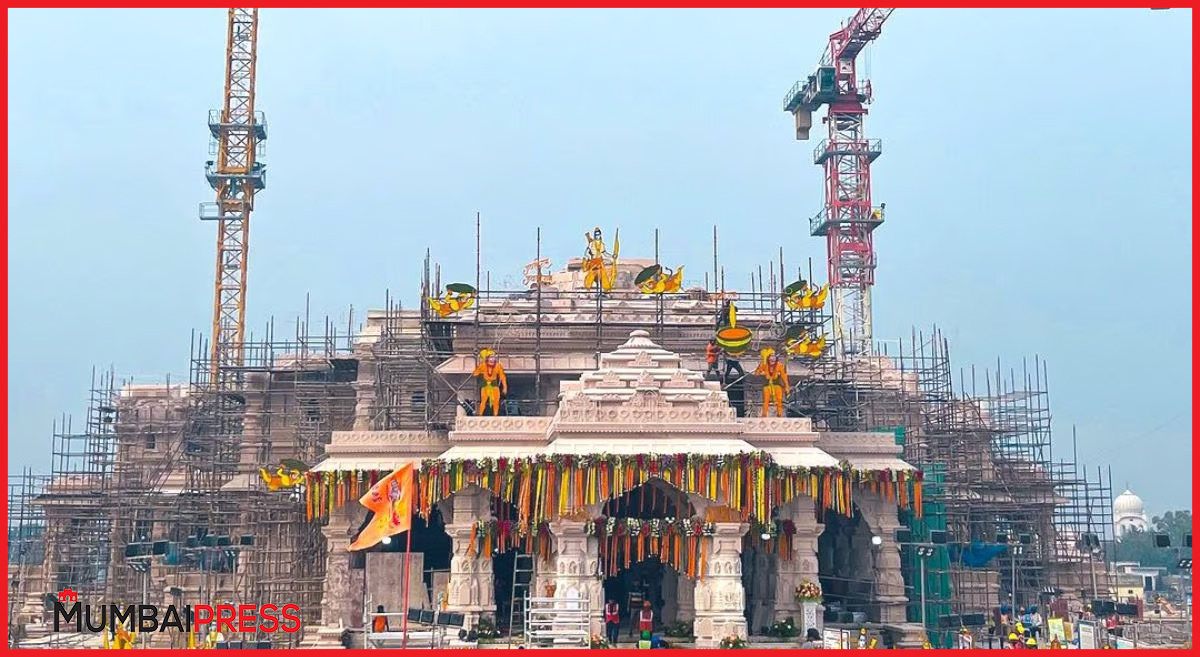
With preparations for the Ram Lalla Pran Pratishtha ceremony in Ayodhya on January 22 in full swing, the UP Police is leaving no stone unturned for the security of the city. Recognising the crucial role locals can play, top police officials held a meeting with residents and members of the Nishad community, seeking their cooperation in maintaining order and vigilance.
The UP police sought local cooperation for seamless security in Temple Town
IG Zone Praveen Kumar led the meeting, emphasizing the significance of the event not just for Ayodhya but for the entire nation. The expected presence of the Prime Minister, along with thousands of VVIP guests from India and abroad, poses a significant security challenge. To address this, Kumar sought the community’s assistance in ensuring a smooth and hassle-free experience for visitors. He urged residents to be alert and report any suspicious activity or unfamiliar individuals, particularly near the Saryu River or within Ayodhya itself. A dedicated WhatsApp number for confidential information sharing was also shared, assuring anonymity for informants.
IG Zone Praveen Kumar said, “In view of the Pran Pratishtha programme to be held in Ayodhya on January 22, today we held a meeting with the local people of Ayodhya and the Nishad community and sought their cooperation regarding the security arrangements of Ayodhya. January 22 is the most important day for us. It is an important day; thousands of VVIP guests are coming to Ayodhya; hence, guidelines have been given to ensure that they do not face any kind of problem.”
For the ‘Pran-Pratishtha’ ceremony, vedic rituals will begin from Jan 16
Prime Minister Narendra Modi would preside over the ‘Pran Pratishtha’ ceremony at the Ram Temple on January 22. Vedic rituals for the ‘Pran-Pratishtha’ ceremony of Ram Lalla (infant Lord Ram) in Ayodhya will begin on January 16, a week before the main ceremony.
From Jan 14 to 22, Ayodhya will mark the Amrit Mahotsav
A priest from Varanasi, Lakshmi Kant Dixit, will perform the main rituals of the ‘Pran Pratishtha’ ceremony of Ram Lalla on January 22. From January 14 to January 22, Ayodhya will mark the Amrit Mahotsav. A 1008 Hundi Mahayagya will also be organised, in which thousands of devotees will be fed. Several tent cities are being erected in Ayodhya to accommodate thousands of devotees, who are expected to arrive in the temple town of Uttar Pradesh for the grand ‘Pran Pratishtha’ ceremony.
According to the Sri Ram Janambhoomi Trust, arrangements will be made for 10,000-15,000 people. Local authorities are also gearing up for the anticipated surge in visitors around the grand ceremony and are in the process of implementing enhanced security measures and making logistical arrangements to ensure a smooth and spiritually enriching experience for all attendees.


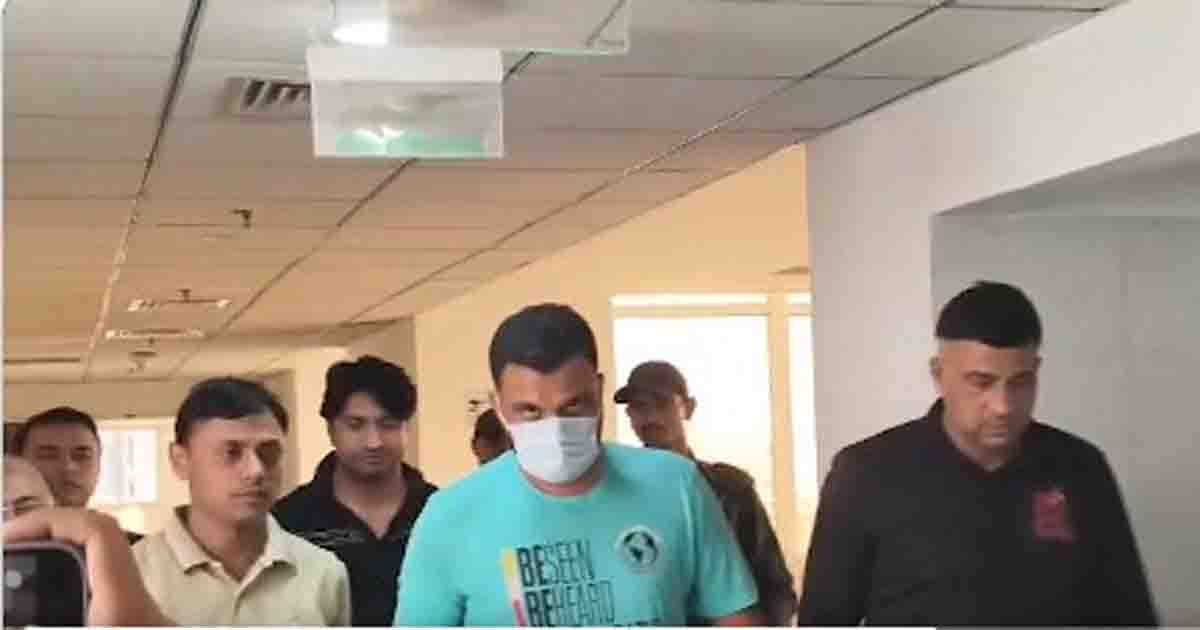
New Delhi, Oct 3: A Delhi court on Saturday remanded alleged international narcotics trafficking accused Navpreet Singh to 10 days of police custody after he was deported from Turkey and brought back to India in connection with a major drug trafficking case.
Singh was produced before the Rouse Avenue Court in New Delhi following his deportation from Turkey, where he was allegedly living under the identity of Navab Virk.
Seeking his custodial remand, the police said that his questioning was required as part of the ongoing investigation into the alleged international narcotics trafficking network and to ascertain the role of other accused and the wider network.
However, the defence opposed the police remand plea, saying that there was no need for further custodial interrogation.
Advocate Asgar Khan, appearing for Singh, told the court that the police had already recorded his statement while he was in custody and that further investigation could proceed on the basis of the statement.
“We presented our arguments against the police remand before the court, but the court granted it,” Khan told media.
Navpreet Singh has been accused by investigating agencies of being linked to an international drug trafficking network allegedly operating between Afghanistan, India and Turkey.
According to the investigation, Singh was allegedly operating as a key handler of the network from Turkey and was accused of facilitating the trafficking of heroin and methamphetamine from Afghanistan to India.
His name had also surfaced in connection with a major narcotics case that came to light in Delhi in 2021, in which investigators recorded the recovery of around 355.5 kg of heroin from the accused persons.
Investigating agencies have claimed that Singh used the identity “Navab Virk” and obtained Turkish citizenship under the assumed identity while continuing to operate the alleged narcotics network.
Union Home Minister Amit Shah on Saturday described Singh’s deportation from Turkey as a “historic milestone” for the Narendra Modi-led Union government.
In a post on social media platform X, Home Minister Shah said that Singh had obtained Turkish citizenship under the alleged fake identity of Navab Virk and continued to smuggle heroin and methamphetamine to India from Afghanistan.
“Our agencies tracked him down, ripping apart veil after veil to unmask his true identity, and secured his deportation. Today he has been brought back to India and put behind bars in connection with cases involving drug trafficking and other crimes he is accused of. Congratulations to all the agencies for this success,” the Union Minister added.
Union Minister Shah also said that the Central government was committed to destroying every narco-cartel before December 2029.
The Ministry of Home Affairs said Singh’s deportation was part of the Centre’s efforts to bring back fugitives involved in serious criminal cases.
The development comes months after suspected drug trafficker Mohammad Salim Dola was brought back to India from Turkey.
Earlier, fugitive Prabhdeep Singh was also brought back from Azerbaijan in connection with a major narcotics case involving the recovery of a large quantity of heroin.
The investigation against Navpreet Singh and other accused is underway.
Lucknow, Oct 3: Ahead of the upcoming Member of Legislative Council (MLC) elections in Uttar Pradesh, the Samajwadi Party (SP) on Saturday announced changes to two of its candidates, replacing the candidates earlier named for the Agra and Gorakhpur-Faizabad teachers’ constituencies.
The SP withdrew the candidature of Ram Prakash Gupta, who had earlier been announced as the party’s candidate from the Agra division. He has now been replaced by Akash Agrawal, the outgoing teachers’ MLC who recently joined the Samajwadi Party.
According to the party, the decision to field Agrawal was influenced by his support among teachers as well as his organisational standing at the local level.
The party has also changed its candidate for the Gorakhpur-Faizabad teacher constituency.
Sanjay Tripathi has emerged as the new SP candidate after the party earlier announced Kamlesh Yadav for the seat.
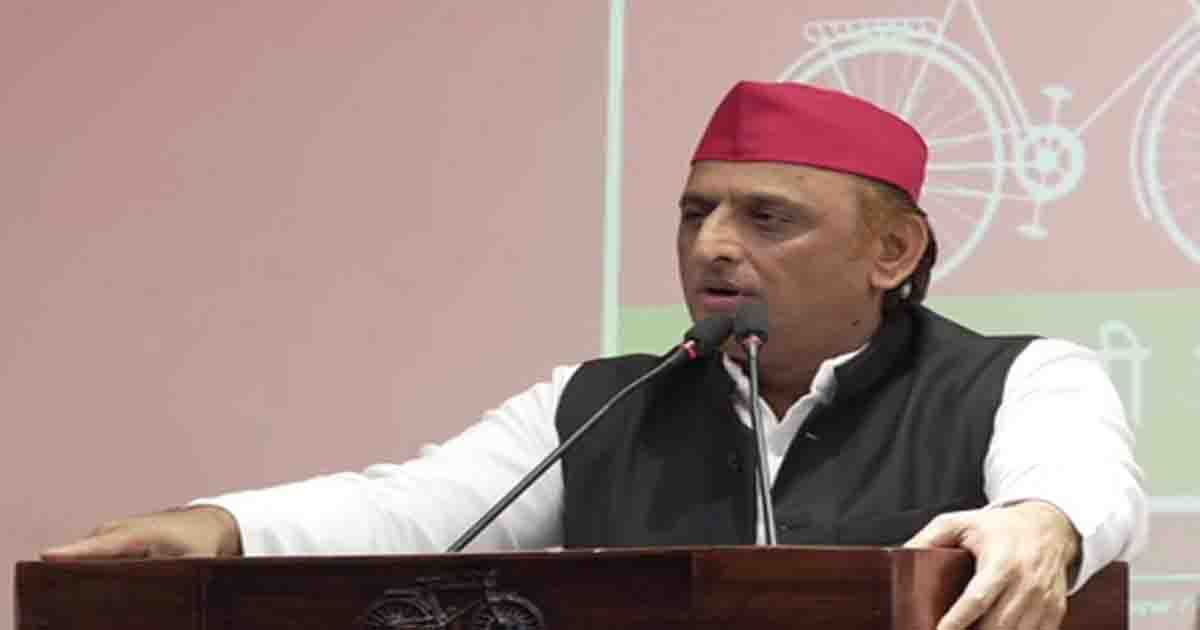
SP President Akhilesh Yadav said that the changes had been made with the consent of the concerned leaders.
While welcoming the newly selected candidates, he also expressed gratitude to the candidates who had initially been announced by the party for the two constituencies.
Akhilesh Yadav thanked Kamlesh Yadav and Prakash Chandra Gupta, along with their families and supporters, for their cooperation and support for the party’s decision.
He said that he would remain “forever grateful” to them for standing by the party.
The SP Chief also said that both the previously announced candidates would be assigned appropriate responsibilities at the appropriate time.
The party had earlier named Kamlesh Yadav as its candidate for the Gorakhpur-Faizabad teacher constituency and Prakash Chandra Gupta for the Agra teacher constituency. With the latest changes, the SP has replaced both candidates and brought in new faces for the two seats.
Voting for these two constituencies, along with 11 other Legislative Council seats falling under the teacher and graduate quota, is scheduled to take place on October 23. The counting of votes will be conducted on October 27.
“The arrival of these two experienced leaders will strengthen the party in the elections,” Akhilesh Yadav said, while appealing to SP workers to extend their full support to the new candidates and work towards ensuring the victory of all party nominees.
The selection of Sanjay Tripathi for the Gorakhpur-Faizabad seat is particularly significant in the context of the ongoing political contest. Tripathi had reportedly been seeking a Bharatiya Janata Party (BJP) ticket during the election campaign.
After the BJP nominated Dhruv Tripathi for the constituency, Sanjay Tripathi distanced himself from the party and announced that he would contest the election as an independent candidate.
The Samajwadi Party subsequently fielded him as its candidate, bringing him into the party’s electoral fold for the MLC contest.
Akash Agrawal, meanwhile, has previously served as an Independent MLC from the Agra Teachers’ constituency. His term is also among those coming to an end with the present election, making the SP’s decision to nominate him significant as the party seeks to utilise his previous electoral experience and support base among teachers in the region.
During the announcement of the candidates, Akhilesh Yadav also launched an attack on the BJP government in Uttar Pradesh. He alleged that BJP members had fraudulently secured votes and raised questions about the functioning of the state’s governance, administration and policing systems over the past 10 years.
The SP Chief also alleged that action under the Goonda Act would be taken against a person who posted a video on social media showing a flooded road in Gorakhpur.
Referring to the murder of a wrestler in Sant Kabir Nagar, Akhilesh Yadav said that several such incidents had taken place across the state.
Citing comments made by the Supreme Court regarding the police system, the SP Chief added, “The police system in the state has deteriorated.”
He also indicated that education and the examination system would be among the key issues that the party would raise during the upcoming elections.
He alleged that paper leaks had increased during the BJP government’s tenure and claimed that discrimination had taken place in government recruitment and jobs.
Akhilesh Yadav said the Samajwadi Party would include issues concerning ad-hoc teachers, unaided teachers, Shiksha Mitras and the old pension scheme in its manifesto.
He also questioned the condition of the state’s healthcare system and said that the SP would provide free treatment to poor people if it returned to power.
“If the Samajwadi Party forms the government, free treatment will be provided to the poor,” he said.
The SP President also placed the party’s PDA, referring to the alliance of backward, Dalit and minority communities, at the centre of its electoral campaign.
He said the Samajwadi Party, along with the INDIA bloc, had defeated the BJP in the 2024 Lok Sabha elections and claimed that the BJP would not be able to withstand the strength of the PDA in the upcoming Assembly elections.
“Youth lack adequate jobs and employment opportunities, and unemployment is rising… During the Samajwadi Party government, laptops were provided to youth, and today, these same youth are questioning the government through mobile phones and laptops,” Akhilesh Yadav added.
International News
Capt Smit Machchhar under excellent medical care, recovering well: Indian Embassy in UAE

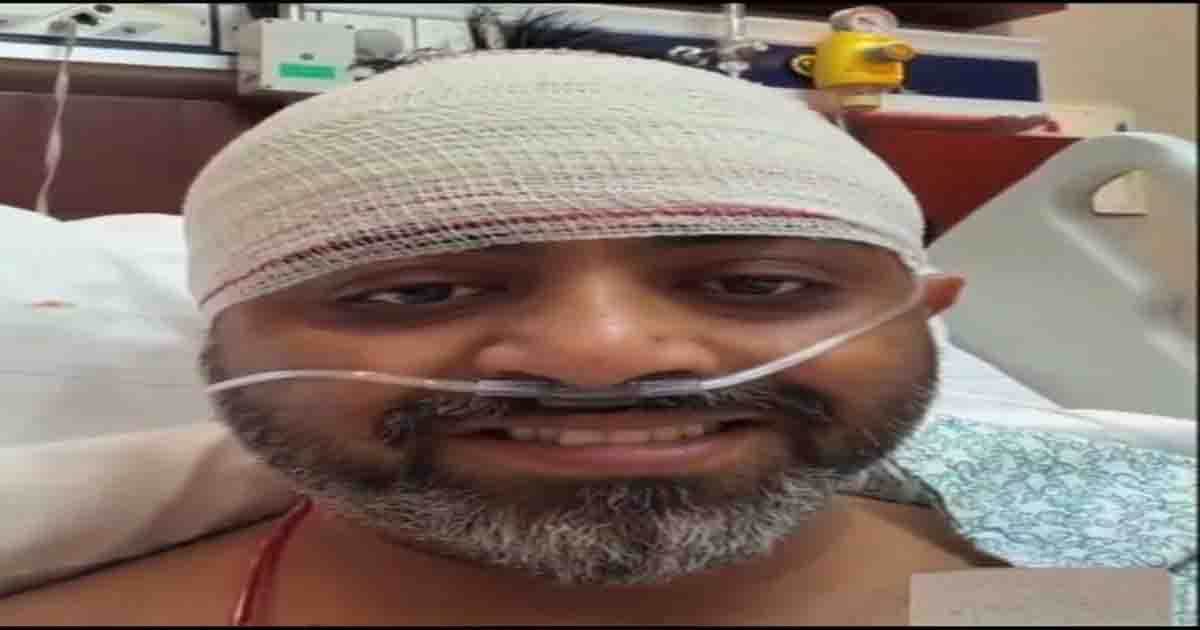
Abu Dhabi, Oct 3: Captain Smit Machchhar, the brave Indian pilot of flydubai flight FZ1073, is responding well to treatment and continues to receive medical attention, the Indian Embassy in the UAE said on Saturday.
The mission said it was coordinating with his family and local authorities. It also thanked the UAE government for the care being extended to him.
“Indian braveheart Capt. Smit remains under excellent medical care & is recovering well. We are in touch with his family & local authorities, extending support for a speedy recovery. Our thanks to UAE gov. for their care. We join well-wishers in praying for his good health,” the Indian mission posted on X.
Captain Machchhar was injured while preventing a mid-air attack on Wednesday aboard the flydubai flight from Dubai to Israel.
During the incident, another pilot stabbed Captain Machchhar and the aircraft began to plummet.
The Indian pilot fought the assailant bravely and opened the cockpit door, following which passengers rushed to assist, entered the cockpit and overpowered the attacker.
Once the attacker was subdued, the seriously wounded Indian pilot was stabilised until the aircraft made an emergency landing in Saudi Arabia.
Prime Minister Narendra Modi on Friday spoke with Captain Machchhar over a video call, praising his courage, presence of mind and composure during the mid-air incident in which he helped save the lives of passengers and crew members.
During the conversation, PM Modi said the country could proudly say that Indians are not those who take lives, but those who are willing to risk their own lives to save others.
PM Modi began the conversation by asking about Captain Machchhar’s health and said the entire country was praying for his speedy recovery.
“The whole country is praying for you. Maha Mrityunjaya Jaap is being performed for you and your health. Your courage, presence of mind and composure saved many lives. The country can proudly say that Indians are not those who take lives, but those who are willing to risk their lives to save others,” PM Modi said.
Captain Machchhar nodded and responded, “Yes, sir.”
The Indian pilot has also received recognition from across the world, with leaders and people lauding his bravery and actions that helped save hundreds of lives during the mid-air attack.

Deported narco-trafficking kingpin Navpreet Singh sent to 10-day police custody

Kasturba Marg Police recover 100 stolen mobile phones, return them to their original owners

Iran to pursue US seizure of commercial ship during truce in international courts: official

SP changes 2 MLC candidates in UP; fields Akash Agrawal, Sanjay Tripathi

Capt Smit Machchhar under excellent medical care, recovering well: Indian Embassy in UAE

Gift to President Putin part of PM Modi bid to globally display India’s heritage

PM Modi’s warm camaraderie with Putin, Xi on full display at BRICS Summit

Corporators of all parties in trouble! Corporators of all major parties including Shiv Sena (UBT), BJP and Congress are facing legal challenges.

Complaint against Netflix & Mukesh Chhabra for inappropriate language on ‘India’s Got Latent 2’

Maha Congress stages agitation against Gyanesh Kumar
-

 Crime4 years ago
Class 10 student jumps to death in Jaipur
-

 Maharashtra2 years ago
Mumbai Local Train Update: Central Railway’s New Timetable Comes Into Effect; Check Full List Of Revised Timings & Stations
-

 Maharashtra2 years ago
Mumbai To Go Toll-Free Tonight! Maharashtra Govt Announces Complete Toll Waiver For Light Motor Vehicles At All 5 Entry Points Of City
-

 Maharashtra2 years ago
False photo of Imtiaz Jaleel’s rally, exposing the fooling conspiracy
-

 National News2 years ago
Ministry of Railways rolls out Special Drive 4.0 with focus on digitisation, cleanliness, inclusiveness and grievance redressal
-

 Maharashtra2 years ago
Maharashtra Elections 2024: Mumbai Metro & BEST Services Extended Till Midnight On Voting Day
-

 National News2 years ago
J&K: 4 Jawans Killed, 28 Injured After Bus Carrying BSF Personnel For Poll Duty Falls Into Gorge In Budgam; Terrifying Visuals Surface
-

 Crime2 years ago
Baba Siddique Murder: Mumbai Police Unable To Get Lawrence Bishnoi Custody Due To Home Ministry Order, Says Report