
Maharashtra
NCP appoints Baba Siddique’s son as president of its Mumbai unit

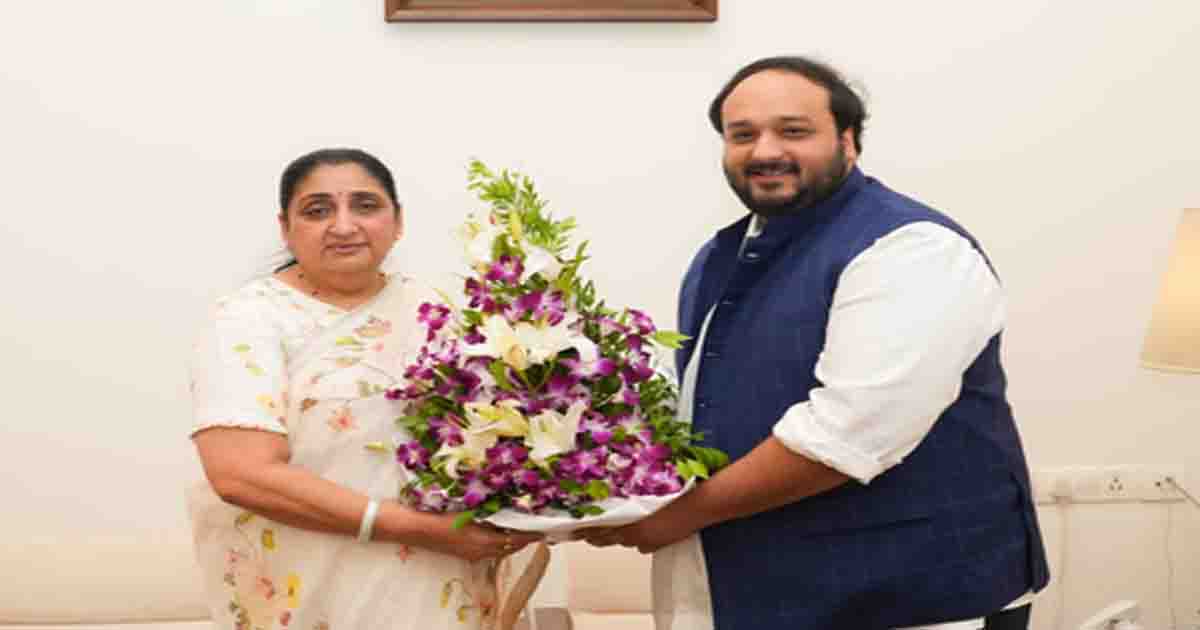
In a major organisational reshuffle within the Nationalist Congress Party (NCP), party legislator Zeeshan Siddique was appointed as the Mumbai Regional President. The formal appointment letter was handed over to Siddique on Tuesday by NCP National President and Maharashtra Deputy Chief Minister Sunetra Pawar.
The appointment letter emphasises continuing the progressive legacy of late leader Ajit Dada Pawar, upholding the tradition of public service, and strengthening the party’s grassroots commitment to the common citizens.
Zeeshan Siddique, who lost the 2024 Assembly elections from Bandra East constituency, is the son of the late veteran politician Baba Siddique. The NCP leadership expressed firm confidence that under Siddique’s stewardship, energy, and dedication, the party organisation in Mumbai will become significantly stronger, more effective, and deeply people-centric.
The appointment marks a crucial step for the NCP as it reorganises its leadership framework in India’s financial capital to bolster its urban outreach and grassroots influence.
Zeeshan’s appointment comes when NCP had failed to increase its tally in the recently held BrihanMumbai Municipal Corporation elections. The party is struggling to consolidate its presence in Mumbai. NCP has historically struggled to establish a dominant presence in Mumbai’s municipal and Assembly politics compared to its formidable strength in western Maharashtra (such as Pune, Satara, and Kolhapur) and the Sugar Belt.
Historically and currently, the NCP functions primarily as a coalition player rather than a lead power within Mumbai. Out of Mumbai’s 36 Legislative Assembly seats and 227 Brihanmumbai Municipal Corporation (BMC) wards, the NCP has historically held only a tiny fraction of seats (often 1-3 Assembly seats at peak).
Areas with notable Muslim population demographics (such as parts of Kurla, Anushakti Nagar, or Shivaji Nagar/Mankhurd) have occasionally elected NCP candidates. Pockets housing migrants from Western Maharashtra and Marathwada living in Mumbai offer localised support due to loyalty to rural NCP leadership. Following the July 2023 split into NCP (Ajit Pawar) and NCP (Sharadchandra Pawar), the already thin Mumbai grassroots apparatus has divided further.
NCP (Ajit Pawar) operates as part of the ruling Mahayuti coalition, relying on state cabinet resources and alliance seat-sharing. NCP insiders said that the party’s core branding, network, and patronage systems are rooted in agrarian politics, sugar cooperatives, and rural local bodies (Zilla Parishads).
Translating this structure into Mumbai’s cosmopolitan, middle-class, and urban slum dynamics has proven difficult, and Zeeshan Siddique faces a major challenge to spread the party’s wings ahead of the next Lok Sabha and Assembly polls slated for 2029.
Observers said that Mumbai’s urban electorate has traditionally favoured the Shiv Sena (both UBT and Shinde factions) for Marathi identity and local civic issues, or the BJP for urban governance and middle-class appeal. Because the NCP partnered with the Indian National Congress (INC) for decades in Maharashtra, seat-sharing agreements historically allocated the vast majority of Mumbai constituencies to Congress, severely limiting the NCP’s opportunity to field candidates and build a city-wide organisation. Most prominent NCP’s heavyweight leaders draw their base from rural constituencies.
The party lacks high-profile, born-and-bred Mumbai leaders capable of driving a citywide narrative. Siddique will have to focus on building dedicated urban-centric agendas (housing redevelopment, slum rehabilitation, local transport), grooming local youth leadership directly from Mumbai’s colleges and trade unions rather than importing rural cadres and leveraging coalition partnerships effectively to claim non-traditional urban seats during BMC and Assembly elections.
Meanwhile, NCP President Sunetra Pawar has appointed Umesh Patil as National Chief Spokesperson.


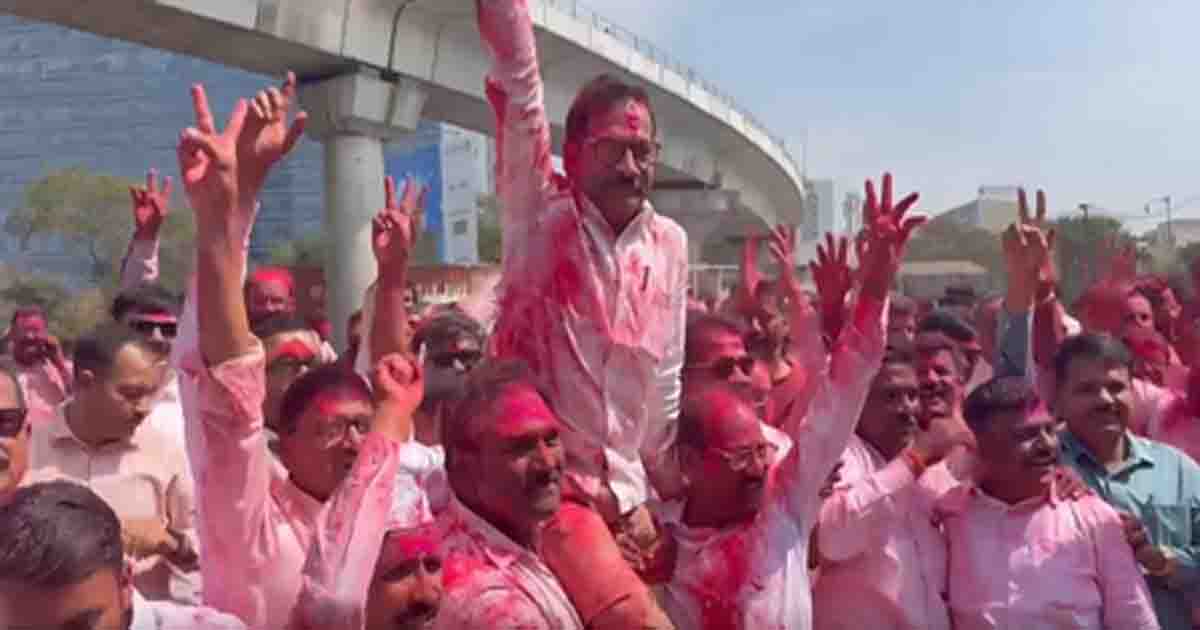
Counting of votes for the five Maharashtra Legislative Council Teachers’ and Graduates’ constituencies continued on Wednesday. Out of the five contested seats, official declarations have come in for two, yielding victories for the Bharatiya Janata Party (BJP) and the National Congress Party (Sharadchandra Pawar).
In Pune Teachers’ Constituency, the BJP nominee Kaustubh Gawade has won after defeating the Congress party’s sitting legislator and nominee Jayant Asgaonkar, and Sachin Sanap, an Independent candidate supported by Eknath Shinde’s Shiv Sena. With this win, Gawade has delivered a major boost to the Mahayuti coalition.
BJP had made the Pune Teachers’ Constituency poll a prestige as the election strategy was implemented under the guidance of Chief Minister Devendra Fadnavis. The party had fielded senior ministers, including Chandrakant Patil and a couple of legislators, during campaigning.
In Chhatrapati Sambhajinagar (Marathwada) Graduates’ Constituency, NCP(SP) nominee Dr Pratapsingh Patil defeated the NCP/Mahayuti candidate Satish Chavan, who was a three-term legislator from the same seat. In addition, Raviraj Sable (Independent) and Dilip Ghuge (Shiv Sena – UBT) also lost.
Dr Pratapsingh Patil maintained a strong preference vote lead throughout counting rounds to secure the seat for the Maha Vikas Aghadi (MVA) coalition.
NCP(SP)’s top leadership, including working president and MP Supriya Sule, former Minister Jayant Patil, state chief Shashikant Shinde, accompanied by Congress leaders, had held a series of meetings and rallies. Incidentally, Shiv Sena legislator and former Minister Abdul Sattar defied party line and supported Dr Pratapsingh Patil. Further, he also received support from disgruntled leaders of the Shiv Sena and Shiv Sena(UBT).
Counting was underway for the remaining three seats due to the preferential voting system, elimination rounds, and quota calculations.
In Nagpur Graduates’ seat, BJP candidate Sudhakar Kohale holds a steady lead over incumbent Congress candidate Abhijeet Wanjari. With elimination rounds progressing, the distribution of second-preference votes will finalise the victory quota.
In Pune Graduates’ seat, the battle remains intense between Smita Jadhav (BJP) and Harshada Jadhav (NCP-SP), with second-preference counting underway.
In Amravati Teachers’ constituency, a multi-cornered contest persists among Kiran Sarnaik (Shiv Sena), Aditi Pohare (Congress), Sangita Shinde (BJP rebel) and Dattatray Lahane (Shiv Sena UBT) as officials process preference tallies.
Final official updates for Nagpur, Pune Graduates, and Amravati are expected once the second-preference elimination rounds reach the required victory quotas.
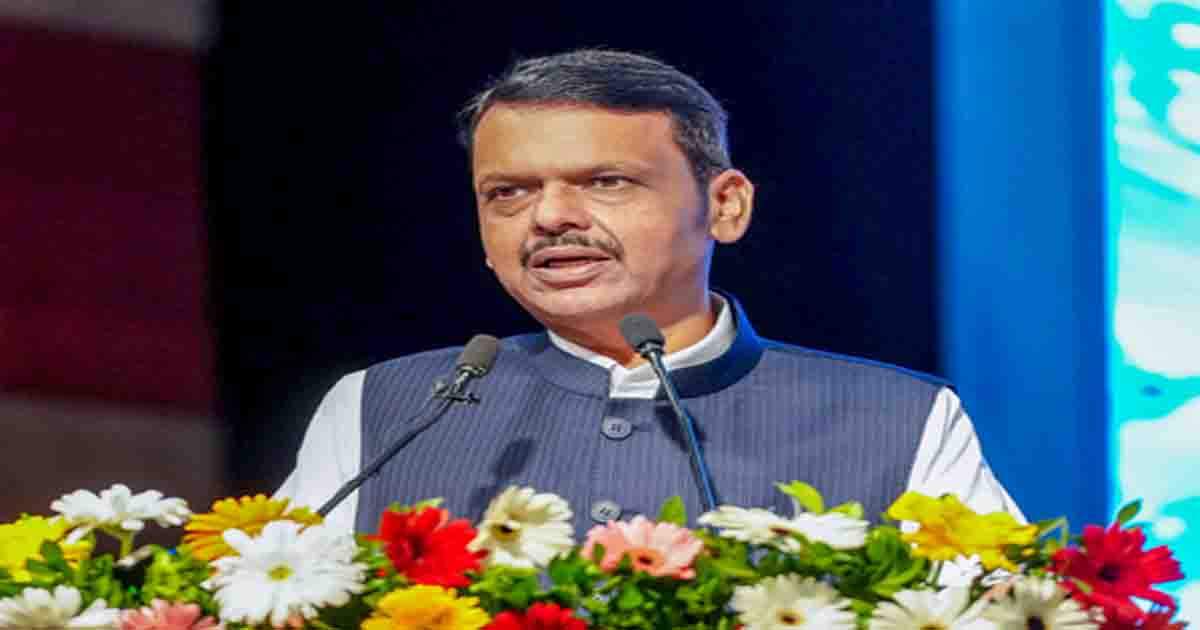
In response to widespread drought conditions across the state affecting the Kharif 2026 season, the Maharashtra government has issued an order to postpone elections for all eligible cooperative societies in drought-declared districts, effective immediately.
The decision was announced through Government Resolution (GR) by the Cooperation Department late Tuesday night. Based on evaluations under the Drought Management Code 2016 and reports from the Commissioner of Agriculture, the government initially identified Trigger-1 conditions across 265 talukas. Subsequent data incorporating Trigger-1 and Trigger-2 assessments elevated the total count to 304 drought-affected talukas across the state.
With severe drought conditions prevailing, various government departments, including Revenue, Agriculture, Animal Husbandry, Cooperation, Rural Development, and Water Supply, are heavily engaged in relief work. Continuing election processes would divert vital administrative staff and officials away from urgent drought mitigation efforts, said the GR.
The government noted that participating in election processes would cause significant inconvenience to farmers and members residing in drought-hit regions. While the GR halts elections across most cooperative bodies in the affected districts from their current stages until further notice, specific categories have been exempted, including Cooperative Housing Societies, any cooperative society where the High Court or Supreme Court has specifically ordered elections to be conducted and societies where the nomination stage of the election process had already commenced prior to the date of the GR.
Government sources cited examples where the politically crucial elections to the District Central Cooperative Banks (DCCBs) were underway. “In Ahilyanagar, of the 21 seats, 11 have already been elected unopposed, but the election for the balance of 10 seats was pending. With yesterday’s GR, the elections for 10 seats have been postponed for six months. Similarly, in Satara DCCB, of the 21 seats, nine have already been elected unopposed, and now the elections for 12 seats have been postponed for six months.”
The state has previously rolled out comprehensive relief packages for the 304 affected talukas under government resolutions dated September 25 and October 14. These measures include crop loan restructuring, suspension of agricultural loan recoveries, waivers on current electricity bills for agricultural pumps, provision of drinking water via tankers, fodder availability for livestock, and expanded employment under the Employment Guarantee Scheme.
The state cabinet on Tuesday announced to pay, as an advance, Rs 5,000 to each of the 1.50 crore farmers from drought-hit districts before Diwali.
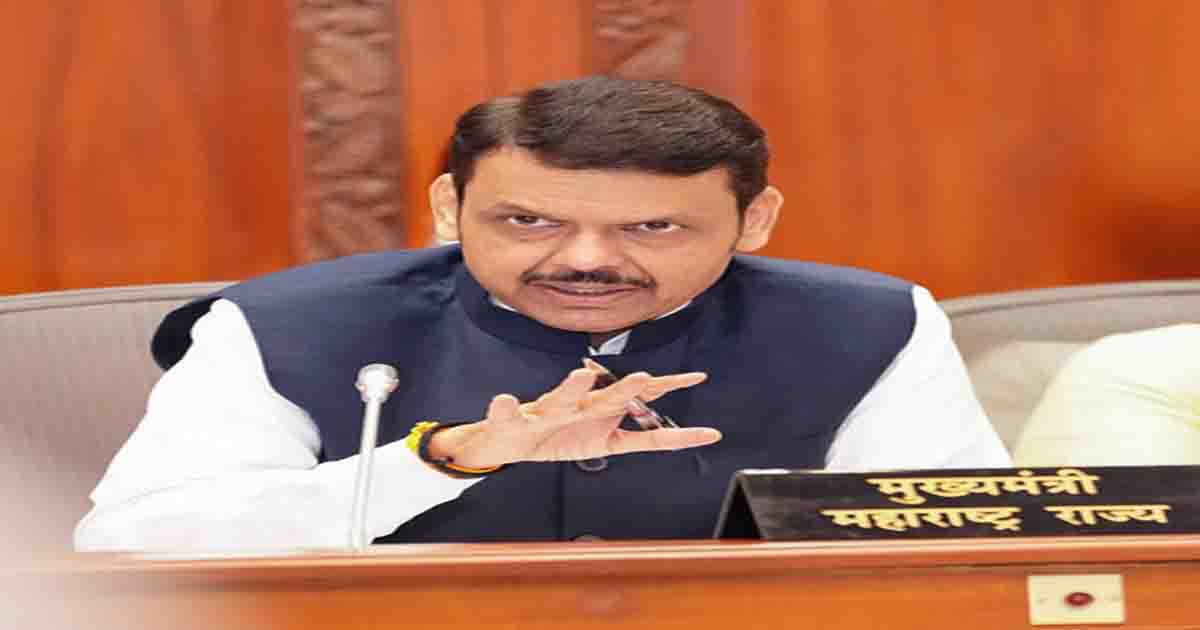
Responding to opposition pushback against the proposed Pumped Storage Hydro Project in Karjat in Raigad district, Chief Minister Fadnavis on Tuesday firmly defended the infrastructure initiative as eco-friendly and crucial for Maharashtra’s power grid stability.
While solar and wind power generate clean energy, they cannot operate 24/7. Pumped storage provides a non-polluting solution to balance renewable sources and guarantee round-the-clock uninterrupted power supply, he said.
CM’s defence comes as the project has sparked severe political friction and concern among environmentalists due to extensive tree-felling clearance required in the region.
Addressing the controversy, CM Fadnavis asserted that the opposition is politicising a vital green energy initiative without a proper understanding of the technical requirements.
CM Fadnavis said that the 3,000 MW project offsets thermal power generation that would otherwise require planting 28 crore trees to offset coal pollution.
As part of environmental mitigation, 90,000 trees will be planted by the forest department, alongside an additional 60,000 trees planted directly on the Karjat project site.
Acknowledging that some trees are being cleared, he stressed that this environmental impact is temporary. By establishing a clean energy storage system, the state is preventing thousands of times more environmental degradation in the future.
He noted that generating equivalent energy via traditional coal-based power plants would cause massive pollution—comparable to the emissions of 40 million vehicles.
Unlike conventional battery storage systems that last around 25 years, pumped storage infrastructure operates effectively for up to 80 years, protecting the environment for generations.
Explaining why solar and wind energy alone are insufficient (as they are not available 24/7 and destabilise the power grid), CM Fadnavis stated that pumped storage acts as an essential green grid-support mechanism.
He emphasised that pump-storage technology has an operational lifespan of around 80 years and is critical for securing clean power for future generations.
Refuting opposition claims, CM Fadnavis highlighted that China has developed over 60,000 MW of similar pumped storage infrastructure and emphasised that Karjat was selected through strict feasibility assessments.
Comparing the opposition’s stance to the past legal disputes surrounding the Aarey Car Shed project—which was eventually cleared by the Supreme Court—CM Fadnavis stated that the state government remains open to listening to genuine concerns, but criticised politicking around essential clean-energy infrastructure.
Addressing demands from critics to relocate the project to regions like Marathwada or Vidarbha, the Chief Minister clarified that pumped-storage infrastructure cannot be built just anywhere; it requires specific geographical terrain and topography, making Karjat an ideal site.
The state government maintains that the project is completely eco-friendly, situated outside the boundaries of the Bhimashankar Wildlife Sanctuary, and vital for Maharashtra’s sustainable energy transition.

Maha MLC polls: BJP, NCP(SP) secure early victories as vote counting continues

‘Udta Teer’ actor Rupinder Walia recalls his first meeting with Ayushmann

Do not close shop of love in market of Diwali: CTI to Rahul on Nov 1 rally issue, seeks 20-minute meet with 20 traders

NCP appoints Baba Siddique’s son as president of its Mumbai unit

Delhi Police arrest 23-year-old auto-lifter, recover four stolen two-wheelers

Rahul, Cong ecosystem want to force regime change: BJP after Neha Bora praises B’desh Gen-Z protest

BJP pays tribute to ex-President Abdul Kalam, recalls his enduring influence on generations of India’s youth

Attack on democratic rights: INDIA Bloc leaders on detentions of anti-ECI protestors

INDIA bloc begins protest march against ECI

Maha Congress stages agitation against Gyanesh Kumar
-

 Crime4 years ago
Class 10 student jumps to death in Jaipur
-

 Maharashtra2 years ago
Mumbai Local Train Update: Central Railway’s New Timetable Comes Into Effect; Check Full List Of Revised Timings & Stations
-

 Maharashtra2 years ago
Mumbai To Go Toll-Free Tonight! Maharashtra Govt Announces Complete Toll Waiver For Light Motor Vehicles At All 5 Entry Points Of City
-

 Maharashtra2 years ago
False photo of Imtiaz Jaleel’s rally, exposing the fooling conspiracy
-

 National News2 years ago
Ministry of Railways rolls out Special Drive 4.0 with focus on digitisation, cleanliness, inclusiveness and grievance redressal
-

 Maharashtra2 years ago
Maharashtra Elections 2024: Mumbai Metro & BEST Services Extended Till Midnight On Voting Day
-

 National News2 years ago
J&K: 4 Jawans Killed, 28 Injured After Bus Carrying BSF Personnel For Poll Duty Falls Into Gorge In Budgam; Terrifying Visuals Surface
-

 Crime2 years ago
Baba Siddique Murder: Mumbai Police Unable To Get Lawrence Bishnoi Custody Due To Home Ministry Order, Says Report