
International News
Israel elections: Likud-led bloc takes lead, Netanyahu calls for ‘strong right-wing’ govt

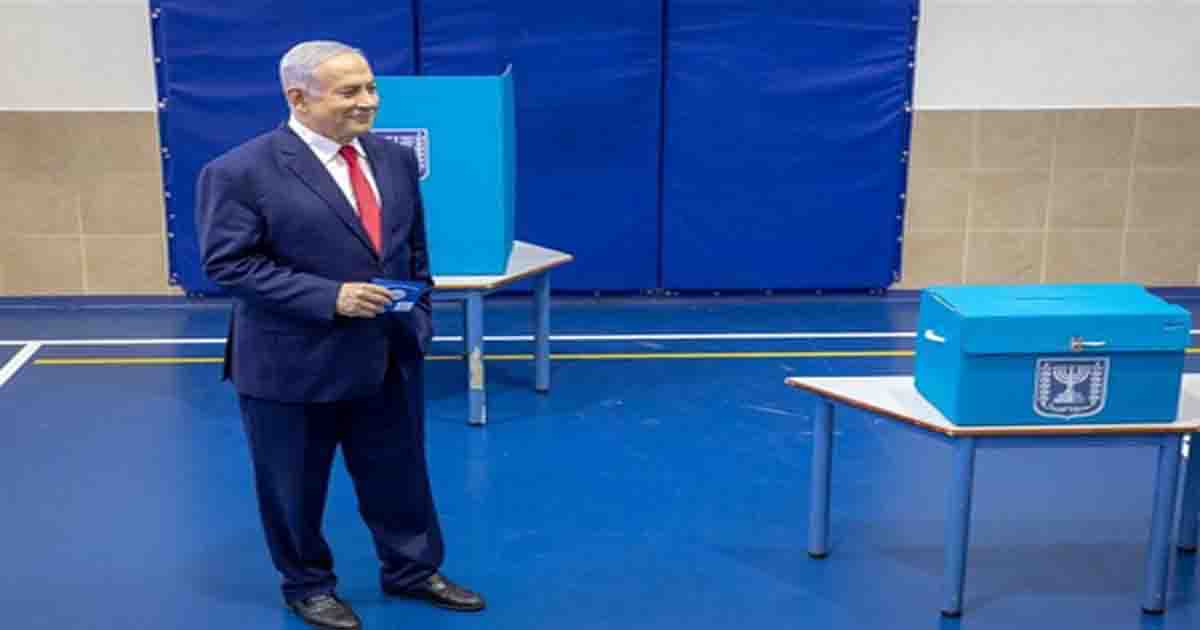
Israel’s election results showed incumbent Prime Minister Benjamin Netanyahu’s Likud bloc leading by Wednesday morning, with 41.9 per cent of ballot boxes counted, local media reported.
The partial results released by Central Elections Committee gave Netanyahu’s bloc 57 seats to 47 for the anti-Netanyahu camp. The predominantly Arab Joint List and Ra’am factions together held the remaining 16 seats, The Times of Israel reported.
Following exit polls released by Israeli media outlets Channels 11, 12 and 13 on Tuesday night, no clear winner emerged in Israel’s election, with neither Netanyahu’s bloc nor the opposition seeking to replace him projected to secure the 61 seats required for a majority in the Knesset, the country’s parliament
However, by Wednesday morning, some polls indicated Netanyahu’s bloc with a clear lead.
An updated exit poll released overnight showed Netanyahu’s bloc drawing level with or gaining an edge over the opposition bloc led by Gadi Eisenkot, a former chief of staff of the Israel Defence Forces.
Responding to the projections, Netanyahu asserted that the right wing commanded a “great majority” among Israel’s “Zionist public” and called for the formation of a “strong right-wing government”.
Addressing supporters at the Likud election headquarters in Jerusalem after the polls, Netanyahu criticised media outlets that had forecast a poor performance by his Likud party in the elections.
“Do you remember how the propaganda channels engineered public consciousness? Likud on 18 seats, 19 seats. They knew the whole time that it was a lie. They were trying to demoralise you from coming to the ballot box. That is what went on here. Well, the first thing that has become clear, unequivocally, is that Likud is the biggest party in Israel. There is no disputing it,” Times of Israel quoted Netanyahu as saying.
“And the second thing that has become clear… is that the right-wing bloc has a clear, decisive majority among the Zionist public, among the Jewish public and all those who support the Jewish state. That is what has become clear. A decisive majority. And therefore I said, and I say again, that we must form a strong, national, right-wing government. That is what must be done,” he added.
He also criticised parties willing to cooperate with Arab parties, calling such an arrangement a “shame”.
Questioning how parties could discuss “the covenant of those who serve” while cooperating with parties that attack Israel Defence Forces (IDF) soldiers, Netanyahu said it was unthinkable “to endanger Israel and set up a government that relies upon anti-Zionist Arab parties”.
He further described them as parties that oppose Israel’s very existence, that regard “Hamas as a charitable organization”, that call Israeli soldiers “war criminals.”
Highlighting Israel’s achievements in the conflicts that followed the October 7, 2023, Hamas-led attack, Netanyahu claimed that Iran had been significantly weakened while Israel had emerged stronger.
The Tuesday elections marked the first electoral contest since the October 7, 2023 Hamas attack, amid significant shifts in the political landscape and the issues shaping voter priorities since the 2022 elections.

International News
Iran’s IRGC says two ‘violating’ supertankers exploded after hitting mines in Hormuz Strait

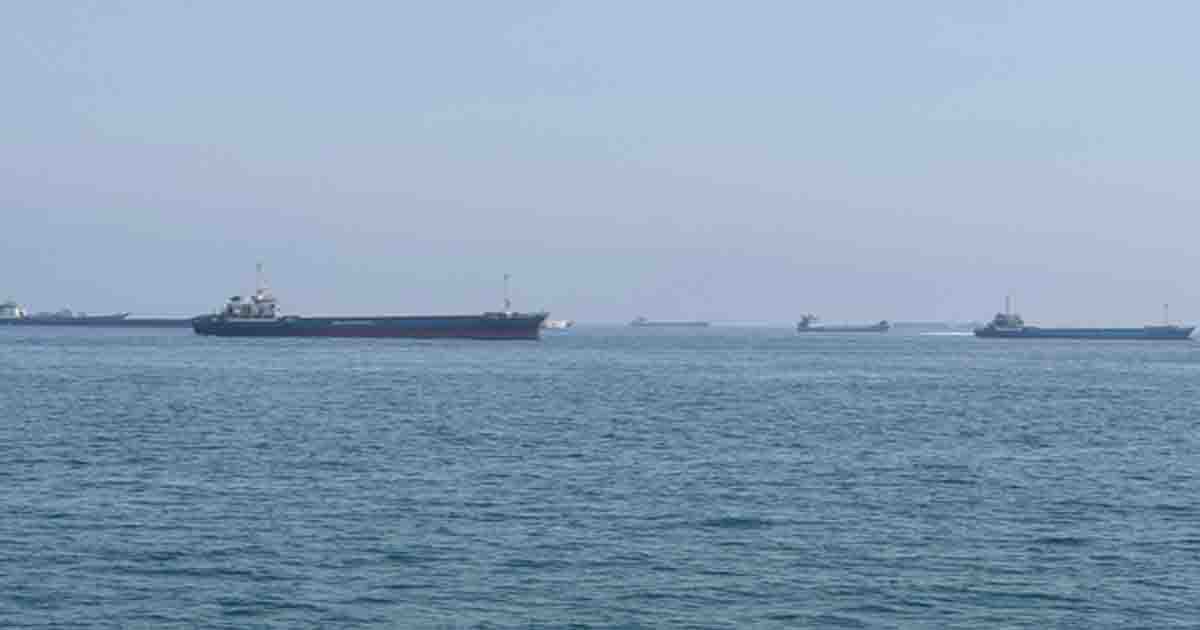
The navy of Iran’s Islamic Revolutionary Guard Corps (IRGC) said that two “violating” supertankers that were transiting the “unauthorized” routes in the Strait of Hormuz exploded after hitting naval mines within the preceding hours.
The oil tankers, which were not complying with the instructions announced by the Iranian naval forces, were brought to a halt north of Oman’s Al Ghanam Island and east of the Strait of Hormuz following the incidents, the navy said in a statement on the IRGC’s official news outlet Sepah News.
In a separate statement on Sunday, the IRGC said its aerospace division’s air defence forces managed to intercept and destroy a US MQ-1 Predator drone east of the Strait of Hormuz earlier in the day.
It added the unmanned aerial vehicle was the 20th US MQ-1 predator drone to have been shot down by its “modern and advanced” air defense systems within the past months, and the fourth US Army reconnaissance-combat drone to have been intercepted within the past 24 hours.
Additionally, the navy of Iran’s Army announced Sunday that two “violating” oil tankers caught fire in the morning after colliding with naval mines east of the Strait of Hormuz.
It said in a statement that the vessels had turned off their identification and navigation systems and entered the “forbidden” region east of the waterway in disregard of earlier warnings.
Earlier on Saturday night, IRGC’s aerospace force targeted the US radars at two air bases in Bahrain in retaliatory missile and drone strikes.
The “hybrid offensive” operation was in response to the continuation of the “aggression against and violation” of Iran’s airspace, and targeted the Al-Riffa and Awali Sakhir air bases in Bahrain, the IRGC said in a statement on its official news outlet Sepah News.
Iran tightened its grip on the strait on February 28, barring safe passage of vessels belonging to or affiliated with Israel and the United States following their joint strikes on Iranian territory.
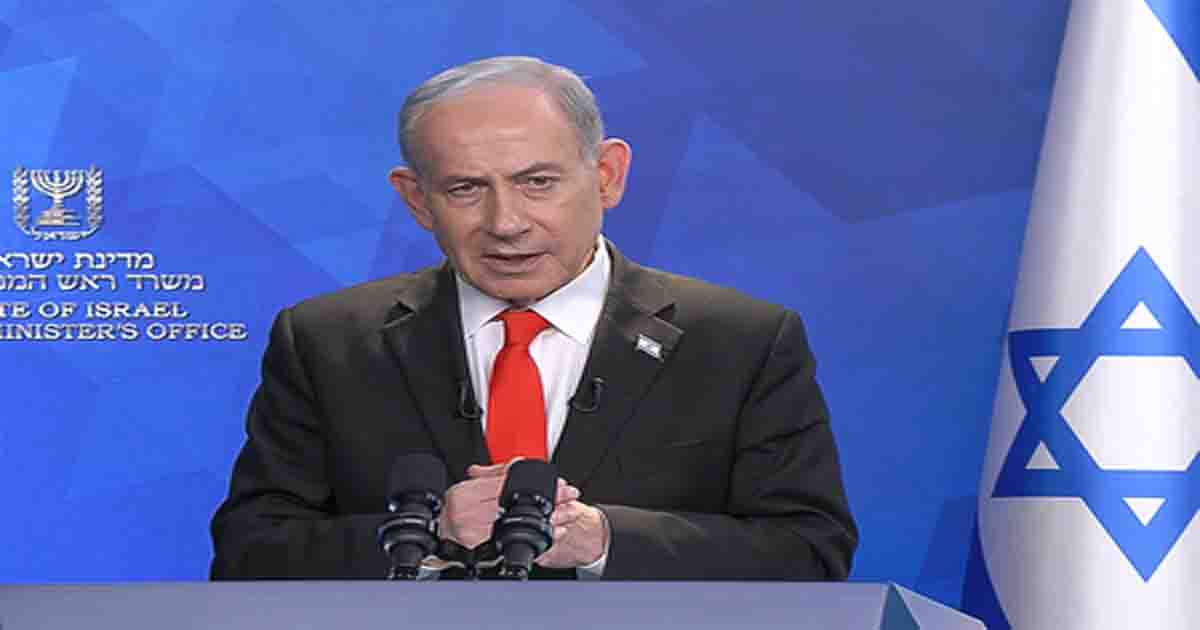
The Israel Defense Forces (IDF) warned Prime Minister Benjamin Netanyahu that a potential strike on Iran could trigger a wider regional conflict, The Times of Israel reported.
The warning came during a closed-door meeting last week between Netanyahu and senior defense officials, as Israel weighs its military options against Iran, said the report, citing Channel 12, a Hebrew-language television network.
Military intelligence warned that an Israeli strike could ignite “multiple fronts,” involving Lebanon, Syria and Gaza, contradicting expectations by Netanyahu and Israel’s intelligence agency Mossad that the operation could be limited to three to five days, it said.
It added that opposition politician Avigdor Liberman had warned recently that Netanyahu may launch a unilateral strike without US involvement or approval.
Liberman said last week that any Israeli attack right now would be unjustified and “completely motivated by politics.”
The IDF declines to comment on remarks made during closed-door meetings.
Citing public broadcaster Kan, the report also said an anonymous source claimed that Netanyahu was urging US President Donald Trump to strike Iran “as soon as possible,” adding that the president has yet to make a decision and is reportedly reluctant to do so.
Earlier this month, Netanyahu had renewed his call for a national unity government, warning that Iran was rebuilding its nuclear program and that only a broad coalition could eliminate the threat to Israel.
In a prerecorded address, Netanyahu urged his political rival Gadi Eisenkot, who has been tasked with forming Israel’s next government, to enter coalition negotiations without preconditions.
“The Iranian regime, which seeks Israel’s destruction, is once again working to revive its nuclear program,” Netanyahu said. “We must remove this existential threat once and for all.”
Netanyahu had said a national unity government could guarantee Israel’s security for years to come and expand regional peace agreements.
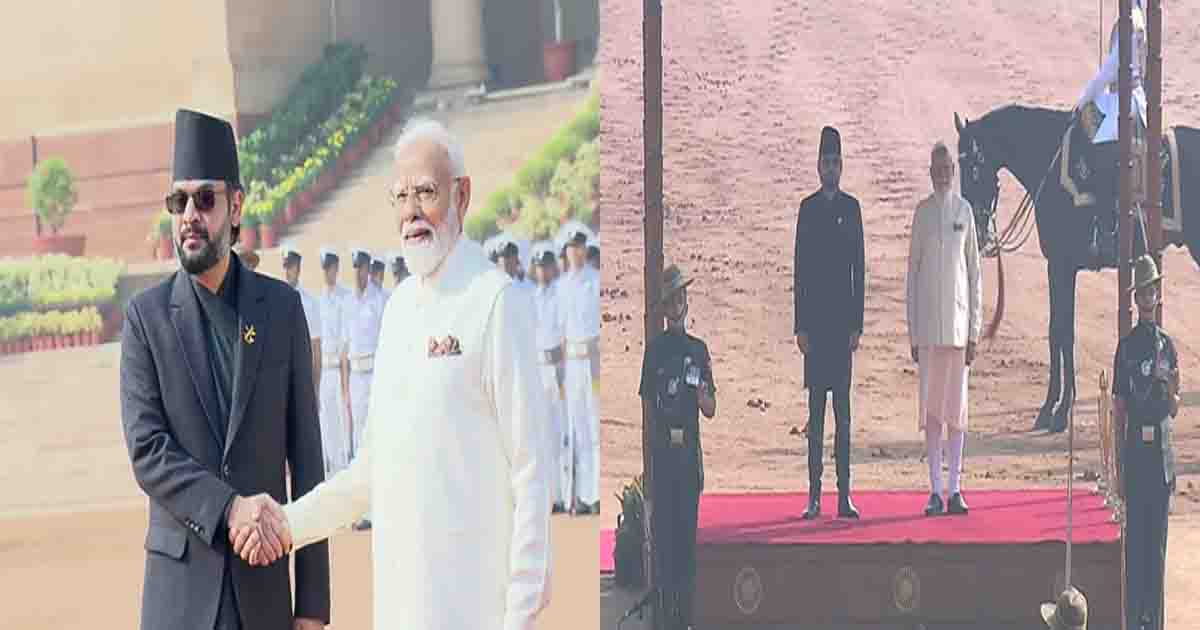
Nepalese Prime Minister Balendra Shah was accorded a ceremonial welcome at the forecourt of Rashtrapati Bhavan on Monday.
Prime Minister Narendra Modi warmly welcomed Shah upon his arrival at the Rashtrapati Bhavan.
Shah arrived in New Delhi on Sunday for a two-day State visit to India at the invitation of Prime Minister Modi. Union Minister of State for Commerce and Industry Jitin Prasada welcomed him at the airport.
He is scheduled to hold delegation-level talks with Prime Minister Narendra Modi later in the day, during which the two leaders will review the full range of India-Nepal relations and exchange views on regional and international issues of mutual interest.
Additionally, both leaders will virtually flag off the Saryu-Kamala Express from New Delhi.
Following the bilateral talks, the two leaders will jointly address a press conference. Prime Minister Modi will also host an official luncheon in honour of the Nepali Prime Minister and his delegation on the same day.
Shah will additionally call on President Droupadi Murmu.
The Nepali Prime Minister is accompanied by Finance Minister Swarnim Wagle, Foreign Minister Shishir Khanal, Chief Advisor to the Prime Minister Kumar Byanjankar and other senior government officials, forming a 35-member government delegation.
A separate 52-member delegation comprising business representatives will also participate in the visit at their own expense.
The bilateral discussions are expected to cover post-flood reconstruction assistance, energy, trade, connectivity and broader cooperation between the two neighbouring countries.
The two sides are also expected to unveil a Joint Vision Document titled “Samriddha Nepal, Samunnat Bharat” (Prosperous Nepal, Developed India), which will set long-term bilateral goals and concrete targets for cooperation.
During the visit, the two countries are also expected to inaugurate several completed projects related to connectivity and energy cooperation and lay the foundation stones for new projects.
According to Nepal’s Foreign Ministry, discussions will focus on strengthening economic cooperation in areas including trade, transportation, investment, energy, connectivity networks and infrastructure development.
The two sides will also exchange memorandums of understanding (MoUs) covering cooperation in education, health, agriculture, sports, disaster management and human resource development.

New GDP series narrows demand-supply estimate gap, improves policy assessment: RBI Deputy Governor

Delhi court issues NBW against YouTuber Dhruv Rathee in defamation case

Ram Kadam criticises LoP Rahul Gandhi over Ardhanarishvara image, targets Uddhav Thackeray over Savarkar remarks

Father-son killed as tractor carrying them plunges in deep well in MP Chhatarpur

Iran’s IRGC says two ‘violating’ supertankers exploded after hitting mines in Hormuz Strait

Congress trying to protect 3 crore Bangladeshi infiltrators in voter list: HM Shah

Red Fort car blast probe exposes blueprint for spread of terror modules across India

Trump flags Iran targets as talks continue

‘Conspiracy, not accident’: NCP on Ajit Pawar death

BJP, Shiv Sena slam Mallikarjun Kharge for terming Diwali ‘Khushiyon ka Eid’
-

 Crime4 years ago
Class 10 student jumps to death in Jaipur
-

 Maharashtra2 years ago
Mumbai Local Train Update: Central Railway’s New Timetable Comes Into Effect; Check Full List Of Revised Timings & Stations
-

 Maharashtra2 years ago
Mumbai To Go Toll-Free Tonight! Maharashtra Govt Announces Complete Toll Waiver For Light Motor Vehicles At All 5 Entry Points Of City
-

 Maharashtra2 years ago
False photo of Imtiaz Jaleel’s rally, exposing the fooling conspiracy
-

 National News2 years ago
Ministry of Railways rolls out Special Drive 4.0 with focus on digitisation, cleanliness, inclusiveness and grievance redressal
-

 Maharashtra2 years ago
Maharashtra Elections 2024: Mumbai Metro & BEST Services Extended Till Midnight On Voting Day
-

 National News2 years ago
J&K: 4 Jawans Killed, 28 Injured After Bus Carrying BSF Personnel For Poll Duty Falls Into Gorge In Budgam; Terrifying Visuals Surface
-

 Crime2 years ago
Baba Siddique Murder: Mumbai Police Unable To Get Lawrence Bishnoi Custody Due To Home Ministry Order, Says Report