
Politics
Rahul Gandhi visits Rajasthan’s Beneshwar Dham after 3-day Chintan Shivir

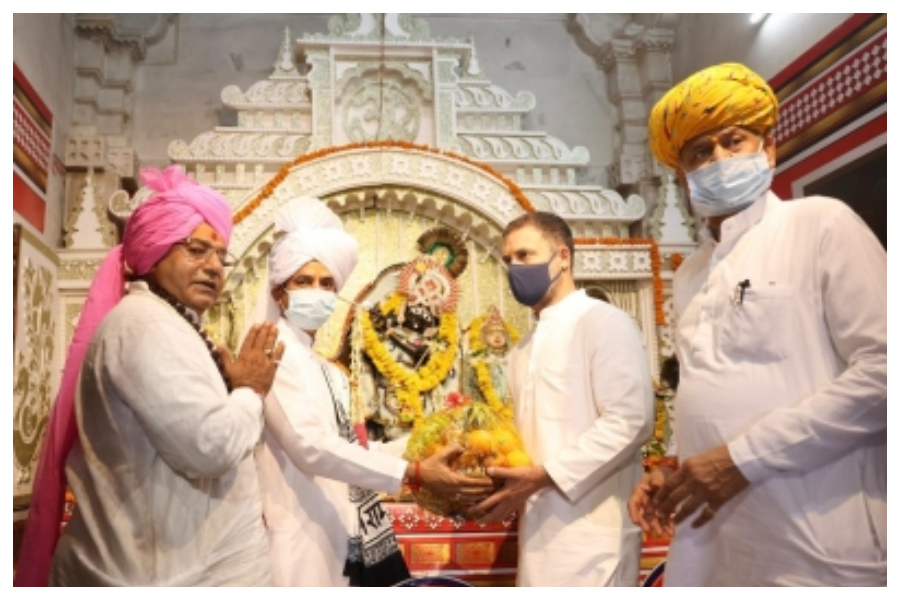
After the Congress’ three-day Chintan Shivir held in Udaipur, party leader Rahul Gandhi on Monday offered prayers at the Beneshwar Dham in Rajasthan’s tribal-dominated Banswara district.
He first offered prayers at the Beneshwar Dham and then laid the foundation stone of the Beneshwar Dham High Level Bridge.
He also addressed a gathering where he greeted people on the occasion of Buddha Purnima.
Sources have said that Rahul Gandhi’s visit just after Chintan Shivir gives out a strong political message and also reveals Congress’ concerns as the AAP in Gujarat has formed an alliance with the Bharatiya Tribal Party (BTP).
Tribals have been the traditional vote bank of Congress, however, after the BJP, local parties have also made a dent in it in Rajasthan.
Congress suffered heavy losses in the 2018 Rajasthan Assembly and 2019 Lok Sabha elections after the rise of the BTP in the tribal-dominated seats of Banswara-Dungarpur, Pratapgarh, and Udaipur.
BTP won two seats in the 2018 polls.
Congress leaders say that the BTP-AAP alliance in Gujarat can cause big losses to the party and hence Rahul Gandhi’s visit.
Rahul Gandhi held meetings in Banswara before the 2018 Rajasthan Assembly and 2019 Lok Sabha elections.
When Sachin Pilot was PCC chief of Rajasthan, rallies of Rahul Gandhi were held in Banswara, Dungarpur, and Beneshwar.
This gathering at Beneshwar Dham is considered important with respect to making a mark in tribal area. During the Lok Sabha elections, a meeting was held in Beneshwar in April 2019, but Congress did not get a single seat.
Sonia Gandhi has also had held meetings in this tribal-dominated district.


Crime
Mira-Bhayandar Crime: 40-Year-Old Housekeeper Brutally Stabbed To Death Inside Residential Complex In Kashimira, Probe Underway

Mira Bhayandar, March 26: The Kashimira locality in Mira-Bhayandar was gripped by fear on Tuesday night following the brutal murder of a 40-year-old female housekeeper. The victim, identified as Suman Nawachi, was repeatedly stabbed with a sharp-edged weapon inside a flat within a prominent residential complex.
Suman Nawachi worked as a housekeeper for several families in the Chandesh Accord residential complex. The attack took place in a flat located in Building Number 27.
According to police reports, the assailant launched a violent attack, stabbing Suman twice in the abdomen, once in the chest, and once across the neck.
Despite being rushed immediately to Gurukrupa Hospital, doctors declared her dead on arrival due to the severity of her injuries.
Upon receiving the alert, Kashimira Police arrived at the scene along with a forensic team to secure the area and collect evidence. Police have seized the weapon used in the crime from the spot.
Investigating officers are currently scanning footage from all CCTV cameras in and around the complex to identify the suspect. Police are recording statements from neighbours and residents to determine if anyone witnessed the entry or exit of the attacker.
The cold-blooded nature of the crime has sent shockwaves through the Kashimira neighbourhood. Local authorities have increased patrolling in the area to reassure panicked residents.
“We are conducting the investigation with the utmost seriousness. Our primary goal is to uncover the motive behind this heinous act and apprehend the perpetrator at the earliest,” stated a senior police official.
While the motive remains unclear, forensic experts are analysing every aspect of the crime scene to provide leads.
Washington, March 25: Top American lawmakers and experts have warned that the country’s heavy reliance on foreign critical minerals, especially those from China, poses a direct threat to national security, and called for urgent steps to build resilient domestic supply chains.
At a House subcommittee hearing on Wednesday, Congressman Paul Gosar said the “very security of our nation relies heavily on a steady input” of minerals essential for defence systems, electronics and advanced technologies. He pointed to copper, rare earths and lithium as key inputs for fighter jets, missiles and batteries.
Gosar warned that the US remains heavily reliant on imports. “We import half of our supply of 20 of the 60 minerals… and we are entirely reliant on the importation of 13,” he said, adding that China dominates global processing and refining capacity.
Lawmakers from both parties agreed that the supply chain vulnerability has strategic implications. Representative Jared Huffman said the issue was not just about resources but governance, alleging that billions in federal investments lacked transparency and oversight.
Expert witnesses told the panel that China has effectively “weaponised” mineral supply chains. Gracelin Baskaran said the key question was no longer whether China controls critical minerals, but how quickly the US can build alternative supply chains.
“The question is what the United States does about it,” she said, calling for coordinated industrial policy and stronger alliances to secure supply.
Geologist Simon Jowitt said the US has “huge unrealised mineral potential” but remains underexplored due to limited geoscientific data and slow permitting. He stressed that exploration is the foundation of any supply chain and can deliver significant economic returns.
Jowitt also underscored the need for a full domestic ecosystem. “There’s no point in just having mineral deposits without having an entirety of a supply chain,” he said, arguing that processing and refining must accompany mining to ensure security.
National security expert Abigail Hunter highlighted structural challenges, noting that supply chains take years to build while disruptions can occur “overnight”. She said China’s control over processing creates a “choke point” that allows it to influence global markets rapidly.
“Capacity must be built in advance,” Hunter said, warning that relying on imports during crises could leave US defence systems vulnerable.
At the same time, watchdog groups raised concerns about government investment strategies. Faith Williams said federal equity stakes in mining firms could create conflicts of interest and reduce transparency.
“Corruption or the appearance thereof is bad for business,” she said, cautioning that unclear rules could distort markets and increase costs for taxpayers.
Despite political divisions, there was broad agreement that critical minerals underpin both economic growth and military capability. Lawmakers cited their role in everything from semiconductors and smartphones to advanced weapons systems.
The hearing also highlighted the economic stakes. Mining contributes billions to the US GDP and supports nearly two million jobs, with wages significantly above the national average.
Experts said solutions would require a combination of domestic production, allied cooperation and demand-side policies. Baskaran urged creating a “market of 2.6 billion consumers” among US allies to counterbalance China’s dominance.
The issue has gained urgency amid rising geopolitical tensions and growing demand for minerals driven by clean energy, defence modernisation and digital infrastructure, placing supply chain resilience at the centre of US strategic planning.
Maharashtra
Mumbai: Controversy while removing the idol of Lord Shiva in Malad! Slogans were raised from both sides, case registered, situation peaceful, security tightened
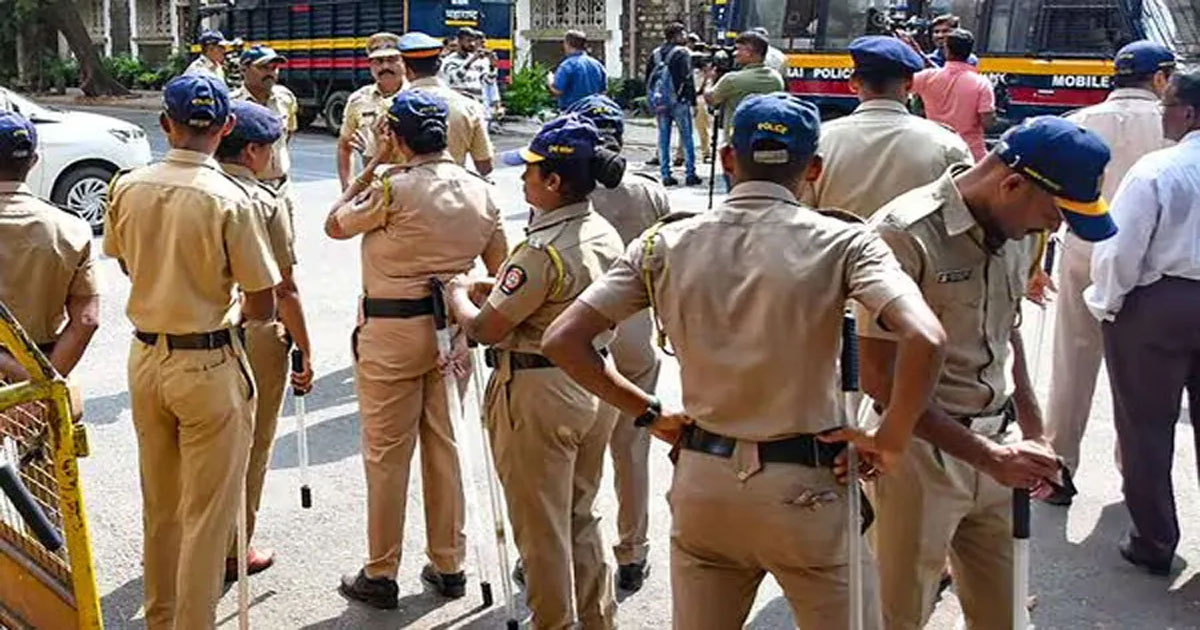
Mumbai: Tension erupted in the Malad area of Mumbai last night when some miscreants created a ruckus near the Jama Masjid, after which the situation deteriorated. The police brought the situation under control. Slogans were raised from both sides. On one side, slogans of Takbir Allah Akbar were raised, while on the other, slogans of Jai Shri Ram were raised. Last night, Isha prayers were being offered at the Jama Masjid. Meanwhile, noise was heard while the idol of Lord Ram was being carried. The worshippers objected. After that, the situation deteriorated. The police brought the parties under control and now the situation is peaceful here, but tension persists. The police have tightened security in all sensitive areas including the Jama Masjid. Since the Ram Navami procession is taken out in the evening and to ensure that no trouble occurs during the Ram Navami procession and Shobhayatra, forces have been deployed everywhere. Mumbai Police Commissioner Devin Bharti has issued strict instructions to the police in this matter, while the police have registered a case against those who created the dispute and the investigation is underway. Violence broke out on Ram Navami three years ago in the Malad area of Mumbai, and after that, miscreants are again trying to spoil the atmosphere here. Last night too, an attempt was made to spoil the atmosphere here, but the police foiled it. Now the situation is peaceful. The police have also warned of action against those spreading rumors and those sharing controversial videos on social media. Along with this, the police are investigating the matter to see if the atmosphere was spoiled. After the communal conflict, the police had identified sensitive areas and also held meetings of the Mohalla Committees and Peace Committees. Along with the installation of CCTV footage in Malad, the procession was monitored by drones. The police have also claimed that the procession ended peacefully due to the presence of forces at Chappa Chappa.

Mira-Bhayandar Crime: 40-Year-Old Housekeeper Brutally Stabbed To Death Inside Residential Complex In Kashimira, Probe Underway

China’s grip on key minerals sparks US alarm; lawmakers demand swift supply-chain fixes

Mumbai: Controversy while removing the idol of Lord Shiva in Malad! Slogans were raised from both sides, case registered, situation peaceful, security tightened

Amendment to Section 154 of the Mumbai Municipal Corporation Act, 1888 for collection of property tax, Bill passed in Legislative Assembly and Council

India has 60 days of crude reserves, 1 full month of LPG supply firmly arranged: Govt

Married Mumbai Woman Mocked In Andheri Society Over ‘Lift Kissing’ CCTV Video, Files Police Complaint

Mumbai: JBCN International School In Borivali Gets Bomb Threat, Search Reveals Hoax, Students Safe

Mahayoti’s big gift to the people of Mumbai… Now there is no tax for houses up to 500 square feet, the Municipal Corporation has increased this limit to 700 square feet.

LPG Crisis In Maharashtra: Cyber Crime On Rise Amid Shortage, 2 Women Lose ₹4 Lakh In ‘Gas Update’ Online Scam In Kalyan-Dombivli

Rashmika Mandanna-Vijay Deverakonda Wedding: Virosh Turn Modern Day Prince & Princess For Their Dreamy Sangeet Ceremony
-

 Crime4 years ago
Class 10 student jumps to death in Jaipur
-

 Maharashtra1 year ago
Mumbai Local Train Update: Central Railway’s New Timetable Comes Into Effect; Check Full List Of Revised Timings & Stations
-

 Maharashtra1 year ago
Mumbai To Go Toll-Free Tonight! Maharashtra Govt Announces Complete Toll Waiver For Light Motor Vehicles At All 5 Entry Points Of City
-

 Maharashtra1 year ago
False photo of Imtiaz Jaleel’s rally, exposing the fooling conspiracy
-

 National News1 year ago
Ministry of Railways rolls out Special Drive 4.0 with focus on digitisation, cleanliness, inclusiveness and grievance redressal
-

 Maharashtra1 year ago
Maharashtra Elections 2024: Mumbai Metro & BEST Services Extended Till Midnight On Voting Day
-

 National News2 years ago
J&K: 4 Jawans Killed, 28 Injured After Bus Carrying BSF Personnel For Poll Duty Falls Into Gorge In Budgam; Terrifying Visuals Surface
-

 Crime1 year ago
Baba Siddique Murder: Mumbai Police Unable To Get Lawrence Bishnoi Custody Due To Home Ministry Order, Says Report