
National News
Punjab CM appears in court over rioting case


Punjab Chief Minister Bhagwant Mann and his Cabinet colleague Harpal Cheema on Saturday appeared in the court of Chief Judicial Magistrate Aman Inder Singh here in a two-year-old rioting case.
The AAP leaders led a party protest in January 2020 against the then Congress government led by Capt Amarinder Singh against the power tariff hike.
However, the court had granted exemption from appearance to another Cabinet minister Aman Arora.
A case was registered against AAP leaders, including Mann and Cheema, on charges of pelting Chandigarh Police with stones in a demonstration on January 10, 2020.
They were booked on charges of rioting, assault and obstructing police from performing their duties near the MLA hostel in Sector 4, Chandigarh.
In the previous hearing on March 23, Mann, Cheema and other leaders were asked to appear before the Chief Judicial Magistrate court.
Mann was represented by senior advocate Anmol Rattan Sidhu and advocate Pratham Sethi.
As per the police, half a dozen police personnel were injured when AAP supporters allegedly started throwing stones at them.


National News
Congress, SP leaders to fight together in UP polls, BJP says alliance will not yield results

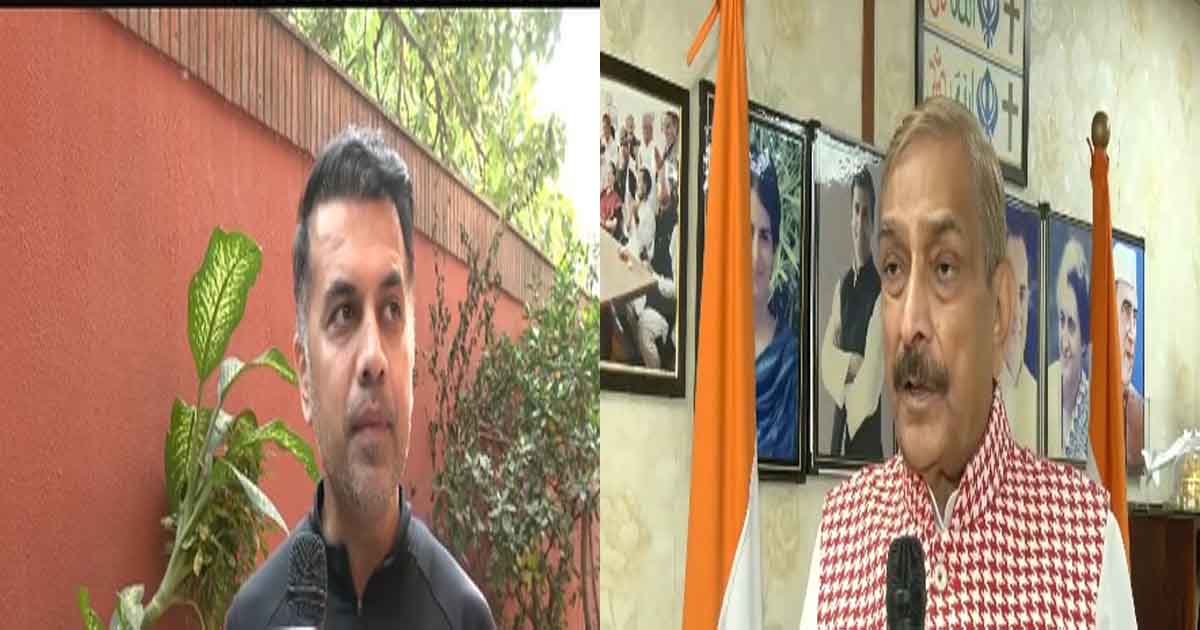
Congress and Samajwadi Party (SP) leaders on Sunday expressed confidence about contesting the upcoming Uttar Pradesh Assembly elections together, even as discussions over seat-sharing continue, while the Bharatioya Janata Party (BJP) questioned the viability of the alliance and said the coming together of more opposition parties would benefit it.
Speaking to media, Congress leader Abhishek Dutt said the party’s organisational preparations were underway across all 403 Assembly constituencies and that the final decision on seat-sharing would be taken by the senior leadership after discussions with SP Chief Akhilesh Yadav.
“Look, my responsibility and that of my fellow co-in-charges is to work across all 403 Assembly constituencies. Whatever decision the party takes regarding the number of seats, our senior leaders will discuss it with Akhilesh Yadav. Once a decision is made, we will all work together across the constituencies. We are going to defeat the BJP together,” Dutt added.
He also criticised parties that, according to him, extend support to the BJP during elections but remain absent afterwards.
“It is not right to appear only during elections and disappear afterwards,” he added.
Congress MP Pramod Tiwari welcomed Akhilesh Yadav’s remarks about the two parties contesting the elections together, saying their coordination in Parliament had demonstrated the benefits of working jointly.
“Look, I will not say anything about the numbers or which seats, but I welcome Akhilesh ji’s statement that both of us will contest together. We fought together in Parliament and benefited from it. We will fight together in the Uttar Pradesh Assembly polls and form the government in the state,” Tiwari said.
Referring to the previous electoral performance of the Congress-SP alliance, the Congress MP added that the two parties had secured 47 seats together and expressed confidence about their prospects if they remained united.
“Look, our (Congress’) alliance with Akhilesh ji’s party won 47 seats; if it is the same ratio, then things have gone worse. We will definitely win if we are in alliance,” Tiwari said.
Former Union Minister and Congress leader Salman Khurshid said discussions between the two parties were underway and expressed hope that they would arrive at an arrangement acceptable to both sides.
“I am not privy to what is happening. Akhilesh Yadav and the Congress leadership are in conversation—in an honest conversation. And I hope in the honest conversation, if we have an honest arrangement, then we will stand to win that election in Uttar Pradesh. I just pray and hope for the best,” Khurshid added.
BJP spokesperson T.R. Srinivas, speaking to media, said the alliance would not pose a challenge to the BJP, saying that Congress had a weak record in direct electoral contests against it.
“The more parties come together, the better for us. Congress has a poor record in direct contests against the BJP, and our strike rate is higher in such fights. Akhilesh Yadav does not fully trust Congress to win seats on its own. This alliance will not produce any results, as seen in the past, because both the Congress and Samajwadi Party try to divide people based on caste lines and religious lines,” Srinivas added.
He added that voters would assess the BJP government on its record in development, investment, employment generation and infrastructure.
Shiv Sena spokesperson Anand Dubey also questioned the Congress’ bargaining position, saying that the party had not formed a government in Uttar Pradesh for several decades.
“Congress party has not been in power in Uttar Pradesh since 1989. That means it has been nearly 36–37 years since the Congress party had a Chief Minister there. And not only do they not have a Chief Minister, they are not even the main Opposition party. So, when they have nothing at all, does it hold any meaning no matter how many seats they demand? It has no meaning,” Dubey said.
NCP-SP National Spokesperson Naseem Siddiqui, meanwhile, defended coalition politics as an integral part of Parliamentary democracy but questioned the reported demand for 181 Assembly seats by the Congress for the upcoming Uttar Pradesh polls scheduled early next year.
Referring to the coalition governments led by former Prime Minister Atal Bihari Vajpayee and the current government under Prime Minister Narendra Modi, Siddiqui said alliances between parties with different ideologies were a legitimate feature of democracy.
“At the time of Atal Bihari Vajpayee, the government was formed with the help of a 22-party coalition; even today, at the time of PM Modi, such coalitions are forming the government. Coalition in democracy is valid. This is part of democracy, that different ideologies come together to form the government,” he added.
Siddiqui said the Samajwadi Party remained the largest political force in Uttar Pradesh and added that the Congress should seek a seat allocation proportionate to its organisational strength.
“In Uttar Pradesh, the Samajwadi Party is the biggest force, but I don’t think that Congress asking for 181 Assembly seats is justified, because Congress doesn’t have that strong a hold in Uttar Pradesh. They can ask for 50 or 100, but not 181,” he added.
The Congress and Samajwadi Party are currently discussing seat-sharing arrangements for the upcoming Uttar Pradesh Assembly elections.
The Congress is reported to have sought 181 seats, while the Samajwadi Party is understood to be expecting the party to settle for around 50 to 60 constituencies.

At least two persons were killed and four others injured in a collision between a car and an auto-rickshaw in Telangana Vikarabad district on Sunday, police said.
A car and an auto-rickshaw collided head-on on the Tunkimetla-Kosgi road near Nandarpur in Bomraspet mandal.
One of the occupants — each of the car and auto-rickshaw — died on the spot, while four others were injured. The injured were taken to the Government Hospital at Pargi. The condition of one of the injured is stated to be critical.
The deceased include B. Srisailam (28), who was to get married in three days. He was returning to his village in a car after shopping in Hyderabad, where he was employed at a hotel.
The car apparently lost control after a tyre puncture and rammed into an auto-rickshaw coming from the opposite direction.
Migrant workers from Bihar were travelling by the auto-rickshaw. One of them died in the accident, while the condition of another is stated to be critical.
Srisailam, who hailed from Lagacharla village in Vikarabad district, was scheduled to enter wedlock with a woman from his village. The wedding was to take place in the temple town of Tirupati on November 18.
Meanwhile, in another accident, two people were injured in Shivrampalli in Hyderabad.
According to police, a bike was run over by a Road Transport Corporation (RTC) bus. A man riding the bike and a woman, who was sitting pillion, were injured. They were shifted to Osmania General Hospital.
The two-wheeler involved in the accident is reported to be a bike taxi.
Police registered a case and took up further investigation.
In another incident, five private buses were gutted in a fire in the early hours of Sunday in near Bodrai in Bowrampet on the outskirts of Hyderabad.
The accident occurred under the limits of the Dundigal police station.
The fire broke out in buses parked close to each other. The flames quickly spread from one vehicle to another, engulfing three buses completely. Two more vehicles were also caught in the fire.
Fire personnel rushed to the spot and launched efforts to bring the blaze under control. The cause of the fire is yet to be ascertained.
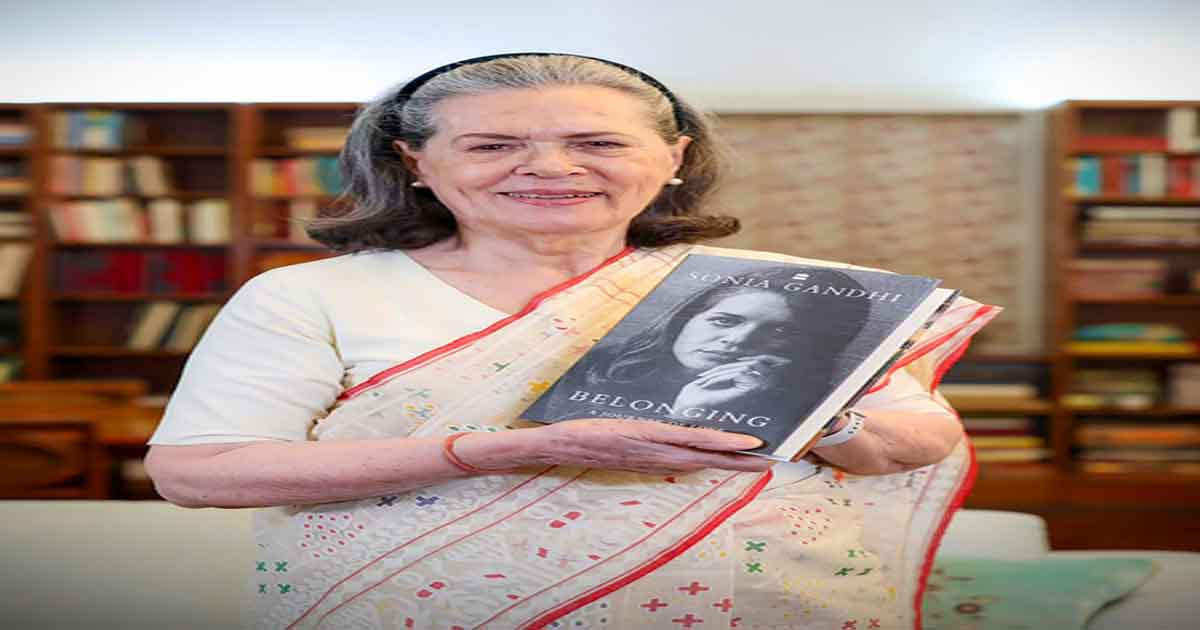
There is something quite intriguing about political memoirs, especially when they concern one of the most powerful political families in the country. The Gandhi family and its leaders have, over the decades, guarded their political secrets, maintained a carefully cultivated public image and kept internal differences, whether within the family or the party, behind closed doors.
But suddenly, one of the most powerful members of the family has decided to be candid and put her life story on paper.
Sonia Gandhi’s recently published memoir, ‘Belonging: A Journey of Love’, has brought out several uncomfortable questions about the family, the Congress party, its leadership and the way power was actually exercised during the UPA years, etc.
Equally interesting is the timing of its release, coming at a time when the family has been trying to build narratives, both political and personal, around Rahul Gandhi.
The irony is that a party which has repeatedly accused its political opponents of distorting history is now finding itself answering questions arising from the recollections of its own first family.
Whether the memoir is also an attempt to invigorate the party’s somewhat sullen cadres or build an aura around Rahul Gandhi, who has lately adopted an increasingly aggressive political posture on several issues, is open to interpretation. Whatever the intention, the book has raked up considerable controversy.
What makes the revelations particularly interesting is that they concern people who were not ordinary political functionaries but some of the most powerful names in the Congress establishment.
Take the case of former President Pranab Mukherjee. Sonia Gandhi has recalled a conversation with him in 2010. “On one occasion, in 2010, I think after expressing his frustration, he shocked me with the suggestion that perhaps it was time for a change at the top, which I understood as a hint of his long-held desire to become Prime Minister,” Sonia Gandhi writes in her book.
She understood this as his long-held desire to become Prime Minister, and the suggestion apparently came as a shock to her. Now, there is nothing unusual about a senior political leader aspiring to become Prime Minister. In fact, it would be rather surprising if someone with Pranab Mukherjee’s experience, political standing and years in government did not harbour such an ambition.
However, it was the reaction of his daughter, Sharmistha Mukherjee, that made the episode even more interesting. Her response reflected a certain uneasiness within the Gandhi family when it came to senior leaders asserting their own political ambitions.
Questioning why Sonia Gandhi was shocked by her father’s ambition, Sharmistha pointed out that Pranab had earned his position through decades of hard work and merit, without anybody serving him political positions on a platter because of dynastic entitlements. She even raised the uncomfortable question of whether Sonia was surprised that somebody outside the Gandhi-Nehru family could aspire to become the Prime Minister.
That was quite a pointed observation. And it has brought back a question that the Congress party has never been particularly comfortable answering. Does the party genuinely provide an equal opportunity to its senior leaders to rise to the top, or does the Gandhi family continue to remain the final authority on who gets what position and how far somebody can go?
The memoir also revisits another controversy that has followed Sonia Gandhi for years — whether she was the real power behind the Manmohan Singh government. Sonia has maintained that there was a clear division of responsibilities, with former PM Manmohan Singh running the government and her taking care of the party. She has rejected allegations that she interfered in official files, administrative matters, or appointments.
However, the political reality of the UPA years was that Sonia Gandhi was not just another Congress President. She was the chairperson of the UPA and the most powerful political figure in the ruling establishment. The National Advisory Council, the coordination mechanism between the party and the government, and the regular meetings of senior leaders were all part of a political arrangement in which her influence was undeniable.
There is a difference between exercising political influence and interfering in government functioning. But the perception that the Prime Minister’s authority was often overshadowed by the Congress leadership did not emerge out of thin air. It became one of the most persistent political criticisms of the UPA government. Sonia’s explanation may put forward her side of the story, but it is unlikely to put the controversy to rest. In fact, the book somehow deepens the thought.
The memoir has also reopened the debate over some of the most difficult chapters in Congress’ history, including the Emergency imposed by Indira Gandhi in 1975 and the anti-Sikh riots of 1984. Sonia describes the riots as a tragic episode and speaks of the failure to deliver timely justice. Her account has drawn criticism, particularly over the manner in which the responsibility and role of the Congress leadership are presented. She has also sought to defend her husband, Rajiv Gandhi, who succeeded his mother Indira Gandhi as the Prime Minister after her assassination in 1984, against allegations of complicity in the events that followed.
Even more interesting is her account of the Emergency and the manner in which she appears to place much of the blame for its excesses on Sanjay Gandhi, her brother-in-law. It is also interesting how she approaches the bitter family relations involving her sister-in-law, Maneka Gandhi. The differences between the two branches of the family, which eventually became public, add another dimension to the account of a family that was not only at the centre of Indian politics but also had its share of internal conflicts.
Political memoirs are, after all, personal accounts. Nobody should expect a leader to write a chargesheet against herself or her own family. But when the subject is a political party that has governed India for decades, its history cannot be treated as a purely family matter.
The events, decisions and personalities involved have shaped the country’s political course and therefore deserve public scrutiny.
Many questions remain unaddressed in the memoir. What about the Quattrocchi-Bofors controversy, the various scams that dogged the UPA years, the questions surrounding her voter ID, or the allegations of minority appeasement in the Babri Masjid and Batla House episodes, or the 2002 Gujarat riots? While she said the riots deeply affected her, Sonia failed to mention the plight of the Kashmiri Pandits who were forced to flee the Valley in the early 1990s. She talked about Kashmiri traditions and delicacies, but omitted the displacement and suffering of Kashmiri Hindus. These are issues that have been part of the country’s political debate for years, and readers may well have expected some answers.
And this is precisely where Congress finds itself in an uncomfortable position. For years, the party has spoken about its democratic traditions, institutional values and glorious political legacy. Questions about internal democracy, leadership succession and the extraordinary influence of one family have continued to follow it.
The family, too, has guarded its secrets rather well over the decades. But Sonia’s memoir now provides an account that, inevitably, represents only one side of the story. There will be others who may have a very different recollection of the same events.
Congress may have guarded its family secrets for years, but political memoirs have a way of bringing old conversations back into public life. And Sonia Gandhi’s book has sought to layer more secrets, as it provides a guided perspective and glimpse.

Congress, SP leaders to fight together in UP polls, BJP says alliance will not yield results

Two killed after car collides with auto-rickshaw in Telangana Vikarabad

FairPoint: Sonia’s memoir opens Gandhi family closed doors, but leaves much hidden

India to get preferential access in US market under trade pact: Piyush Goyal

Iran’s IRGC says drones hit US air defence radar station in Bahrain

Attack on democratic rights: INDIA Bloc leaders on detentions of anti-ECI protestors

Congress trying to protect 3 crore Bangladeshi infiltrators in voter list: HM Shah

Online betting: ED conducts searches at 20 premises in Mumbai, Pune, Hyderabad

Red Fort car blast probe exposes blueprint for spread of terror modules across India

Tiger Shroff attack: Bihar family denies accused is their son
-

 Crime4 years ago
Class 10 student jumps to death in Jaipur
-

 Maharashtra2 years ago
Mumbai Local Train Update: Central Railway’s New Timetable Comes Into Effect; Check Full List Of Revised Timings & Stations
-

 Maharashtra2 years ago
Mumbai To Go Toll-Free Tonight! Maharashtra Govt Announces Complete Toll Waiver For Light Motor Vehicles At All 5 Entry Points Of City
-

 Maharashtra2 years ago
False photo of Imtiaz Jaleel’s rally, exposing the fooling conspiracy
-

 National News2 years ago
Ministry of Railways rolls out Special Drive 4.0 with focus on digitisation, cleanliness, inclusiveness and grievance redressal
-

 Maharashtra2 years ago
Maharashtra Elections 2024: Mumbai Metro & BEST Services Extended Till Midnight On Voting Day
-

 National News2 years ago
J&K: 4 Jawans Killed, 28 Injured After Bus Carrying BSF Personnel For Poll Duty Falls Into Gorge In Budgam; Terrifying Visuals Surface
-

 Crime2 years ago
Baba Siddique Murder: Mumbai Police Unable To Get Lawrence Bishnoi Custody Due To Home Ministry Order, Says Report