
General
Pune trio goes on a ‘long drive’ – a record 21,000 km through borders of India

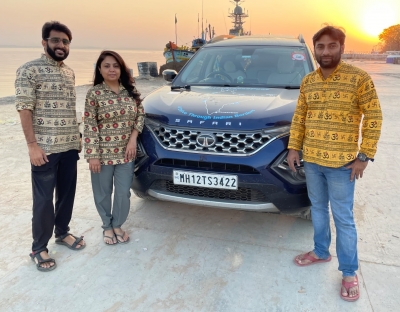
Creating a new record, a Pune couple and their friend – all software engineers-cum-adventure lovers – went on a ‘long drive’ in an SUV, covering a whopping 21,000 km in 70 days across the entire boundary of India, from east to west, north to south.
They are — Jaykumar Anadkat, his wife Pooja Padiya-Anadkat, both from Gujarat, and their friend Sonesh Mehra from Rajasthan, who are the co-founders of the adventure club, ‘PlacesAroundPune’.
“We have done many activities like hiking, trekking, cycling, mountaineering, scuba-diving etc., but this time we wanted to do something unique and fulfilling. So we charted out this trip — “#MapMyCountry” — in our Tata Safari SUV, and we hope to make it to the record books,” said Jaykumar, after the trio returned home late on Monday.
The trio, all aged 35, embarked on their journey on February 27 from Magarpatta and returned to the same location on May 8, zooming through 26 states, several Union Territories, 52 major cities and over 250 important travel destinations along the boundary and borders of India.
“We went around the country’s periphery, all the border states and drew the India map through the car route, starting in a clockwise direction from Maharashtra,” said Mehra.
From Maharashtra, they went to Gujarat (Dwarka and Koteshwar temples in the extreme western parts of India), Rajasthan, Punjab, Haryana, Jammu & Kashmir, Ladakh, Himachal, Uttarakhand, Uttar Pradesh, Bihar, West Bengal, the Northeastern states like Kaho in Arunachal Pradesh, the first village of India in the east, and Danushkodi Rameshwar and Kanyakumari as the southernmost tip.
“We touched six international borders — Pakistan, China, Nepal, Bhutan, Bangladesh and Myanmar. We learnt a lot about the different people of India, their cultures and lifestyles, the weather systems, the abundant beauty of different parts of the country. It was a very enriching drive indeed,” said Pooja.
The ultra-long drive took them from 45-degree Celsius in Rajasthan deserts to the -5-degree Celsius in snowy Kashmir, braving hailstorms in Himachal Pradesh and Nagaland, torrential rains in Assam, and the humid weather in the southern states. Though they carried suitable clothes, many a times they had to hunt for more locally in order to survive.
The trio recalls speeding through some of the wildest and densest forests akin to a jungle safari, off-roading, dusty dry desert sands, boat-rides in mangrove forests, traversing snowy mountains roads, or gingerly driving through bamboo bridges, over deep valleys and turbulent rivers in different parts of India, soaking in the first sunrise in the east and the colourful sunsets in the west and southern beaches.
They also joined some tribal and traditional cultural festivals, wearing local costumes, singing, dancing or prancing to their tunes, and gulping cuisines ranging from the weirdest to delicacies, cooking for themselves on roadside fires, or just gobbling some fruits when nothing was available or dhabas were shut.
There are literally miles of many memories, including some a bit spooky, that the trio returned with — like one excited gentleman from Punjab, Ripu Daman, who contacted them through Facebook and happily hosted them with his family for a night.
In Nagaland, they met a 95-year-old member of a tribe of erstwhile ‘headhunters’, who still proudly wears a garland with a few heads on it that he claimed to have acquired many decades ago!
Today, Jaykumar, Pooja and Sonesh are extremely thrilled on completing their ‘long drive’ without any untoward incident, something they will cherish for long.


Mumbai: Yesterday (October 7, 2026), the ‘N’ Ward office of the Mumbai Municipal Corporation carried out a demolition drive targeting 28 structures in Ghatkopar (West) that were affected by the road-widening project between Jhunjhunwala College and the Andheri-Ghatkopar Link Road.
This demolition campaign was conducted under the supervision of Assistant Commissioner (‘N’ Ward) Jaydeep More.
Adequate police security was deployed alongside municipal officers and staff during the operation.
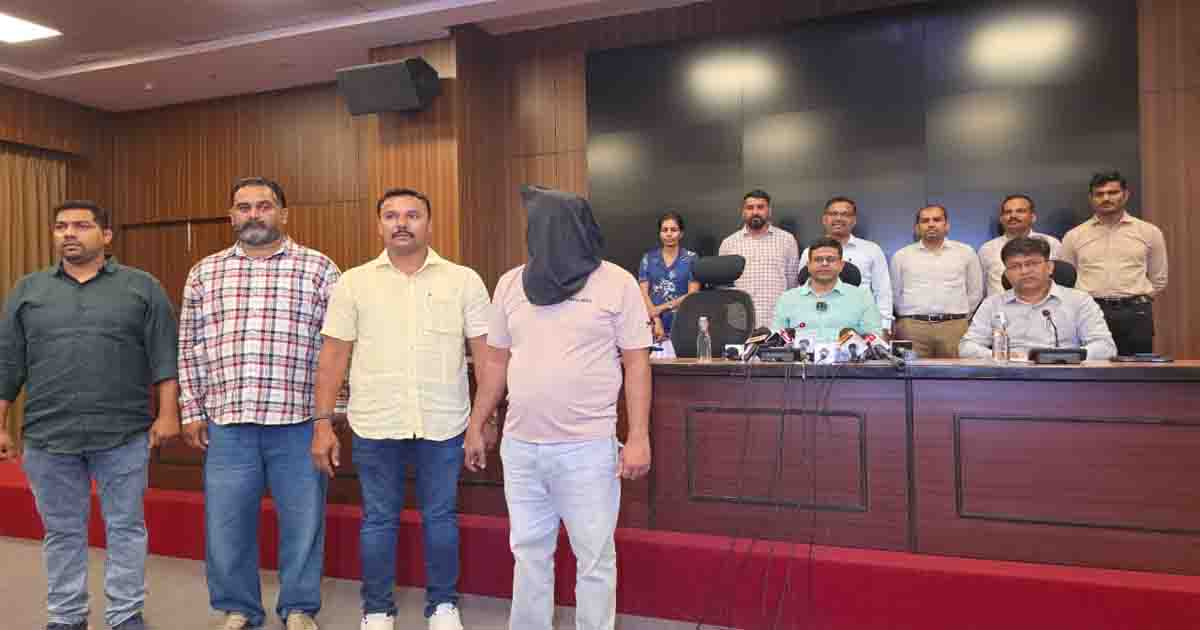
In a case involving the defrauding of a 72-year-old senior citizen in Mumbai on August 13, an unidentified caller—posing as Dinesh Kumar, a Senior Manager at Bank of India—gained the victim’s trust by promising to facilitate the issuance of a Senior Citizen Card. The caller sent an APK file named “Senior Citizen Card http://Verification.apk” to the complainant’s WhatsApp and coerced them into entering personal and bank debit card details, resulting in the misappropriation of ₹5,62,000. Initially, the Byculla Police Station registered a case (No. 497/26) under Sections 318(4) and 319(2) of the BNS and Sections 66(C) and (D) of the Information Technology Act, 2000. While the Property Cell of the Mumbai Crime Branch was conducting a parallel investigation, senior officials ordered the transfer of the case to the Crime Branch; it was subsequently re-registered as Case No. 927/2026 for further investigation.
A thorough technical analysis of the aforementioned APK file was conducted, leading to the identification and arrest of the accused—a 36-year-old male software developer and resident of Madhya Pradesh—who was responsible for developing the fraudulent APK file. During a raid on the accused’s office in Madhya Pradesh, authorities recovered a pen drive, a CPU, three hard disks, a Wi-Fi router, and three mobile phones. Preliminary technical analysis revealed that the accused was utilizing servers from various service provider companies. Investigation confirmed that the accused had created and sold a total of 2,805 malicious APK files to other cybercriminal gangs. These files were used to defraud 9,673 people across India. Complaints regarding these incidents have been registered on the cyber helpline number 1930—specifically 1,074 nationwide, 143 in Maharashtra, and 36 in Mumbai—revealing a total fraud amount of ₹15.75 crore. Cases have been cracked involving 88 incidents across India, 8 in Maharashtra, and 5 in Mumbai.
This successful operation was executed by a team comprising Police Commissioner Devin, Joint Police Commissioner Anil Kumbhare, Additional Commissioner Krishna Kant Upadhyay, DCP (Crime) Raj Tilak Roshan, and the Crime Branch. DCP Raj Tilak Roshan stated that this action was taken in response to fraud targeting the elderly under the guise of issuing senior citizen cards; the police also regularly conduct awareness campaigns among the elderly regarding this issue.
Maharashtra
Mumbai CSMT: Case Filed Against Garjana Morcha Over Demand to Scrap SIR; Nitesh Rane Defends Action, Calls for Aditya Thackeray Passport to Be Seized

Mumbai: The Mumbai Police have registered a case against the organizers of the ‘Garjana Morcha’ (Roaring Rally), which was held without permission at Azad Maidan near the BMC headquarters. The protest, organized by Shiv Sena chief Uddhav Thackeray and MNS chief Raj Thackeray, saw the participation of party workers from across Mumbai and the state. During the event, demands were raised to cancel the FIR, and Raj Thackeray—in his address—termed the FIR itself illegal; he also proposed a boycott of the elections. The Mumbai Police have registered the case under Sections 223, 189, and 190 of the BNS. Authorities stated that the case was filed due to the unlawful assembly of a crowd. The Azad Maidan Police have initiated an investigation into the matter, and the case has been registered against the organizers as well as other leaders. A case must be registered for an illegal protest: Nitesh Rane
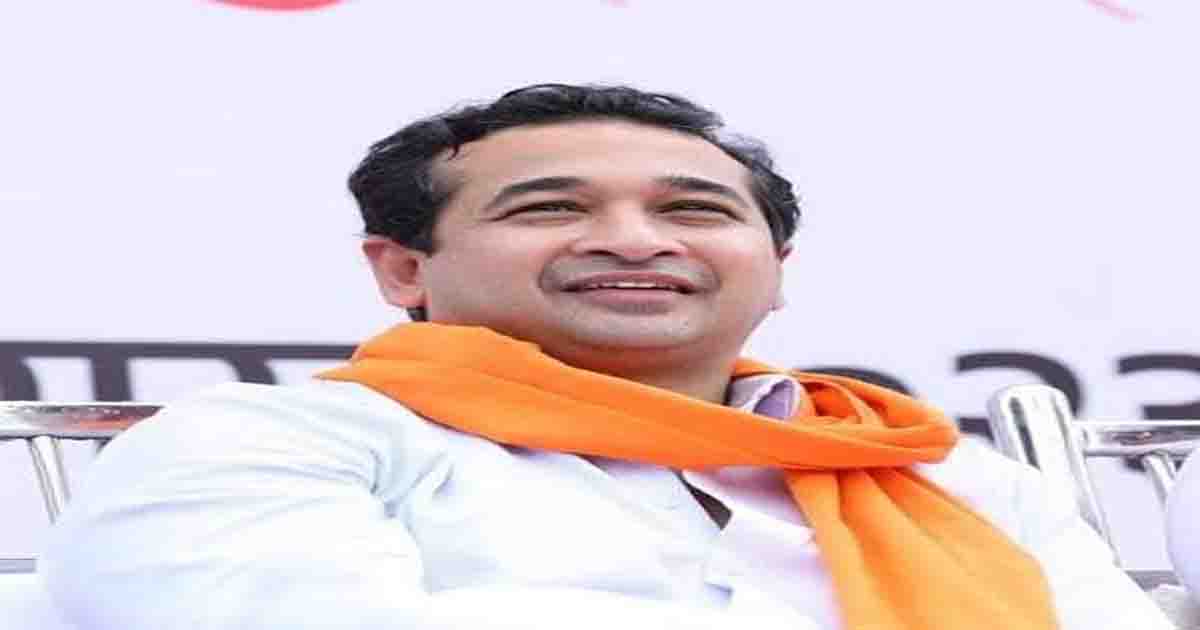
Following the police case registered after the Azad Maidan protest, BJP leader and minister Nitesh Rane stated that filing a case for an unauthorized, illegal protest is mandatory because the Constitution of Babasaheb Ambedkar prevails here. He alleged that the protest was held for “Vote Jihad.” Furthermore, in a vitriolic outburst, Rane noted that Aaditya Thackeray was absent from the protest organized by Uddhav and Raj Thackeray; claiming Aaditya knew action would be taken against him and might flee, Rane demanded that his passport be confiscated.

Regime change certain in 2027: Akhilesh lashes out at BJP, Election Commission

Newlywed poisons husband, 3 family members in Maharashtra Jalgaon

Nana Patekar death: Final post-mortem report out, rules out foul play

Gujarat Police nab three more accused in Punjab’s Mad Sandhu murder case

FairPoint: Rahul-Priyanka aggressive street shows in Oppn power game

Gift to President Putin part of PM Modi bid to globally display India’s heritage

PM Modi’s warm camaraderie with Putin, Xi on full display at BRICS Summit

INDIA bloc begins protest march against ECI

Complaint against Netflix & Mukesh Chhabra for inappropriate language on ‘India’s Got Latent 2’

Maha Congress stages agitation against Gyanesh Kumar
-

 Crime4 years ago
Class 10 student jumps to death in Jaipur
-

 Maharashtra2 years ago
Mumbai Local Train Update: Central Railway’s New Timetable Comes Into Effect; Check Full List Of Revised Timings & Stations
-

 Maharashtra2 years ago
Mumbai To Go Toll-Free Tonight! Maharashtra Govt Announces Complete Toll Waiver For Light Motor Vehicles At All 5 Entry Points Of City
-

 Maharashtra2 years ago
False photo of Imtiaz Jaleel’s rally, exposing the fooling conspiracy
-

 National News2 years ago
Ministry of Railways rolls out Special Drive 4.0 with focus on digitisation, cleanliness, inclusiveness and grievance redressal
-

 Maharashtra2 years ago
Maharashtra Elections 2024: Mumbai Metro & BEST Services Extended Till Midnight On Voting Day
-

 National News2 years ago
J&K: 4 Jawans Killed, 28 Injured After Bus Carrying BSF Personnel For Poll Duty Falls Into Gorge In Budgam; Terrifying Visuals Surface
-

 Crime2 years ago
Baba Siddique Murder: Mumbai Police Unable To Get Lawrence Bishnoi Custody Due To Home Ministry Order, Says Report