
disaster
Nepal tragedy: Reports emphasise need for close regional cooperation against future devastation

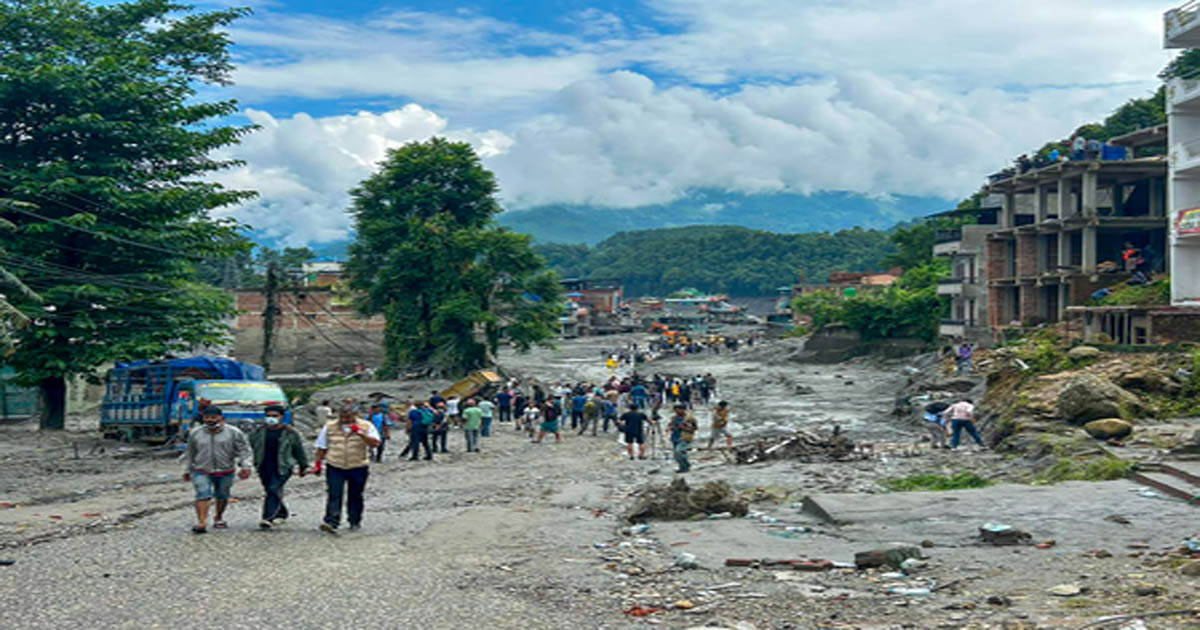
New Delhi, Aug 29: Nepal’s devastating flash floods serve as a reminder of the urgent need for regional collaboration, where countries under the shadow of the mighty Himalayas need to adopt a diplomatic narrative that includes ecological security as an important part of relationships, exert reports.
Popular Nepali newspaper Kantipur Friday observed that it is time for Kathmandu to immediately start working on disaster diplomacy and on the agreement with Beijing on its “implementation modality” and “framework”.
Incidentally, China and Nepal had agreed to share cross-border real-time information on floods and landslides and flag potential risks of glacial lake outburst floods. However, no formal agreement has been signed yet to implement such a mechanism despite Nepal Foreign Minister Shisir Khanal having raised the issue during his China visit in May.
Such reports emphasised the need for sharing information and cooperation in disaster reduction, where long-term risks should be taken into account in the construction of strategic structures such as roads, bridges, and hydropower projects near international borders.
Parliamentarians from across the Hindu Kush Himalaya (HKH) region too had insisted on Wednesday, as news of the devastation emerged, that the tragedy underscored the urgent need for stronger regional cooperation to address climate risks that transcend national boundaries.
They were meeting for the two-day 2nd Hindu Kush Himalaya Parliamentarians’ Meet in Thimphu, where a moment of silence for the victims and their families was also observed, according to the International Centre for Integrated Mountain Development (ICIMOD), an intergovernmental knowledge and learning centre working on behalf of the people of the HKH.
Participants said the disaster highlighted the importance of collective action, stronger preparedness, and sustained regional cooperation to reduce climate-related risks and build resilience across the HKH region. ICIMOD is based in Kathmandu, and works in and for eight regional member countries – Afghanistan, Bangladesh, Bhutan, China, India, Myanmar, Nepal, and Pakistan. The body later examined satellite imagery and concluded that “a massive rock–ice avalanche occurred in Nepal, blocking the Lhende River and triggering cascading floods downstream”.
Their assessment pointed not to tectonic activity but to glacial instability, a phenomenon increasingly linked to climate change. This was corroborated by the US Geological Survey (USGS), which earlier took the tremor as an earthquake.
In a revised statement, the USGS stated that additional analysis of seismic waves and satellite imagery led to the determination that the seismic event was rather a glacial collapse and debris flow, and that no earthquake had occurred. Global warming and construction in nearby areas are largely being seen as the reason for the avalanche, though the actual reason may take some time to be identified, pointed reports.
Some experts compared such glaciers on mountains to cement that helps hold a building together. Mongabay, a US-based non-profit conservation and environmental science news platform, also said that the floods were triggered by a glacier collapse and landslide into a river on the Tibet-Nepal border.
Like other reports, it assumed climate change had loosened the ice “till the entire mountainside, including a glacier clinging to it, collapsed into the river flowing some 3,000 metres below”.
Pointing out that no early warning system would have helped those who were close downstream when the huge chunk and debris fell on Wednesday, the article stated that one way to manage this risk is to be able to predict such a disaster with a credible probability level, so that governments can take protective action. This, it emphasised, would need countries to comprehensively map all icebound slopes above a certain gradient. In the face of such reports, the HKH countries would need to step up research, share data, and coordinate seamlessly to be prepared for such calamities.


Singrauli, Oct 17: Mild earthquake tremors were felt in the Singrauli district of Madhya Pradesh on Saturday, India Meteorological Department (IMD) officials said.
According to preliminary data, the intensity of the earthquake was measured at 3.5 on the Richter scale.
The epicentre was located at a depth of around 10 km below the surface, officials added.
The tremor was recorded on Saturday at 2:12 p.m.
Officials monitoring seismic activity confirmed that the quake had an intensity of 3.5, with the focus situated around 10 km beneath the earth’s surface.
The information is based on initial readings and remains subject to further verification by scientific agencies.
Residents in parts of Singrauli reported feeling the mild shaking during the afternoon hours.
While the intensity was relatively low, the sudden tremor caused momentary concern among people in the affected areas.
No immediate reports of damage to buildings or injuries have been received so far.
Earthquake monitoring agencies are examining the preliminary data to determine the exact location of the epicentre and assess any aftershock possibilities.
A magnitude of 3.5 is generally classified as a light earthquake, which is often felt by people nearby but rarely causes significant structural damage, especially when the focus is at a moderate depth of around 10 km.
Authorities in Singrauli have advised the public to remain calm and follow standard safety guidelines in case of any further seismic activity.
Local administration is closely tracking the situation and is in coordination with relevant scientific bodies for updated information.
This is not the first time the region has experienced mild seismic activity, though such events of low intensity usually pass without major incident.
Experts note that earthquakes of this magnitude are relatively common in various parts of the country and typically do not pose a serious threat when the depth is around 10 km.
Further details are awaited as agencies continue to analyse the complete data set.
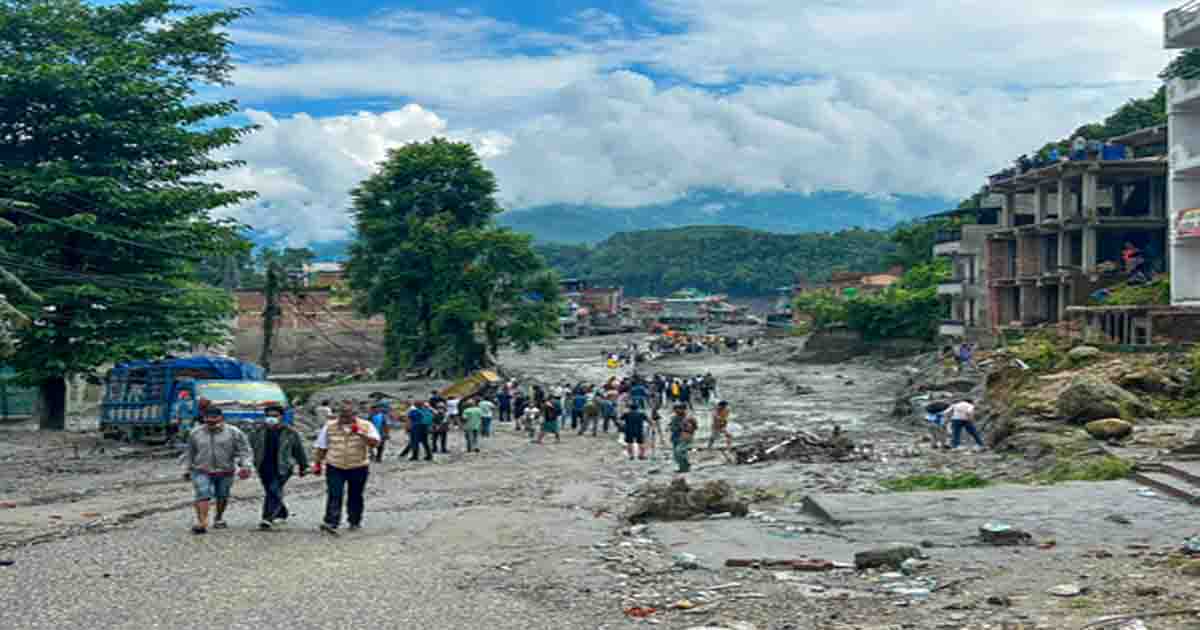
Kathmandu, Oct 15: Nepal and the International Bank for Reconstruction and Development (IBRD), part of the World Bank Group, have signed a mandate agreement to explore the development of a catastrophe bond that could help the Himalayan nation secure rapid access to funds in the event of a major natural disaster.
The agreement marks the beginning of a collaboration to assess the feasibility and potential structure of a catastrophe bond, under which Nepal could transfer part of its disaster risk to international capital markets and strengthen its financial preparedness for natural disasters, the World Bank said in a statement.
Under the agreement, the World Bank Group Treasury will work with the Nepal government and market participants to evaluate the proposed transaction.
The initiative comes as Nepal seeks to strengthen its capacity to prepare for, withstand and recover from natural disasters in the wake of devastating floods in the Bhotekoshi and downstream Trishuli river basins on August 26. The floods have killed nearly 1,500 people, while more than 5,000 remain unaccounted for, according to the National Disaster Risk Reduction and Management Authority.
Triggered by an avalanche near the Nepal-China border that blocked the river’s flow, the floods swept away several human settlements, a dozen hydropower projects, a solar plant, and several roads and bridges. Physical damage is estimated at 1.66 billion US dollars, according to the World Bank’s Global Rapid Post-Disaster Damage Estimation report.
According to the World Bank, Nepal is highly vulnerable to earthquakes, floods, landslides and other climate-related hazards, which can cause extensive damage to infrastructure, disrupt economic activities and place considerable pressure on public finances.
A catastrophe bond is a financial instrument that allows governments or other entities to transfer specific disaster risks to investors. Depending on the terms of the bond, investors may lose some or all of their principal if a specified disaster occurs, allowing the funds to be used to support the affected entity.
“Such instruments can provide an alternative source of disaster financing, potentially enabling governments to access funds more quickly than relying solely on budget reallocations or post-disaster assistance,” the World Bank said.
The initiative is part of the World Bank Group’s established catastrophe bond programme, which has helped countries access international capital markets to transfer disaster risks and secure financial protection against natural hazards.
The World Bank helps countries increase their financial resilience to disasters by supporting disaster risk financing programmes and offering contingent financing and insurance solutions.
It also assists countries in designing, developing and implementing comprehensive disaster risk financing strategies.
“A risk financing strategy helps clients determine a balance between retaining risk, for example, through a contingent financing product, and transferring risk, for example, through an insurance product,” the World Bank said.
A range of financial products can be used to address the financial risks of disasters, and the optimal mix of approaches depends on the types of risks faced by a country and the frequency and severity of disaster events, it said.
Developing countries are particularly vulnerable to the economic and fiscal consequences of disasters because of factors such as gaps in insurance coverage, inadequate infrastructure resilience, and the concentration of populations and economic activities in exposed areas.
“Following a major disaster, governments often have to redirect budgetary resources towards emergency response, relief and reconstruction, potentially affecting other development priorities,” the World Bank said.
disaster
Bihar tragedy: 13 children die as boat capsizes in Ganga River in Vaishali; search on for missing passengers


Patna, Oct 14: In a major tragedy, at least 13 children drowned after a boat carrying passengers capsized in the Ganga River near Rampur Shyamchand village under the Raghopur police station area of Bihar’s Vaishali district on Tuesday evening. The search is on for missing passengers.
Even more heartbreaking is the fact that seven of the deceased children belonged to the same family, turning the incident into a huge tragedy for the family and the village.
According to preliminary reports, around 20 to 30 people were travelling by boat to attend a feast in a neighbouring village.
The boat reportedly lost equilibrium after reaching the main current of the Ganga and overturned, throwing passengers into the water.
The accident triggered panic in the area, as cries for help were heard from the river.
Local residents rushed to the spot and began rescue efforts before the district administration, police and State Disaster Response Force (SDRF) teams joined the operation. Local divers also assisted in the search.
Seven of the deceased children were reportedly from the family of Rampravesh Rai, alias Raja, a resident of Rampur Shyamchand village.
The deaths have left the affected families and the wider village in deep mourning.
The group was travelling to a neighbouring village, crossing the river and a nearby low-lying waterlogged area locally known as a dhab.
Several children were aboard the boat, while the total number of passengers was estimated at between 20 and 30.
Authorities have been working to establish the exact number of people on board and determine whether anyone remains missing.
Angry residents protested against the district administration following the tragedy.
Villagers alleged that the boat was old and in poor condition and claimed that requests for its replacement had been submitted earlier, but no action was taken by the authorities.
There are also suspicions that the boat may have been carrying more passengers than its holding capacity.
However, the exact cause of the accident and the boat’s condition remain subject to investigation.
Union Minister Chirag Paswan expressed grief over the deaths, describing the incident in Raghopur Diyara, which falls within his parliamentary constituency, as deeply distressing.
Paswan said he had spoken to the District Magistrate to seek details about the rescue operation and discuss assistance for the affected families through the Bihar and central governments.
Paswan also announced that he would visit the accident site to meet the bereaved families and enquire about the condition of the injured.
He added that injured passengers had been sent to NMCH for further treatment.
The Bihar Congress also expressed deep sorrow over the deaths of the children and conveyed condolences to the bereaved families.
The party prayed for peace for the souls of the departed children and strength for their families to cope with the loss.
Further details regarding the final casualty count, the number of missing passengers and the circumstances leading to the capsizing are awaited.

Samajwadi Party, education two banks of river who can’t meet: UP CM Yogi Adityanath

Tanker attacked northeast of Saudi Arabia: UKMTO

MP: Mild earthquake tremors felt in Singrauli

Maha CM calls emerging technologies key to India’s youth

Iran IRGC says supertanker exploded after hitting mine in Hormuz Strait

Rahul, Cong ecosystem want to force regime change: BJP after Neha Bora praises B’desh Gen-Z protest

BJP pays tribute to ex-President Abdul Kalam, recalls his enduring influence on generations of India’s youth

INDIA bloc begins protest march against ECI

Maha Congress stages agitation against Gyanesh Kumar

Complaint against Netflix & Mukesh Chhabra for inappropriate language on ‘India’s Got Latent 2’
-

 Crime4 years ago
Class 10 student jumps to death in Jaipur
-

 Maharashtra2 years ago
Mumbai Local Train Update: Central Railway’s New Timetable Comes Into Effect; Check Full List Of Revised Timings & Stations
-

 Maharashtra2 years ago
Mumbai To Go Toll-Free Tonight! Maharashtra Govt Announces Complete Toll Waiver For Light Motor Vehicles At All 5 Entry Points Of City
-

 Maharashtra2 years ago
False photo of Imtiaz Jaleel’s rally, exposing the fooling conspiracy
-

 National News2 years ago
Ministry of Railways rolls out Special Drive 4.0 with focus on digitisation, cleanliness, inclusiveness and grievance redressal
-

 Maharashtra2 years ago
Maharashtra Elections 2024: Mumbai Metro & BEST Services Extended Till Midnight On Voting Day
-

 National News2 years ago
J&K: 4 Jawans Killed, 28 Injured After Bus Carrying BSF Personnel For Poll Duty Falls Into Gorge In Budgam; Terrifying Visuals Surface
-

 Crime2 years ago
Baba Siddique Murder: Mumbai Police Unable To Get Lawrence Bishnoi Custody Due To Home Ministry Order, Says Report