
Maharashtra
PM Modi Cleans Premises Of Kalaram Temple In Nashik To Push For ‘Swachhata Abhiyan’

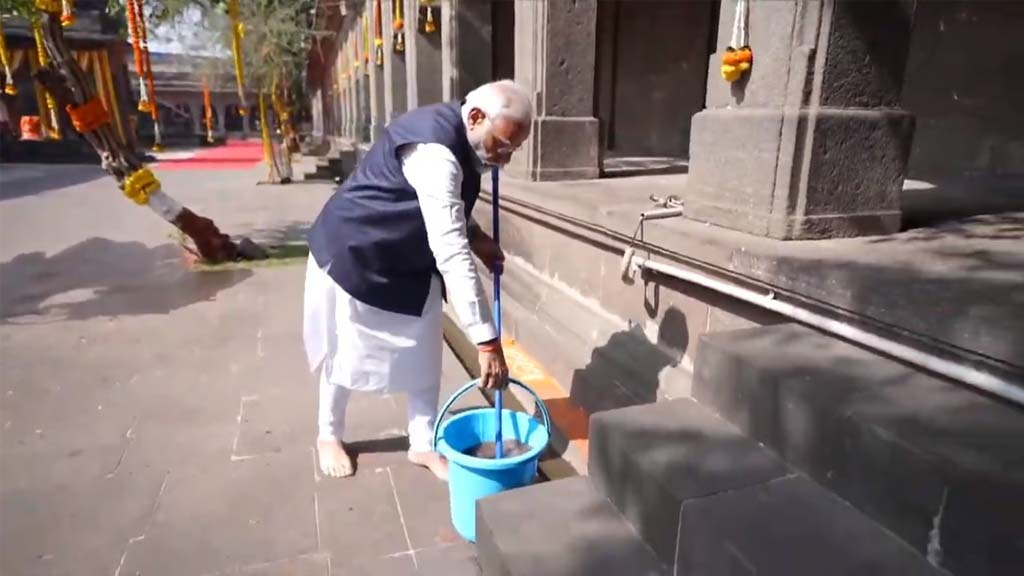
Prime Minister Narendra Modi on Friday took part in the ‘Swachhata Abhiyan’ at Nashik’s Kalaram Temple in Maharashtra. Additionally, he urged the public to engage in cleanliness drives at temples nationwide in preparation for the consecration ceremony of the Ram Mandir in Ayodhya.
The video depicts the Prime Minister cleaning the vicinity near a tree at the Kalaram Temple in Nashik using a bucket and mop.
In alignment with his pledge for cleanliness, PM Modi initiated a Swachhta Abhiyan to tidy up sites of religious significance in anticipation of the Pran-Pratishtha of Lord Ram in Ayodhya on January 22, 2024. Demonstrating his commitment, he personally cleaned the premises of the Shree Kalaram Mandir, while encouraging all Indians to uphold cleanliness at all places of religious importance.
Following the cleanliness drive at Kalaram Temple, PM Modi engaged in prayers at Ramkund in Nashik.
During a youth event, PM Modi emphasised the potential of first-time voters to infuse new energy into our democracy, envisioning India’s youth as ambassadors of yoga and Ayurveda.
This isn’t the first instance of PM Modi joining the Swachhata Abhiyan. He has previously partaken in cleaning initiatives to raise awareness among citizens.

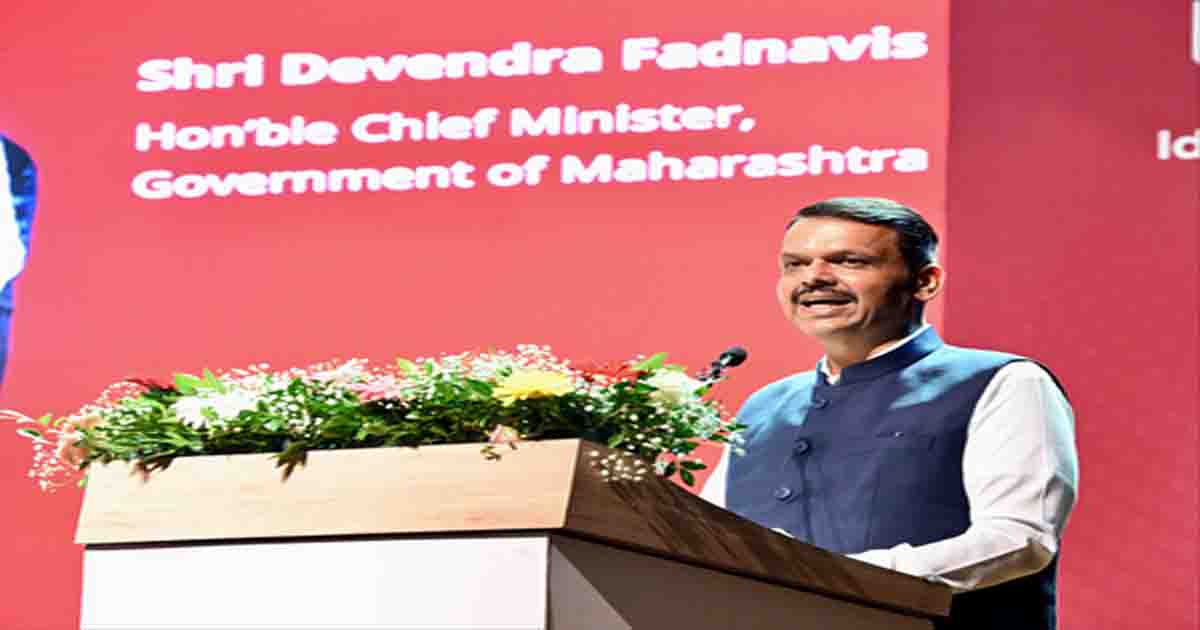
Mumbai, Sep 30: Chief Minister Devendra Fadnavis on Wednesday said that Maharashtra is India’s undeniable startup capital, both in sheer numbers and effective implementation.
At the prize distribution ceremony of the 4th edition of ‘The Governance Challenge’, he expressed confidence that youth-led research and innovation will soon position Maharashtra as a global innovation hub.
The prestigious governance competition was organised in collaboration with the Bill & Melinda Gates Foundation and Samagra. Prominent dignitaries present included Chief Secretary Rajesh Aggarwal, MITRA Governing Council Member Deepak Karanjikar and Gates Foundation Deputy Director Arnav Kapoor.
CM Fadnavis said that Maharashtra currently hosts over 18% of India’s total startups, exceeding 30,000 active ventures—the highest in the nation. He announced plans to construct a massive 300-acre Innovation City in Navi Mumbai, focusing primarily on Artificial Intelligence (AI) and advanced deep-tech research.
Under the Maharashtra Artificial Intelligence Policy 2026, the state will establish dedicated AI incubators and train over 200,000 youth and working professionals. Additionally, ‘M-Hub’ is being built as the state’s first dedicated startup incubator, he informed. Powered by innovation, Maharashtra aims to build a $1 trillion economy by 2030 and expand to a $2 trillion economy by 2035, he said.
CM Fadnavis stated that the state is establishing an end-to-end innovation pipeline—bridging ideas from tier-2 and tier-3 regional centres (such as Nagpur, Nashik, Kolhapur, Nanded, and Amravati) directly into market-ready global enterprises. “This initiative goes beyond a mere competition—it is a platform to discover talent and ideas that will shape the future administrative setup of Maharashtra and India. Hackathons should not end with certificates; their true strength lies in real-world implementation,” he added.
Chief Secretary Rajesh Aggarwal emphasised the synergy between government, corporate sectors, and market dynamics to foster self-sustaining innovations with minimal governmental friction.
Maharashtra
Local struggle in Mankhurd-Shivaji Nagar bears fruit; polluting SMS company to be shut down by 2027: Abu Asim Azmi

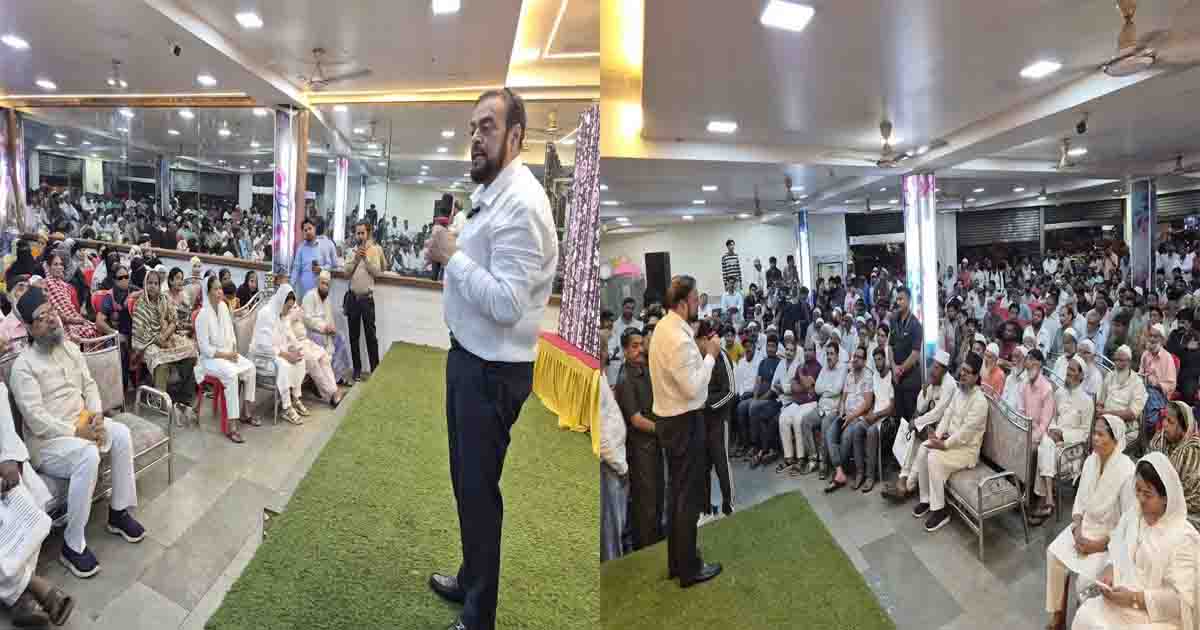
Mumbai: A final decision has been reached to shut down the SMS company in the Mankhurd-Shivaji Nagar area by 2027; the facility had been polluting the air and posing a health risk to local residents for years. This development—achieved through a prolonged public struggle and persistent protests led by the Samajwadi Party—is being hailed as a major victory and a source of immense relief for the area’s inhabitants.
A special event was organized to celebrate this success, during which the history of the long struggle was revisited in the presence of the Samajwadi Party’s Maharashtra State President and local MLA, Abu Asim Azmi. During the event, the hard work of party workers and the unparalleled cooperation of local citizens were acknowledged, with the history of the campaign displayed on an LED screen. Key actions were highlighted, including the extensive campaign against the company led by State President Abu Asim Azmi; the organization of large-scale sit-ins and protest marches; raising the issue prominently in the Legislative Assembly to pressure the government and administration to close or relocate the plant; and waging a legal battle to vigorously expose violations of pollution control standards. State President Abu Asim Azmi extended his heartfelt congratulations to all the residents of Mankhurd-Shivaji Nagar on this achievement. He stated that this success is a testament to the patience and unwavering struggle of the local people, who never allowed their voices against pollution to be silenced. They also expressed gratitude to every citizen and party worker who stood shoulder-to-shoulder with them throughout this entire struggle. It was further clarified that although a 2027 deadline has been set for the company’s closure, the campaign to secure a clean, healthy, and safe environment for Mankhurd-Shivaji Nagar will not stop here; the Samajwadi Party’s struggle to protect the local environment and the health rights of residents will continue with full intensity in the days ahead.
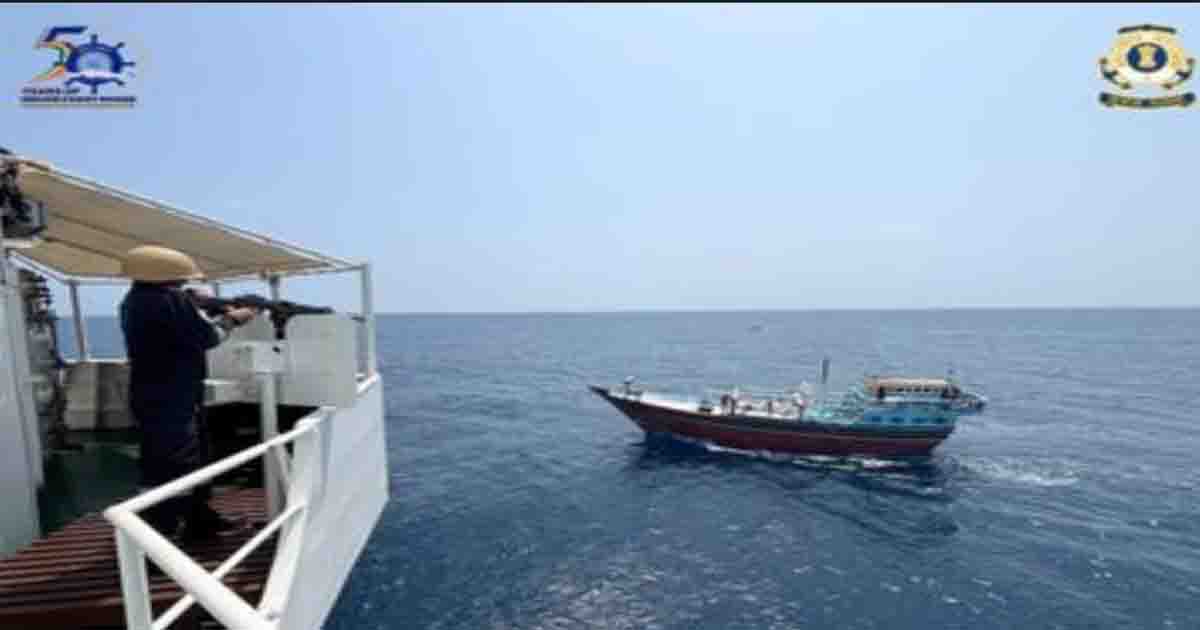
The Indian Coast Guard and the Gujarat ATS have achieved a major breakthrough against an international drug smuggling network in Gujarat. In a joint operation, the two agencies seized drugs worth approximately ₹3,000 crore from a boat in the Arabian Sea.
Five Pakistani nationals have been arrested in connection with this operation. A total of 526 kilograms of narcotics were recovered from the boat. The arrested individuals are currently being interrogated.
The Indian Coast Guard and Gujarat ATS busted a major drug smuggling network through this joint operation in the Arabian Sea.
Acting on intelligence inputs, the agencies intercepted a suspicious boat at sea. A search of the vessel yielded 526 kilograms of narcotics, estimated to be worth around ₹3,000 crore in the international market.
Five Pakistani nationals on board the boat were arrested during the operation. All the accused are being questioned. Investigative agencies are working to determine the origin of the drug consignment and its intended destination within India.
Efforts are also underway to identify other individuals involved in this network.
Further investigation into the matter is currently ongoing. Details regarding the entire drug supply chain and other individuals linked to the international smuggling network will only be revealed after the investigation concludes.

Bihar Mahagathbandhan echo in Oppn’s UP seat-sharing debates?

Israel probes Flydubai cockpit incident after hijack alert (Ld)

Youth-led research to transform Maharashtra into a global innovation hub: CM Fadnavis

US-led coalition concludes anti-IS operation in Iraq: Pentagon

Three men arrested in Madhya Pradesh for circulating video of tourist in Ajmer

Gift to President Putin part of PM Modi bid to globally display India’s heritage

PM Modi’s warm camaraderie with Putin, Xi on full display at BRICS Summit

7.8 pc GDP growth reflects country’s progress: Maha CM Fadnavis, Dy CM Shinde

BMC takes action against Mumbai Central Orchid City Mall; mall shut down.

Nepal PM calls for global response to rising Himalayan climate risks
-

 Crime4 years ago
Class 10 student jumps to death in Jaipur
-

 Maharashtra2 years ago
Mumbai Local Train Update: Central Railway’s New Timetable Comes Into Effect; Check Full List Of Revised Timings & Stations
-

 Maharashtra2 years ago
Mumbai To Go Toll-Free Tonight! Maharashtra Govt Announces Complete Toll Waiver For Light Motor Vehicles At All 5 Entry Points Of City
-

 Maharashtra2 years ago
False photo of Imtiaz Jaleel’s rally, exposing the fooling conspiracy
-

 National News2 years ago
Ministry of Railways rolls out Special Drive 4.0 with focus on digitisation, cleanliness, inclusiveness and grievance redressal
-

 Maharashtra2 years ago
Maharashtra Elections 2024: Mumbai Metro & BEST Services Extended Till Midnight On Voting Day
-

 National News2 years ago
J&K: 4 Jawans Killed, 28 Injured After Bus Carrying BSF Personnel For Poll Duty Falls Into Gorge In Budgam; Terrifying Visuals Surface
-

 Crime2 years ago
Baba Siddique Murder: Mumbai Police Unable To Get Lawrence Bishnoi Custody Due To Home Ministry Order, Says Report