
National News
BJP announces month-long ‘Seva Sankalp Abhiyan’ to mark PM Modi’s 25 years of public service

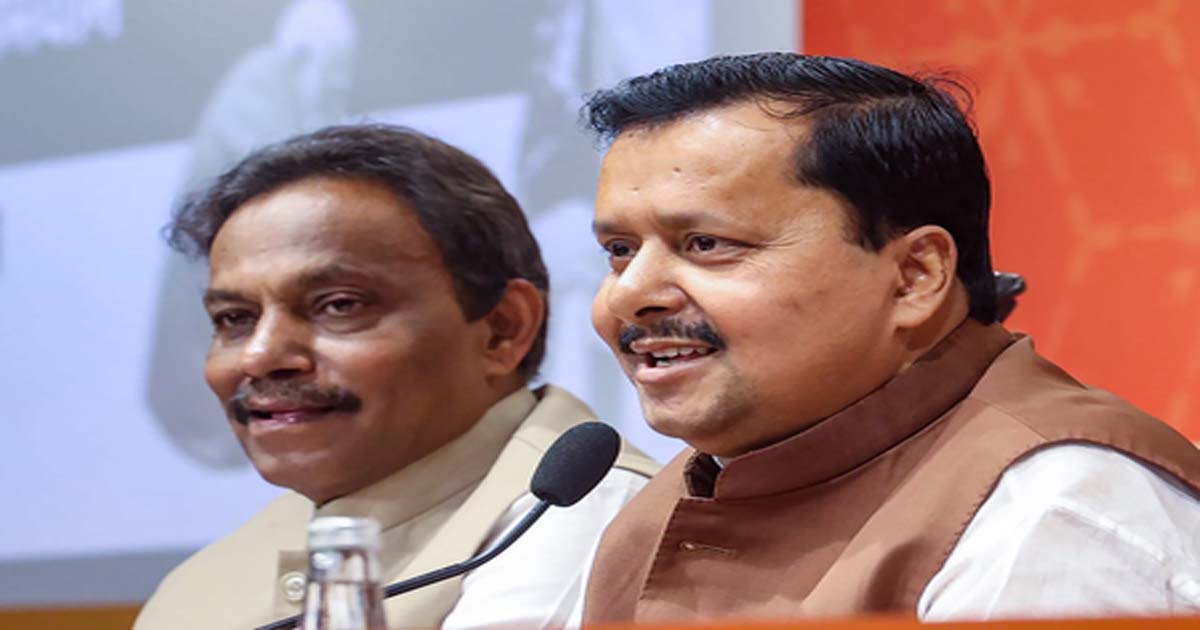
New Delhi, Sep 9: The Bharatiya Janata Party (BJP) on Wednesday announced that it will conduct a special month-long campaign titled ‘Seva Sankalp Abhiyan’, starting September 17 to mark the completion of 25 years of Prime Minister Narendra Modi’s public life and service.
BJP National President Nitin Nabin, addressing a press conference at the party headquarters, announced that PM Modi will complete 25 years of public service on October 7. To mark this occasion, the BJP will conduct a special month-long campaign from September 17, which is the Prime Minister’s birthday, to October 17.
“Prime Minister Modi’s journey of service began on October 7, 2001, when he assumed office as the Chief Minister of Gujarat. Over the past 25 years, he has worked continuously, guided by the mantra of public service to national service,’ Nabin said.
“The Prime Minister’s public life is characterised by his unwavering focus on his objectives and resolutions from day one, and his persistent efforts to bring them to fruition,” he added.
The BJP President asserted that when PM Modi assumed charge of the top office in 2014, the atmosphere in India was “marked by despair and policy paralysis”.
During that period, he said, the Indian economy was counted among the ‘Fragile Five’; however, now India ranks among the “world’s fastest-growing major economies”, and the country’s stature and prestige on the global stage have steadily risen.
“PM Modi’s journey began as an ordinary BJP worker, and today he discharges his responsibilities as the nation’s ‘Pradhan Sevak’. Clear vision, firm resolve, and continuous efforts to bring about positive societal change have shaped this journey,” he said.
Nabin stated that under PM Modi’s leadership, the country has strengthened its cultural identity and heritage alongside its development. Citing the Ram Mandir, Kashi Vishwanath Corridor, and the Somnath and Mahakal corridors, he said the Modi government has worked to “preserve, restore, and develop the nation’s cultural heritage”.
Additionally, referring to Narendra Modi’s tenure as the Chief Minister of Gujarat, the BJP chief mentioned how he worked to ensure water supply to the people through the Narmada project, while also making efforts to establish the state as a major hub for development and investment through the ‘Vibrant Gujarat’ initiative.
Linking the Prime Minister’s development journey from Gujarat to the national level, Nabin noted that this same vision drove the implementation of large-scale development schemes across the country.
“While the nation’s youth once faced an atmosphere of despair, a sense of hope and optimism emerged after 2014,” he said.
Citing the rise of startups and unicorns, he noted that India now ranks among the world’s leading nations for startups. He asserted that the country’s youth are no longer merely “job seekers” but have emerged as “job creators”.
Highlighting sports initiatives like ‘Khelo India’ and ‘Fit India’, he noted that Indian youth are now representing the nation across various fields.
The BJP chief further mentioned that PM Modi has championed the concept of “women-led development” and highlighted the continuous efforts made to enhance women’s economic participation by referencing schemes like ‘Beti Bachao, Beti Padhao” to “Lakhpati Didi.
He also mentioned the ‘Nari Shakti Vandan Adhiniyam’, noting that it represents a “significant step” toward providing political representation to women and ensuring their participation in policymaking.
Nabin added that Prime Minister Modi has transformed the traditional perspective regarding border areas.
“Previously, border villages were referred to as the country’s ‘last villages’, but the government redefined their role and importance by designating them as ‘India’s first villages’,” he added.
“The BJP observes Prime Minister Modi’s birthday as ‘Seva Diwas’ (Day of Service). In this spirit, a month-long ‘Seva Sankalp Abhiyan’ will be organised this year from September 17 to October 17. It is the BJP’s responsibility to take the message of public service to as many people in society as possible. Through this campaign, Prime Minister Modi’s work spanning 25 years of public life — encompassing service, development, and nation-building — will be highlighted to the public,” Nabin said.
“The Prime Minister’s 25-year journey of service should be viewed not merely as a series of political achievements, but as an unwavering commitment to serving the people and the nation,” the BJP chief said, while calling upon party workers and the general public to join the campaign.

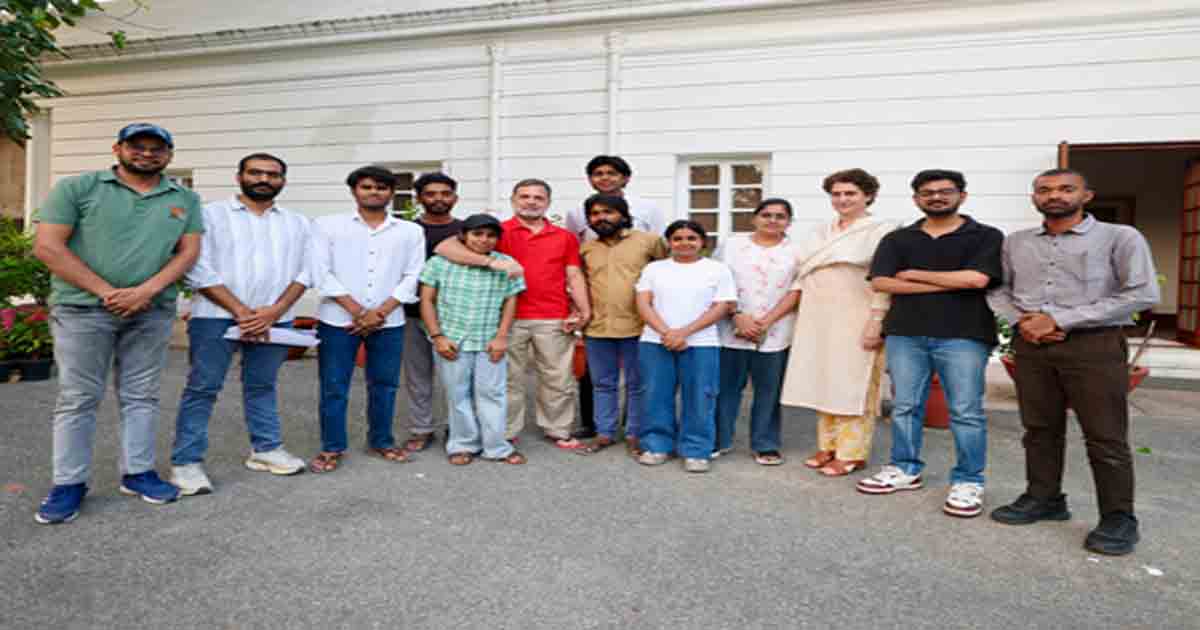
Leader of Opposition (LoP) in the Lok Sabha Rahul Gandhi and Congress General Secretary Priyanka Gandhi Vadra met with students of the Vision IAS coaching institute on Wednesday and heard their problems about the tuition centre.
According to Congress, during the meeting, the students voiced concerns over the declining quality of teaching and study materials at the coaching institute and mentioned that they have not been able to get their fee refunds.
In a post on X, Congress said, “LoP Shri Rahul Gandhi and Congress General Secretary Smt. Priyanka Gandhi Vadra ji met students of the Vision IAS coaching institute.”
“The students raised serious concerns about a sharp decline in the quality of teaching, mentorship and study materials at the institute. They also said the management had been unresponsive to their demands for fee refunds,” the party added.
Vision IAS is a coaching institute for the UPSC Civil Services Examination (CSE). It claims to offer General Studies foundation courses, test series, current affairs magazines, and personalised mentoring.
Its classroom centres are located in Delhi (Karol Bagh and Mukherjee Nagar), Jaipur, Pune, Hyderabad, Chandigarh, Ahmedabad, and Lucknow.
Students at the institute have been raising concerns over suspended and repeatedly cancelled classes, a sharp decline in teaching and mentorship quality, and unresponsive management refusing fee refunds for months now.
Earlier in July this year, students and faculty staged a protest outside the main branch of the coaching institute in Delhi’s Karol Bagh over the disruption of academic activities and non-payment of salaries to teachers.
The faculty members raised issues of delayed or withheld payments for several months, while the students demanded fee refunds.
The coaching institute was also in the headlines last year in December when the Central Consumer Protection Authority (CCPA) imposed a penalty of Rs 11 lakh on it for publishing misleading advertisements on its official website concerning the results of the UPSC Civil Services Examination (CSE) 2022 and 2023, in violation of the Consumer Protection Act, 2019.
International News
EAM Jaishankar and US counterpart Rubio discuss advancing ties, regional developments

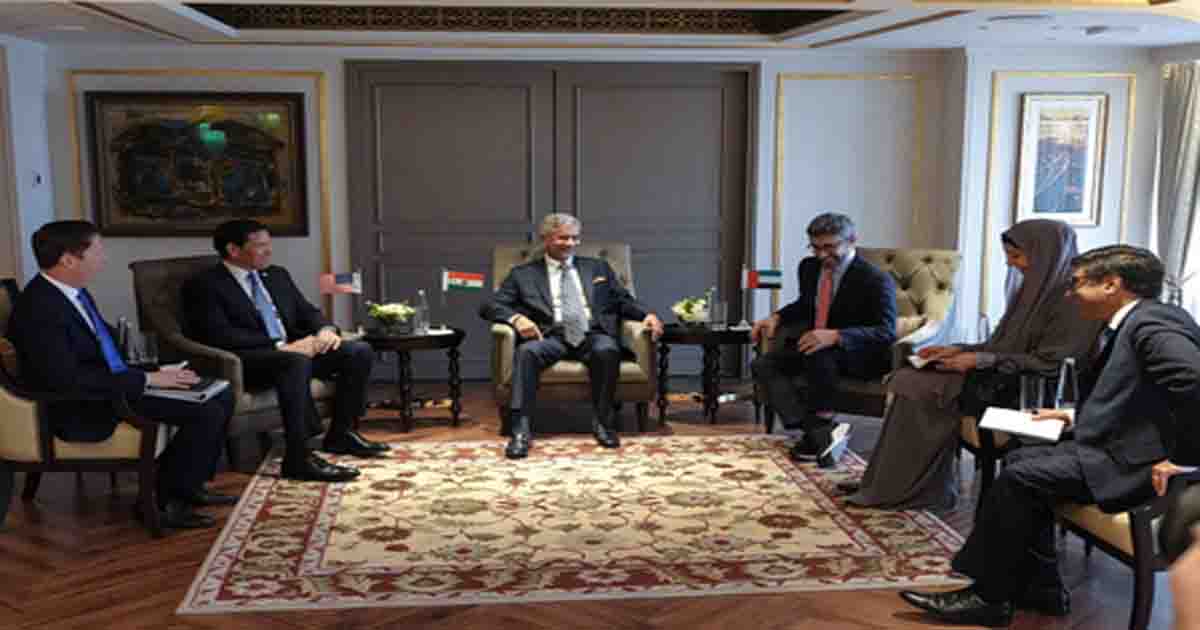
External Affairs Minister (EAM) S Jaishankar held a meeting with US Secretary of State Marco Rubio in Mumbai on Tuesday, with discussions focusing on further advancing bilateral ties.
During the meeting, the two ministers exchanged views on regional developments. Foreign Secretary Vikram Misri, US Ambassador to India Sergio Gor and other officials were also present at the meeting.
“Pleased to meet US Marco Rubio in Mumbai today. We shared views on further advancement of our ties, focusing on trade, energy, technology, defence and people-to-people ties. Also exchanged views on regional developments,” EAM Jaishankar stated on X after the meting.
Rubio said that he and EAM Jaishankar discussed energy security and defence cooperation.
“In Mumbai, Indian External Affairs Minister S Jaishankar and I discussed energy security and defense cooperation while reaffirming the importance of advancing the U.S.-India strategic partnership,” the US Secretary of State posted on X.
Earlier, EAM Jaishankar, Marco Rubio and UAE Foreign Minister Sheikh Abdullah bin Zayed Al Nahyan held a meeting in Mumbai, with discussions held on regional energy security and advancing shared economic priorities.
“It was great to meet with Indian External Affairs Minister S Jaishankar and UAE Foreign Minister Sheikh Abdullah bin Zayed Al Nahyan to discuss regional energy security and advance our shared economic priorities,” Rubio stated on X after the meeting.
Following the meeting, Ambassador Gor also took to X and wrote: “The US, India, and UAE have real opportunities to advance cooperation on energy, trade, technology, and regional connectivity. Marco Rubio, S Jaishankar, and UAE Foreign Minister Sheikh Abdullah bin Zayed Al Nahyan in Mumbai for a discussion on turning our close ties into concrete results!”
Earlier in the day, Marco Rubio arrived in Mumbai for an official visit to India. For his visit to Mumbai, Rubio is accompanied by his wife, Jeanette Rubio and US Ambassador to India Sergio Gor.
The Ministry of External Affairs (MEA) extended a warm welcome to Rubio as he arrived in Mumbai for his second visit to India, noting that it provides an opportunity to further advance cooperation across various pillars of the India-US Comprehensive Global Strategic Partnership.
“Welcome to Mumbai, US Secretary of State Marco Rubio, on your second visit to India! He was received by Shri Ashish Shelar, Minister of Culture, Electronics, IT and AI, Government of Maharashtra at the airport. The visit provides an opportunity to further advance cooperation across the various pillars of the India-US Comprehensive Global Strategic Partnership,” the MEA posted on X.
After concluding his engagements in Mumbai, Rubio will travel to Gujarat’s Jamnagar for talks that will include “enhanced energy cooperation”, the US State Department said.
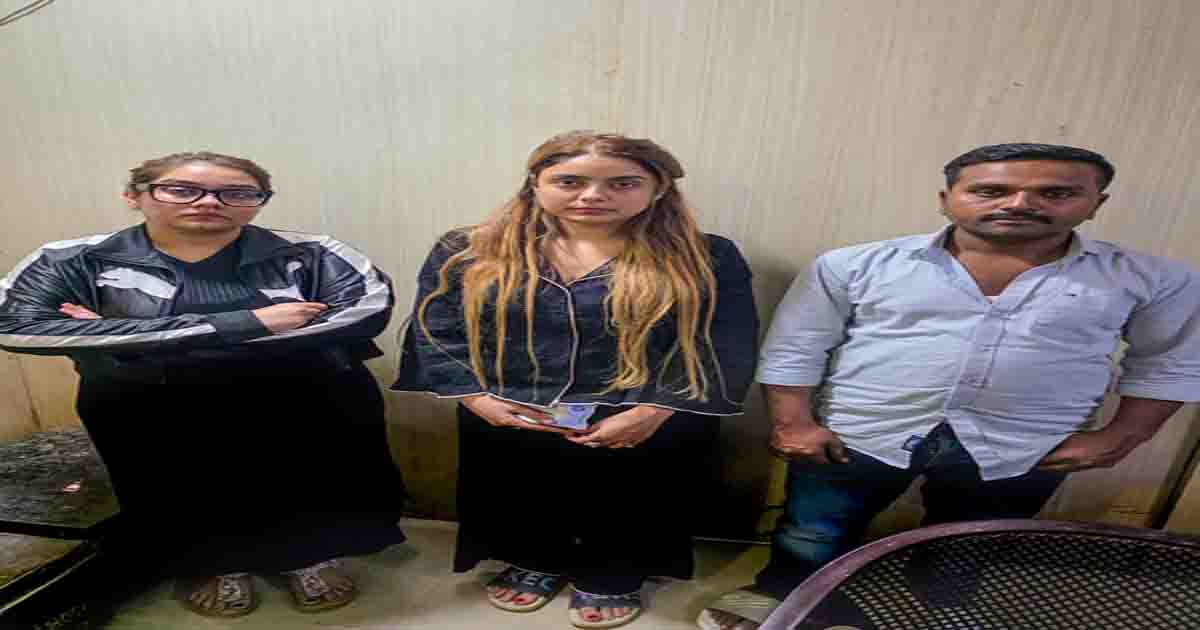
Model Shraddha Dubey, a key accused in the death of Lucknow-based businessman Shiva Sharma, has been arrested in Nagpur along with her sister Rashmi Dubey and driver Danish, Uttar Pradesh Police said on Tuesday.
The three accused, who had been absconding since the registration of the case, were apprehended by the Lucknow Police and the Uttar Pradesh Special Task Force (STF) with the assistance of Nagpur Police on Tuesday.
A reward of Rs 50,000 each had been announced for information leading to their arrest.
Following her arrest, Shraddha Dubey has been brought to Bell Road Police Station on Wardha Road in Nagpur, where she is currently being questioned.
Officials of the Uttar Pradesh STF and Nagpur Police are present at the police station and are jointly questioning her.
According to the police, a case under Section 103(1) of the Bharatiya Nyaya Sanhita (BNS) was registered at the Hazratganj Police Station on October 9 on the basis of a written complaint filed by Ranjana Sharma.
The accused are being taken through the necessary legal formalities before being brought to Lucknow for further investigation into Sharma’s death.
Meanwhile, fresh details have emerged about Dubey’s movements during her absconding period.
According to media reports, she stayed for nearly 24 hours at a hotel in Taj Nagari Phase-I in Agra.
The reports claimed that CCTV footage showed a vehicle allegedly linked to Dubey arriving at the hotel at 6:33 a.m. on October 17. Around 20 minutes later, at 6.53 a.m., a woman identified as Dubey reportedly entered the premises. The vehicle’s registration number was reported to be UP32RT8043.
During her absconding period, Dubey had released a video appealing against linking her name with influential individuals.
An earlier viral audio recording, purportedly featuring her threatening Sharma, had also surfaced, in which she was allegedly heard referring to complaining about him to a ‘sir’.

Sensex, Nifty surge up to 1 pc in early deals; IT shares lead gains

Rahul, Priyanka meet students of coaching institute, hear their grievances

EAM Jaishankar and US counterpart Rubio discuss advancing ties, regional developments

Maha: Woman beaten to death with hammer over minor dispute in Palghar; two arrested

Woman arrested for extorting ₹4 crore by blackmailing victims with obscene videos

Rahul, Cong ecosystem want to force regime change: BJP after Neha Bora praises B’desh Gen-Z protest

BJP pays tribute to ex-President Abdul Kalam, recalls his enduring influence on generations of India’s youth

Attack on democratic rights: INDIA Bloc leaders on detentions of anti-ECI protestors

INDIA bloc begins protest march against ECI

Maha Congress stages agitation against Gyanesh Kumar
-

 Crime4 years ago
Class 10 student jumps to death in Jaipur
-

 Maharashtra2 years ago
Mumbai Local Train Update: Central Railway’s New Timetable Comes Into Effect; Check Full List Of Revised Timings & Stations
-

 Maharashtra2 years ago
Mumbai To Go Toll-Free Tonight! Maharashtra Govt Announces Complete Toll Waiver For Light Motor Vehicles At All 5 Entry Points Of City
-

 Maharashtra2 years ago
False photo of Imtiaz Jaleel’s rally, exposing the fooling conspiracy
-

 National News2 years ago
Ministry of Railways rolls out Special Drive 4.0 with focus on digitisation, cleanliness, inclusiveness and grievance redressal
-

 Maharashtra2 years ago
Maharashtra Elections 2024: Mumbai Metro & BEST Services Extended Till Midnight On Voting Day
-

 National News2 years ago
J&K: 4 Jawans Killed, 28 Injured After Bus Carrying BSF Personnel For Poll Duty Falls Into Gorge In Budgam; Terrifying Visuals Surface
-

 Crime2 years ago
Baba Siddique Murder: Mumbai Police Unable To Get Lawrence Bishnoi Custody Due To Home Ministry Order, Says Report