
International News
Pak general elections not possible in 3 months: Poll body

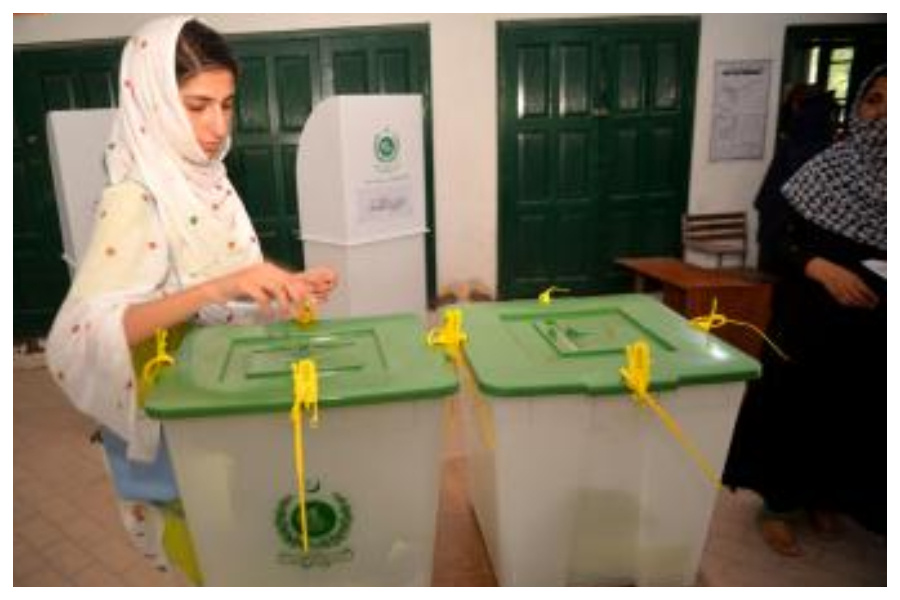
The Election Commission of Pakistan (ECP) has expressed its inability to conduct general elections within three months, citing various legal hitches and procedural challenges as the reason.
A senior ECP official told Dawn news that the preparations for the general elections would require some six months.
He said fresh delimitation of constituencies, particularly in Khyber Pakhtunkhwa where the number of seats had been increased under the 26th Amendment, and bringing district- and constituency-wise electoral rolls in conformity were the major challenges.
“Delimitation is a time-consuming exercise where the law provides for one month’s time just to invite objections,” he said, adding that another one month was required to address the same.
The official told Dawn news that a minimum of three months would be required to complete the exercise, followed by another gigantic task of updating voters’ lists.
He said procurement of election material, arrangement for ballot papers and appointment and training of polling staff were also amongst the challenges, adding that under the law, ballot papers with water mark were to be used which were not available in the country and would have to be imported.
He revealed that the ECP had proposed to amend the law to provide for ballot papers with “security features”, instead of “water mark”.
The official said inviting bids and scrutinising financial and technical quotations would also require some time. About the election material, he said some two million stamp pads would be required for around 100,000 polling stations.
“This is just one example. Other materials in huge quantity, including scissors and ball points, will also have to be procured,” he remarked.
Referring to some legal hitches, the official told Dawn news that under Section 14 of the Elections Act, the ECP was to announce an election plan four months prior to the polls.
He said the law requiring use of EVMs (electronic voting machines) and giving overseas Pakistanis voting rights also held the field and had to be repealed.

A Hindu American parents’ group is taking its campaign to change how Hinduism is taught in American schools directly to teachers, saying it found educators receptive to “accurate and culturally sensitive” material at a New Jersey conference attended by about 200 teachers.
The Hindu Parents Network (HPN) said it sponsored an interactive session on “Accurate and Culturally Sensitive Teaching of Hinduism in a Changing World” at the 2026 New Jersey Teachers Conference.
The session “addressed common misrepresentations, discussed classroom challenges, and shared practical resources to support educators”, the group said in a message to supporters on Friday.
“The response was overwhelmingly positive. Educators recognised the need for accurate resources and welcomed practical solutions,” it said.
“What if we could transform how thousands of students understand Hindu Dharma and history by empowering the educators who teach them?” the group asked, as it appealed for funds to take the effort nationwide.
HPN said it wants to develop “accurate, classroom-ready educational resources”, reach more educators through conferences and workshops, and “work with school districts to address misrepresentations”.
The group says its goal is to ensure “the next generation learns about Hindu dharma through resources that are bias-free, accurate, culturally sensitive, and respectful”.
In its mid-year report, HPN said it supported six new engagements with school districts in 2026 over curriculum bias, misrepresentation of Hindus and culturally sensitive teaching.
The group publishes “Hinduism for Schools” handbooks for primary and secondary classes and free lesson plans, slides and quizzes on topics such as Holi, which it says are meant to complement textbooks.
Earlier this month, HPN launched an educational video for Hindu Heritage Month on the contributions of Hindu civilisation.
Indian American and Hindu American groups have for years contested the portrayal of Hinduism in US textbooks, most prominently in California’s history-social science curriculum debates.
The push comes at a sensitive time for the community. Hindu American organisations have reported a rise in online hate, and lawmakers have demanded a federal hate-crime investigation into the foiled plot at a Hindu temple in Aurora, Illinois, on October 11.
New Jersey has one of the largest Indian American populations in the country.
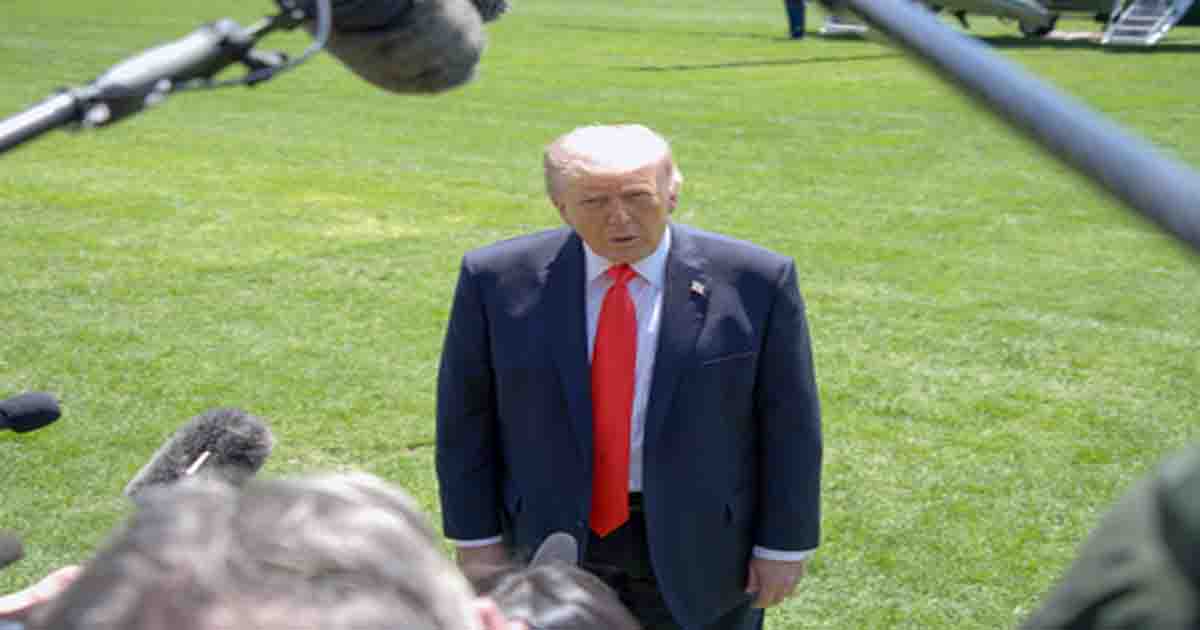
US President Donald Trump suggested that further military action against Iran remained possible, while acknowledging that the war could carry a political cost for Republicans in the approaching congressional elections.
Asked how the conflict had affected the election campaign, Trump said Americans were divided over his decision but defended it as necessary to prevent Iran from obtaining a nuclear weapon.
“Well in one way, they love it because I’m doing what should have been done by other presidents, and another way maybe they don’t,” he told reporters before departing Washington.
“It’s — there’s a price to pay, which I knew immediately when I did it, but we can’t let Iran have a nuclear weapon.”
Trump did not specify whether he was considering a new operation, identify potential targets or give a timetable.
“The Iran War, and we’ve knocked the hell out of them, and we may do it a little bit further,” he said.
That statement was an indication of possible further action, rather than an announcement that an operation had been ordered. His assessment of the damage inflicted on Iran was not accompanied by a military briefing or supporting figures.
The President argued that some voters supported the campaign even if others opposed it.
“I mean, in one way, people probably don’t love it, but many people, many great patriots, really love it. This should have been done a long time ago by other presidents,” he said.
Trump’s comments linked his conduct of the war directly to the domestic political contest.
During the same exchange, the President said Republican prospects would depend heavily on whether his supporters turned out to vote.
The remarks came as UN Secretary-General António Guterres warned in New York that widening conflicts were transmitting economic shocks far beyond the countries where fighting was taking place.
Guterres identified energy markets, shipping lanes, supply chains and financial systems as channels through which wars were affecting households.
“The distance from the Strait of Hormuz to a family home or village market is shorter than we think,” he said.
Guterres called for fighting to stop, civilians to be protected and diplomacy to be given space. He also announced that he would travel to Egypt on Friday.
Asked about the visit, he described Egypt as one of the mediators in the conflict between the United States and Iran. He did not announce a negotiating breakthrough or a meeting between American and Iranian representatives.
The two sets of remarks offered no confirmed timetable for ending the conflict. Trump left open the possibility of further action, while the UN chief emphasised diplomatic efforts and the consequences for civilians and developing economies.
International News
Netanyahu speaks with PM Modi, invites him for Israel’s Independence Day along with heroic Indian pilot

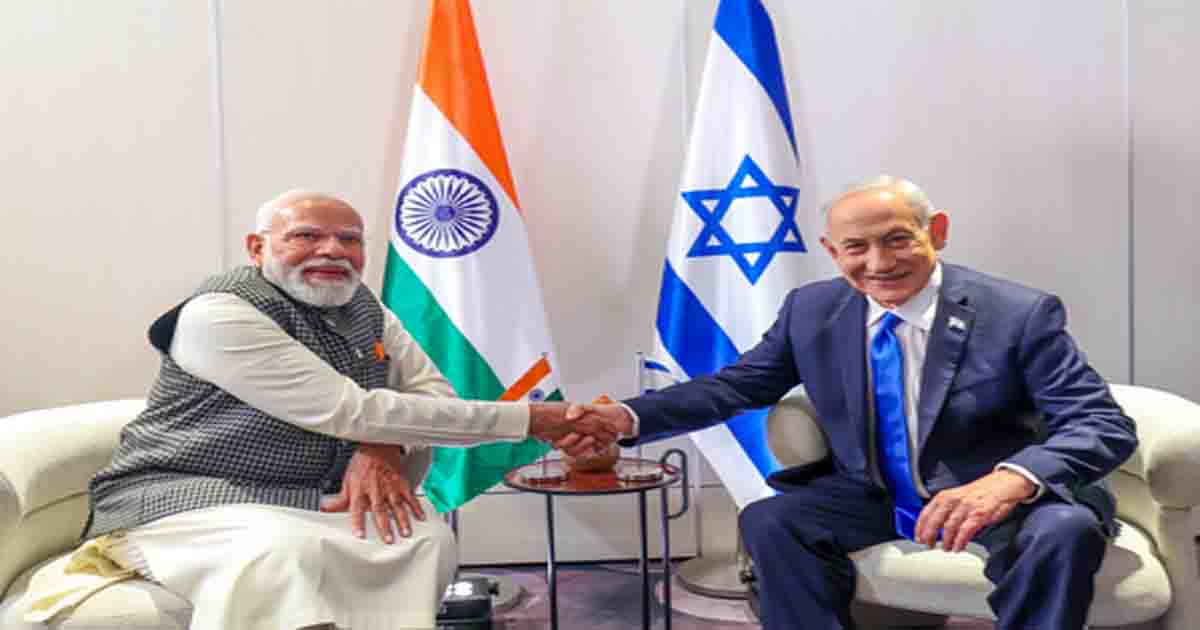
Israel Prime Minister Benjamin Netanyahu held a telephonic conversation with Prime Minister Narendra Modi on Thursday and invited him to light a torch along with “heroic Indian pilot” Captain Smit Machchhar on the country’s Independence Day.
During the phone call, PM Modi and Netanyahu also reviewed the sustained momentum in bilateral ties and reaffirmed their commitment to further strengthen the partnership between both countries.
“Received a phone call from Israeli Prime Minister Benjamin Netanyahu. We reviewed the sustained momentum in our bilateral ties and reaffirmed our commitment to further strengthening our partnership. We also exchanged views on recent developments in West Asia and underscored the urgent need to restore peace and stability in the region,” PM Modi wrote on X after the phone call.
Netanyahu said that PM Modi thanked him for the invitation and expressed India’s readiness to cooperate with Israel in fighting terrorism.
“I spoke with my friend, Indian Prime Minister Narendra Modi, and invited him to light a torch together with the heroic Indian pilot on the Independence Day of the State of Israel. Modi thanked me for the invitation and said that on the ground and in the air, India and Israel fight terrorism together. He expressed his appreciation for the courageous and long-standing relationship between us,” Netanyahu posted on X.
Machchhar sustained severe injuries during an attack by the Omani co-pilot on a Tel Aviv-bound flydubai flight on September 30. The co-pilot allegedly attempted to take control of the aircraft, following which Machchhar fought him off and managed to unlock the cockpit door.
The move allowed crew members and passengers to enter the cockpit and restrain the attacker, averting what could have been a major disaster. The flight was carrying more than 170 people.
On October 3, Netanyahu held a telephonic conversation with Captain Smit Machchhar and hailed him as a “true hero” of the people of India, Israel and the whole world. He invited Captain Smit Machchhar and PM Modi to light a celebratory flame on Israel’s Independence Day.
“Captain, I want to invite you and my dear friend, Prime Minister Narendra Modi, to light a celebratory flame on our next Independence Day. You are a true hero of the brave peoples of India and Israel, and you’re a hero of the entire world,” Netanyahu told the Captain Machchhar.
“I wish you a very speedy and complete recovery,” he added.
The Israeli Prime Minister said the honour was usually reserved for his country’s own citizens. However, he added, “But I think here in this case, all the citizens of Israel will embrace you. They do now and they will then too.”
Netanyahu, who was told by the pilot how the attack unfolded in the cockpit, said he was amazed by his conduct.
“I’m amazed at your courage, at your coolness of judgment under impossible conditions,” the Israeli Prime Minister said, adding that what the Captain did was remarkable and that it bordered on the miraculous.
Netanyahu said the pilot had saved more than the lives of those on board.
“You saved so many souls. I think you saved something bigger. You saved the spirit of the world to realise that a brave pilot and brave passengers can overcome this evil, however threatening, however violent. It’s something that is being justly hailed around the world,” Netanyahu said.
“You’re a hero of Israel. You’re a hero of India. You’re a hero of the entire world,” he added.
Inviting the Captain again towards the end of the conversation, Netanyahu said: “So we hope to see you very soon in Israel. I look forward to seeing you here again. But under the circumstances, I think this will be a memorable and historic visit.”
“Thank you for everything you did,” the Israeli Prime Minister told the Indian pilot.

Class 12 student dies after setting herself on fire at Delhi school; police probe on

Hindu American parents push US teachers to rethink how Hinduism is taught

Maharashtra ATS arrests suspected Jaish-e-Mohammed associate in Mumbai Mahim area

‘Bigg Boss 20’: Rohit Shetty questions Lovepreet Gill, Scout’s closeness

Indian equities extend losses this week as Brent crude oil rises to 6-month high

Rahul, Cong ecosystem want to force regime change: BJP after Neha Bora praises B’desh Gen-Z protest

BJP pays tribute to ex-President Abdul Kalam, recalls his enduring influence on generations of India’s youth

Attack on democratic rights: INDIA Bloc leaders on detentions of anti-ECI protestors

INDIA bloc begins protest march against ECI

Maha Congress stages agitation against Gyanesh Kumar
-

 Crime4 years ago
Class 10 student jumps to death in Jaipur
-

 Maharashtra2 years ago
Mumbai Local Train Update: Central Railway’s New Timetable Comes Into Effect; Check Full List Of Revised Timings & Stations
-

 Maharashtra2 years ago
Mumbai To Go Toll-Free Tonight! Maharashtra Govt Announces Complete Toll Waiver For Light Motor Vehicles At All 5 Entry Points Of City
-

 Maharashtra2 years ago
False photo of Imtiaz Jaleel’s rally, exposing the fooling conspiracy
-

 National News2 years ago
Ministry of Railways rolls out Special Drive 4.0 with focus on digitisation, cleanliness, inclusiveness and grievance redressal
-

 Maharashtra2 years ago
Maharashtra Elections 2024: Mumbai Metro & BEST Services Extended Till Midnight On Voting Day
-

 National News2 years ago
J&K: 4 Jawans Killed, 28 Injured After Bus Carrying BSF Personnel For Poll Duty Falls Into Gorge In Budgam; Terrifying Visuals Surface
-

 Crime2 years ago
Baba Siddique Murder: Mumbai Police Unable To Get Lawrence Bishnoi Custody Due To Home Ministry Order, Says Report