
Business
No increase in fuel prices for 2nd consecutive day on Tuesday


Petrol and diesel prices remained unchanged for the second consecutive on Tuesday providing relief to consumers who have been facing a regular increase in fuel prices in the past few months taking the retail rates to historic high levels.
With no revision, the price of petrol in Delhi remained Rs 105.84 a litre and Rs 111.77 per litre in Mumbai, according to a price notification of state-owned fuel retailers. In Mumbai, diesel rates also remained static at Rs 102.52 a litre; while in Delhi it costs Rs 94.57, the same as on Sunday.
The price pause comes after the rates rose for four straight days when the rates of both petrol and diesel rose by Rs 1.40 paise per litre. There was no change in the rates also on October 12 and 13.
Diesel prices have increased on 19 out of the last 25 days taking up its retail price by Rs 5.95 per litre in Delhi.
With diesel prices rising sharply, the fuel is now available at over Rs 100 a litre in several parts of the country. This dubious distinction was earlier available to petrol that had crossed Rs 100 a litre-mark across the country a few months earlier.
Petrol prices had maintained stability since September 5, but oil companies finally raised the pump prices last week. Petrol prices have also risen on 16 of the previous 21 days taking up the pump price by Rs 4.65 per litre.
Crude prices have been on a surge rising over a three-year high level of over $ 85.7 a barrel now. It has softened a bit, falling below $ 85 a barrel now. Since September 5, when both petrol and diesel prices were revised, the price of petrol and diesel in the international market is higher by around $9-10 per barrel as compared to the average prices during August.



Kathmandu, Oct 15: Nepal and the International Bank for Reconstruction and Development (IBRD), part of the World Bank Group, have signed a mandate agreement to explore the development of a catastrophe bond that could help the Himalayan nation secure rapid access to funds in the event of a major natural disaster.
The agreement marks the beginning of a collaboration to assess the feasibility and potential structure of a catastrophe bond, under which Nepal could transfer part of its disaster risk to international capital markets and strengthen its financial preparedness for natural disasters, the World Bank said in a statement.
Under the agreement, the World Bank Group Treasury will work with the Nepal government and market participants to evaluate the proposed transaction.
The initiative comes as Nepal seeks to strengthen its capacity to prepare for, withstand and recover from natural disasters in the wake of devastating floods in the Bhotekoshi and downstream Trishuli river basins on August 26. The floods have killed nearly 1,500 people, while more than 5,000 remain unaccounted for, according to the National Disaster Risk Reduction and Management Authority.
Triggered by an avalanche near the Nepal-China border that blocked the river’s flow, the floods swept away several human settlements, a dozen hydropower projects, a solar plant, and several roads and bridges. Physical damage is estimated at 1.66 billion US dollars, according to the World Bank’s Global Rapid Post-Disaster Damage Estimation report.
According to the World Bank, Nepal is highly vulnerable to earthquakes, floods, landslides and other climate-related hazards, which can cause extensive damage to infrastructure, disrupt economic activities and place considerable pressure on public finances.
A catastrophe bond is a financial instrument that allows governments or other entities to transfer specific disaster risks to investors. Depending on the terms of the bond, investors may lose some or all of their principal if a specified disaster occurs, allowing the funds to be used to support the affected entity.
“Such instruments can provide an alternative source of disaster financing, potentially enabling governments to access funds more quickly than relying solely on budget reallocations or post-disaster assistance,” the World Bank said.
The initiative is part of the World Bank Group’s established catastrophe bond programme, which has helped countries access international capital markets to transfer disaster risks and secure financial protection against natural hazards.
The World Bank helps countries increase their financial resilience to disasters by supporting disaster risk financing programmes and offering contingent financing and insurance solutions.
It also assists countries in designing, developing and implementing comprehensive disaster risk financing strategies.
“A risk financing strategy helps clients determine a balance between retaining risk, for example, through a contingent financing product, and transferring risk, for example, through an insurance product,” the World Bank said.
A range of financial products can be used to address the financial risks of disasters, and the optimal mix of approaches depends on the types of risks faced by a country and the frequency and severity of disaster events, it said.
Developing countries are particularly vulnerable to the economic and fiscal consequences of disasters because of factors such as gaps in insurance coverage, inadequate infrastructure resilience, and the concentration of populations and economic activities in exposed areas.
“Following a major disaster, governments often have to redirect budgetary resources towards emergency response, relief and reconstruction, potentially affecting other development priorities,” the World Bank said.
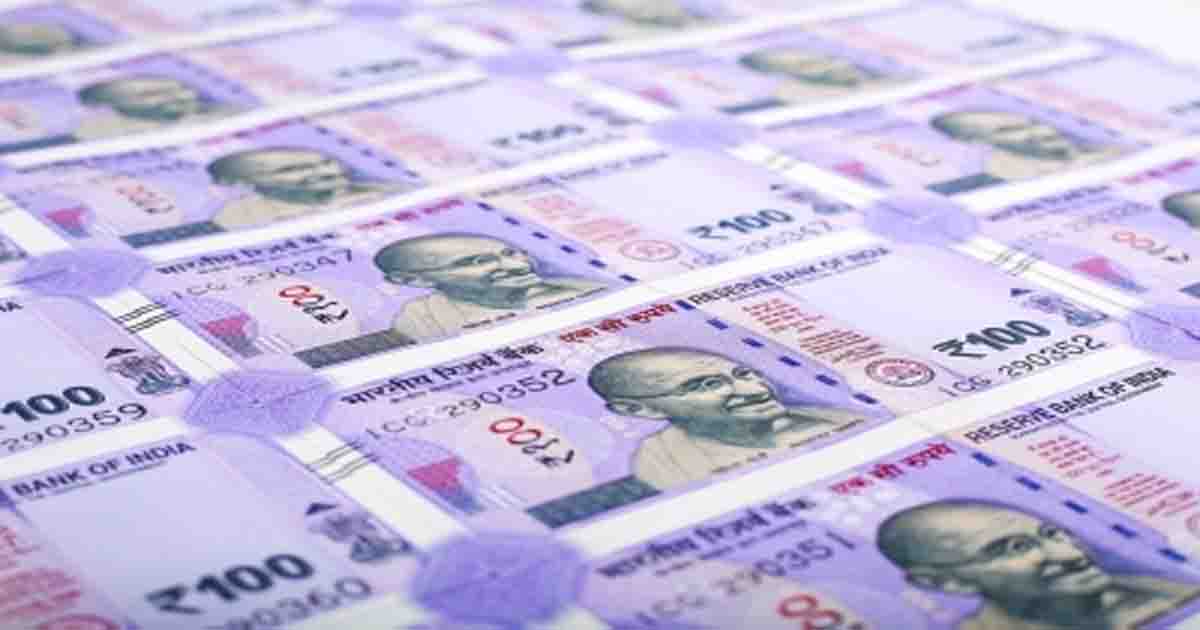
New Delhi, Oct 15: The Indian rupee is likely to remain in an appreciating territory even as global markets remain engulfed in turbulence, while the government and the Reserve Bank of India (RBI) may need to consider further policy steps to shore up resilience, a report said on Thursday.
The report from SBI Research forecasted inflation to peak at around 6.8 per cent in November 2026. It predicted that India’s 10-year yield will likely touch 7.6 per cent which will aid in price discovery in the future as well.
“The USD/INR forward implied yield opened at 4.60 per cent, around 42 bps higher than yesterday’s close,” the report noted.
Higher hedging costs make dollar funding more expensive and could encourage corporates to shift towards INR-denominated borrowing, supporting demand for the rupee, it added.
“The RBI has done a stupendous job and now the government must step up in reducing structural frictions on the taxation front, European Central Bank policy, ODI and AI policy,” the report noted.
The RBI could adopt a calibrated tightening approach through an asymmetric corridor adjustment, raising the MSF rate by 50 bps from 5.75 per cent to 6.25 per cent in the interim.
This could be followed by a 25 bps repo rate hike in December, taking the repo rate to 5.75 per cent and the MSF rate to 6.50 per cent, it forecasted.
Global financial markets are likely to remain volatile amid persistent geopolitical uncertainties, elevated US yields and evolving inflation dynamics.
The RBI has taken salutary steps to stabilise market conditions and can act up to a point, but further measures by the government on the taxation front, particularly concerning G-secs and ECBs clarity on AI policy, could help deepen domestic borrowing avenues and support capital flows.
Business
Govt signs Rs 4,106 crore contracts for communication satellite for IAF, heavyweight torpedoes for Navy


New Delhi, Oct 15: The Ministry of Defence on Thursday said it has signed contracts worth Rs 4,106 crore for the acquisition of a dedicated communication satellite capability for the Indian Air Force, and Varunastra heavy-weight torpedoes for the Indian Navy.
Both contracts mark a significant step towards advancing the development of domestic defence manufacturing capabilities while promoting self-reliance in critical technologies in line with the government’s ‘Aatmanirbhar Bharat’ and ‘Make-in-India’ vision.
The contract for the GSAT-7C satellite, valued at Rs 2,563 crore, was signed with New Space India Limited, Bengaluru.
According to an official statement, this indigenously designed, developed and manufactured satellite will enhance the secure, resilient and seamless communication capabilities for the assets of the Indian Air Force, thereby strengthening operational effectiveness.
Meanwhile, the contract for Varunastra, worth Rs 1,543 crore, was signed with Bharat Dynamics Limited, Hyderabad.
Varunastra is an indigenous ship-launched anti-submarine torpedo developed by the Naval Science and Technological Laboratory.
“Equipped with advanced manoeuvring capabilities, it is capable of engaging enemy submarines at long ranges, thereby enhancing the anti-submarine warfare capability of the Indian Navy,” said the statement.
Earlier this month, the Ministry of Defence signed a Rs 661.50 crore deal with BrahMos Aerospace Private Limited for the procurement of BrahMos fire control system and launchers for Indian Navy ships under the Buy (Indian-IDDM) category.
With a minimum of 68 per cent indigenous content, the project encourages active participation of various Indian industries, including MSMEs (micro, small and medium enterprises) in the supply chain. The project will generate employment over a period of three years.
It also bolsters India’s maritime security architecture and defence capabilities and marks a critical milestone in the ongoing efforts to indigenise advanced military technology, according to the Defence Ministry statement.
The BrahMos System fitted on board various frontline warships is the Indian Navy’s primary Surface-to-Surface Missile (SSM) system for maritime strike operations. The weapon system is capable of targeting land and sea targets from extended ranges with pinpoint accuracy at supersonic speed.

Building collapses in Varanasi due to firecracker explosion, two rescued

Take child sexual abuse material circulation on social media seriously, SC tells Centre

Kerala: 5,991 road accident deaths occurred on national highways in three years

SC refers Rajpal Yadav cheque bounce cases to mediation for amicable settlement

NEET-PG 2026: SC issues notice on plea seeking candidate-wise disclosure of questions, options, and answers

Rahul, Cong ecosystem want to force regime change: BJP after Neha Bora praises B’desh Gen-Z protest

BJP pays tribute to ex-President Abdul Kalam, recalls his enduring influence on generations of India’s youth

Mumbai Cyber Cell arrests 6 members of organized gang in major operation; Beware of cyber fraudsters; Digital arrest has no legal status; DCP Bajrang Bansode

INDIA bloc begins protest march against ECI

Maha Congress stages agitation against Gyanesh Kumar
-

 Crime4 years ago
Class 10 student jumps to death in Jaipur
-

 Maharashtra2 years ago
Mumbai Local Train Update: Central Railway’s New Timetable Comes Into Effect; Check Full List Of Revised Timings & Stations
-

 Maharashtra2 years ago
Mumbai To Go Toll-Free Tonight! Maharashtra Govt Announces Complete Toll Waiver For Light Motor Vehicles At All 5 Entry Points Of City
-

 Maharashtra2 years ago
False photo of Imtiaz Jaleel’s rally, exposing the fooling conspiracy
-

 National News2 years ago
Ministry of Railways rolls out Special Drive 4.0 with focus on digitisation, cleanliness, inclusiveness and grievance redressal
-

 Maharashtra2 years ago
Maharashtra Elections 2024: Mumbai Metro & BEST Services Extended Till Midnight On Voting Day
-

 National News2 years ago
J&K: 4 Jawans Killed, 28 Injured After Bus Carrying BSF Personnel For Poll Duty Falls Into Gorge In Budgam; Terrifying Visuals Surface
-

 Crime2 years ago
Baba Siddique Murder: Mumbai Police Unable To Get Lawrence Bishnoi Custody Due To Home Ministry Order, Says Report