
International News
New South Korean President takes oath, vows to rebuild nation


Yoon Suk-yeol, a former prosecutor, took the oath of office as the 13th President of South Korea on Tuesday and vowed to rebuild the nation on the foundation of a liberal democracy and market economy.
The 61-year-old kicked off his five-year term at midnight in the underground bunker of the new presidential office building in Yongsan by receiving a briefing from the Joint Chiefs of Staff.
To usher in the new administration, a bell-ringing ceremony was held at the stroke of midnight in downtown Seoul.
His inauguration ceremony was attended by 41,000 people, including foreign envoys such as US Second Gentleman Douglas Emhoff and Chinese Vice President Wang Qishan.
In his inaugration address, Yoon outlined various challenges facing the country and the world from pandemics and rearrangements in global supply chains to record-low growth and rising unemployment in South Korea.
“It is our generation’s calling to build a nation that espouses liberal democracy and ensures a thriving market economy, a nation that fulfils its responsibility as a trusted member of the international community, and a nation that truly belongs to the people,” he said before some 41,000 people gathered at the ceremony, noting that he is mindful of his “solemn duty to rebuild
this great nation”.
The new President also offered North Korea an olive branch amid its increased saber rattling
“While North Korea’s nuclear weapon programmes are a threat not only to our security and that of Northeast Asia, the door to dialogue will remain open so that we can peacefully resolve this threat.
“If North Korea genuinely embarks on a process to complete denuclearization, we are prepared to work with the international community to present an audacious plan that will vastly strengthen North Korea’s economy and improve the quality of life for its people,” he added.
Yoon takes over at a time when South Korea is struggling to deal with economic challenges stemming from the Covid pandemic, the war in Ukraine, the threat of North Korea’s nuclear and missile programs and other factors resulting in the phenomenon of “three simultaneous highs” in inflation, interest rates and exchange rates.
Both economic security and North Korea are expected to feature high on the agenda of Yoon’s first summit with US President Joe Biden in Seoul on May 21.
On the domestic front, he faces a hostile National Assembly controlled by the main opposition Democratic Party.


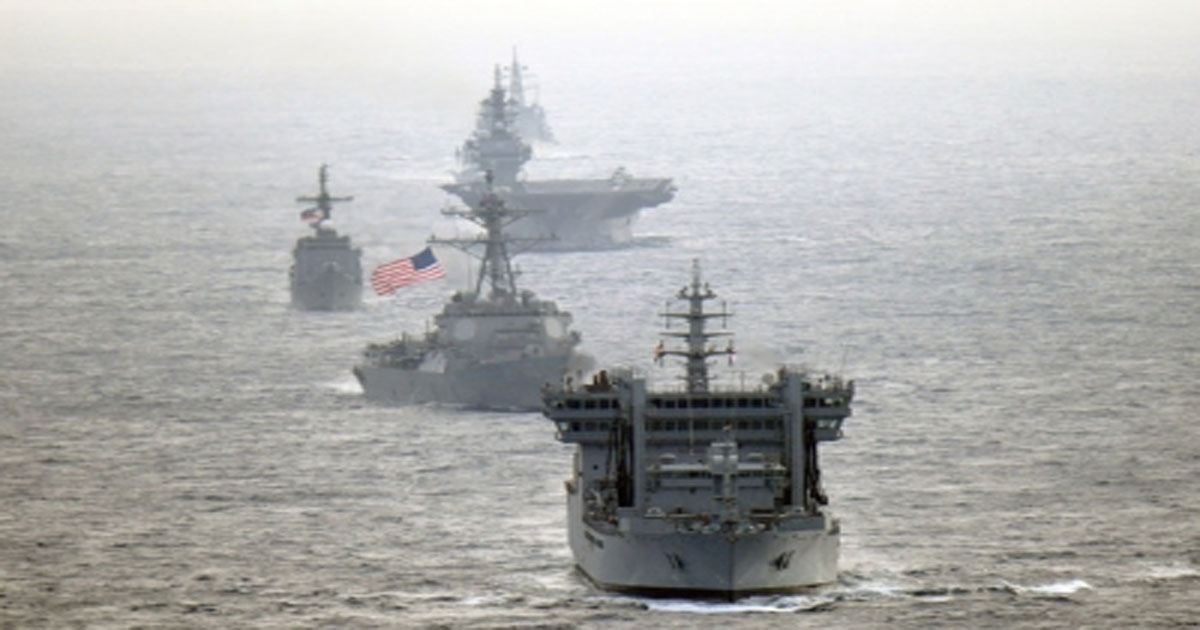
Tehran, May 4: The Navy of Iran’s Islamic Revolution Guard Corps (IRGC) on Monday claimed that it hit a US Navy frigate with two missiles that sought to pass through the Strait of Hormuz, the semi-official Fars news agency reported.
The US frigate, which had set sail near Iran’s southern port city of Jask to cross the Strait of Hormuz “in violation of the traffic and shipping security,” was hit after ignoring the Iranian naval forces’ warning, Fars cited local sources as saying.
It added that after being struck, the frigate was forced to retreat and flee from the region.
However, according to a subsequent report by Axios, a senior US official denied that a US ship was hit by Iranian missiles, Xinhua news agency reported.
Iran has repeatedly announced that no movement is possible through the Strait of Hormuz without its official permission, and ignoring this warning will be met with a decisive response from the Iranian armed forces, according to Fars.
US President Donald Trump said Sunday the United States will guide ships stranded in the Strait of Hormuz safely out of the restricted waterway on Monday.
In response to Trump’s claim, Iran’s main military command, Khatam al-Anbiya Central Headquarters, warned on Monday that “any foreign armed forces, especially the aggressive US army, will be attacked if they intend to approach and enter the Strait of Hormuz,” according to the official news agency IRNA.
Iran tightened its grip on the Strait of Hormuz beginning February 28, when it barred safe passage to vessels belonging to or affiliated with Israel and the United States following joint strikes on Iranian territory.
The United States imposed its anti-Iran blockade on the Strait of Hormuz after post-ceasefire negotiations with Tehran on April 11 and 12 failed to lead to an agreement.
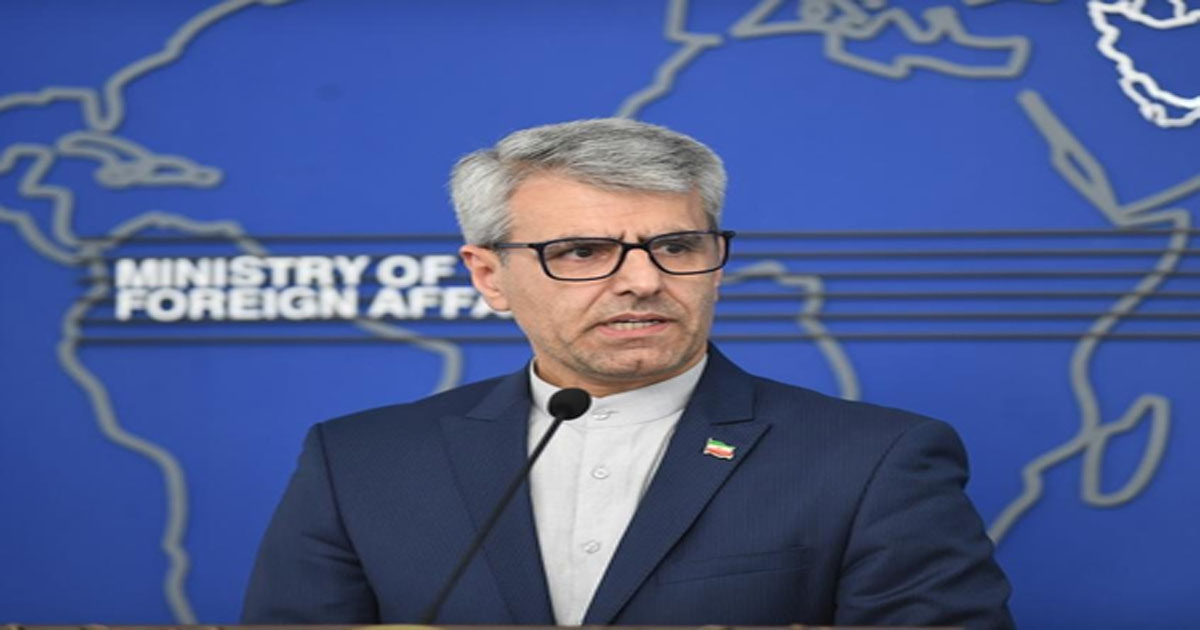
Tehran, May 3: Iran’s Foreign Ministry spokesman Esmaeil Baghaei condemned US President Donald Trump’s remarks that called the US seizure of Iranian vessels “piracy.”
“The president of the United States has openly described the unlawful seizure of Iranian vessels as ‘piracy,’ brazenly boasting that ‘we act like pirates,'” Baghaei said in an X post.
“This was no verbal slip. It was a direct and damning admission of the criminal nature of their actions against international maritime navigation,” Baghaei added.
Trump on Friday bragged that the US Navy acted “like pirates” in its blockade of Iranian ports. “We took over the ship, we took over the cargo, we took over the oil. It’s a very profitable business,” Trump said at an event in Florida, Xinhua news agency reported.
Baghaei called on the international community, UN member states, and the UN secretary-general to firmly reject any normalization of such “blatant violations” of international law.
The United States imposed its anti-Iran blockade on the Strait of Hormuz after post-ceasefire negotiations with Tehran in Pakistan’s capital Islamabad on April 11-12 failed to yield an agreement.
The ceasefire between Iran, the United States and Israel took effect on April 8 following 40 days of fighting. On February 28, the United States and Israel launched joint attacks on Tehran and other Iranian cities, killing Iran’s then-Supreme Leader Ali Khamenei, senior commanders and civilians.
Iran responded with waves of missile and drone strikes targeting Israel and US bases and assets in the Middle East, while tightening its grip on the Strait of Hormuz and denying safe passage to vessels linked to Israel and the United States.
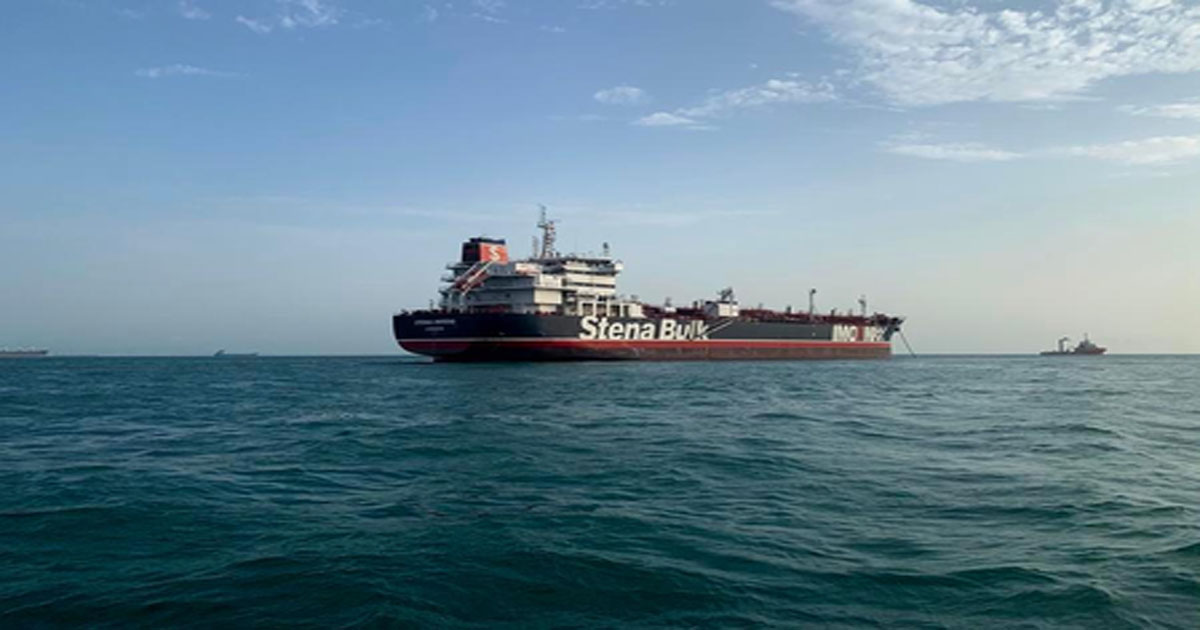
Washington, May 2: The Pentagon has estimated that Iran has suffered losses of around $4.8 billion in oil revenue due to a blockade imposed by the United States Navy on its ports, which cited unnamed officials.
The report noted that two tankers have been seized during the course of the blockade. In addition, officials said that as many as 31 tankers carrying approximately 53 million barrels of oil are currently “stuck in the Gulf,” highlighting the scale of disruption caused to Iran’s oil exports.
According to the same officials, some vessels are now opting for “a costlier and longer route to deliver oil to China for fear of US maritime interdiction,” indicating that shipping patterns have been altered due to concerns over enforcement actions by US forces.
The blockade was imposed by the United States on Iranian ports during a temporary truce, as part of efforts aimed at pressuring Iran to accept a Pakistan-brokered ceasefire that would permanently end the ongoing conflict involving Israel, the United States, and Iran.
Iran had stated last month that it had fully reopened the Strait of Hormuz to commercial shipping following the announcement of a 10-day truce between Israel and the Iranian-backed Hezbollah in Lebanon.
However, the waterway was subsequently restricted again after the US declined to lift its blockade, maintaining that restrictions would remain in place until a permanent agreement to end the war with Iran is reached.
Meanwhile, US President Donald Trump told lawmakers that the war against Iran has “terminated,” as the military action — which was launched without Congressional approval — has reached a 60-day legal deadline.
“There has been no exchange of fire between the United States and Iran since April 7, 2026,” Trump was quoted by Politico as saying in a letter to congressional leaders.
“The hostilities that began on February 28, 2026, have terminated,” Trump said.
According to the report, the latest move is an effort to quelch the fight over the need for Congress to approve the conflict, Xinhua reported.
Under the War Powers Resolution adopted in 1973, the president — after notifying Congress of the use of military force — must terminate the action within 60 days, unless Congress authorises continued military action.
The United States and Israel launched major combat operations against Iran on February 28. The Trump administration formally notified Congress on March 2 of the military action, meaning the 60-day legal deadline would expire on May 1.

Sensational Incident in Mumbai: Man Found with Knife Lodged in His Head Outside Sion Hospital ICU; Allegations of Medical Negligence

West Bengal Assembly Election Results 2026: ‘BJP Win Will Curb Infiltration, Terror,’ Says CM Devendra Fadnavis; Credits PM Modi For Surge

Action taken against Dhulia Muslim settlement is totally unjust, Abu Asim Azmi writes to Minority Commission requesting a stay on the action and notice

IRGC claims to hit US Navy frigate after ignoring Iran’s warning

Agnimitra Paul among six early BJP winners in Bengal as party leads in 192 seats

‘Son Falsely Implicated, We Are Well-Educated’: Father Of Accused Tausif Attar Defends Son After Skullcap, Namaz Coercion Allegations Rock TCS Nashik

Mumbai: Pan-India Hawala Trail Exposes Chilling Conspiracy Behind Rohit Shetty House Firing Case

Asha Bhosle’s son says last respects to be paid at residence in Lower Parel, followed by last rites at Shivaji Park

Mumbai: 15th arrest in Rohit Shetty shooting case, shooter identified, arrested, more arrests possible

Crude oil prices tank up to 20 pc over Iran ceasefire announcement
-

 Crime4 years ago
Class 10 student jumps to death in Jaipur
-

 Maharashtra2 years ago
Mumbai Local Train Update: Central Railway’s New Timetable Comes Into Effect; Check Full List Of Revised Timings & Stations
-

 Maharashtra2 years ago
Mumbai To Go Toll-Free Tonight! Maharashtra Govt Announces Complete Toll Waiver For Light Motor Vehicles At All 5 Entry Points Of City
-

 Maharashtra2 years ago
False photo of Imtiaz Jaleel’s rally, exposing the fooling conspiracy
-

 National News2 years ago
Ministry of Railways rolls out Special Drive 4.0 with focus on digitisation, cleanliness, inclusiveness and grievance redressal
-

 Maharashtra1 year ago
Maharashtra Elections 2024: Mumbai Metro & BEST Services Extended Till Midnight On Voting Day
-

 National News2 years ago
J&K: 4 Jawans Killed, 28 Injured After Bus Carrying BSF Personnel For Poll Duty Falls Into Gorge In Budgam; Terrifying Visuals Surface
-

 Crime2 years ago
Baba Siddique Murder: Mumbai Police Unable To Get Lawrence Bishnoi Custody Due To Home Ministry Order, Says Report