
Maharashtra
Nawab Malik apologises to HC for making statements against Wankhedes

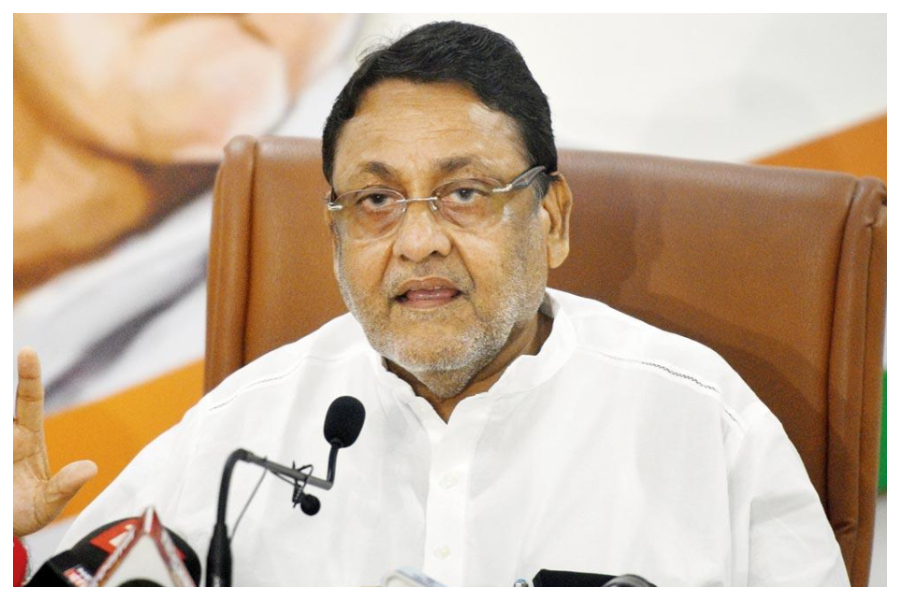
Maharashtra Minister Nawab Malik on Friday tendered an unconditional apology in the Bombay High Court for “wilfully breaching” his undertaking to the court to refrain from making any statements against Narcotics Control Bureau Zonal Director Sameer Wankhede and his family.
In his affidavit in response to an explanation sought by the court why action should not be taken against him as prima facie, Malik had “wilfully breached” its order, he tendered an “unconditional apology” to Justice S. J. Kathawalla and Justice Milind Jadhav.
“At the outset, I tender my unconditional apology to this Honourable Court in respect of the breaches of my undertaking given to this Honourable Court as recorded in the orders dated November 25 and 29, 2021. I had no intention to disrespect, dishonour, overreach or breach the said order,” said Malik.
He also said that his utterances were not any press releases or statements but were part of interviews with the media outlets when he was merely replying to questions asked by journalists.
“These responses were made by me in the belief that such responses made in the course of interviews were not within the ambit of his undertaking before the court,” said Malik, in reference to the defamation case filed by the NCB officer’s father, Dnyandev Wankhede.
The NCP leader assured that he would not make any more personal comments on the Wankhedes until the pendency of the defamation suit, and the apology was accepted by the court.
“I however believe my statement will not prevent me from commenting on the political misuse of central agencies, and the conduct of their officers in the course of performance of their official duties hereafter,” Malik said in the affidavit.
Following the undertaking by Malik’s lawyer Aspi Chinoy, Wankhede’s counsel Birendra Saraf urged that the Minister must not misuse the (above) statement to continue making defamatory utterances against the NCB officer.

Maharashtra
Citizens must ‘ignite like volcano’: Shiv Sena(UBT) uses Balasaheb Thackeray legacy to rally against govt, poll body

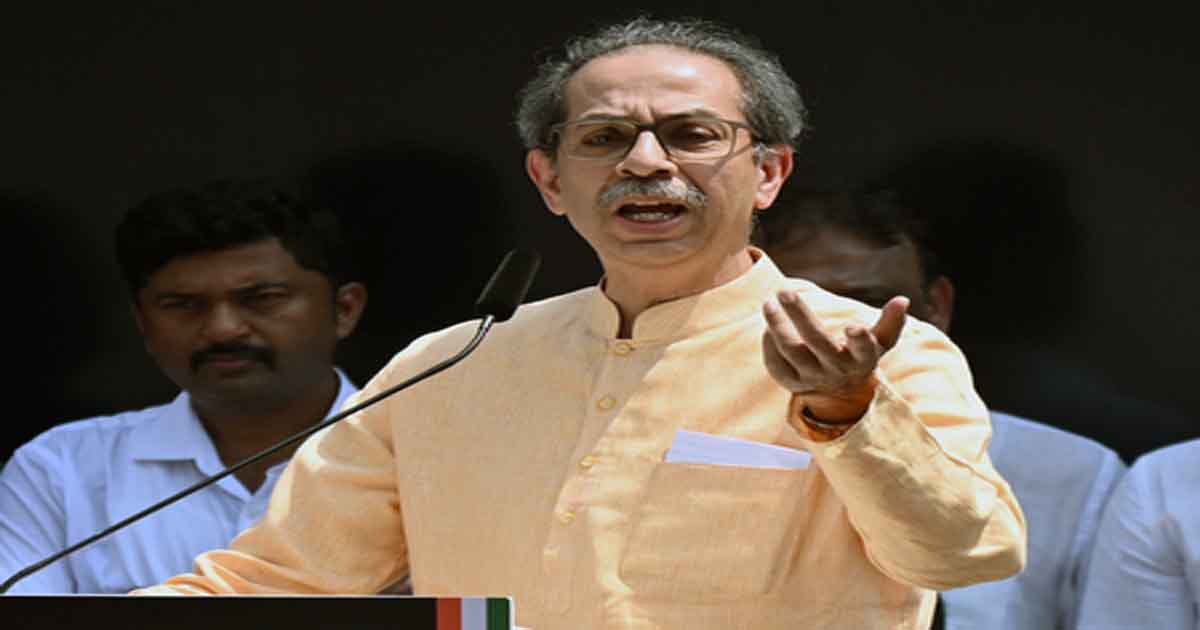
The Shiv Sena Uddhav Balasaheb Thackeray on Tuesday, the 14th death anniversary of the party founder Balasaheb Thackeray, used the occasion to mount a sweeping political attack on Maharashtra Chief Minister Devendra Fadnavis, the central leadership of Prime Minister Narendra Modi and Union Home Minister Amit Shah, and the Election Commission of India.
The Thackeray camp, in an editorial in the party’s mouthpiece, ‘Samaana’, claimed that Maharashtra and the nation continue to feel the absence of Balasaheb Thackeray, whose leadership was defined by discipline, meticulousness, and decisive action. The editorial highlighted how Thackeray connected with common workers and farmers across castes and religions through his speeches, writing, and cartoons.
Emphasising his commitment to building a new history rather than merely stirring up the past, the editorial asserted that the country remains permanently indebted to his historic contributions.
The editorial devoted significant space to portraying Thackeray as a fierce environmentalist who loved Maharashtra’s mountains, rivers, and forests, contrasting this with the current state administration’s policies. It alleged that under Chief Minister Devendra Fadnavis, large-scale deforestation, river reclamation, and mountain excavation are being carried out under the guise of development.
Specifically citing forest areas in Satara, Karjat, Bhimashankar, Aarey, and Gadchiroli, the editorial accused the state government of recklessly clearing forests to benefit a group of industrialists. It further claimed that citizens and activists protesting these projects are being suppressed and labelled as “Naxalites” and “enemies of development”.
Turning to state cooperative politics, the editorial accused Chief Minister Fadnavis of subverting democratic norms during the Kolhapur-based Gokul Milk Union elections. The editorial alleged that the state government altered rules and enacted new laws to disqualify candidates elected by farmers in order to declare defeated ruling-party candidates victorious.
At the national level, the editorial targeted PM Modi, HM Amit Shah, former Chief Election Commissioner Rajiv Kumar, and the incumbent CEC Gyanesh Kumar — referring to them collectively as a “gang of four”. It alleged that this group manipulated electoral processes by deleting crores of names from voter lists and committing “vote theft”, echoing Thackeray’s past warnings that democracy risks becoming a “maidservant of the rulers”.
Concluding its critique, the editorial stated that the public has begun taking to the streets in protest against perceived authoritarianism and electoral irregularities.
Invoking Balasaheb Thackeray’s famous remark that citizens in a democracy must ignite like a volcano against injustice rather than remain passive “sheep”, the Uddhav Thackeray-led Shiv Sena claimed that widespread public sentiment today echoes the belief that had Thackeray been alive, the current leadership in Delhi would have been forced to retreat.
Maharashtra
Former Maha Dy CM Ajit Pawar linked MahaYuti vision directly to PM Modi development agenda: HM Shah
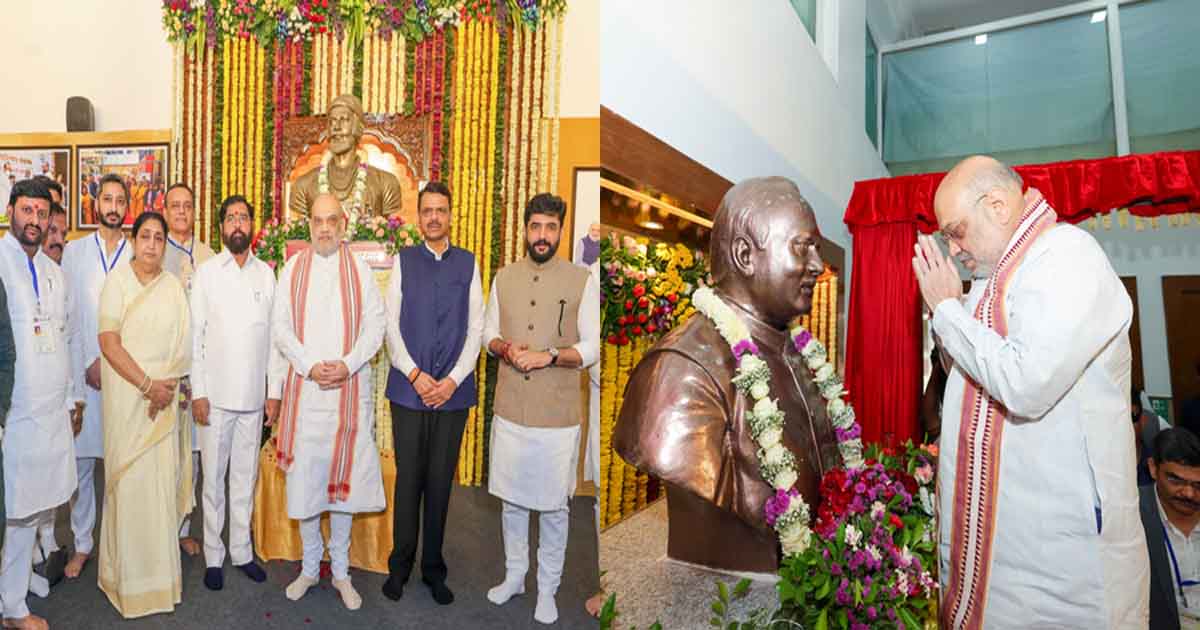
Union Home and Cooperation Minister Amit Shah said on Monday that while joining the MahaYuti alliance, former Deputy Chief Minister late Ajit Pawar firmly believed that Prime Minister Narendra Modi’s national development vision and the MahaYuti were deeply intertwined.
“While taking the decision to join the MahaYuti alliance, Ajit Pawar had said that after Narendra Modi became the Prime Minister, the development of the country cannot be seen separately from the MahaYuti,” he said.
He was speaking during the unveiling ceremony of a statue dedicated to the late former Deputy CM Ajit Pawar in the premises of the Pune Zilla Parishad.
Union Minister Shah praised Ajit Pawar’s rare boldness, saying that he was known for his absolute clarity on complex subjects and never shied away from giving direct “yes” or “no” answers in critical political negotiations.
He termed the former Deputy CM late Ajit Pawar’s untimely demise is an irreparable loss for Maharashtra—particularly for Pune, Baramati, and Pimpri-Chinchwad.
He noted that the void left behind cannot be easily filled.
He shared a personal bond with the Nationalist Congress Party (NCP) leader, describing him as “a dear friend and a mass leader with deep insights into Panchayati Raj, cooperation, agriculture, and modern urban development”.
“The departure of Ajit Pawar is a personal loss for him. He was a good friend of mine. With his passing, we have lost a mass leader who possessed a deep vision of development and long experience and a clear vision in the fields of Panchayati Raj, cooperation, agriculture, and modern urban development,” Union Minister Shah said.
Recalling the resolution of double income-tax issues on cooperative sugar mills under Prime Minister Narendra Modi’s government, Home Minister Shah noted how Ajit Pawar deeply valued this as a monumental boost for the cooperative sugar sector.
“Despite rising from Baramati to the highest echelons of Maharashtra’s leadership, Ajit Pawar remained deeply grounded, prioritising grassroots development, party workers’ rights, and remaining accessible through his signature Lok Darbar until the very end,” the Union Home Minister added.
He recalled that during the second wave of the Covid-19 pandemic, while others feared stepping out, Ajit Pawar maintained a relentless work ethic—reporting to the State Secretariat daily by 7 a.m., managing rescue efforts, and coordinating oxygen supplies.
He said that Ajit Pawar’s methodology of blending sensitivity, coordination, punctuality, and discipline will serve as a lasting source of inspiration for the youth and future politicians of Maharashtra.
“For Ajit Pawar, party workers were supreme; he fearlessly fought for the rights of NCP workers and always placed their interests first. Emerging from Baramati, Ajit Pawar reached the highest leadership of Maharashtra, but even at that position, he remained deeply rooted and kept the development of the region supreme in every discussion. Even while serving as Deputy Chief Minister, Ajit Pawar used to come to Baramati to listen to the troubles of the public maintaining his habit of staying among the people until the very end,” Union Minister Shah added.
According to the Union Home Minister, the methodology of working with sensitivity, coordination, and punctuality that he (Ajit Pawar) established will serve as a source of inspiration for the youth of Maharashtra in the times to come.
He noted that the former Deputy Chief Minister was known for his candidness even on the most difficult topics; very few people in politics have such courage.
Highlighting Ajit Pawar’s unmatched mastery over cooperative structures, Home Minister Shah remarked, “Whether it is a milk union, PACS (Primary Agricultural Credit Society), sugar mills, urban cooperative banks, or district cooperative banks, if you needed an encyclopedia to solve any cooperative problem, the name that always emerged was Ajit Pawar.”
He said that whether it is a milk cooperative society, PACS, sugar factories, urban cooperative banks, or district cooperative banks, if one has to look for an encyclopedia of problems in every cooperative sector, one name emerges, and that is Ajit Pawar.
He added that this is only possible when there is a profound understanding of the importance of the cooperative sector and a genuine affection for farmers, villagers, and poor women dairy producers.
“The shortcomings, virtues, and administration of the cooperative sector cannot be learned from any book. This is only understood when someone works in this sector from the bottom to the top. Ajit Pawar not only nurtured Maharashtra’s cooperative sector exceptionally well but also laboured continuously to advance it and remove its hurdles,” Union Minister Shah remarked.
He said that despite being the Deputy Chief Minister, Ajit Pawar maintained his habit of living among the people until the end of his life.
He added that Ajit Pawar was a leader devoted to his work.
“God called him (Ajit Pawar) back to Him before his time, which saddens us all. However, the work he did, the methodology he created of working with sensitivity toward the people, in a well-planned manner, with discipline, and in a punctual manner, will serve as an inspiration for many young politicians of Maharashtra in the future,” Union Minister Shah said.
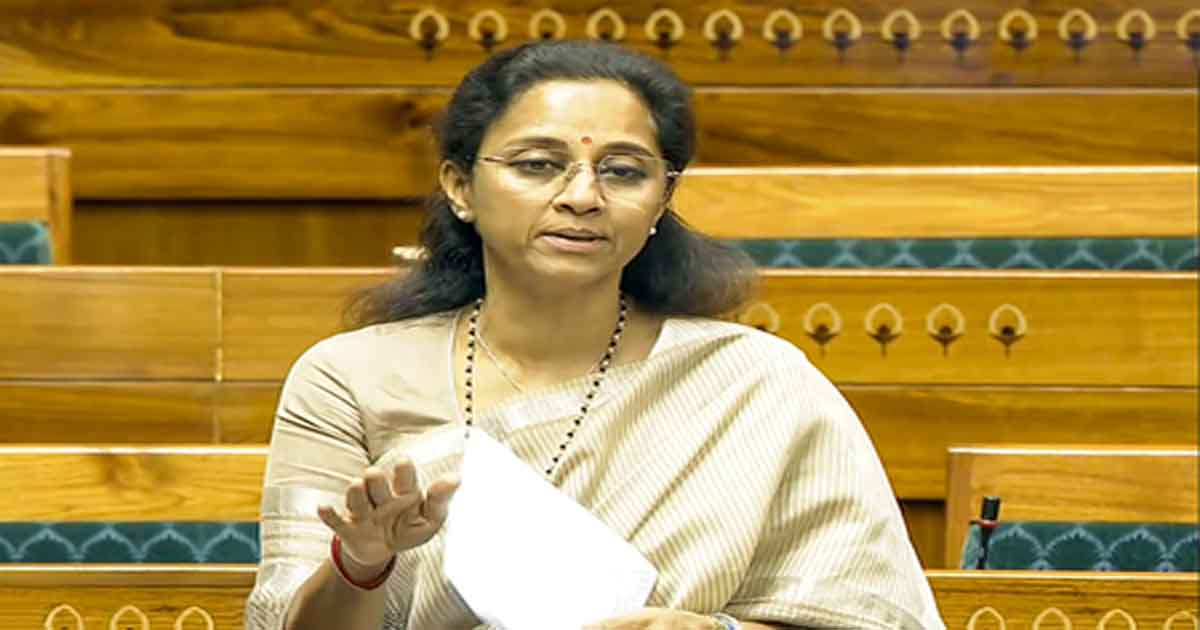
The categorical statement by Nationalist Congress Party (Sharadchandra Pawar) working president and Baramati MP Supriya Sule on Saturday, declaring that merger talks had come to a “full stop” following the tragic death of her brother Ajit Pawar in January this year, and ruling out any possibility of joining the BJP-led NDA, marks a decisive turning point in Maharashtra politics.
With personal ties severed and the two factions aligned with opposing national alliances, the two wings of the Nationalist Congress Party (NCP) now face distinct challenges in sustaining their political relevance, expanding their support base and securing their future in Maharashtra politics.
Having rejected both reunification with the ruling faction and alignment with the National Democratic Alliance (NDA), the NCP (SP) has chosen ideological consistency over immediate access to state power. The Sharad Pawar-led faction is expected to focus more now on its consolidation as the principal Opposition anchor in Maharashtra.
With eight Lok Sabha MPs — far outnumbering the rival faction’s lone MP—NCP–SP holds significant leverage in Delhi and within the Maha Vikas Aghadi (MVA).
By staying firmly in the Opposition, Sule has avoided triggering an internal revolt from younger leaders like Rohit Pawar, who had reportedly threatened to join the Congress if NCP–SP aligned with the Bharatiya Janata Party (BJP).
However, with only 10 MLAs in the Maharashtra Assembly and the next Assembly elections years away, keeping ground-level cadres motivated without state patronage or development funds is notoriously difficult in Western Maharashtra’s cooperative-driven politics.
Former Maharashtra deputy chief minister Ajit Pawar was the undisputed organisational engine of the rival faction. Without his direct grip over local sugar cooperatives, district banks, and municipal bodies, NCP–SP can target second-rung leaders and disgruntled MLAs in the Sunetra Pawar camp who feel sidelined by senior leaders like Praful Patel or Sunil Tatkare.
Poaching the sitting MLAs may invite immediate retaliation from the BJP-led state machinery, including investigative agency scrutiny and financial squeezes on cooperative institutions.
At 86, Sharad Pawar’s active campaigning bandwidth is naturally limited. Sule’s firm “no” to a merger establishes her independent authority, signalling to cadres that she is not looking for a crutch from the ruling faction to inherit her father’s political legacy.
She can position herself as a policy-focused national parliamentarian while empowering Rohit Pawar and Jayant Patil to handle state-level street agitation. Over the medium term, if sustaining a standalone regional party without the “Clock” symbol becomes resource-heavy, NCP (SP) could explore closer structural integration—or even a future merger—with the Congress, returning to its pre-1999 roots.
As far as the ruling NCP faction is concerned, Sule’s statement closes off an easy path to regaining emotional legitimacy among traditional Pawar loyalists. Operating without Ajit Pawar’s charismatic mass appeal, Sunetra Pawar and senior leaders face acute strategic choices.
Sunetra Pawar holds the dual positions of Maharashtra Deputy Chief Minister and national president of the NCP. The party may have to explore an option of transition from a one-man command structure (Ajit Pawar) to a collective leadership model where Sunetra Pawar serves as the unifying Pawar surname and empathetic face, while the party working president Praful Patel manages Delhi equations, the Maharashtra unit chief Sunil Tatkare handles state organisation, and senior minister Chhagan Bhujbal anchors the Other Backward Class (OBC) outreach.
However, recent setbacks in the October 2026 Maharashtra Legislative Council (MLC) polls (where the party nominee lost to NCP (SP) in the Aurangabad graduates constituency) indicate that transferring Ajit Pawar’s personal vote bank seamlessly to a new leadership setup is proving challenging.
With 41 MLAs in a comfortable Mahayuti government, the NCP does not face an immediate existential threat. It can use ministerial portfolios, Guardian Ministerships (such as Pune and Beed), and state funds to keep its MLAs satisfied and ring-fence its Western Maharashtra bastions ahead of local body and civic polls.
But the over-dependence on the BJP may reduce the party’s autonomous identity. As seen in Chief Minister Devendra Fadnavis’s remarks that the BJP would expect to be consulted on any merger, the BJP treats the NCP as a junior partner whose seat share in future elections could be trimmed if its independent vote transfer weakens.
If a formal party-to-party merger is off the table, the ruling NCP can still weaken NCP (SP) incrementally by inducing individual MLAs or local strongmen from Sharad Pawar’s camp to cross over, citing constituency development funds and three more years of Mahayuti rule. However, bringing in outsiders could trigger friction among its own 41 MLAs over ticket distribution and cabinet berths, said the party insiders.
As long as NCP’s identity revolves around being the “other Pawar faction,” it remains vulnerable to comparisons with Sharad Pawar’s original legacy. Sunetra Pawar has already signalled a shift towards issue-based positioning — such as focusing on artificial intelligence (AI) and modern technology in agriculture and party introspection.
Carving out a distinct social coalition (Maratha-OBC-minority balance within the NDA) is essential to survive independently of the Baramati family dynamic.
The political observers argued that a permanently divided NCP prevents either faction from recreating the undivided NCP’s 55–70 seat dominance in Maharashtra. In Western Maharashtra, the BJP gains room to expand into traditional sugar-belt constituencies, while the Congress becomes the primary beneficiary of anti-BJP votes within the MVA.
For voters and party workers, the biggest fallout of Sule’s announcement is clarity. Since January 2026, persistent rumours of a reunion kept cadres in both camps hesitant to attack each other aggressively. With reunification formally buried, both factions will have to now fight each other as permanent political rivals.

Drug cartels turn to private players, DIY videos to evade crackdown; agencies flag new trend

Rahul Gandhi responds to backlash over ‘lap’ remark, shares temple sculpture

Quad is constructive and trusted partnership for India: PM Modi

Vance says Trump will avoid ‘forever war’ in Iran

2027 UP elections: Nitin Nabin to address BJP’s core group meeting in Mathura today

Congress trying to protect 3 crore Bangladeshi infiltrators in voter list: HM Shah

Red Fort car blast probe exposes blueprint for spread of terror modules across India

Tiger Shroff attack: Bihar family denies accused is their son

Trump flags Iran targets as talks continue

‘Should face same punishment as adults’: Abu Azmi demands lowering of age of juvenile offenders to 14
-

 Crime4 years ago
Class 10 student jumps to death in Jaipur
-

 Maharashtra2 years ago
Mumbai Local Train Update: Central Railway’s New Timetable Comes Into Effect; Check Full List Of Revised Timings & Stations
-

 Maharashtra2 years ago
Mumbai To Go Toll-Free Tonight! Maharashtra Govt Announces Complete Toll Waiver For Light Motor Vehicles At All 5 Entry Points Of City
-

 Maharashtra2 years ago
False photo of Imtiaz Jaleel’s rally, exposing the fooling conspiracy
-

 National News2 years ago
Ministry of Railways rolls out Special Drive 4.0 with focus on digitisation, cleanliness, inclusiveness and grievance redressal
-

 Maharashtra2 years ago
Maharashtra Elections 2024: Mumbai Metro & BEST Services Extended Till Midnight On Voting Day
-

 National News2 years ago
J&K: 4 Jawans Killed, 28 Injured After Bus Carrying BSF Personnel For Poll Duty Falls Into Gorge In Budgam; Terrifying Visuals Surface
-

 Crime2 years ago
Baba Siddique Murder: Mumbai Police Unable To Get Lawrence Bishnoi Custody Due To Home Ministry Order, Says Report