
Maharashtra
Mumbai: ‘Mahayuti In 2024 & Kamal Ki Sarkar In 2029 Should Be Our Aim,’ Says Union Home Minister Amit Shah

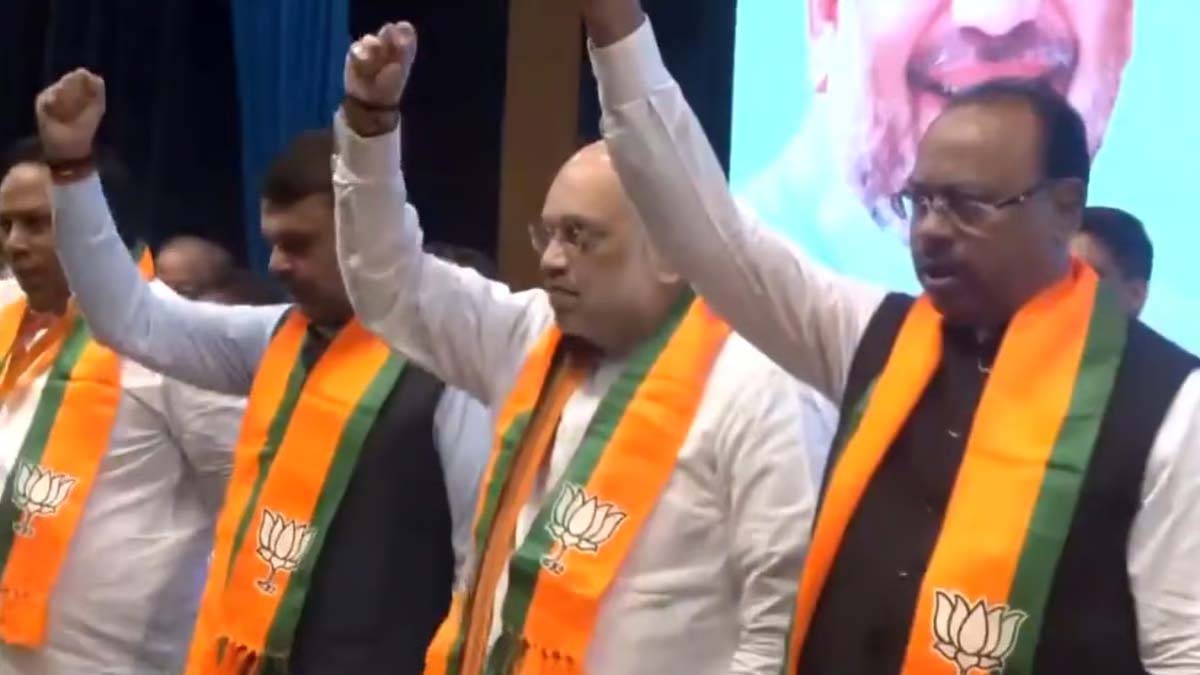
Mumbai: Sensing unrest at many levels within the current Mahayuti ruling alliance in Maharashtra, Union Home Minister Amit Shah asked BJP leaders and workers to resolve internal differences ahead of the assembly elections. This is Shah’s third visit to the state in a fortnight. On Tuesday, he met Deputy Chief Minister Devendra Fadnavis, state BJP president Chandrashekhar Bawankule, and the party’s Mumbai unit head Ashish Shelar at the meeting in Dadar. He is also said to have held seat-sharing meetings with the alliance partners, Shiv Sena and NCP.
Aim For 2024 & 2029
Promising a “pure government”, Shah said the BJP will take centrestage in Maharashtra by 2029, but this year the focus is on Mahayuti.
“Mahayuti in 2024 and Kamal Ki Sarkar in 2029 is what we should aim for,” said Shah, asking party workers to sort out every possible difference.
Shah added, “Why should we be disheartened? Narendra Modi has formed the government thrice in the last 60 years. We are in power, having won the elections; how can Rahul Gandhi claim victory?” He also promised to implement the Uniform Civil Code (UCC) in Maharashtra when in power again.
“If UCC is introduced, Maharashtra will become the third state in the country to do so. This indicates the BJP’s commitment to a uniform legal framework across communities,” he said.
Maharashtra NCP-SP President Jayant Patil Criticises Home Minister Amit Shah Over His Frequent Visits
Criticising Shah over his frequent visits, NCP (SP) state president Jayant Patil said that the BJP has become very weak.
“Instead of going to Haryana and Jammu Kashmir where assembly elections are underway, he is in Mumbai,” Patil said, also claiming that BJP workers are not ready to campaign for their alliance partners.
NCP-SP Launches ‘Hakka Magtoy Maharashtra’ Campaign
Meanwhile, NCP (SP) launched ‘Hakka Magtoy Maharashtra’ (Maharashtra is seeking its right) campaign against the Mahayuti alliance. The party also released a song and a video advertisement to show how the law and order situation has deteriorated in the state, crime against women is allegedly peaking, and farmers and youths are not getting their dues.

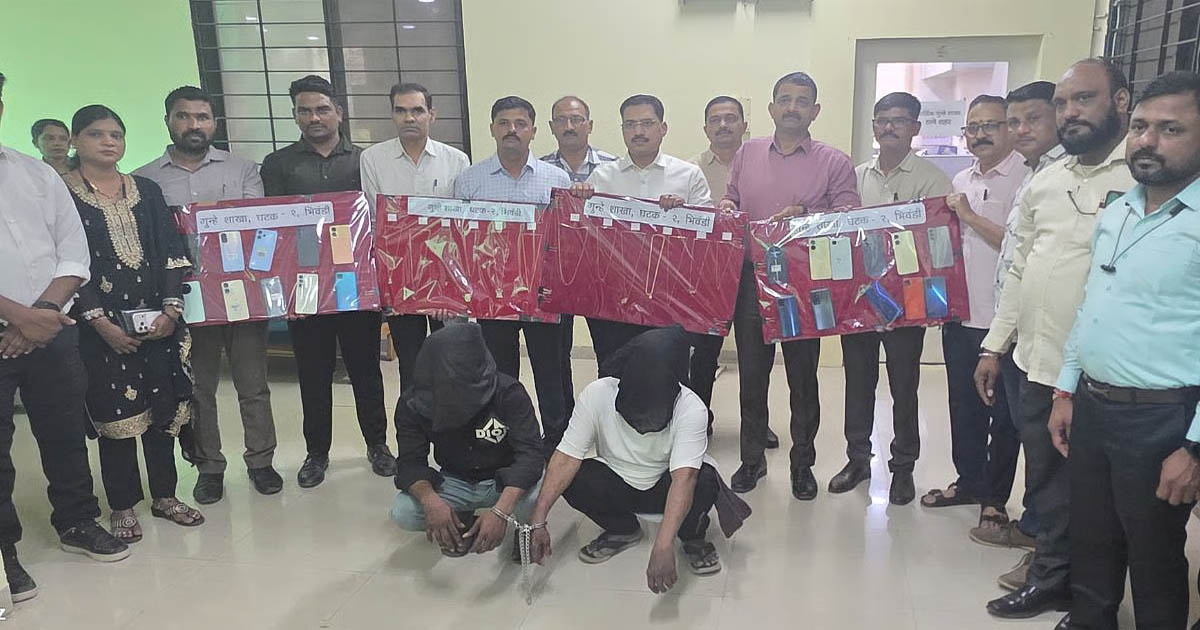
Thane, Feb 14: In a significant crackdown on street crimes, the Thane Crime Branch has successfully apprehended two suspects involved in a series of chain and mobile snatching incidents. The operation has led to the resolution of at least 16 pending cases across several jurisdictions, including Thane, Bhiwandi, and Pune.
Acting on a tip-off and technical surveillance, a special team led by Deputy Commissioner of Police (DCP) Amarsingh Jadhav initiated a targeted drive against rising street robberies. The investigation led to the arrest of two key suspects:
Ravindra Dhanaji Bhosle (24): Arrested on February 4, 2026, in the Kalyan-Bhiwandi area. Following his interrogation, police recovered 45 grams of gold jewellery valued at approximately ₹3.20 lakh. Bhosle has been linked to 13 cases of chain snatching spanning Bhiwandi, Kalyan, Thane, Ulhasnagar, Karjat Railway, and Pune.
Dinesh Pandurang Chator: Arrested for his involvement in mobile snatching. His apprehension led to the recovery of 21 high-end mobile phones and jewellery, with a total estimated value of ₹8.55 lakh.
The suspects reportedly targeted victims in crowded areas and transit points. DCP Jadhav informed the press that the team utilised a combination of CCTV footage analysis and confidential informant networks to track the duo’s movements.
“This operation is a result of a coordinated effort by our special team. We have successfully recovered stolen property worth over ₹11 lakh and cleared 16 FIRs across multiple police stations,” stated DCP Jadhav.
In a significant breakthrough for regional security, the Thane Crime Branch has successfully resolved 16 cases of chain and mobile snatching. The extensive investigation spanned multiple jurisdictions, including Thane, Bhiwandi, Kalyan, Pune, and Karjat.
This coordinated effort led to the recovery of key assets, including 45 grams of gold and 21 mobile phones, with a total estimated recovery value of approximately ₹11.75 lakh. Following this success, the Thane Police have urged citizens to remain vigilant and report any suspicious activity to local authorities.
Meanwhile, further investigations are currently underway to determine if the apprehended suspects are part of a larger organised criminal syndicate or are linked to additional unsolved cases across the region.
Maharashtra
Andheri: Flower Festival inaugurated in the presence of actor Akshay Kumar, Mumbai Municipal Corporation Commissioner Bhushan Gagrani, MLA Amit Sattam and Haroon Khan

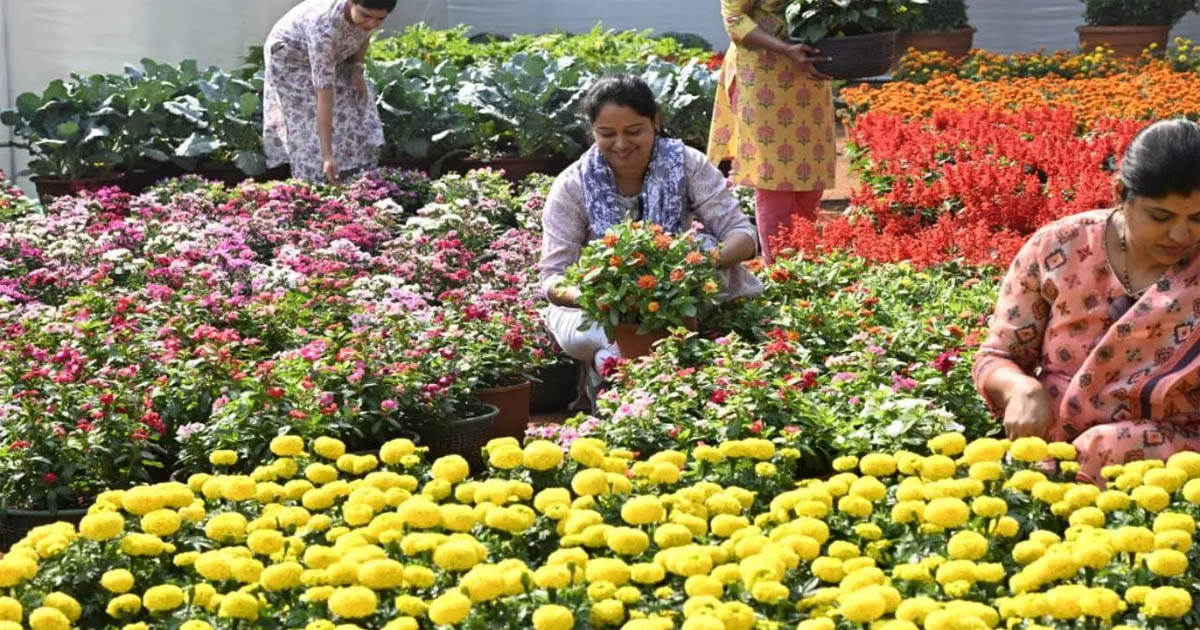
Mumbai: Replicas of musical instruments made of various colorful flowers… peacocks, butterflies, elephants, horses and sanais adorned with flowers, choghdhe, trumpets… abundance of flowers… amazing petunias, broccoli, salvia plants… fragrant flowers with marigolds, roses, mogra etc… plants… vines, vegetables… and for all this, decorated with fertilizers, pots etc., the Andheri Flower Festival was inaugurated today by actor Padma Shri Shri Akshay Kumar. On this occasion, Mumbai Municipal Corporation Commissioner Bhushan Gagrani, MLA Amit Satam, MLA Haroon Khan, Corporator Sudha Singh, Corporator Deepak Kotekar, Corporator M Rohan Rathod, Corporator Anish Makwani, Corporator Sunita Mehta, Corporator Vitthal Bhanderi, Corporator Rupesh Savarkar, Corporator Savarkar, Corporator Bhagya Shri Kapse, Assistant Commissioner of West Zone Chakrapani Ale, Municipal Corporation Parks Superintendent Jitendra Pardeshi and various dignitaries were present. Recently, the Mumbai Flower Festival was organized in South Mumbai by the Mumbai Municipal Corporation. About 1.5 lakh Mumbaikars attended and enjoyed the exhibition. After this exhibition, the Flower Festival is now being organized in Andheri too. This two-day festival is being organized at the Pushpa Narsi Adyar of the Municipal Corporation located on the road. The flower festival is open to all citizens on Saturday, February 14 and Sunday, February 15, 2026 from 8 am to 9 pm. The Andheri Flower Festival is decorated with colorful flowers. There are also halls for trees, pots, fertilizers, garden tools, various plants and tree nurseries, flower medicines, pesticides, sprayers, fertilizers, etc. Along with this, various bonsai varieties, ornamental plants, flowers, vegetables, medicinal plants are also put up for display.
Actor Akshay Kumar said, Mumbai is a very busy city. The Municipal Corporation has organized a beautiful flower festival. This flower festival should be held twice a year. One thing is felt in the flower festival, that is, to come here and ‘stop’. ‘Stopping’ is very important in life. Come and be calm in life. Come here, sit, look… These flowers want to tell you something, that they bring ‘peace’ in your life. Feed yourself. Don’t compete with anyone, just let yourself bloom and when everyone blooms, then only a ‘garden’ is formed. Everyone has many works. I also work a lot. But I completely relax myself after 6 pm. Because the most important thing is health. We should take great care of our health and the flower festival makes you aware of this. Bhushan Gagrani, Commissioner of Mumbai Municipal Corporation, said, the flower festival is an important step taken to protect the environment of Mumbai. We want to take this campaign and this heritage to a higher level, so that every Mumbaikar is involved in it. This treasure of nature should not belong to the municipal corporation or any one person, it is the treasure of every Mumbaikar. We all want to protect it.
MLA Mr. Amit Sattam said that we all should keep Mumbai city clean and beautiful at all times. For this, the actor presented the idea of a cleanliness competition. In which Andheri should compete with Parla, Parla with Santa Cruz, Santa Cruz with Bandra, Bandra with Mahim, Mahim with Dadar and Dadar with Malabar Hill, he suggested organizing a cleanliness competition. We will definitely think about this in the coming time. Mumbai is currently at number nine in Swachh Bharat. MLA Sattam also said that we will try to bring Mumbai to number one soon.
Local citizens, students of municipal schools, youth, senior citizens etc. are visiting the first flower fair in Andheri.
Maharashtra
SIO recommends educational and socio-economic inclusion in Budget 2026-27, demands a budget based on justice and fairness
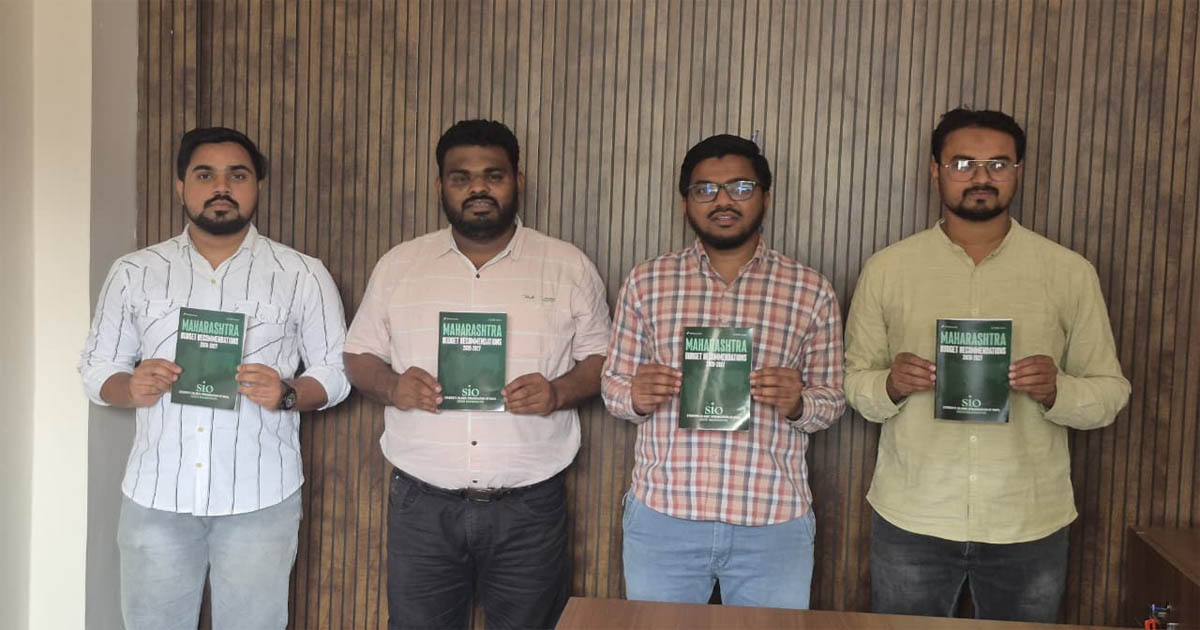
Mumbai: The Students Islamic Organisation of India (SIO), Maharashtra South Zone has submitted its recommendations to the state government for the 2026-27 budget. The report calls for a planned systemic change in the education sector, urging the Maharashtra government to allocate at least 20% of the total budget expenditure for education to ensure the constitutional values of equity and inclusive development.
Despite Maharashtra’s rapid economic growth, the report highlights the lack of development opportunities for the Muslim community. Citing decades of data from the Sachar, Kundu, and Mahmud-ur-Rehman committees, it has been observed that Muslims often lag behind Scheduled Castes (SC) and Scheduled Tribes (ST) in key human development indicators, especially in urban and backward districts.
Key points and recommendations:
- Education Crisis in Urdu Primary Schools
The report reveals a clear disparity in student retention: Only 10 out of every 100 students in Urdu medium schools reach the Higher Secondary Certificate (HSC) level, while the number is 27 in Marathi medium schools.
SIO Demands:
Infrastructure Development: The state government should address the fact that 9.1% of these schools lack boys’ toilets and 6.9% lack girls’ toilets.
Teacher Retention: Special attention should be paid to urgent recruitment and regularization of contract teachers to address the student-teacher ratio.
- Addressing the Shortage of Digital and Other Resources
Currently, only 7% of Urdu medium schools have computer laboratories and the computer-to-student ratio is 81:1, SIO demands dedicated funding for smart classrooms and AI-powered learning tools.
- Reforms in Secondary and Higher Education
To prevent dropouts at the transition stage, SIO suggests:
Extension of RTE Act: The age limit of Right to Education (RTE) Act should be extended to 18 years.
New Institutions: A Central University should be established in Maharashtra to maintain the quality of education and a Higher Education Regulatory Authority should be set up.
Career Opportunities: Vocational exposure at the upper primary stage and career counselling cells should be introduced in all junior colleges.
- Financial Aid and Minority Welfare
The organization demands the government to increase the scholarship allocation to fill the gap left by the closure of MANF and pre-matric scholarships, while ensuring timely and transparent distribution to economically weaker families.
- Urban Development
Beyond the classroom, SIO proposes special interventions in minority-centric areas, including public parks, libraries, student centres and better sanitation management, etc.
In this regard, SIO South Maharashtra President Uzair Ahmed Rangrez said, “The 2026-27 budget is a major opportunity to correct long-standing regional and social imbalances. We are not just asking for funding, we are asking for a roadmap for social justice. By prioritizing these recommendations, the government can ensure that every citizen is included in the ‘Maharashtra Development Agenda’, regardless of the region they come from or the language they speak.” This was informed here today by
Awais Siddiqui
State Secretary, Public Relations
SIO, South Maharashtra.

Thane Crime Branch Busts Chain And Mobile Snatching Racket, Solves 16 Cases Across Region

Andheri: Flower Festival inaugurated in the presence of actor Akshay Kumar, Mumbai Municipal Corporation Commissioner Bhushan Gagrani, MLA Amit Sattam and Haroon Khan

SIO recommends educational and socio-economic inclusion in Budget 2026-27, demands a budget based on justice and fairness

Filmy-Style Crackdown In Kalyan: Pune’s ‘Most Wanted’ Nabbed After High Drama In Irani Basti

Mumbai BMC issues notice of seizure of property to major defaulters for non-payment of property tax

Mumbai Traffic Update: Heavy Vehicles Banned In City From February 1 During Peak Hours; What’s Allowed & What’s Not?

BMC Election Results 2026 Winners List: Check Ward-Wise Names Of Candidates Who Secured Victory

Mumbai BMC Results Samajwadi Party Wiped Out From Govindi

Sensex, Nifty close week with gains over positive cues

Mumbai, Parts Of Thane & Bhiwandi To Face 10% Water Cut As BMC Undertakes Maintenance Work; Know If Your Area Is Affected
-

 Crime4 years ago
Class 10 student jumps to death in Jaipur
-

 Maharashtra1 year ago
Mumbai Local Train Update: Central Railway’s New Timetable Comes Into Effect; Check Full List Of Revised Timings & Stations
-

 Maharashtra1 year ago
Mumbai To Go Toll-Free Tonight! Maharashtra Govt Announces Complete Toll Waiver For Light Motor Vehicles At All 5 Entry Points Of City
-

 Maharashtra1 year ago
False photo of Imtiaz Jaleel’s rally, exposing the fooling conspiracy
-

 National News1 year ago
Ministry of Railways rolls out Special Drive 4.0 with focus on digitisation, cleanliness, inclusiveness and grievance redressal
-

 Maharashtra1 year ago
Maharashtra Elections 2024: Mumbai Metro & BEST Services Extended Till Midnight On Voting Day
-

 National News1 year ago
J&K: 4 Jawans Killed, 28 Injured After Bus Carrying BSF Personnel For Poll Duty Falls Into Gorge In Budgam; Terrifying Visuals Surface
-

 Crime1 year ago
Baba Siddique Murder: Mumbai Police Unable To Get Lawrence Bishnoi Custody Due To Home Ministry Order, Says Report