
Maharashtra
Mumbai: CR To Install More CCTV Cameras, Talk Back Systems In Ladies Coaches Of Local Trains; Panic Buttons On Every Platform

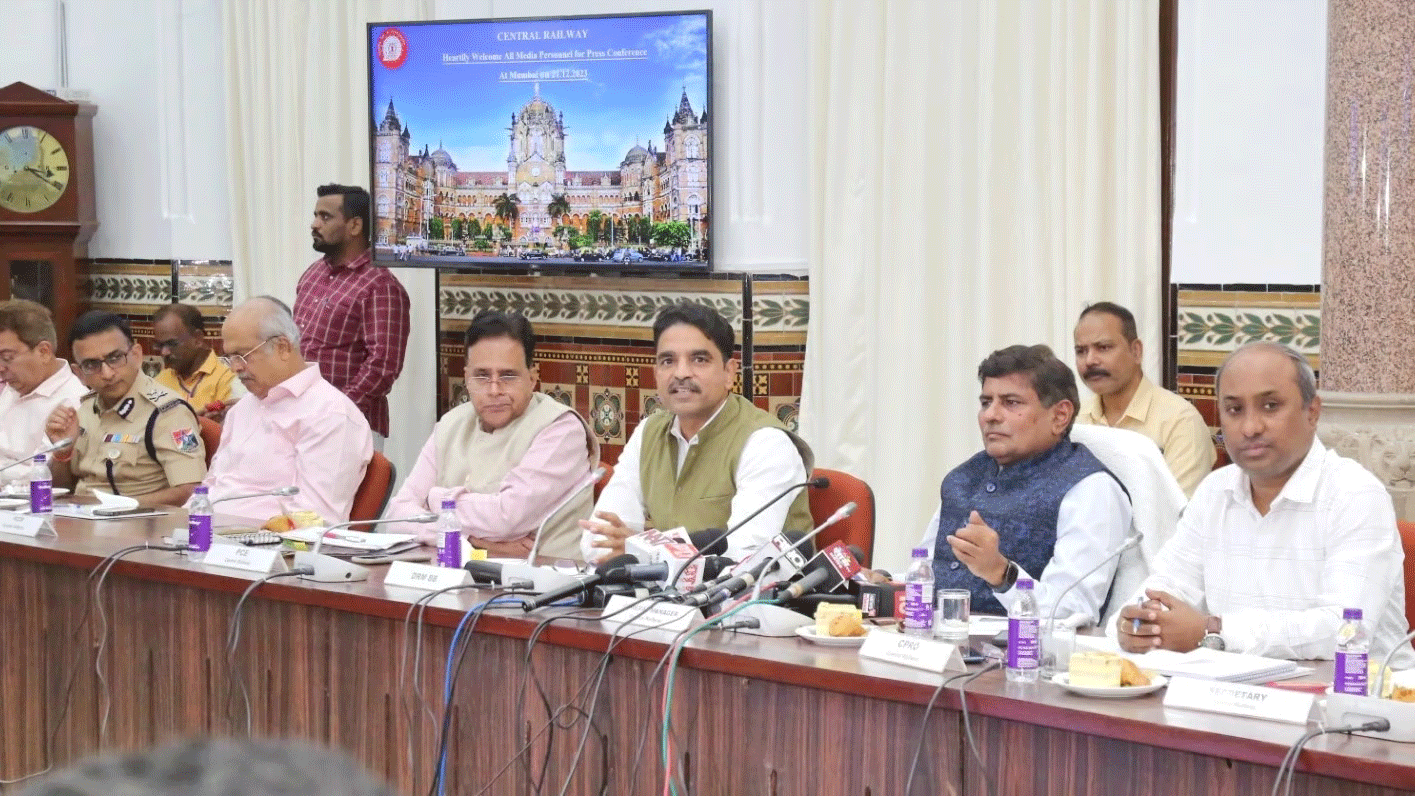
The Central Railways (CR) is taking significant strides to enhance the safety, security, and efficiency of its services, with a comprehensive set of initiatives aimed at benefiting commuters. In a press conference on Thursday, Ram Karan Yadav, the General Manager of Central Railways, highlighted several key projects and improvements.
Yadav acknowledged the challenges associated with introducing more 15-car local train services, emphasizing the necessity for platform extensions to accommodate the longer trains. When questioned about the accommodation in first-class compartments for women, he stated that existing compartments adhere to norms, but further consideration would be given based on demand.Asked about the proposed station between Mulund and Thane he said authorities concerned have yet to allocate the necessary land for the new station.
Enhanced security for women
One of the primary focuses is the safety of women passengers. CR has undertaken the task of equipping all ladies coaches of suburban trains with CCTV cameras and TalkBack systems by March 2024. Currently, 421 out of 771 coaches are already equipped with CCTV, and emergency TalkBack Systems are operational in 512 ladies coaches. The “Meri Saheli” scheme has been launched to secure women traveling alone on long-distance trains, with special attention to 103 identified crime-prone trains.
40 critical signals grappling with visibility and identity issues
Mumbai division of CR has identified 40 critical signals grappling with visibility and identity issues. According to Yadav a comprehensive plan for the potential relocation of these signals onto gantries will be executed in adherence to the guidelines set by the Railway Board. The Mumbai division, which boasts nearly 2000 signals, including 390 on the right side, has identified this subset of signals as a priority due to visibility challenges.
Station security and technological advancements
Beyond the trains, CR is investing in station security with the installation of panic buttons at two locations on each platform across its 117 major stations. Additionally, advanced technology, such as Video Analytics and Face Recognition capabilities, is being integrated into CCTV systems at prominent stations.
Innovative driver assistance systems
To enhance the safety of train operations, CR is implementing Advanced Driver Assistance Systems (ADAS) in suburban trains. ADAS includes audio alert units, Signal Location Announcement System (SILAS), and a Virtual Reality Based training module for crew training. The ADAS, combined with Cabin Video Voice Recording Systems (CVVRS), ensures continuous monitoring of the crew’s status, addressing concerns like fatigue, distraction, mobile usage, and smoking.
Infrastructure upgrades, redevelopment
CR is actively involved in infrastructure development, with the ongoing redevelopment of Chhatrapati Shivaji Maharaj Terminus (CSMT) and major upgrades at Nagpur and Ajni stations. The timeline for the CSMT redevelopment project is targeted for completion within the next 30 months.
79 unauthorised entry points
CRs Mumbai’s division has identified 79 unauthorized entry points out of this 12 already closed .Efforts are on to close the remaining points gradually to control the trespass. Furthermore, the Mumbai division has sanctioned the construction of a 46 km boundary wall at various locations, with 3.5 km completed and the rest in progress. Additionally, 204 locations have been earmarked for boundary wall/fencing construction, with 25 already completed.
Despite these measures, Yadav said that in the past year, 272 trains experienced delays due to human run-over incidents, with 227 delays recorded in the current financial year. Expressing concern over the loss of precious lives, Yadav urged the public to refrain from crossing railway tracks for their safety.
Speed enhancements of suburban trains
According to Yadav, Mumbai Division is set to boost local train speeds in three suburban sections. The Tilak Nagar to Panvel harbor line, currently at 80 kmph, aims to reach 105 kmph by March ’24. Similarly, the Thane-Vashi and Nerul-Kharkopar sections are undergoing speed enhancements projected to conclude by March ’24. Additionally, the Karjat-Khopoli section’s speed is targeted to increase from 60 kmph to 90 kmph by March ’24, contributing to overall improvements in local train efficiency.
Passenger amenities
CR is focused on improving passenger amenities, including the development of subscription-based “Woloo” toilets for women at six stations in Mumbai. These modern facilities are equipped with WiFi, central air conditioning, access control software, and sanitary napkin dispensers.
Environmental initiatives
CR is actively pursuing green energy solutions with the installation of 8.2 MW of rooftop solar energy and plans for an additional 10 MW in the near future. Wind power energy, amounting to 56.4 MW, is being utilized for traction. The commitment to environmental sustainability also includes operating 98 Linke Hofmann Busch (LHB) rakes on Head on Generation (HOG), achieving an operational efficiency of 85%.
Social responsibility and security measures
The Central Railways, through its Railway Protection Force (RPF), has undertaken various measures such as rescuing 1121 children, saving lives, recovering stolen railway material, and cracking down on ticket touts, unauthorized hawkers, and male passengers in ladies’ compartments.
AC coaches of long distance trains will be equipped with smoke detectors
According to Yadav, smoke detection system in 837 AC coaches (464 during this year) already provided. In remaining 372 coaches it will be provided upto March 2024″ said Yadav .A total of 103 crores. Passengers carried by CR in this financial year as compared to 94 crores last year upto Nov’23.
Hundred percent electrification
According to Yadav, hundred percent Electrification of broad gauge routes except new line of Ashti- New Loni section of 40 Kms which is planned to be completed by March 24.Thereby reducing the traction change.


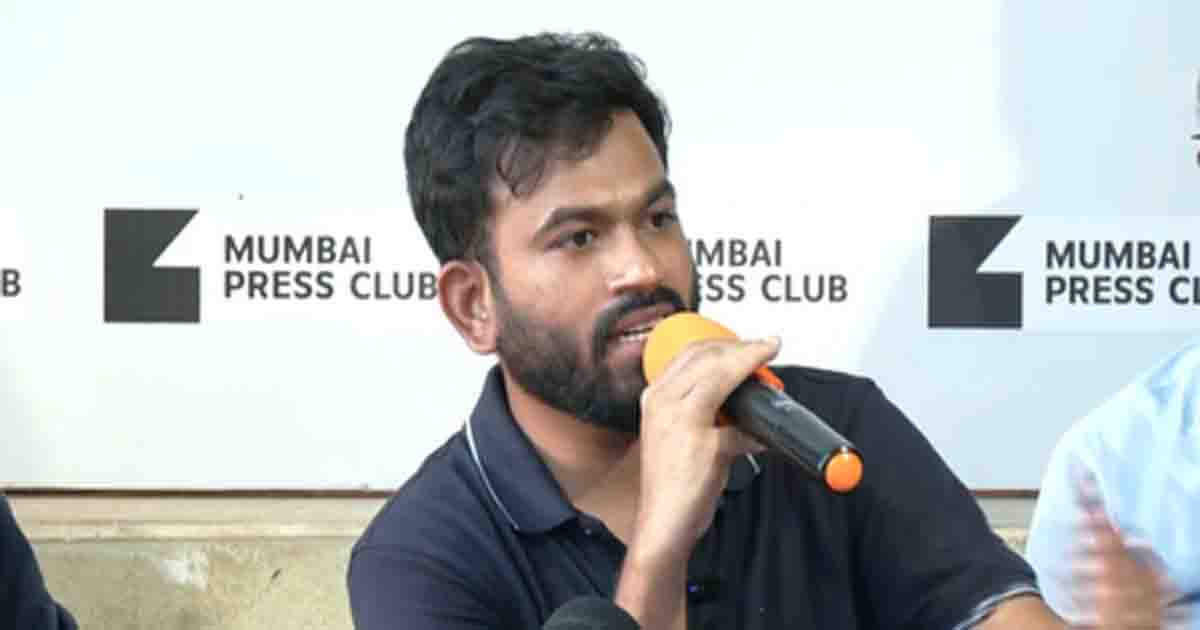
Mumbai, Oct 1: Launching a direct and fiery broadside at Maharashtra Chief Minister and Home Minister Devendra Fadnavis, Cockroach Janta Party (CJP) founder Abhijeet Dipke on Thursday warned the state government against making tactical errors, daring the authorities to arrest him ahead of CJP’s scheduled demonstrations from October 2 in Mumbai.
“Do not repeat the mistake committed on July 20. If you want to arrest us, do it right now,” he declared during a press conference in Mumbai, setting a tense backdrop for his party’s upcoming agitation against Chief Election Commissioner (CEC) Gyanesh Kumar.
Calling Chief Election Commissioner Gyanesh Kumar a “traitor to the nation,” Dipke demanded his immediate resignation over allegations of widespread electoral roll manipulation.
He accused the ruling coalition of engaging in state-sponsored disenfranchisement and using the Election Commission of India (ECI) as a political tool.
“Whoever sits as the Chief Election Commissioner must be transparent. The 13 crore voters whose names were deleted across the country will hit the streets, and when they do, the public will demand the resignation of Gyanesh Kumar’s bosses,” Dipke asserted.
He further demanded that the Election Commission freeze the recent Special Summary Revision (SIR) lists and conduct upcoming elections strictly using the 2005 voter lists.
Addressing questions regarding police authorisation for the demonstrations, Dipke rejected the necessity of official approval, drawing a historical parallel to the Indian freedom struggle.
“Which of our protests was ever granted permission? We are protesting democratically against the ruling power — why would they permit it? Had Mahatma Gandhi asked the British for permission to protest, they would have refused him too. Permission or not, we will march,” he said.
Taking a direct swipe at CM Fadnavis over his recent remarks that protesters face a three-day jail term before securing bail, Dipke scoffed, “Keep me in jail for three months instead of three days… I will return to the streets again and again,” echoing Fadnavis’s famous political slogan.
He also questioned the selective granting of venue permissions: “If Devendra Fadnavis can hold a political rally at Shivaji Park and ask for votes, why are we barred from protesting at the very same site?”
Dipke announced that CJP will extend full support to the opposition’s joint agitation on October 4. While Dipke will be on a nationwide tour, CJP cadres will assemble in force in Mumbai, setting aside party lines to join a larger united front against the ECI.
Looking ahead to future electoral dynamics, Dipke highlighted the power of young voters. He said, “In the 2029 elections, Gen Z will constitute the single largest voter demographic. It is our duty to deliver the kind of country they envision and deserve.”
Addressing recent public criticism of his high-end wardrobe choices during political campaigns, Dipke dismissed the political chatter surrounding his Rs 30,000 shoes. “I wear Rs 30,000 shoes because I can afford them. I am a massive Shah Rukh Khan fan — it was simply a fan moment and a reel,” he clarified.
With opposition parties gearing up for a massive protest outside the ECI headquarters in New Delhi on October 6, CJP’s Mumbai agitation on October 2 marks the start of escalating confrontation between opposition factions and the Election Commission.
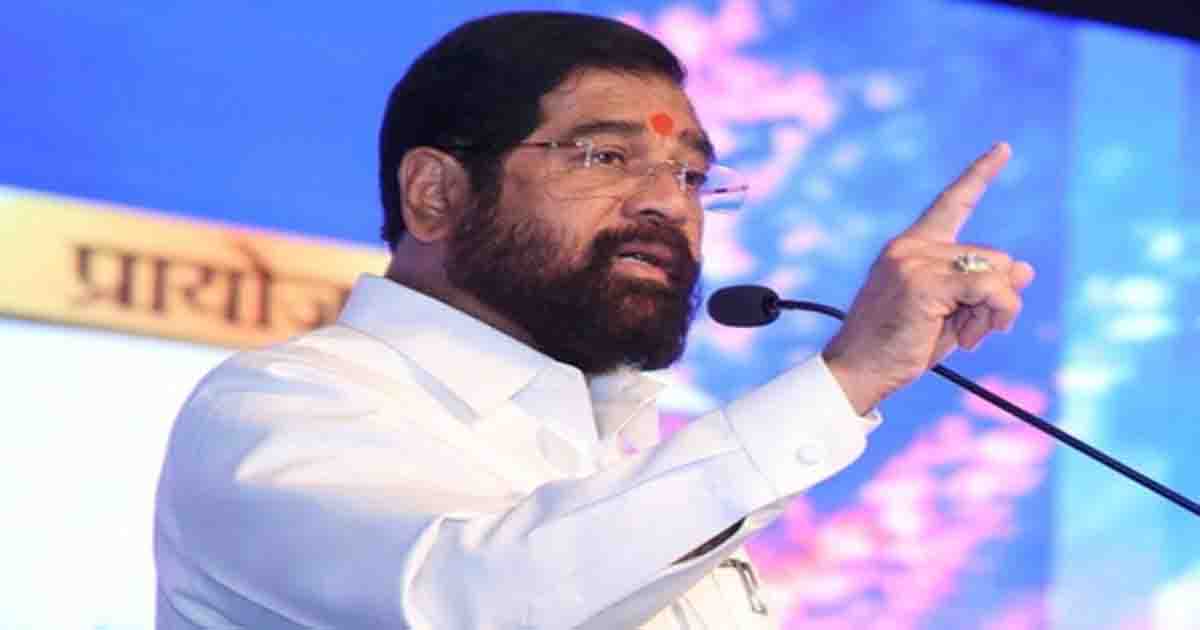
Mumbai, Oct 1: Against the backdrop of the severe drought-like situation prevailing across 265 talukas in Maharashtra, Deputy Chief Minister Eknath Shinde on Thursday appealed to the public to celebrate the upcoming Navratri festival and other religious and cultural events with utmost simplicity to stand firmly by the farmers, the nation’s providers.
He also urged Shiv Sena office-bearers, public festival committees (Ganesh and Navratri mandals), and citizens to contribute the funds saved from festival expenditure directly as relief to drought-affected farmers.
“Forego lavish festival celebrations this season and reallocate event funds towards the relief and rehabilitation of drought-affected farmers across Maharashtra,” he said in a post on X.
This year, due to failed rains in Vidarbha, Marathwada and other parts of the state, a shadow of drought has spread across most regions.
With nature’s fury ruining standing crops, thousands of farmers are left devastated.
Speaking on this critical situation, Deputy Chief Minister Shinde reiterated his stance, stating that “our Baliraja (farmers) have the primary right over the state treasury”.
He emphasised that during such times of crisis, the Mahayuti government and the Shiv Sena stand resolutely behind farmers with full strength.
While official government-level relief measures are actively underway, he noted that it is equally vital for everyone to step forward as a society and contribute during this hour of need.
He said celebrating upcoming festivals with grandeur and fanfare while farmers are in distress and anxiety would be inappropriate.
Therefore, public committees, Shiv Sena office-bearers, social organisations, and citizens should observe festivals. Instead of lavish expenditure on celebrations, the saved funds should be redirected towards direct relief and rehabilitation for drought-affected farmers.
Deputy Chief Minister Shinde expressed confidence that if everyone comes to the aid of food providers during their time of crisis, overcoming this natural disaster would be well within reach.
He noted that if saving festival costs allows society to wipe away the tears of even a single farmer and bring a smile to that person’s face, it would truly be genuine service to Goddess Jagadamba.
Reaffirming the Mahayuti administration’s commitment to the farming sector, Deputy Chief Minister Shinde said the government has prioritized mobilizing resources.
However, he called for a broader collective effort to support farmers battling agrarian distress.
“The first claim on the treasury of this state belongs to our farmers,” he said, adding that when farmers are battling the dire circumstances of drought, it is a collective moral and social responsibility to stand firmly by their side. He further said it would not be appropriate to celebrate upcoming religious or cultural festivals with great pomp and show while farmers remain gripped by anxiety.
With dry spells affecting multiple districts, the state government is actively deploying relief measures.
Deputy Chief Minister Shinde said unified public participation, alongside government assistance, would help the state overcome this natural adversity and restore long-term security to rural Maharashtra.
Maharashtra
Malegaon 2006 Blast Case: Supreme Court Stays Bombay High Court’s Remarks Against Muslim Accused Discharged from the Case

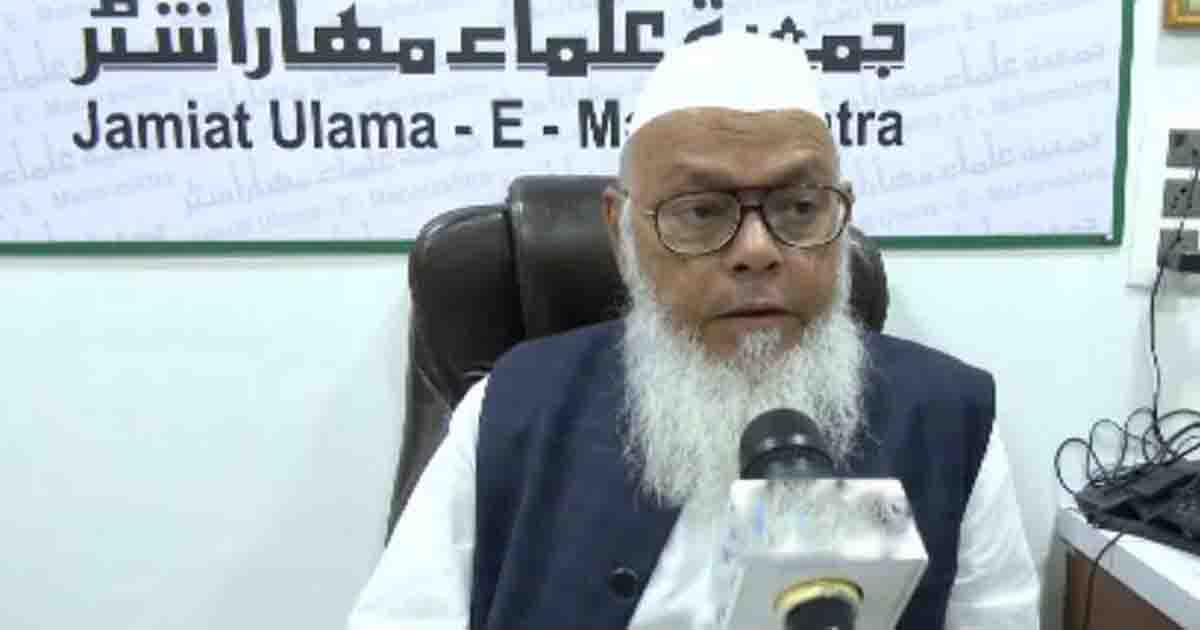
Victims of the 2006 Malegaon bomb blast have filed a petition in the Supreme Court of India against four accused—Rajendra Chaudhary, Manohar Ramsingh Narwaria, Dhan Singh, and Lokesh Sharma—who were discharged from the case last month; a hearing on this matter took place today. Additionally, a petition was filed seeking the expunging of High Court remarks made against the Muslim accused who had been discharged from the case; the Supreme Court granted this request and directed the Bombay High Court to hear the pending appeal concerning the Muslim accused without being influenced by the High Court’s recent observations. Meanwhile, the Maharashtra ATS, along with Dhan Singh and others, has filed a petition in the Bombay High Court against the nine Muslim individuals who were discharged from the case. Senior Advocates Nitya Ramakrishnan and Sadan Farasat presented arguments before the Supreme Court bench comprising Justice Arvind Kumar and Justice Vipul Pancholi. Jamiat Ulama-e-Maharashtra (Arshad Madani) provided legal representation on behalf of the bomb blast victims and the Muslim accused who had been discharged from the case. During today’s hearing, Advocate Sadan Farasat informed the two-judge bench that a division bench led by the Chief Justice of the Bombay High Court had recently discharged four accused persons (Dhan Singh and others) from the case; however, the court’s judgment also included remarks against the Muslim accused. These remarks were made in the absence of the Muslim accused and without affording them an opportunity to present their side; therefore, the court was urged to expunge these observations. Acting on Advocate Sadan Farasat’s request, the bench ordered that the remarks made in the Bombay High Court’s judgment would not prejudice the cases currently pending in the High Court concerning the discharged accused—Noorul Huda and others—and directed the High Court to decide the appeals on their merits. Following the conclusion of Senior Advocate Sadan Farasat’s arguments, Senior Advocate Nitya Ramakrishnan, representing the bomb blast victims, informed the court that the High Court had discharged accused individuals Rajendra Chaudhary, Manohar Ramsingh Narwaria, Dhan Singh, and Lokesh Sharma, even though charges had already been framed against them in the trial court. The bench directed Senior Advocate Nitya Ramakrishnan to present arguments regarding the appeals filed by the bomb blast victims next week and adjourned the hearing. Expressing satisfaction with today’s court proceedings in Mumbai, Maulana Halimullah Qasmi, President of Jamiat Ulama-e-Maharashtra, stated that a partial success had been achieved. Victims of the bomb blast, along with the accused—Noorul Huda, Mohammad Ali Shaikh, Asif Bashir, Mohammad Zahid, and Raees Ahmed (who were discharged from the case in 2016)—had requested the Jamiat Ulama-e-Maharashtra Legal Aid Committee, through Maulana Abdul Qayyum, to challenge the Bombay High Court’s verdict in the Supreme Court of India. Maulana Halimullah Qasmi stated that four petitions (SLPs) were filed in the Supreme Court following consultations with senior lawyers—a matter heard today—and that the services of the country’s renowned criminal lawyers were engaged to ensure effective legal representation, resulting in partial success today. He further noted that, through the efforts of the Jamiat Ulama Legal Aid Committee, nine Muslim youths arrested by the Maharashtra ATS were initially released on bail and subsequently discharged from the case; however, the accused belonging to the majority community and the Maharashtra ATS challenged the discharge order in the Bombay High Court, where proceedings are currently underway. Maulana Halimullah Qasmi added that he considers it highly unlikely the NIA will challenge the Bombay High Court’s decision in the Supreme Court of India, given that the agency has not yet filed an appeal in the High Court against the accused acquitted in the 2008 Malegaon blast case; conversely, victims of the blast have filed an appeal in the Supreme Court, which was heard today. Thirty-one people were killed and 312 injured in the serial bomb blasts that occurred on September 8, 2006, at the Hamidia Mosque, Bada Qabristan, and Mushawarat Chowk.

Iran rejects Britain’s claim of involvement in military base incident

CJP’s Dipke dares Fadnavis govt to arrest him ahead of Mumbai agitation

Maha Dy CM urges simple Navratri celebrations, appeals for aid to drought-hit farmers

Malegaon 2006 Blast Case: Supreme Court Stays Bombay High Court’s Remarks Against Muslim Accused Discharged from the Case

Maha govt announces major loan relief, expanded drought coverage for farmers

Gift to President Putin part of PM Modi bid to globally display India’s heritage

PM Modi’s warm camaraderie with Putin, Xi on full display at BRICS Summit

BMC takes action against Mumbai Central Orchid City Mall; mall shut down.

Nepal PM calls for global response to rising Himalayan climate risks

Corporators of all parties in trouble! Corporators of all major parties including Shiv Sena (UBT), BJP and Congress are facing legal challenges.
-

 Crime4 years ago
Class 10 student jumps to death in Jaipur
-

 Maharashtra2 years ago
Mumbai Local Train Update: Central Railway’s New Timetable Comes Into Effect; Check Full List Of Revised Timings & Stations
-

 Maharashtra2 years ago
Mumbai To Go Toll-Free Tonight! Maharashtra Govt Announces Complete Toll Waiver For Light Motor Vehicles At All 5 Entry Points Of City
-

 Maharashtra2 years ago
False photo of Imtiaz Jaleel’s rally, exposing the fooling conspiracy
-

 National News2 years ago
Ministry of Railways rolls out Special Drive 4.0 with focus on digitisation, cleanliness, inclusiveness and grievance redressal
-

 Maharashtra2 years ago
Maharashtra Elections 2024: Mumbai Metro & BEST Services Extended Till Midnight On Voting Day
-

 National News2 years ago
J&K: 4 Jawans Killed, 28 Injured After Bus Carrying BSF Personnel For Poll Duty Falls Into Gorge In Budgam; Terrifying Visuals Surface
-

 Crime2 years ago
Baba Siddique Murder: Mumbai Police Unable To Get Lawrence Bishnoi Custody Due To Home Ministry Order, Says Report