
Crime
Mumbai: Bandra-Based Businesswoman Alleges ₹65.40 Lakh Cheating In Chemical Supply Scam, FIR Filed At LT Marg Police Station


Mumbai: A Bandra-based businesswoman has alleged that she was cheated of ₹65.40 lakh in a fraudulent chemical supply deal involving an Ahmedabad-based intermediary and a Vadodara firm. An FIR has been registered against Damnik Rathod, Arvind Ahuja, Hasmukhbhai Shah and Sachin Rajeshirke at the LT Marg Police Station.
The complainant, Nita Abhinav Upadhyay (43), a resident of Bandra (West), is a partner in A.N.N. Finechem LLP, a firm registered in 2024 with the Registrar of Companies (RoC).
The firm deals in the purchase and sale of Active Pharmaceutical Ingredients (API), sourcing chemicals from various Indian companies and supplying them to other firms through agents on a 30–90 day payment cycle.
According to the complaint, in July 2025, Punit Prajapati from Ahmedabad contacted Upadhyay regarding the availability of the chemical Pregabalin on behalf of one Dr Manik Rathod. Subsequently, Rathod directly contacted her and placed an order for 3 tonnes of Pregabalin worth ₹95.40 lakh, agreeing to pay 50% advance and the balance within 30 days of delivery.
On July 30, 2025, a purchase order was received from Agaman Chemicals Pvt Ltd, Vadodara, but since the agreed advance payment was not received, the goods were not dispatched.
Later, Rathod informed Upadhyay that due to his company’s bank account being frozen, the payment would instead be made by another firm, Alakhat Business Solutions Pvt Ltd, Vadodara. Initially, Upadhyay refused, citing irregularity in receiving payment from a different company than the one issuing the purchase order. Rathod then cancelled the earlier order and facilitated direct dealings with Alakhat Business Solutions Pvt Ltd.
On August 18, 2025, Alakhat Business Solutions Pvt Ltd placed an order for 1 tonne of Pregabalin worth ₹31.80 lakh, agreeing to pay 50% advance and the remaining amount via post-dated cheque (PDC) within 15 days.
An advance of ₹15.90 lakh was credited via RTGS to A.N.N. Finechem LLP’s HDFC Bank account on August 19, 2025. Trusting the transaction, the complainant procured the material from SBD Healthcare, Bharuch, and handed over the consignment to the company’s vehicle.
Subsequently, further RTGS payments of ₹15.90 lakh each were made on September 1, 8 and 12, 2025, along with ₹30 lakh on September 16, 2025, against additional orders.
Each time, Upadhyay purchased the required material from suppliers including SBD Healthcare (Bharuch), GGC Vadodara and Apex Pharma (Bharuch), making full payments before dispatching the goods.
However, when the first post-dated cheque dated September 21, 2025, was deposited, it was returned with the remark “Account Closed and Insufficient Balance.” Upon confronting Arvind Ahuja, identified as the manager of Alakhat Business Solutions Pvt Ltd, she was repeatedly assured that payment issues were being resolved. Bank officials reportedly informed her that attempts to contact the company’s director, Hasmukhbhai Natwarbhai Shah, were unsuccessful.
Further inquiries revealed that another director, Sachin Rajeshirke, was unavailable due to a family bereavement. Despite repeated follow-ups through calls and emails, no payments were made. When Upadhyay verified the company’s addresses in Vadodara and Roorkee, she allegedly found that no such operational offices existed.
On October 13, 2025, the company emailed stating that payment was delayed due to a “government audit” and technical issues, promising clearance after Diwali. However, no payment was received thereafter.
In October 2025, Upadhyay met Dr Manik Rathod in Vadodara to seek clarification. Rathod allegedly denied responsibility. Later, in January 2026, she received a message through Prajapati that if she paid ₹5 lakh, Rathod would provide updated contact details and the new office address of Alakhat Business Solutions Pvt Ltd.
The complainant stated that this strengthened her suspicion that Rathod, along with Arvind Ahuja and directors Hasmukhbhai Shah and Sachin Rajeshirke, had conspired to cheat her firm.
According to the complaint, goods worth ₹1.59 crore were supplied to the accused company. While ₹93.60 lakh was received through RTGS, the remaining ₹65.40 lakh remains unpaid.
Alleging criminal conspiracy and cheating, Upadhyay has filed a complaint against the accused. Based on her statement, an FIR has been registered at the LT Marg Police Station, and further investigation is underway.

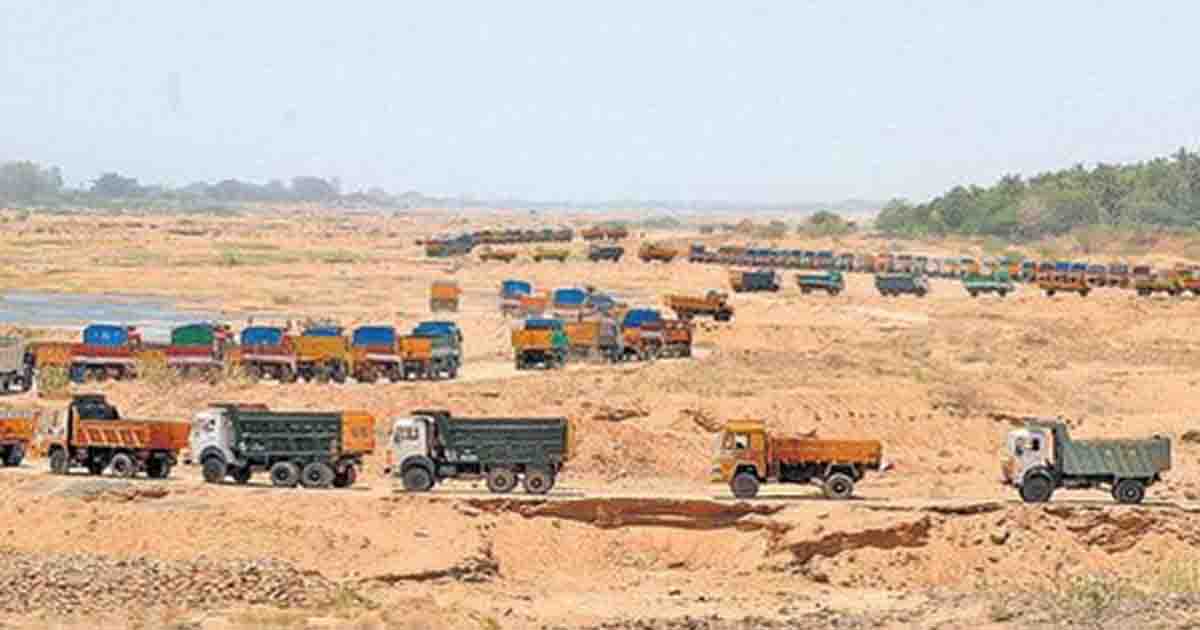
Chennai, Oct 6: Nearly four out of five trucks registered to transport construction minerals in Tamil Nadu remain without GPS tracking devices, prompting another extension of the installation deadline despite a Madras High Court order aimed at tightening monitoring of mineral movement.
Only 30,000 of the 1.4 lakh trucks registered on the Mineral Management System (MIMAS) portal had vehicle location-tracking devices as of September 30. The remaining 79 per cent are yet to comply with the requirement to cover vehicles carrying M-sand, P-sand and other construction aggregates.
The Geology and Mining Department has now extended the deadline to October 31, following representations from transport associations seeking additional time. The original March 31 deadline had already been extended, while the government had separately announced that vehicles without GPS devices would stop receiving mineral transit passes from September 1.
Linking vehicle trackers to MIMAS is intended to strengthen oversight of mineral transportation by recording where trucks load material and tracking their movement. Such records could help authorities identify supplies originating from unauthorised quarries and investigate illegal extraction and transport violations.
However, the slow rollout has drawn criticism from lorry owners, who have questioned the government’s commitment to enforcing the system. G. Ganesh, general secretary of the Tamil Nadu State Lorry Owners Federation, said the cost of tracking devices had fallen sharply, from Rs 15,000 to Rs 3,700.
He said several vendors could supply more than one lakh devices meeting the AIS-140 standard, arguing that availability should not justify further delays.
The government’s reluctance to implement the requirement raised questions about its resolve to curb illegal mining, he said.
Department officials, however, said the approximately 37 authorised suppliers lacked sufficient stocks to equip all remaining vehicles within a short period.
An official said the latest extension followed requests from several associations. Officials also said action was being taken against people generating fraudulent mineral transit passes with fake QR codes.
A dedicated number for complaints about quarrying violations would soon be introduced and linked to the department’s control room in Chennai.
The enforcement challenge comes amid a substantial gap between construction demand and authorised quarry output.
Official estimates put Tamil Nadu’s average daily requirement for construction aggregates at around 5.25 lakh units, compared with permitted quarry production of only 1.2 lakh units, highlighting the need for closer regulatory scrutiny.
Crime
Karnataka: Convict’s wife’s complaint exposes alleged sexual exploitation, forged SC order release racket

Bengaluru, Oct 6: What began with a prisoner’s wife allegedly being sexually exploited by prison officials and ended with her husband walking out of jail on the strength of a forged Supreme Court order took a further turn on Tuesday after the convict allegedly abandoned her and married another woman.
This prompted the wife to write a detailed complaint to the Prison Department, which brought the alleged conspiracy to light, police said on Tuesday.
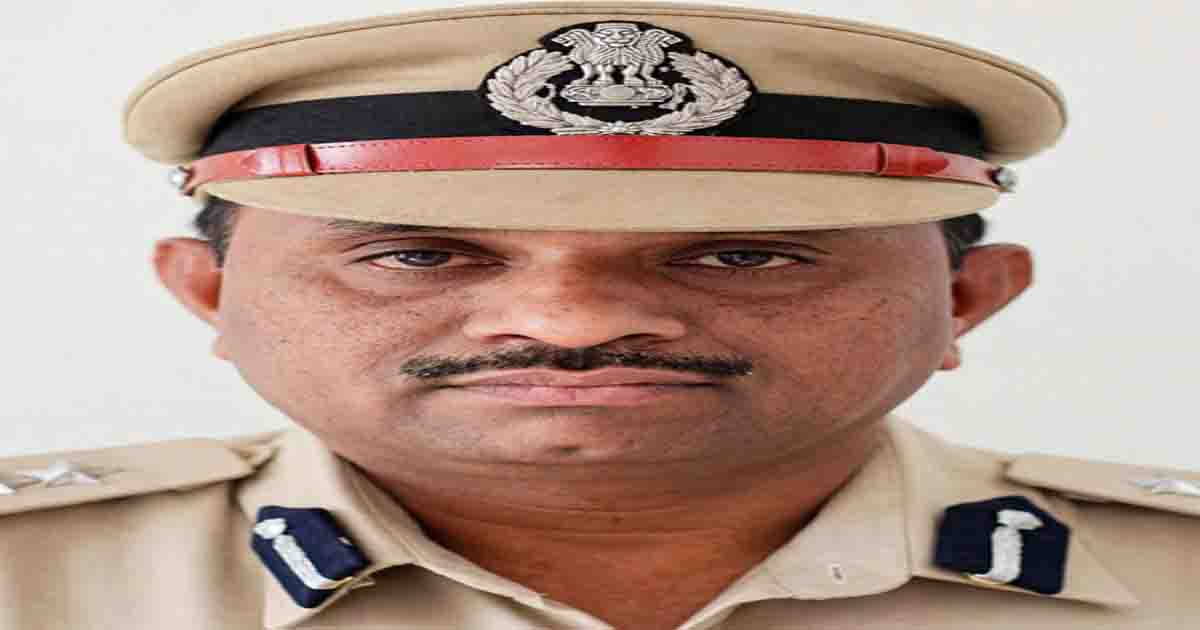
The Parappana Agrahara police in Bengaluru have arrested life convict Shankar A. and prison employee Srikanth S., while Prison Department North Zone DIG Somashekar has also been arrested in connection with the alleged forgery and illegal release of the prisoner from Bengaluru Central Prison in 2018.
Police said the case surfaced after Shankar’s wife, who had been visiting the prison while her husband was serving his life sentence, wrote to the Prison Department after he was released and allegedly deserted her to marry another woman. In her complaint, she reportedly detailed the alleged sexual exploitation by prison officials and the circumstances surrounding her husband’s release.
According to police, Srikanth, who was then working as a Second Division Assistant (SDA) and is now a First Division Assistant in the Convict Prisoner Section, allegedly sexually exploited the woman and later helped fabricate a Supreme Court order to facilitate Shankar’s release.
During the investigation, the woman’s statement also allegedly revealed the involvement of Somashekar, who was serving as Chief Superintendent/DIG at the time. Police said Somashekar allegedly made video calls to the woman and asked her to strip. Investigators have obtained the purported video and sent it to the Forensic Science Laboratory (FSL) for examination.
Police said the woman had become acquainted with Somashekar during her visits to the prison. He allegedly offered to help her secure her husband’s release and subsequently exploited her. Srikanth allegedly joined the effort and helped prepare the forged court document.
The police investigation began following a complaint filed by Karna B. Kshetri, Superintendent-in-Charge of Central Prison, Bengaluru, on May 20. The complaint alleged that Shankar had fabricated a copy of a Supreme Court order and falsely claimed that he had been released on November 13, 2018, on the basis of the purported order.
A case was registered at Parappana Agrahara Police Station under Sections 465, 468, 471 and 420 of the IPC.
Police found that Shankar had been convicted in a case registered at Chikkapet Police Station under Sections 364(A) and 120(B) of the IPC. The Fast Track Court-I, in its judgment dated July 12, 2004, had sentenced him to life imprisonment and imposed a fine of Rs 10,000. His conviction and sentence were subsequently upheld by the Karnataka High Court and the Supreme Court.
According to the investigation, Srikanth allegedly fabricated a copy of a purported Supreme Court order relating to a criminal appeal petition dated November 2, 2018. Based on the forged document, Shankar was released from Central Prison on November 13, 2018.
Shankar and Srikanth were arrested and produced before a court, which remanded them to judicial custody. Somashekar was subsequently arrested and remanded to police custody till October 9 for further questioning and investigation.
Police are examining Somashekar’s alleged role in the sexual exploitation of the convict’s wife and in the circumstances surrounding Shankar’s release in detail. Investigators are also probing whether similar forged documents were used to secure the release of other prisoners.
The investigation is being conducted under M. Narayana, Deputy Commissioner of Police, Electronic City Division. Assistant Commissioner of Police Satish K.M., Police Inspector P.G. Naveen Kumar, PSIs Mahadevayya and Kalavathi, and other personnel were involved in the investigation and arrests.
Crime
‘Create fear among criminals’: SC tells Delhi Police in suo motu case on recent rape incidents
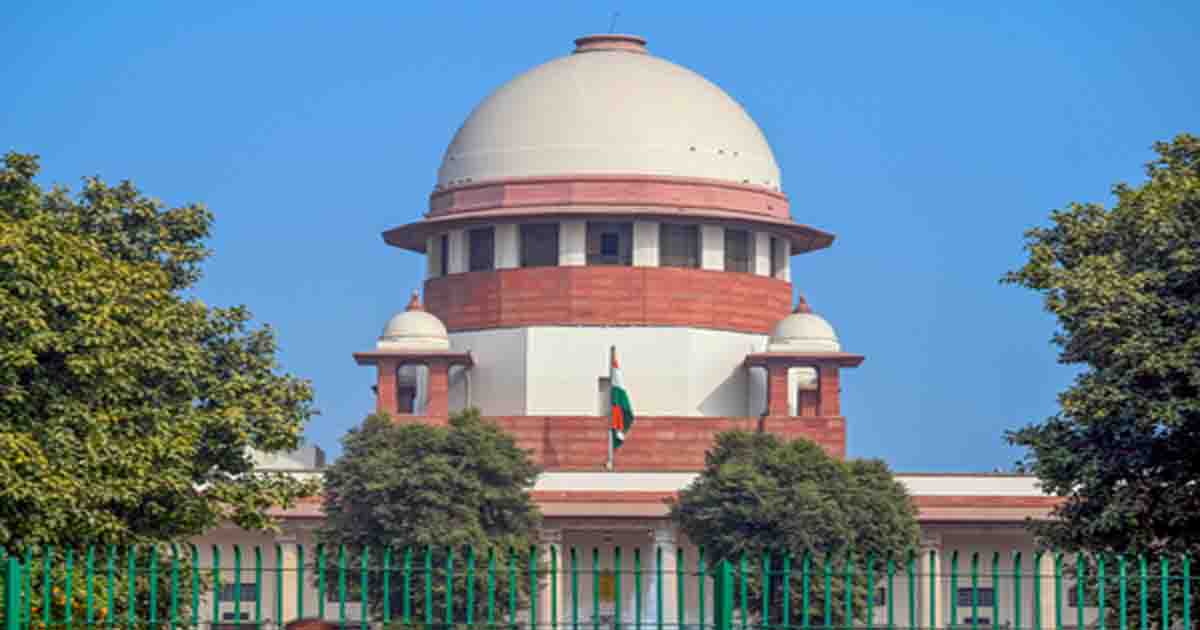
New Delhi, Oct 5: The Supreme Court on Monday directed the Delhi Police and the Union Ministry of Home Affairs (MHA) to place their responses on record within four weeks in its suo motu proceedings concerning recent rape and sexual assault incidents in Delhi-NCR, orally observing that it was important to prevent crimes rather than taking follow-up action.
A Bench of Justices J.B. Pardiwala and K. Vinod Chandran stressed the need for effective preventive measures and continuous monitoring of vulnerable public spaces to ensure the safety of women and children.
The apex court orally remarked that merely putting measures on paper would not be sufficient and said that authorities must take concrete action to prevent crimes.
“We have to work together. We must ensure that every woman in Delhi-NCR should feel safe even at 11 p.m. whether travelling on the roads or the metro,” the Justice Pardiwala-led Bench observed.
It further said that the focus should be on preventing crime rather than merely acting after an offence has taken place.
“What is important is to prevent a crime, not what you do after a crime is committed,” the top court said, stressing that the police must create fear among “goons and anti-social elements” who are prone to committing such crimes.
The Supreme Court also questioned the Delhi Police on the effectiveness of CCTV surveillance in the absence of continuous monitoring and asked whether there was a mechanism for continuous monitoring of vulnerable areas.
It also questioned the absence of a dedicated “war room” for monitoring and responding to incidents, asking how crime could be prevented without such a mechanism.
“You have to create fear in the mind of a person who is ready to commit a crime,” the bench observed, adding that the police were required to instil the fear that committing such offences would have severe consequences.
The proceedings arise from the Supreme Court’s suo motu cognisance of a series of disturbing reports of rape and sexual assault across Delhi-NCR.
In its order passed on September 28, the apex court had expressed serious concern over the safety of public spaces, including parks, roads, buses, metro stations, subways and footbridges, observing that such places could not be allowed to become high-risk zones due to inadequate lighting, poor surveillance, or lax patrolling.
The bench had also sought a comprehensive status report on the safety arrangements in public places, the use of the National Database on Sexual Offenders (NDSO), the Investigation Tracking System for Sexual Offences (ITSSO), the Mission Shakti programme, emergency response systems, women’s helplines, CCTV coverage, women help desks and One Stop Centres.
It had directed the Delhi Police to constitute dedicated teams for each police district to identify vulnerable locations and prepare district-wise vulnerability maps. It had further ordered audits of lighting and CCTV infrastructure and intensified patrolling in identified vulnerable areas.
The proceedings came against the backdrop of several reported sexual offences, including the alleged gang rape of a 17-year-old girl at Aastha Kunj Park and the alleged sexual assault of a minor inside a moving sleeper bus travelling from Greater Noida to Delhi. The apex court had observed that the latter incident raised painful parallels with the 2012 Nirbhaya case.
The matter is now tentatively listed for further hearing on November 16.

Amitabh Bachchan reacts as KBC contestant recalls waiting for 5 hours outside Jalsa with his mother

Delhi court grants regular bail to influencer Swatantra Bhardwaj in assault case

Iran’s president, FM vow defence of national interests

INDIA bloc protest: MPs try to push open gates of Akashvani Bhawan

As large number of mineral transporting trucks lack GPS, TN extends deadline to October 31

Gift to President Putin part of PM Modi bid to globally display India’s heritage

PM Modi’s warm camaraderie with Putin, Xi on full display at BRICS Summit

Corporators of all parties in trouble! Corporators of all major parties including Shiv Sena (UBT), BJP and Congress are facing legal challenges.

Complaint against Netflix & Mukesh Chhabra for inappropriate language on ‘India’s Got Latent 2’

Maha Congress stages agitation against Gyanesh Kumar
-

 Crime4 years ago
Class 10 student jumps to death in Jaipur
-

 Maharashtra2 years ago
Mumbai Local Train Update: Central Railway’s New Timetable Comes Into Effect; Check Full List Of Revised Timings & Stations
-

 Maharashtra2 years ago
Mumbai To Go Toll-Free Tonight! Maharashtra Govt Announces Complete Toll Waiver For Light Motor Vehicles At All 5 Entry Points Of City
-

 Maharashtra2 years ago
False photo of Imtiaz Jaleel’s rally, exposing the fooling conspiracy
-

 National News2 years ago
Ministry of Railways rolls out Special Drive 4.0 with focus on digitisation, cleanliness, inclusiveness and grievance redressal
-

 Maharashtra2 years ago
Maharashtra Elections 2024: Mumbai Metro & BEST Services Extended Till Midnight On Voting Day
-

 National News2 years ago
J&K: 4 Jawans Killed, 28 Injured After Bus Carrying BSF Personnel For Poll Duty Falls Into Gorge In Budgam; Terrifying Visuals Surface
-

 Crime2 years ago
Baba Siddique Murder: Mumbai Police Unable To Get Lawrence Bishnoi Custody Due To Home Ministry Order, Says Report