
National News
Mukhtar Ansari being shifted to Lucknow jail

Former BSP MLA and jailed mafia don Mukhtar Ansari is being shifted to the Lucknow jail, a year after he was brought back from Ropar in Punjab and lodged in the Banda jail.
Mukhtar was taken out of Banda jail early Monday morning in an ambulance and is being brought to Lucknow by road amidst tight security.
His son and newly-elected MLA, Abbas Bin Mukhtar Ansari told IANS that he feared that his father may be harmed in transit.
“I do not understand why this shifting without any prior information. We came to know that preparations for shifting my father to Lucknow began late on Sunday night,” he said.
Meanwhile, in another development, the Uttar Pradesh Police have registered a case against Mukhtar and 12 of his associates under the Gangster Act.
Twelve people from Mau, Ghazipur, Lucknow and Prayagraj have also been named in the case related to the use of an ambulance which was used to transport Ansari to and from the Punjab jail.


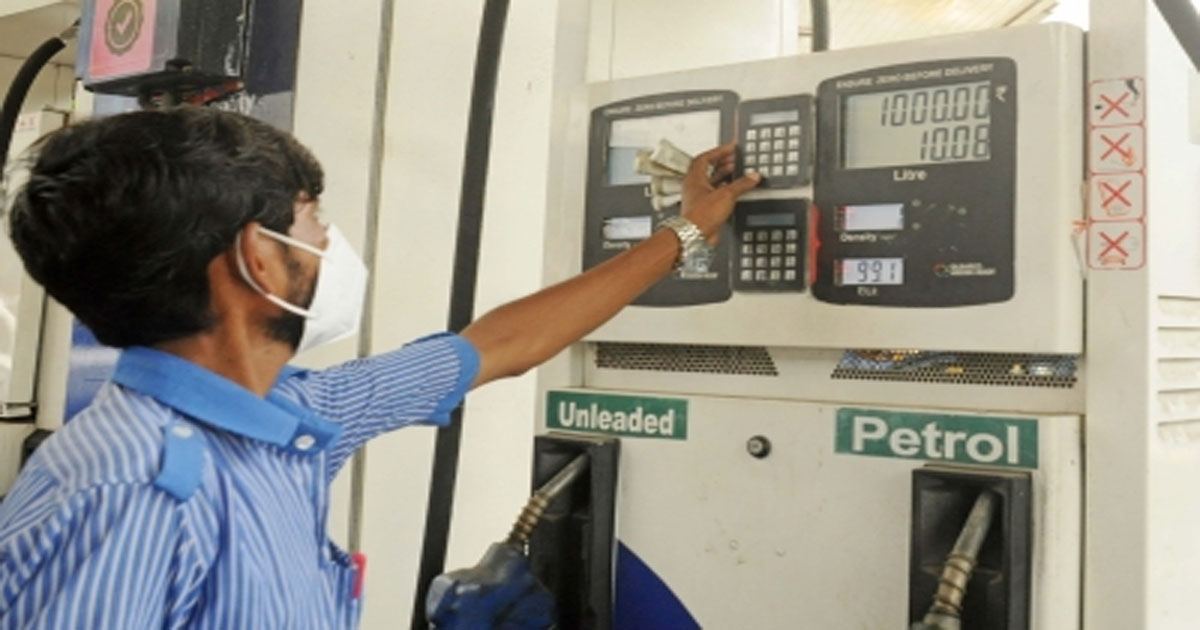
New Delhi, March 27: The government on Friday said retail pump prices of petrol and diesel will not change, and the excise reduction is not being passed on as a price cut at the pump.
Instead, it directly reduces the under-recoveries being absorbed by public sector oil marketing companies (OMCs) — Indian Oil Corporation, Bharat Petroleum Corporation and Hindustan Petroleum Corporation — who have continued to supply fuel to Indian consumers at prices well below their cost of supply, the Petroleum Ministry said.
At current international crude prices, under-recoveries stand at approximately Rs 26 per litre on petrol and Rs 81.90 per litre on diesel.
The combined daily under-recovery being absorbed by OMCs is approximately Rs 2,400 crore.
The excise reduction offsets Rs 10 per litre of these losses, ensuring OMCs can continue to supply fuel without disruption while keeping retail prices unchanged, said the ministry.
The government has reduced excise duty by Rs 10 per litre on both petrol and diesel with immediate effect.
“This decision has been taken in response to the steep and rapid rise in international crude oil prices, which have surged from approximately $70 per barrel to around $122 per barrel over the past month — an increase of nearly 75 per cent in under four weeks, driven by the ongoing conflict in West Asia and associated disruptions to global energy supply chains,” the ministry said.
The contrast with global fuel markets is instructive. Fuel prices have risen by 30 to 50 per cent across South and South-East Asian countries, 30 per cent in North America, and 20 per cent in Europe since the onset of the current crisis. India has held the line. That stability carries a fiscal cost, and the government has chosen to bear it.
Earlier in the day, Minister for Petroleum and Natural Gas, Hardeep Singh Puri, said that Prime Minister Narendra Modi decided to take a hit on government finances to safeguard the Indian citizen.
“The government has taken a substantial impact on its taxation revenues to reduce the high losses being faced by oil marketing companies at this time of sky-high international prices,” he mentioned.
Alongside the excise reduction, the government has simultaneously introduced an export levy on diesel. At a time when international diesel prices have surged sharply, the levy is designed to disincentivise exports and ensure that refinery output is directed first towards meeting domestic demand.
Keeping Indian pumps fully supplied takes precedence over export opportunities, however commercially attractive those may be at current global prices. The government will continue to monitor the evolving global energy situation and take all measures necessary to maintain supply stability and price protection for Indian consumers.
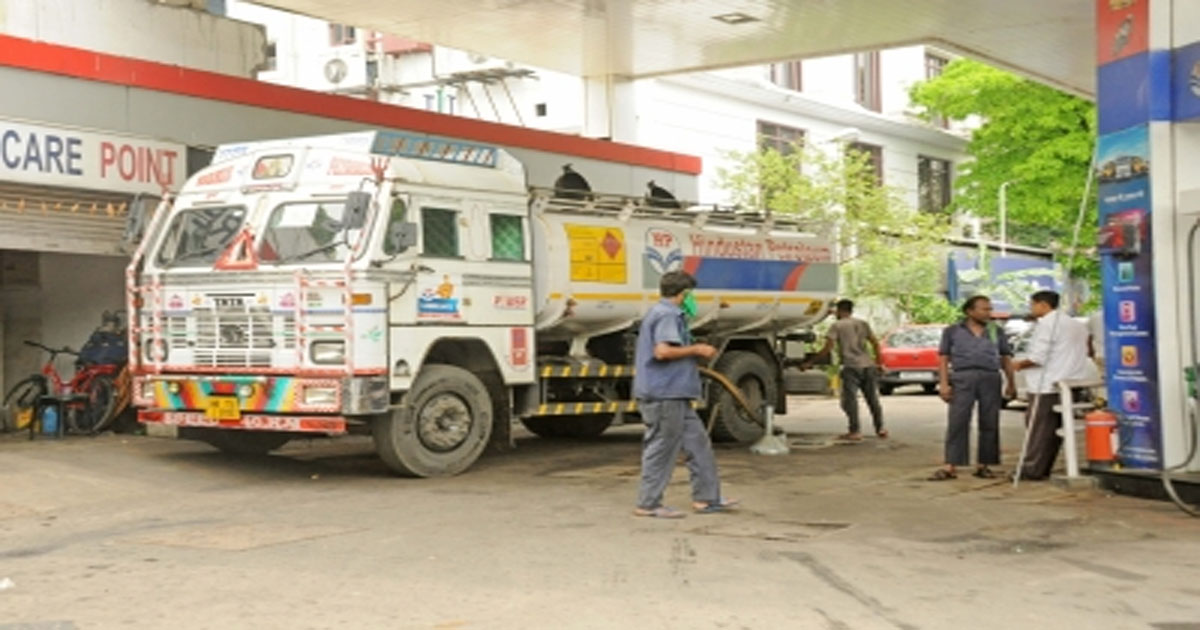
New Delhi, March 26: The government on Thursday categorically stated that India’s petroleum and LPG supply situation is fully secure and under control, calling upon citizens not to be misled by a “deliberately mischievous, coordinated campaign of misinformation” that is being carried out to spread unjustified panic.
India has 74 days of total reserve capacity, and actual stock cover is around 60 days right now (including crude stocks, products stocks and the dedicated strategic storage in caverns), even as “we are on the 27th day of the Middle East crisis”, the Petroleum Ministry said, adding that all retail fuel outlets have enough supplies.
“There is no shortage of petrol, diesel, or LPG anywhere in the country,” it said in a statement, adding that nearly two months of steady supply is available for every Indian citizen, regardless of what happens globally.
“Next 2 months of crude procurement has also been secured. India is completely secure for the next many months, and the quantity in strategic cavern storage becomes secondary in such a supply situation. Therefore, any representation that India’s reserves are depleted or insufficient should be dismissed with the disdain it deserves,” the ministry highlighted.
Across the world, countries are dealing with price increases, rationing, odd-even vehicle restrictions, and forced station closures. Few have declared a “National Energy Emergency”.
“India DOES NOT FEEL THE NEED FOR ANY SUCH MEASURES. While other nations are rationing, there is no shortage of supplies in India. Where isolated instances of panic buying occurred at select pumps, they were driven by deliberate misinformation spread by certain videos on social media,” the ministry emphasised.
Despite the surge in demand at such pumps, fuel was dispensed to all the consumers, and oil company depots have been operational through the night to ramp up supplies.
The ministry further stated that steps have also been taken by oil companies to increase credit to petrol pumps to over 3 days from the earlier allowed 1 day in order to ensure that there is no shortage of petrol and diesel at any pump due to working capital issues of pump owners.
Notably, despite the situation at the Strait of Hormuz, India is today receiving more crude oil from its 41-plus suppliers across the world than what was previously arriving through the Straits.
“Every Indian refinery is running at over 100 per cent utilisation. Crude oil supplies for next 60 days have already been tied up by Indian Oil companies. There is NO supply gap,” the ministry said.
There is also no LPG shortage. Following the LPG Control Order issued by this Ministry, domestic refinery production has been ramped up by 40 per cent, bringing daily LPG output to 50 TMT (more than 60 per cent of our requirement) against a total daily requirement of around 80 TMT.
The net daily import requirement has consequently come down to only 30 TMT — meaning India is now producing much more than it needs to import.
“Over and above domestic production, 800 TMT of assured inbound LPG cargoes are already secured and en route from the United States, Russia, Australia, and other countries, arriving across India’s 22 LPG import terminals — double the 11 terminals that existed in 2014,” the ministry said.
“Approximately one full month of supply is firmly arranged, with additional procurement being finalised continuously,” it added.
Oil companies are successfully delivering over 50 lakh cylinders every day. Commercial cylinder allocations have been raised to 50 per cent in consultation with state governments to avoid hoarding or black marketing.
Moreover, piped natural gas is being promoted — in full coordination with state governments — because it is cheaper, cleaner, and safer for Indian households.
India already produces 92 MMSCMD of natural gas domestically, out of a total daily requirement of 191 MMSCMD, making India far less import-dependent on gas than on LPG.
City gas distribution has expanded from 57 geographical areas in 2014 to over 300 today. Domestic PNG connections have grown from 25 lakh to over 1.5 crore. This transition was well underway before the current situation arose and reflects India’s long-term energy strategy.
“The claim that PNG is being pushed because LPG is running out is misinformation. LPG supply is secure. PNG is simply a better, more affordable and highly convenient fuel for India’s households,” said the ministry.
The ministry urged all citizens to rely only on official government communications for information regarding fuel and gas availability.
National News
Congress Leader Rahul Gandhi Visits Sir Ganga Ram Hospital To Meet Sonia Gandhi; Cancels Kerala Visit

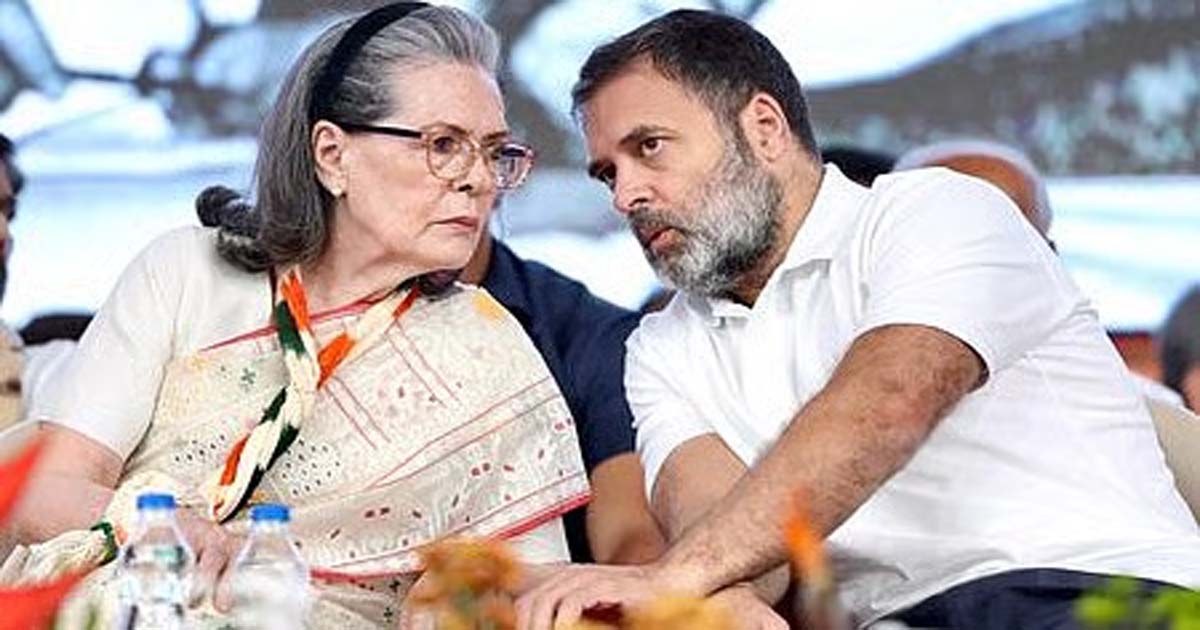
New Delhi: Congress leader Rahul Gandhi visited Sir Ganga Ram Hospital on Thursday morning, where his mother and Congress Parliamentary Party (CPP) Chairperson Sonia Gandhi was admitted after experiencing respiratory issues.
The veteran leader was admitted after experiencing respiratory issues at Sir Ganga Ram Hospital on Tuesday night.
As this happened, Rahul Gandhi, Leader of Opposition (LoP) Lok Sabha, did not visit Kerala for his scheduled visit ahead of the polls. Virtually addressing a rally held in Kozhikode, the Congress leader said that he could not attend the rally in person as his mother was hospitalised in New Delhi.
“I would have liked to come here, but I was forced to stay in today and was unable to come. Yesterday, my mother was hospitalised and I, as a son, was quite worried about her, so I decided to stay with her. I know that the people of Kerala will understand this. Last night, I was extremely worried about my mother’s health. The whole night, I was only comforted by one thing. I was comforted by a nurse from Kerala who came in every hour to check on my mother,” he said.
A hospital official said earlier that Sonia Gandhi remains stable and under observation. The veteran leader was being administered antibiotics, he added.
“Sonia Gandhi was admitted to Sir Ganga Ram Hospital on Tuesday at 10:22 PM. She is stable. Doctors are conducting further investigations to check for possible infection in the stomach and urinary tract. A team of doctors is closely monitoring her condition, and antibiotics have been administered,” a hospital official said.
As a precautionary measure, doctors decided to admit her for observation and further medical management.
On Wednesday, Sir Ganga Ram Hospital Chairman Dr Ajay Swaroop said that following a detailed medical examination, Sonia Gandhi’s bronchial asthma was mildly exacerbated by the combined effects of cold weather and prevailing pollution levels in Delhi.
The veteran leader was also admitted last year in June due to stomach-related issues. She was kept under observation at the hospital’s gastro department.
Before this, in the same month, Gandhi was admitted to Indira Gandhi Medical College and Hospital in Himachal Pradesh’s Shimla on June 7.

Retail petrol and diesel prices won’t change, excise cut to offset oil firms’ losses: Govt

Mumbai Local Train Update: Technical Glitch At Borivali Disrupts WR Services; CR Commuters Report Delay Due To Cancellations

Human rights group calls Pakistani airstrikes on Kabul rehab centre ‘unlawful’, flags possible war crime

Mumbai: ’12 Baje Se Lockdown Hai, Stock Up’, Mumbra Youth’s ‘Panic Buying’ Video Gets Him Rounded Up By Police

Iran issues ‘ultimatum’ to Bahrain, UAE hotels hosting US troops: Report

Married Mumbai Woman Mocked In Andheri Society Over ‘Lift Kissing’ CCTV Video, Files Police Complaint

Mumbai: JBCN International School In Borivali Gets Bomb Threat, Search Reveals Hoax, Students Safe

Mahayoti’s big gift to the people of Mumbai… Now there is no tax for houses up to 500 square feet, the Municipal Corporation has increased this limit to 700 square feet.

LPG Crisis In Maharashtra: Cyber Crime On Rise Amid Shortage, 2 Women Lose ₹4 Lakh In ‘Gas Update’ Online Scam In Kalyan-Dombivli

Rashmika Mandanna-Vijay Deverakonda Wedding: Virosh Turn Modern Day Prince & Princess For Their Dreamy Sangeet Ceremony
-

 Crime4 years ago
Class 10 student jumps to death in Jaipur
-

 Maharashtra1 year ago
Mumbai Local Train Update: Central Railway’s New Timetable Comes Into Effect; Check Full List Of Revised Timings & Stations
-

 Maharashtra1 year ago
Mumbai To Go Toll-Free Tonight! Maharashtra Govt Announces Complete Toll Waiver For Light Motor Vehicles At All 5 Entry Points Of City
-

 Maharashtra2 years ago
False photo of Imtiaz Jaleel’s rally, exposing the fooling conspiracy
-

 National News1 year ago
Ministry of Railways rolls out Special Drive 4.0 with focus on digitisation, cleanliness, inclusiveness and grievance redressal
-

 Maharashtra1 year ago
Maharashtra Elections 2024: Mumbai Metro & BEST Services Extended Till Midnight On Voting Day
-

 National News2 years ago
J&K: 4 Jawans Killed, 28 Injured After Bus Carrying BSF Personnel For Poll Duty Falls Into Gorge In Budgam; Terrifying Visuals Surface
-

 Crime1 year ago
Baba Siddique Murder: Mumbai Police Unable To Get Lawrence Bishnoi Custody Due To Home Ministry Order, Says Report