
Crime
MP: Breakthrough in Deva Pardhi custodial death case; accused cop surrenders on eve of SC’s Oct 7 arrest deadline


Bhopal, Oct 6: In a dramatic turn of events that underscores the Supreme Court’s unyielding push for accountability in custodial violence cases, one of the two key accused police officers in the tragic death of 26-year-old Deva Pardhi has surrendered to authorities in Madhya Pradesh, mere hours before the apex court’s self-imposed deadline for their arrest on October 7.
The development comes amid mounting judicial scrutiny and could prevent a high-stakes contempt showdown scheduled for tomorrow.
Town Inspector (TI) Sanjeet Singh Mawai, who had evaded capture for over a year, walked into the Badarwas police station in Shivpuri district late on Sunday evening, effectively ending a gruelling manhunt that had drawn sharp rebukes from the nation’s highest court.
This surrender follows the recent arrest of his co-accused, Assistant Sub-Inspector (ASI) Uttam Singh, nabbed by the Central Bureau of Investigation (CBI) in Indore just over a week ago.
Mawai’s voluntary appearance is seen as a direct response to the Supreme Court’s October 7 ultimatum, potentially sparing senior officials – including state Chief Secretary, from being hauled into court for failing to comply with its directives.
The case, which has become a stark symbol of police impunity and the perils faced by marginalised communities in custody, originated in the dusty lanes of Guna district, Madhya Pradesh, on July 15, 2024.
Deva Pardhi, a young tribal man from the nomadic Pardhi community, was gearing up for what should have been the joyous culmination of his life — a traditional wedding procession to his bride’s village.
Dressed in his wedding finery, Deva and his uncle, Gangaram Pardhi, were bundled into a vehicle – a tractor and trolley in which they had to proceed for the ‘baraat.’ Police took them under the pretext of routine questioning in a petty theft case involving ₹8 lakh stolen from nearby Bhidra village.
Tragically, the very tractor-trolley meant to ferry the wedding party was repurposed by the police to transport the duo to the Myana Police Station, turning a day of celebration into one of unimaginable grief.
Hours later, the bridegroom Deva was dead, plunging the community in grief.
The official narrative from the Madhya Pradesh Police painted a picture of sudden misfortune; a fatal cardiac arrest in custody. However, Deva’s family, shattered and suspicious, pointed out brutal torture at the hands of the officers on duty.
Autopsy reports and eyewitness accounts from Gangaram, who survived the ordeal, painted a harrowing picture of beatings, electric shocks, and relentless interrogation tactics designed to extract confessions for crimes the duo had no connection to.
The incident’s fallout was immediate and visceral. Deva’s distraught bride, unable to bear the loss, attempted suicide by self-immolation outside the police station, only to be rushed to Guna District Hospital along with other grieving relatives who tried to follow suit.
Protests erupted across the region, with tribal rights activists decrying it as yet another instance of systemic violence against Adivasi communities, whose members are often stereotyped as habitual offenders and subjected to extrajudicial excesses.
The family’s desperate plea for justice landed in the Supreme Court, where a petition exposed glaring lapses in the initial Magisterial enquiry ordered by the state government — a probe that critics dismissed as a whitewash.
On May 15, 2025, a pivotal Bench led by Justice B.V. Nagarathna delivered a scathing indictment of the local police’s handling of the investigation.
Citing evidence of tampering, witness intimidation, and deliberate concealment, the court transferred the probe to the CBI and issued a crystal-clear mandate: “The police officials found responsible for the custodial death shall be arrested forthwith and not later than a period of one month.”
This order wasn’t just procedural; it was a clarion call against the “blue wall of silence” shielding errant officers, emphasising that custodial deaths erode the very foundation of constitutional rights under Article 21.
Yet, as weeks turned into months, compliance faltered. By September 2025, with neither Mawai nor Uttam Singh in custody despite their suspension on September 24 — four months after they allegedly went underground — the victim’s mother, in a bold act filed a contempt petition.
The plea accused the CBI and the Madhya Pradesh government of willful disobedience, alleging a nexus that allowed the accused to roam free while drawing salaries and even filing anticipatory bail applications.
The Supreme Court’s hearings in late September were nothing short of a judicial thunderbolt. On September 23, the Bench of Justices Nagarathna and R Mahadevan — known for their no-nonsense approach to human rights violations — pulled no punches.
“More than four months have passed, and the direction of the court has not been complied with. It appears that you are protecting the officers,” the Bench thundered at the state’s counsel.
Justice Nagarathna probed deeper: “You were impleaded as a party in the (May 15) order. This is contempt of the order of the Supreme Court by the State government. How can the State sanction salaries for persons who were directed to be arrested?”
Additional Solicitor General (ASG) K.M. Natraj, representing the CBI, and Aishwarya Bhati for the state, faced a barrage of questions.
ASG Raja Thakare detailed the agency’s exhaustive efforts; physical surveillance, financial transaction tracking, toll plaza vehicle monitoring, social media scrutiny, and raids on known hideouts. The CBI had even upped the ante with a ₹2 lakh reward per head for credible tips, announced on September 24. However, the Bench remained unmoved.
“What is the meaning of this? This is all eyewash,” Justice Nagarathna retorted, dismissing the measures as superficial.
Justice Mahadevan also expressed his ire, “You are part of the State administration. When a grave crime takes place, how can you wash away your responsibility? You are protecting the officers who were directed to be arrested. How can they have the audacity to file anticipatory bail pleas against an order of the Supreme Court?”
The court’s frustration peaked with accusations of “aggravated contempt.” It warned of summoning the CBI Director, the Madhya Pradesh Chief Secretary, and the Additional Superintendent of Police overseeing the probe.
“Your helplessness feels in the garb of protection,” Justice Nagarathna observed, rejecting pleas of operational hurdles. In a bid to jolt the system into action against the police, the Bench set a hard deadline: Arrests by October 7, or the Investigating Officer and the Additional Chief Secretary of the Home Department would be personally summoned on October 8.
The matter was listed for further hearing on September 26. On September 26, ASI Uttam Singh, 42, was apprehended in Indore after surrendering at a special CBI court. Sources indicate he had been holed up in the city, relying on a network of sympathisers, but the reward announcement and intensified surveillance forced his hand.
Interrogations revealed preliminary leads on Mawai’s movements, including cryptic social media posts hinting at his distress over the mounting heat.
By October 5, Intelligence pointed to Shivpuri as his likely bolt-hole, leading to his pre-dawn surrender. “He came in quietly, citing family pressure and fear of escalation,” a senior Shivpuri police official told reporters, adding that Mawai was immediately handed over to the CBI for custody remand.
Both officers now face charges under Sections 302 (murder), 330 (causing hurt to extort confession), and 193 (fabricating false evidence) of the IPC, alongside provisions of the SC/ST (Prevention of Atrocities) Act.
In a parallel development, Guna police on October 5 nabbed dismissed Sub-Inspector Ramveer Singh Kushwaha, who had dodged arrest for over two-and-a-half years.
Kushwaha stands accused of witness tampering in the 2022 murder of Atmaram Pardhi — believed to be a relative of Deva — another case shrouded in controversy and stalled probes.
Despite securing bail in the murder charge from the Madhya Pradesh High Court, his anticipatory bail in the intimidation matter was pending. Acting on social media surveillance showing Kushwaha rallying supporters in Guna, Superintendent of Police Ankit Soni deployed a crack team that swooped in on Sunday night.
“This is a testament to zero tolerance for those undermining justice,” Soni stated, linking the arrest to broader efforts post the Supreme Court’s Guna scrutiny.
The Guna cluster of cases—encompassing Deva’s death, Atmaram’s unsolved killing, and the eight-year disappearance of Geeta (a potential witness in related matters)—highlights a disturbing pattern.
Activists point to the Pardhi community’s vulnerability, often targeted under draconian anti-nomad laws, with custodial deaths in Madhya Pradesh rising to 15 per cent in 2024 as per NCRB data.
As Deva’s mother, who has led a tireless campaign from her modest Bilakhedi home, awaits October 8, hearing, a sliver of hope pierces the grief.


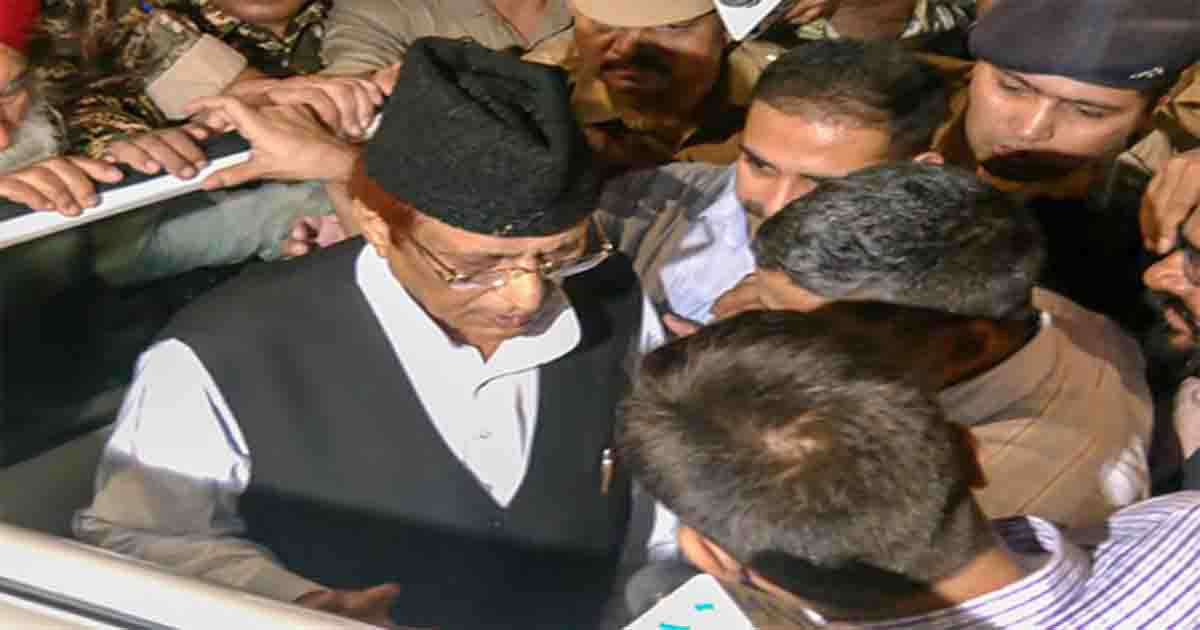
Samajwadi Party (SP) leader Mohammad Azam Khan was on Sunday sent to 14 days of judicial custody a day after being arrested by the Enforcement Directorate (ED) in connection with a Jauhar University-linked money laundering case.
The order was passed by the Ghaziabad MP-MLA Court, which directed that Khan will remain in judicial custody until November 13.
Speaking to reporters, the SP leaders’ lawyer, Danish Ali, said: “Today, Azam Khan has been remanded to judicial custody. We argued that since this is a 2019 case, the authorities could have taken action through a B-Warrant when he was already in custody. There has also been a violation of Section 19.”
“The ED has sought his custody to further interrogate him,” he added.
The Samajwadi Party leader’s arrest by the ED on Saturday came close to the provisional attachment of land and buildings belonging to Mohammad Ali Jauhar University in Uttar Pradesh’s Rampur district, valued at Rs 426.46 crore, in connection with the money laundering probe involving the Maulana Mohammad Ali Jauhar Trust, Azam Khan, and others.
The fresh trouble for Azam Khan came in the backdrop of a short-lived relief offered to him and his son Abdullah Khan by the Allahabad High Court, which suspended their sentence in the dual PAN card case and also granted them bail on Thursday.
In the money laundering case, the ED attached assets of the University that have a current estimated market value of around Rs 1,170 crore.
The university campus, located at Jauhar Nagar in Rampur’s Singhankhera village, is owned by the Maulana Mohammad Ali Jauhar Trust, which was founded and is controlled by Azam Khan, who also serves as the institution’s honorary Chancellor, said the ED.
The investigation stems from 26 FIRs registered at Azeem Nagar police station in Rampur, alleging that agricultural land belonging to farmers was forcibly acquired for the university.
The ED said enquiries by the district administration also found that nearly 34 acres of enemy property at Singhankhera village had allegedly been occupied for the university despite the cancellation of the land lease. The land has since been recovered by the Custodian of Enemy Property through the district administration.
Crime
PGIMER Director visits six-year-old girl injured in Panchkula school incident, entire treatment to be provided free

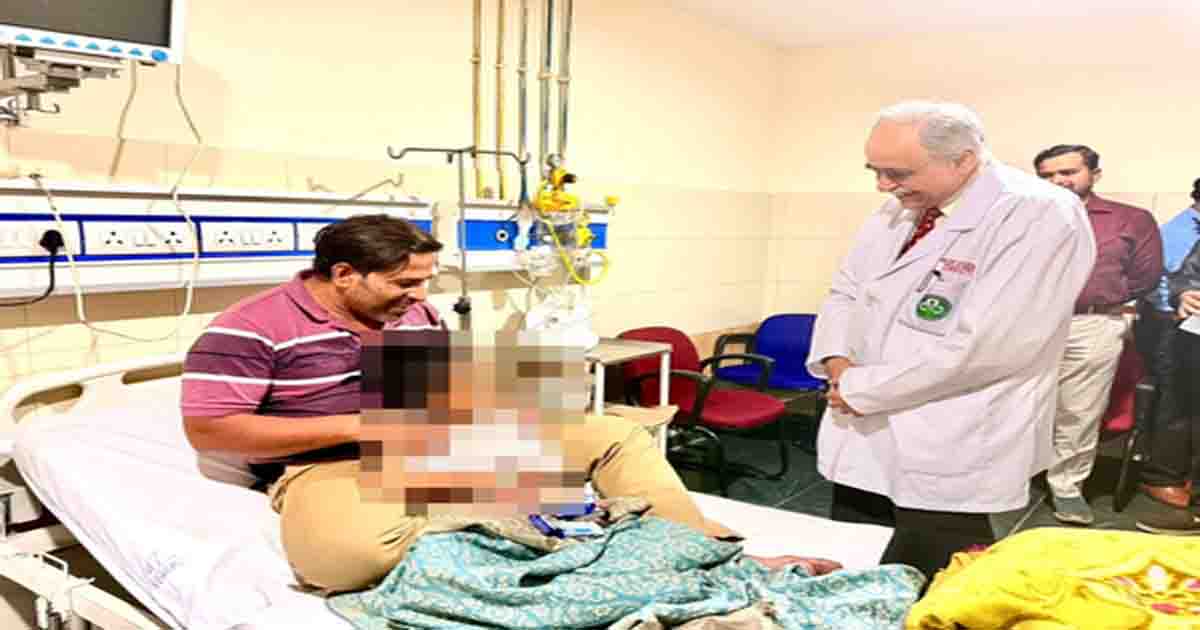
Postgraduate Institute of Medical Education and Research (PGIMER), Chandigarh, Director Professor Vivek Lal visited the six-year-old girl undergoing treatment there, following an alleged assault at a school in Panchkula on October 28.
During his visit, Professor Lal interacted with the treating doctors and enquired about the child’s health, medical condition and progress. He expressed deep concern over the unfortunate incident and assured the family that the institute would extend every possible assistance to ensure the child’s recovery.
Taking a special humanitarian initiative, the PGIMER Director ordered that the girl’s entire medical treatment be provided free of cost, with all expenses to be borne by the institute. In addition to covering all medical expenses, PGIMER has also provided her with a private room to ensure comfort, privacy, and appropriate care during her hospital stay.
Professor Lal said that the responsibility of PGIMER goes beyond providing medical treatment and includes standing alongside patients and their families during difficult times.
He emphasised that the institute is committed to ensuring the best possible medical care and all necessary support for the young patient and her family.
The six-year-old girl was brought to PGIMER with critical injuries after an alleged assault by an eight-year-old boy inside her classroom at a school in Panchkula on October 28. She was subsequently referred to the premier medical institute in Chandigarh for specialised treatment.
At present, the child is being treated by a multidisciplinary team of specialists, who are closely monitoring her condition and providing all necessary medical attention.
Following the Director’s visit, the institute has assured the family of continued medical and institutional support throughout the child’s treatment. According to officials, the Director will personally monitor the treatment and other care being given to the child.
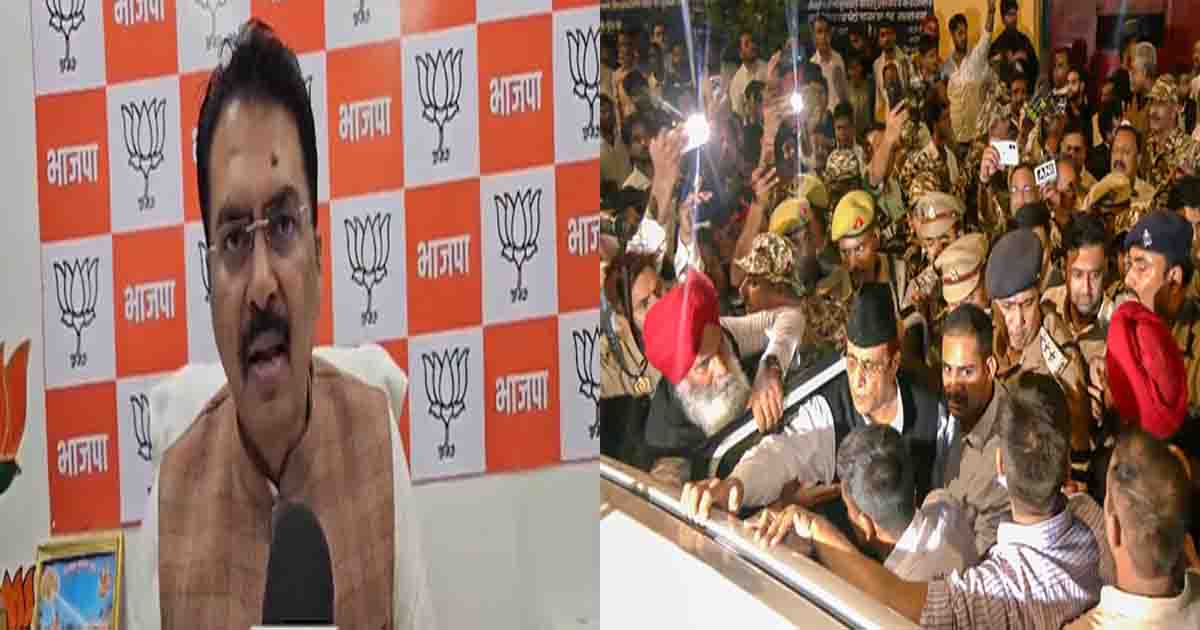
NDA leaders on Sunday hit out at Samajwadi Party (SP) leader Azam Khan over his remarks about being “targeted” because of his religion and said that if the Enforcement Directorate found evidence, his arrest would be valid.
They added that even though he was bailed in a different matter, the authorities might have found evidence proving his guilt in other cases.
On October 31, the Enforcement Directorate arrested Samajwadi Party leader Azam Khan in a money laundering case in connection with the provisional attachment of land and buildings belonging to Mohammad Ali Jauhar University in Uttar Pradesh’s Rampur district, valued at Rs 426.46 crore.
Speaking to the reporters before being taken away by the ED, Khan said, “Is this the punishment for being a Muslim?”
The fresh trouble for Azam Khan came against the backdrop of a short-lived relief offered to him and his son Abdullah Khan by the Allahabad High Court by suspending their sentence in the dual PAN card case, granting them bail on Thursday.
Speaking to reporters, Uttar Pradesh Minister of State Narendra Kashyap said, “The law, Parliament and the Constitution do not judge a person based on religion. The law judges a person based on their crimes.”
“If Azam Khan committed a crime, and evidence was found that he has more property than his income, or that he committed forgery, physical violence, or theft, then the investigation is valid,” he added.
Speaking to MEDIA, Bihar BJP State President Sanjay Saraogi firmly said the law is equal for all. “Claiming that you are being attacked and oppressed because of your religion is not going to exempt you from the crimes you have committed,” he said.
“A person who built an empire of Rs. 1170 crores by oppressing the poor, orphans, and weak farmers is playing the victim today,” Saraogi said.
“There is no religion in money laundering and corruption. No matter if someone thinks of themselves as the biggest of strongmen, one who loots public money has a place only inside a prison,” he added.
JD(U) National General Secretary Shyam Rajak said that, “On the one hand, the judiciary decided to bail him; on the other hand, there might be more cases in which he was accused by the ED. It doesn’t mean that if he is bailed in one crime, the other ones will be dissolved too”
JD(U) National Spokesperson Rajiv Ranjan said that Azam Khan had a strong influence when the Samajwadi Party ruled the state. “He committed many financial crimes then,” Ranjan said, adding, “It is a good opportunity for Azam Khan to prove his innocence to the financial institutions of the state.”
Shiv Sena spokesperson Krishna Hegde said, “The ED will question him in multiple matters. Azam Khan has already spent time in jail; his son has been released, but he will have to face the ED.”

Zaheer Iqbal opens up about challenges of playing an obsessive lover in ‘Tu Hai Meri Kiran’

SP leader Azam Khan sent to 14 days of judicial custody in money laundering case

Trump flags Iran targets as talks continue

Congress wishes to run democracy according to the law of Gandhi family, says BJP chief Nitin Nabin

PGIMER Director visits six-year-old girl injured in Panchkula school incident, entire treatment to be provided free

Rahul, Cong ecosystem want to force regime change: BJP after Neha Bora praises B’desh Gen-Z protest

Attack on democratic rights: INDIA Bloc leaders on detentions of anti-ECI protestors

BJP pays tribute to ex-President Abdul Kalam, recalls his enduring influence on generations of India’s youth

INDIA bloc begins protest march against ECI

Online betting: ED conducts searches at 20 premises in Mumbai, Pune, Hyderabad
-

 Crime4 years ago
Class 10 student jumps to death in Jaipur
-

 Maharashtra2 years ago
Mumbai Local Train Update: Central Railway’s New Timetable Comes Into Effect; Check Full List Of Revised Timings & Stations
-

 Maharashtra2 years ago
Mumbai To Go Toll-Free Tonight! Maharashtra Govt Announces Complete Toll Waiver For Light Motor Vehicles At All 5 Entry Points Of City
-

 Maharashtra2 years ago
False photo of Imtiaz Jaleel’s rally, exposing the fooling conspiracy
-

 National News2 years ago
Ministry of Railways rolls out Special Drive 4.0 with focus on digitisation, cleanliness, inclusiveness and grievance redressal
-

 Maharashtra2 years ago
Maharashtra Elections 2024: Mumbai Metro & BEST Services Extended Till Midnight On Voting Day
-

 National News2 years ago
J&K: 4 Jawans Killed, 28 Injured After Bus Carrying BSF Personnel For Poll Duty Falls Into Gorge In Budgam; Terrifying Visuals Surface
-

 Crime2 years ago
Baba Siddique Murder: Mumbai Police Unable To Get Lawrence Bishnoi Custody Due To Home Ministry Order, Says Report