
National News
Modi slams previous govts for creating water crisis in Bundelkhand


Nov 19 Prime Minister Narendra Modi on Friday lashed out at ‘previous governments in Lucknow and Delhi’ for creating water crisis in the Bundelkhand region.
At a rally that marked the inauguration of the Arjun Sahayak project, the Prime Minister said: “The wait for water is over now. Over four lakh people will get clean drinking water. The people of Mahoba, Banda, Hamirpur and Lalitpur will benefit from this scheme.”
He said that Bundelkhand at one time, was a model for water conservation and management. Rivers like Ken, Betwa, Dhasan made the region famous and prosperous.
“The land of Bundelkhand blessed Lord Ram when he was in exile. However, those who ruled Delhi and UP never worked towards its development. Earlier governments mistreated the region,” he said.
The Prime Minister said that water problem in the region became so acute that people refused to marry their daughters in this area and this led to migration.
“The previous family-oriented government destroyed natural resources and allowed the mafia to prosper. After Yogi Adityanath came to power, the mafia was bulldozed but you should not forget what the previous governments did to you. In their regime, scams and commissions were the order of the day,” he stated.
He said that the previous government showed no interest in the Arjun Sahayak Yojana because they worked to loot and we work to serve. “Some do the politics of problem while we do the politics of solution,” he said.
Modi said that the scheme will give a new lease of life to the Bundelkhand region.
“Over 30 lakh families have benefitted from the ‘nal se jal’ scheme,” he said.
Meanwhile, the Arjuna Sahayak irrigation project worth Rs 2,655 crore, is a significant initiative to alleviate water distress in the districts like Mahoba, Hamirpur and Banda and to bring relief to the farmers of the state.
The mega project on the river Dhasan will not only provide irrigation facilities to over 1.5 lakh farmers of about 168 villages of Mahoba, Banda and Hamirpur but will also facilitate the provision of clean drinking water (potable water) to over 4 lakh families residing in water-scarce regions.
The project will play an important role in benefitting the crop growers along with other projects.
The project, which started nearly a decade ago (2009-10), will not only make Bundelkhand green but its operationalisation will also help in irrigation of around 44,382 hectares of land in the districts of Mahoba, Hamirpur and Banda.
Along with this, 15,104-hectare irrigation capacity will also be restored. In addition, 20 MCM drinking water will also be available to Mahoba from the Kabrai Dam.
Nearly 1,49,755 farmers of 168 villages will be benefitted.
According to the government spokesman, the Arjun Sahayak Project, which was started in the year 2009-10 at a cost of Rs 850 crore, was to be completed in the year 2015.
However, due to the neglect of the previous governments, not only the completion of the project was delayed but also its cost was increased to Rs 2655.36 crore.
The Bundelkhand region, for long, has been facing acute water shortage where most wells and hand-pumps have dried up due to decreasing groundwater levels. The residents in the drought-prone regions were forced to buy basic necessities such as drinking water.
In view of solving the water crisis in such regions, the government completed the Rasin Dam Project (Chitrakoot) Bandai Dam Project (Lalitpur) between March 1, 2020, and March 31, 2021.
In the coming days, projects like Kulpahar and Shahzad of Bundelkhand will serve as a model for the state. These are being connected to the sprinkler system. With this, more irrigation will be done in less water and the yield will also increase.


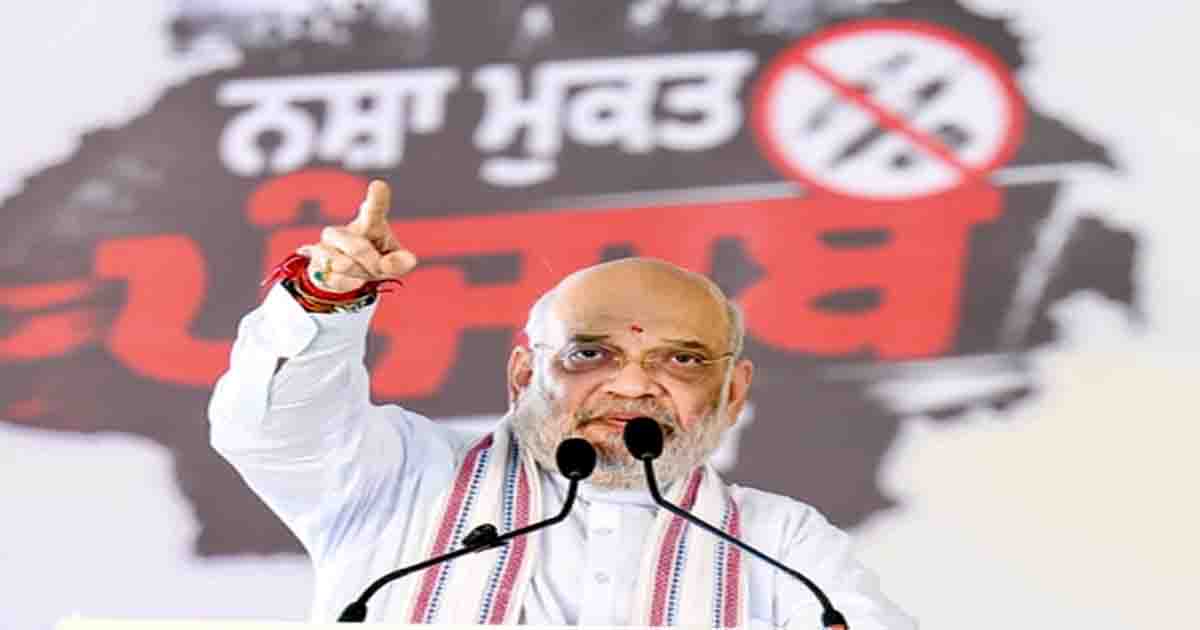
Union Home Minister Amit Shah will visit Punjab on October 20, Bharatiya Janata Party (BJP) leader Ravneet Singh Bittu announced on Sunday.
This will be HM Shah’s second visit in 20 days. He last visited Punjab on September 30 to address an anti-drug rally in Jalandhar.
Announcing the visit in a post on X, Bittu stated that at a time when Punjab is grappling with a serious drug problem, there is a need for decisive action, strong leadership, and firm determination to safeguard the youth and the future of the state.
“Punjab welcomes Hon’ble Union Home Minister Shri Amit Shah Ji on his visit to Punjab on 20th October. At a time when Punjab is battling the grave menace of drugs, we need decisive action, strong leadership and a firm resolve to secure our youth and our future,” the former Union Minister said.
Taking aim at the Punjab government over the growing drug menace in the state, Bittu said, “The AAP Govt in Punjab has lost his mandate much before his completion of term. I appeal to every Punjabi to support Amit Shah Ji and have faith in our collective mission to make Punjab drug-free, once and for all.”
“Let us unite to save Punjab’s youth and reclaim Punjab’s future!” he added.
HM Shah’s visit comes at a time when political parties are gearing up for the 2027 Assembly elections in Punjab. It is likely that during his visit, he will focus on strengthening the BJP and discussing preparations for the polls.
There is also a possibility that the Home Minister might visit Mansa to meet the family members of anti-drug activist Parwinder Singh Jhota.
Earlier this week, HM Shah raised concerns over the alleged rise in drug trafficking, gangsterism and organised crime in Punjab, questioning the Bhagwant Mann-led government over the safety of the state’s residents.
In a post on social media platform X in Hindi, he said recent incidents in Dirba and Mansa had raised serious questions about the law and order situation in the state.
HM Shah further said that the Home Ministry will also seek responses from the Punjab government on both these incidents.
During his September 30 rally, the Home Minister promised to make Punjab free of the illicit ‘chitta’ (synthetic drug) trade before December 31, 2029, saying the BJP would contest the next Assembly elections in the state primarily on the issue of a drug-free Punjab.
He urged the mothers and the youth of Punjab to extend support to the BJP in the next Assembly elections by voting for the lotus symbol, promising to free the state from the illicit drug trade.
Leader of Opposition in the Lok Sabha Rahul Gandhi on Sunday expressed grief over the loss of lives in the road accident near Shitla Mata Temple in Madhya Pradesh’s Gwalior and extended deepest condolences to the grieving families.
Fourteen people were killed, while 27 were injured after a truck rammed into shops near Shitla Mata Temple early on Sunday. The incident occurred at around 1:30 a.m. on Sunday when the truck lost control while descending a slope near the historic Shitla Mata Temple, located 18 kilometres from the district headquarters.
Taking to X, Gandhi said, “The news of the deaths of several devotees in a horrific accident caused by an out-of-control truck near the Sheetla Mata Temple in Gwalior, Madhya Pradesh, is extremely heartbreaking.”
“I express my deepest condolences to the grieving families who have lost their loved ones in this accident. I stand with them in this hour of sorrow. I hope for the swift recovery of the injured,” he added.
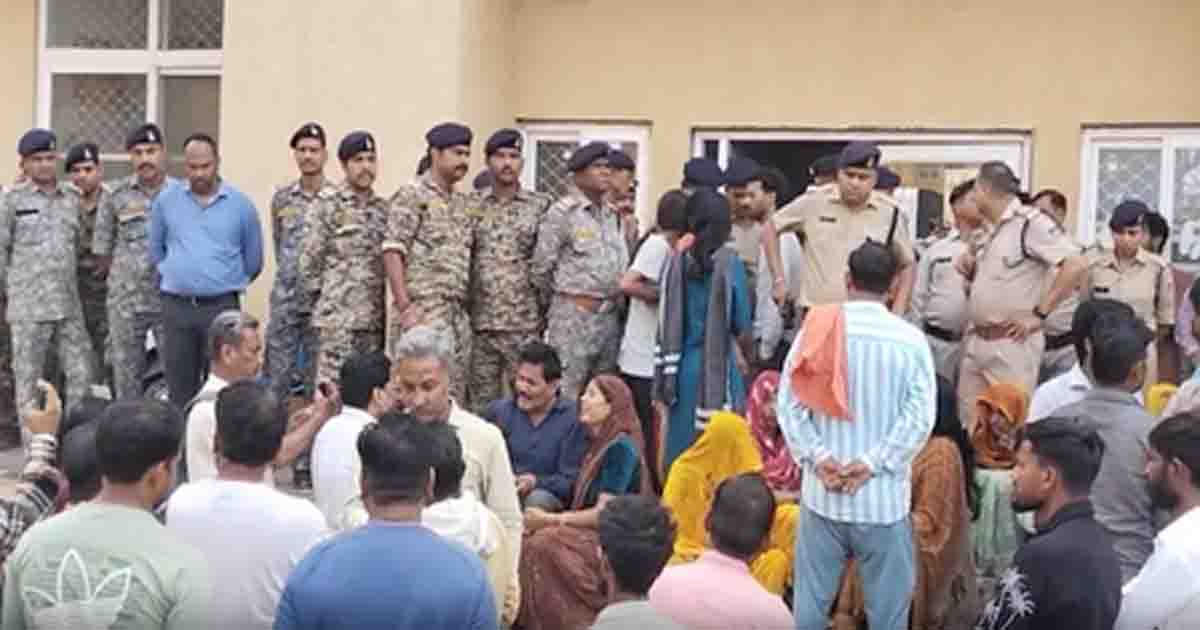
Meanwhile, families of those killed in the tragic road accident gathered outside the post-mortem house on Sunday and expressed outrage over what they alleged was the administration’s failure to ensure proper traffic management during the heavy rush of devotees amid the Navratri festival.
They assembled outside the post-mortem house in large numbers, raising questions over the district administration’s arrangements and demanding accountability for the tragedy.
The incident has triggered widespread anger among residents. Questions are being raised over the police administration’s handling of traffic regulation and public safety during the festival. People have demanded strict action against those found responsible for the lapses that allegedly led to the accident.
The tragedy occurred during the auspicious festival of Navratri, when hundreds of thousands of devotees visit the historic Shitla Mata Temple. Typically, the route passing by the temple is closed to large vehicles during this period; hence, an investigation is underway to determine who allowed the truck to enter.
Officials have stated that they are probing who authorised the truck’s entry and whose negligence led to this incident.
The victims’ families have questioned how the movement of a truck wasn’t prohibited in the vicinity of the Shitla Mata Temple.
A couple died on the spot, and their three minor daughters were left battling for life after a speeding car hit their motorcycle in Madhya Pradesh’s Pandhurna while they were returning home after darshan.
The deceased have been identified as Vasudev Uike (40) and his wife Sunita Uike (35). Their three daughters — Vaishnavy (3), Sonu (7) and Rakhi (5) — sustained injuries in the accident and are undergoing treatment.
The youngest, Vaishnavy, suffered a fracture and has been referred to Nagpur for advanced medical care, while Sonu and Rakhi are being treated at the Pandhurna Civil Hospital.
According to police, the family was travelling on a motorcycle and was crossing the Tigaon four-lane highway when a speeding car hit their bike with great force. The impact was so severe that both Vasudev and Sunita died on the spot. Passers-by and local residents rushed the injured children to a hospital.
The accident took place late at night when traffic on the highway was relatively low. Eyewitnesses said the car was travelling at high speed and did not stop after the collision. The driver of the car fled from the scene, leaving the family lying on the road.
Police teams reached the spot soon after receiving information and launched a search for the absconding vehicle and its driver. Senior officers said efforts are underway to trace the car through CCTV footage and other leads available on the highway.
The motorcycle involved in the accident has been seized, and a case has been registered. Local administration and hospital authorities are monitoring the condition of the three injured girls.
Doctors treating them at Pandhurna Civil Hospital said Sonu and Rakhi are stable but under observation, while Vaishnavy requires specialised treatment in Nagpur.
Residents of the area have demanded strict action against the absconding driver and better safety measures on the Tigaon four-lane highway, which has witnessed several accidents in the past.
Police said further investigation is in progress to ascertain the exact sequence of events and establish the identity of the car involved in the accident.

HM Amit Shah to visit Punjab on October 20

Prabhas’ ‘Spirit’ gets a new release date, to lock horns with Ranbir Kapoor’s ‘Ramayana part 2’

Delhi protests put business worth Rs 400 crore at daily risk, exposure may reach Rs 4,000 crore in 10 days: CAIT

Extremely heartbreaking: Rahul Gandhi on MP road accident

Couple killed, 3 minor daughters critical as speeding car hits bike in MP’s Pandhurna

Rahul, Cong ecosystem want to force regime change: BJP after Neha Bora praises B’desh Gen-Z protest

BJP pays tribute to ex-President Abdul Kalam, recalls his enduring influence on generations of India’s youth

Attack on democratic rights: INDIA Bloc leaders on detentions of anti-ECI protestors

INDIA bloc begins protest march against ECI

Maha Congress stages agitation against Gyanesh Kumar
-

 Crime4 years ago
Class 10 student jumps to death in Jaipur
-

 Maharashtra2 years ago
Mumbai Local Train Update: Central Railway’s New Timetable Comes Into Effect; Check Full List Of Revised Timings & Stations
-

 Maharashtra2 years ago
Mumbai To Go Toll-Free Tonight! Maharashtra Govt Announces Complete Toll Waiver For Light Motor Vehicles At All 5 Entry Points Of City
-

 Maharashtra2 years ago
False photo of Imtiaz Jaleel’s rally, exposing the fooling conspiracy
-

 National News2 years ago
Ministry of Railways rolls out Special Drive 4.0 with focus on digitisation, cleanliness, inclusiveness and grievance redressal
-

 Maharashtra2 years ago
Maharashtra Elections 2024: Mumbai Metro & BEST Services Extended Till Midnight On Voting Day
-

 National News2 years ago
J&K: 4 Jawans Killed, 28 Injured After Bus Carrying BSF Personnel For Poll Duty Falls Into Gorge In Budgam; Terrifying Visuals Surface
-

 Crime2 years ago
Baba Siddique Murder: Mumbai Police Unable To Get Lawrence Bishnoi Custody Due To Home Ministry Order, Says Report