
Business
Maharashtra rakes in investment proposals worth Rs 88,500 cr at Davos

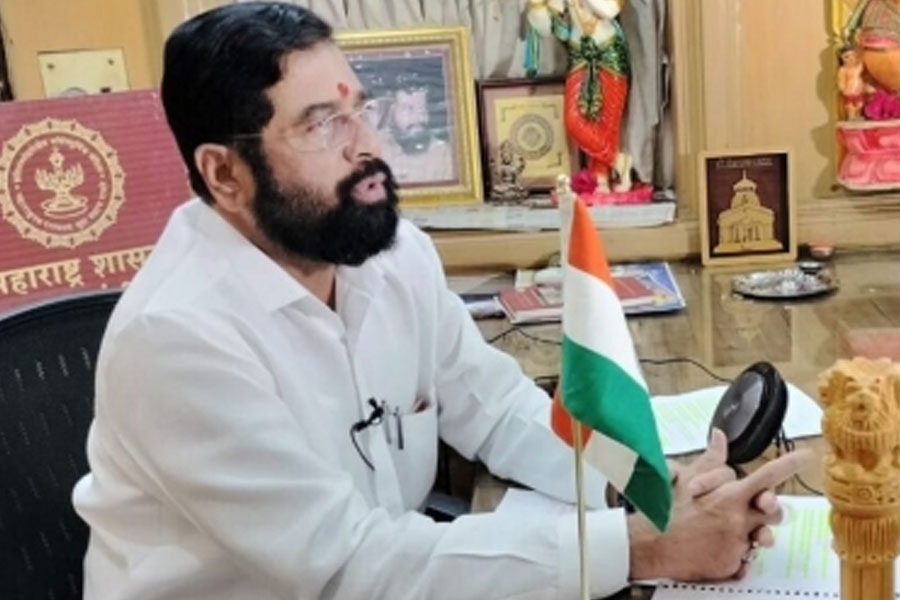
Conducting brisk business at the World Economic Forum (WEF) in Davos, Switzerland, Maharashtra Chief Minister Eknath Shinde and his team inked MoUs worth around Rs 88,500 crore for various projects with a potential to create over 56,000 jobs, officials said on Tuesday.
Industry Minister Uday Samant, who is part of the CM’s entourage, said that in the first two days, the state government has signed agreements with several major global conglomerates and investors.
Present at the ceremonies were top officials like Harshdeep Kamble, Vipin Sharma, T. Krishna, Shreya Eren, Ashish Nawade and others.
The prospective investors include USA’s New Era Cleantech Solution’s Rs 20,000 crore coal gasification project (15,000 jobs) and Israel’s Rajuri Steels and Alloys subsidiary’s Rs 600 crore steel plant (1,000 jobs), both in Chandrapur.
MoUs were also signed with two UK companies — Varad Ferro Alloys will set up a Rs 1,520 crore steel project in Gadchiroli (2,000 jobs) and Rcube/Ark Data’s investment for a Rs 12,000 crore plant in Pune (1,200 jobs) — besides Portugal’s Elite Plast AutoSystems proposing to start a Rs 400 crore plastic automotive project in Pune (2,000 jobs).
Another big one will be GoGoRo Engineering and Badway Engineering’s Rs 20,000 crore investment projects with employment potential of 30,000 across the state.
Others include Mahindra Electric Vehicle Automobile Ltd’s investment of Rs 10,000 crore in Pune (3,000 jobs), Japan’s Nippon Telegraph & Telephones’s Rs 20,414 crore across the state (1,525 jobs).
These were preceded by proposals from Berkshire Hathaway HomeServices Orenda India (Rs 16,000 crore), ICP Investments/Indus Capitals (Rs 16,000 crore), Greenko Energy Projects Pvt Ltd of Telangana (Rs 12,000 crore), Nipro Pharma Packaging India Pvt Ltd of Pune (Rs 1,650 crore) and Rukhi Agro Foods of Thane (Rs 250 crore).
Shiv Sena (UBT) chief spokesperson and MP Sanjay Raut said that if all these investments are indeed coming, it will be good for the state.
“However, let’s wait till the investments actually come and jobs are really created before we comment,” said a skeptical Raut, who had on Monday urged Shinde to visit Gujarat and get back projects of Maharashtra which had shifted there in 2022.
The MoUs pertain to greenfield projects like data centres, pharmaceuticals, logistics, chemicals, automobiles, electric vehicles, renewable energy and ESDM.
Among the most industrialised states in India, Maharashtra contributes 15 per cent to the national GDP and 16 per cent of the country’s industrial output.
The services sector accounts for much of the state’s economy, up to 62 per cent of the state GDP, followed by the manufacturing sector which contributes 20 per cent through major industries including automobiles, engineering, textiles, pharmaceuticals, chemicals, petrochemicals, food processing and IT/ITeS.


New Delhi, Oct 8: Domestic equity benchmarks opened largely flat on Thursday with Nifty opening around 22,600 mark as gains in IT and pharma stocks were offset by weakness across financial, FMCG and auto stocks.
Nifty opened at 22,599.05, down 4 points or 0.02 per cent.
Similarly, Sensex started at 72,668, up 29.30 points or 0.04 per cent.
Sector-wise, Nifty IT, Nifty MidSmall Healthcare, Nifty Pharma were top gainers with advancing up to 0.59 per cent.
Meanwhile, metal, consumer durables and chemicals also traded marginally higher.
On the other hand, Nifty Financial Services ex-Bank, Nifty FMCG slipped up to 0.38 per cent.
Market experts said the RBI’s calibrated tightening stance could put pressure on equity valuations as higher interest rates make fixed-income investments relatively more attractive.
They also expect investor preference to shift marginally towards relatively interest-inelastic sectors such as pharmaceuticals.
Experts noted that growth stocks have continued to attract investor interest despite high valuations, while value stocks have remained subdued.
“Sustained selling by foreign investors in large-cap stocks, coupled with the US 10-year Treasury yield staying above 5.3 per cent, could keep large-cap stocks under pressure,” they added.
“Yesterday’s multiple attacks at 22574 calls for an extended period of consolidation, before setting a direction. Though considerably weakened, the 23100-220 view is still in play, with downside marker at 22439,” according to them.
Experts added that a sustained reversal in the market trend would require foreign investors to turn buyers, while value stocks could offer opportunities over the longer term.
In addition, foreign institutional investors remained net sellers on Wednesday and offloaded equities worth more than Rs 6,121 crore.
While domestic institutional investors provided some support and purchased equities of around Rs 4,596 crore.
Moreover, market sentiment remained cautious amid concerns over elevated US Treasury yields and oil prices, while Asian markets traded on a cautious note following a softer session on Wall Street.
New Delhi, Oct 7: Meta on Wednesday announced a series of new AI-powered measures aimed at strengthening its fight against child sexual exploitation on Facebook and Instagram, as the company revealed it took action against 5.3 million pieces of child sexual exploitation content in India during the first six months of 2026.
The social media giant said more than 98 per cent of the violative content removed in India between January and June this year was proactively detected by its systems before being reported by users.
“Between January to June 2026, we actioned 5.3 million pieces of child sexual exploitation content on Facebook and Instagram in India, with over 98 per cent found and proactively addressed before anyone reported it,” the tech giant said.
Globally, Meta said it actioned 33.2 million pieces of child sexual exploitation content across Facebook and Instagram during the same period, with over 97 per cent identified proactively.
“Globally between January to June 2026, we actioned 33.2 million pieces of child sexual exploitation content from Facebook and Instagram, over 97 per cent found and proactively addressed before anyone reported it,” it added.
According to the company, online predators are increasingly using sophisticated tactics to evade detection, including advertisements that appear harmless but covertly direct users to illegal content hosted outside Meta’s platforms.
In response, the company has upgraded its ad review systems and deployed additional artificial intelligence tools to identify such activity more effectively.
Meta said the new safeguards include large language model (LLM)-based detection systems designed to identify “signposting” content that may appear benign but is suspected of directing users to child sexual exploitation material or related harmful activities.
The company has also enhanced its ability to assess the destination of advertisements, enabling it to block links leading to violative content and take action against the accounts responsible.
“Once a link is blocked, we search for and then delete other content – such as ads, posts or comments – that contain the link. We take steps to prevent people from posting content containing a blocked link on Facebook, Instagram and Threads, and ads containing blocked links would be rejected at upload,” Meta said in its official statement.
New Delhi, Oct 7: The Delhi High Court on Wednesday permitted a senior director of Vivo Mobile India to travel to Bangkok for four days for official meetings and directed suspension of the Look Out Circular (LOC) issued against him during the period.
A single-judge Bench of Justice Sachin Datta allowed Harinder Dahiya, the company’s Senior Director of Finance and Accounts, to travel to Thailand, from October 12 to 15 for official meetings concerning statutory audit matters, audit and control transformation, litigation, and business and finance strategy at Vivo India.
The High Court also permitted release of his passport and directed that the LOC against him will remain suspended during the four-day period.
Dahiya had challenged the March 19, 2026 order of the Patiala House Courts, which had rejected his plea seeking setting aside of the LOC, permission to travel abroad and release of his passport.
The Enforcement Directorate (ED) opposed the application, contending that Dahiya, as Director and Chief Financial Officer of Vivo India, had played a crucial role in the alleged siphoning of proceeds of crime stated to be around Rs 20,241 crore.
The federal anti-money laundering agency also said that the official meetings could be attended virtually and relied on another order of the High Court, by which the travel application of co-accused Guangwen Kuang alias Andrew Kuang was dismissed.
However, the Delhi High Court said the earlier order concerning Kuang did not assist the ED as it was based on his foreign nationality and the absence of an extradition treaty with China.
Dahiya, an Indian national travelling to Thailand, stood on a different footing, it said.
As part of the conditions, Dahiya has been directed to deposit original title documents of his immovable assets with the High Court Registry as security until his return and furnish his travel itinerary, flight details, address of stay and contact number in Thailand to the investigating officer and trial court.
He has also been directed to intimate the investigating officer and trial court within 24 hours of his return, re-deposit his passport within the same period and appear before the trial court on the next date fixed.
The High Court also directed that Dahiya will not contact any witness, tamper with evidence or do anything prejudicial to the proceedings.
The LOC will automatically revive after October 15.
The High Court clarified that its observations were confined to the present application and would not amount to an expression on the merits of the main case.

Will be remembered for his good work for farmers’ welfare and great acting: NDA leaders pay their respects to Nana Patekar

Israeli military says struck 1,00,000 Mideast targets since October 2023

Akshay Kumar mourns Nana Patekar demise, says ‘it’s hard to believe you’re gone’

Indian equity markets open flat; financial shares drag

Randeep Hooda to late Nana Patekar: When I first saw him in Parinda, didn’t think I was watching an actor

Gift to President Putin part of PM Modi bid to globally display India’s heritage

PM Modi’s warm camaraderie with Putin, Xi on full display at BRICS Summit

Complaint against Netflix & Mukesh Chhabra for inappropriate language on ‘India’s Got Latent 2’

INDIA bloc begins protest march against ECI

Maha Congress stages agitation against Gyanesh Kumar
-

 Crime4 years ago
Class 10 student jumps to death in Jaipur
-

 Maharashtra2 years ago
Mumbai Local Train Update: Central Railway’s New Timetable Comes Into Effect; Check Full List Of Revised Timings & Stations
-

 Maharashtra2 years ago
Mumbai To Go Toll-Free Tonight! Maharashtra Govt Announces Complete Toll Waiver For Light Motor Vehicles At All 5 Entry Points Of City
-

 Maharashtra2 years ago
False photo of Imtiaz Jaleel’s rally, exposing the fooling conspiracy
-

 National News2 years ago
Ministry of Railways rolls out Special Drive 4.0 with focus on digitisation, cleanliness, inclusiveness and grievance redressal
-

 Maharashtra2 years ago
Maharashtra Elections 2024: Mumbai Metro & BEST Services Extended Till Midnight On Voting Day
-

 National News2 years ago
J&K: 4 Jawans Killed, 28 Injured After Bus Carrying BSF Personnel For Poll Duty Falls Into Gorge In Budgam; Terrifying Visuals Surface
-

 Crime2 years ago
Baba Siddique Murder: Mumbai Police Unable To Get Lawrence Bishnoi Custody Due To Home Ministry Order, Says Report