
Politics
Lalu Prasad, daughter Misa raided by CBI in ‘land for job’ scam

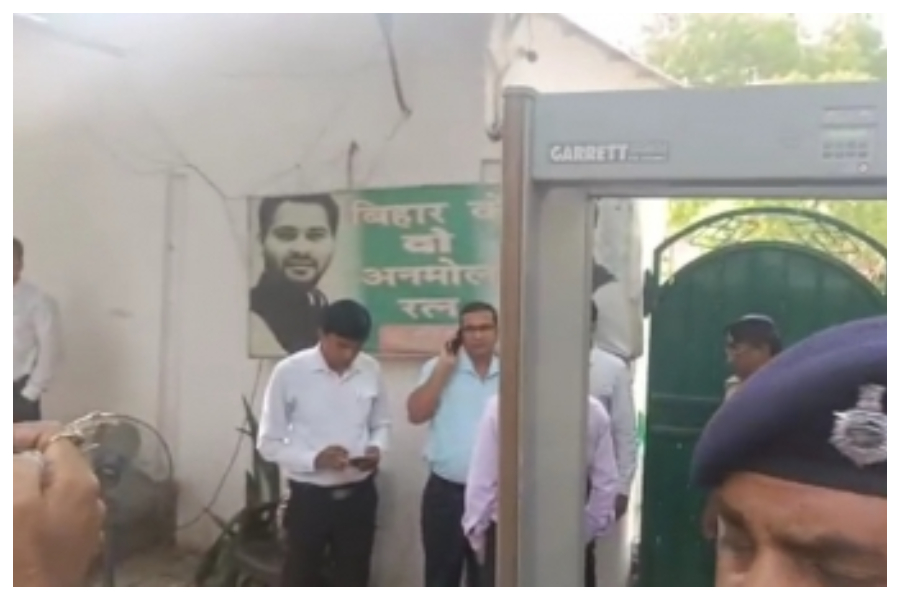
The Central Bureau of Investigation (CBI) on Friday was conducting raids at 16 different locations in Bihar and Delhi linked to Rashtriya Janata Dal (RJD) chief Lalu Prasad and his daughter, Misa Bharti, in connection with a land for job scam.
The scam involved taking land from unemployed youths on the pretext of providing them government jobs.
A CBI source said that a fresh case was recently lodged against Lalu and others for accepting bribes from unemployed youths and cheating them on the pretext of providing them jobs in the government sector.
“Yadav, when he was the Union minister, through his aide or directly told the innocent persons that he would help them get government jobs. And they took land from the job seekers. However, the jobs were not provided to all,” the source said.
When asked how many such land pieces were acquired by Lalu and others through this, the source said they were making a list.
The CBI officials are also recording the statements of those who are present at the locations.
This comes weeks after the RJD leader was granted bail in the Rs 950-crore fodder scam case. He has already been convicted in five cases of the fodder scam.


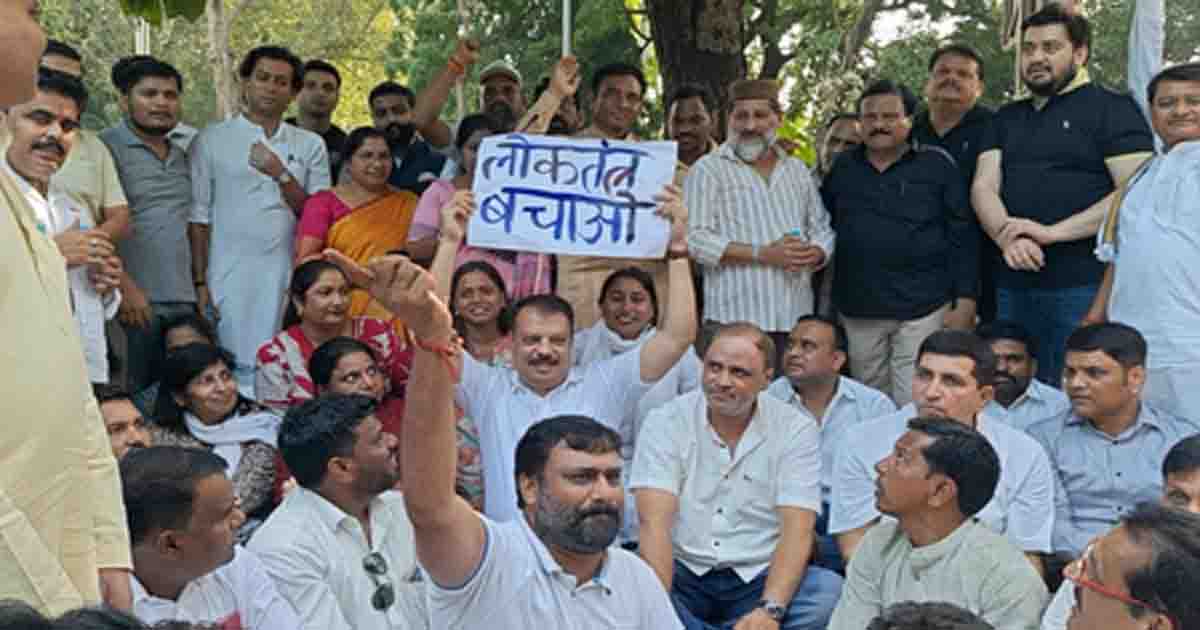
Bhopal, Oct 12: Madhya Pradesh Congress leaders, led by Leader of Opposition Umang Singhar, reached New Delhi on Monday to join Rahul Gandhi’s campaign against alleged vote theft and demand the resignation of Chief Election Commissioner Gyanesh Kumar.
Upon reaching New Delhi, Madhya Pradesh Congress legislators and senior party leaders staged a sit-in on Barakhamba Road, accusing the Election Commission of irregularities in electoral rolls.
The protest is part of the Congress’s wider campaign against the Special Intensive Revision (SIR) of voter lists and its allegations of electoral manipulation.
Singhar said the entire Madhya Pradesh Congress had reached Delhi to stand with Rahul Gandhi in what the party described as a fight to protect democracy.
“The entire Madhya Pradesh Congress has come to Delhi to fight alongside Rahul Gandhi to protect democracy. If we have to go to jail for this fight, we are ready. We will not retreat until Gyanesh Kumar resigns,” Singhar said.
Former Madhya Pradesh Congress president Arun Yadav accused the Chief Election Commissioner of facilitating alleged vote theft under the protection of Prime Minister Narendra Modi.
He said the party would continue its agitation until Kumar stepped down and announced that a march to the Supreme Court would also be taken out.
“Gyanesh Kumar has facilitated vote theft under the protection of the Prime Minister. We will continue our protest until he resigns,” Yadav said.
The Madhya Pradesh Congress has been protesting against the revision of electoral rolls and demanding accountability from the Election Commission.
On October 8, the party organised demonstrations across the state, including a march in Bhopal led by former Chief Minister Digvijaya Singh, state Congress president Jitu Patwari and Singhar.
The party’s campaign follows Rahul Gandhi’s recent protests in Delhi, where opposition leaders sought to raise questions about the electoral process and demanded Kumar’s resignation.
The Election Commission has defended its procedures, saying political parties must follow the prescribed process to seek meetings with its officials.
The Delhi demonstration also saw participation from Congress Working Committee member Kamleshwar Patel, former Leader of Opposition Ajay Singh, former minister Sajjan Singh Verma, senior MLA Arif Masood and Tarun Bhanot.
International News
Riyadh airport attack: Embassy officials visit hospital, provide support to injured Indians

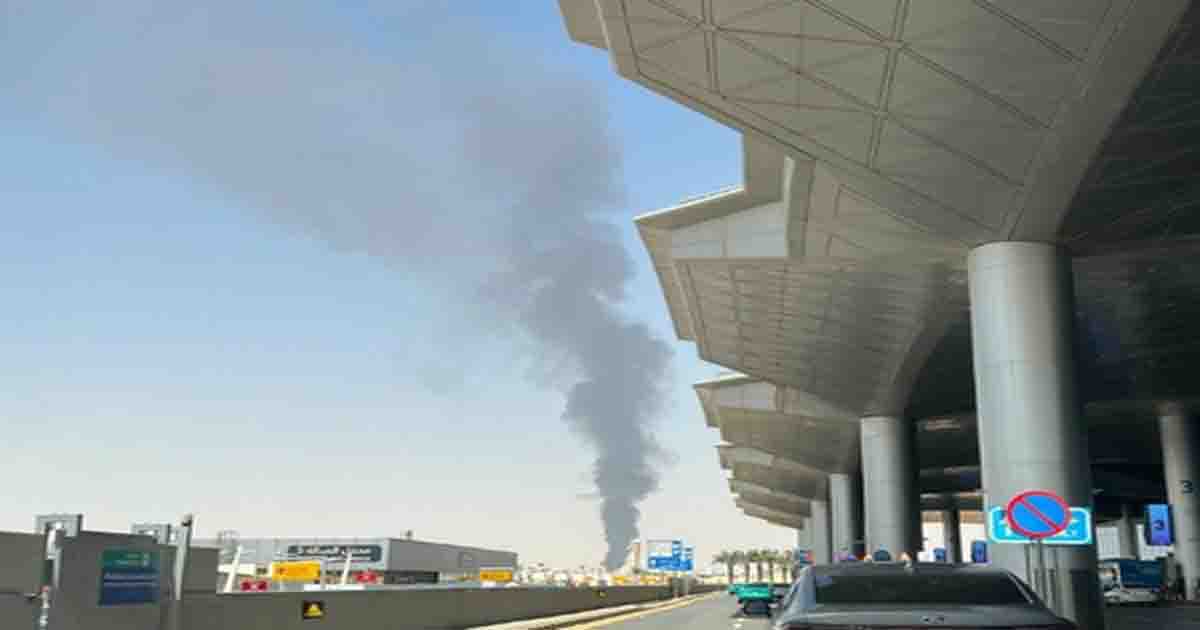
Riyadh, Oct 12: The Indian Embassy in Saudi Arabia said on Monday that it has been providing assistance to the family of the deceased Indian national, Mohammed Yousuf Ali, who died in the recent attack on Riyadh airport.
The Embassy said its officials visited the hospitals where injured people have been receiving treatment. As many as five people are in the ICU and two remain in the normal ward while the rest have been discharged from the hospital.
Sharing an update regarding the Riyadh airport attack on X, the Indian Embassy in Saudi Arabia stated, “The family of late Mr. Mohammed Yousuf Ali, who passed away in the attack on Riyadh airport, has decided to conduct the funeral in Riyadh itself. Mission is providing all assistance to the bereaved family, including completion of all formalities for the funeral.”
“Mission officials have visited the hospitals where injured nationals are undergoing treatment. Three persons continue to be in ICU, and two more have been admitted in the ICU, two remain in the normal ward, and rest have been discharged. The Embassy remains in constant touch with their family members and providing all possible support,” it added.
On Sunday, the Indian Embassy in Saudi Arabia confirmed the death of an Indian national injured in the Riyadh airport attack and offered condolences to the family of the deceased.
“It is learnt that one Indian national injured in the Riyadh attack has unfortunately lost his life today. We convey our heartfelt condolences to the family of the deceased. We are in touch with the family and will provide all support for ensuring the early repatriation of mortal remains,” the Embassy posted on X.
The deceased, Mohammed Yusuf Ali, hailed from Hyderabad. His two sons and an aunt were also injured in the attack.
On October 11, India condemned the attack on Saudi Arabia’s King Khalid International Airport, saying that attacks on civilians and civilian infrastructure were “unacceptable” and calling for an immediate cessation of hostilities.
In a statement, the Ministry of External Affairs (MEA) said, “We strongly condemn the repeated attacks on Riyadh’s King Khalid International Airport over the past few days, including the dastardly attack on October 10, which have led to loss of lives, injuries and damage to property. We express our condolences to the families of the deceased and wish speedy recovery to the injured persons.”
“The repeated attacks on civilians and civilian infrastructure are completely unacceptable and must cease immediately,” the statement read.
“We stand in solidarity with the people and the government of the Kingdom of Saudi Arabia in defence of their sovereignty, and hope that peace and normalcy returns to the region at the earliest,” it added.
On October 10, Saudi Arabia’s General Authority of Civil Aviation said that the attack targeting King Khalid International Airport on Saturday afternoon killed 12 people and injured 309 others.
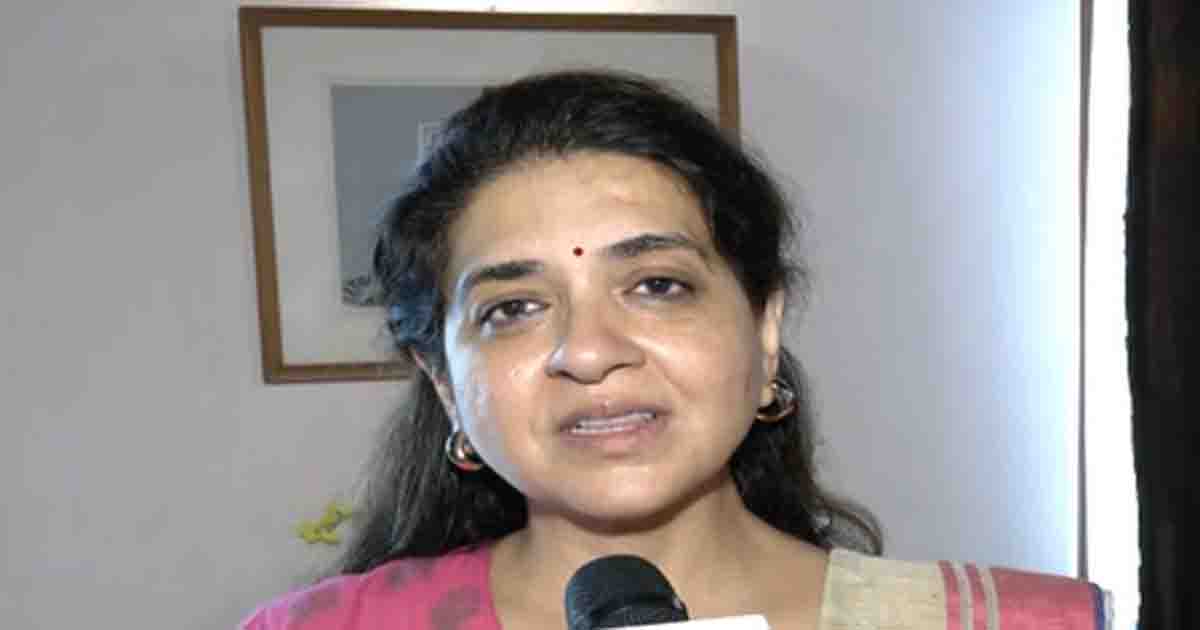
Mumbai, Oct 12: Shiv Sena national spokesperson Shaina NC said on Monday that Leader of Opposition in Lok Sabha, Rahul Gandhi, thinks protesting is equivalent to ordering food items on a delivery app.
“For Rahul Gandhi, calling for protests is similar to ordering food on delivery apps. Call someone to protest; create inconvenience for people every day,” Shaina said while commenting on the ongoing unrest in the national capital.
“Honourable Supreme Court Justice Surya Kant has said that the matter is sub judice; then why are you creating nuisance on the streets and not letting the court do its work?” she asked.
She added, “Rahul Gandhi lacks empathy and does not care about common people who would want to go to Rajiv Chowk, Patel Chowk, Mandi House, Secretariat, Barakhamba Road. They are getting affected.”
“The protestors don’t care about the Metros, traffic, security of the people,” she said.
She further said, “When the matter is in court, one must wait and respect the decision of the Supreme Court.”
Stressing the matter, she further said, “How long will you (Opposition) be able to mislead people through a false narrative? You are welcome to debate in the parliament, but don’t create chaos on the streets.”
Shaina further said that people are not attracted by names like ‘Thackeray’, ‘Gandhi’, and that the opposition has no vision, plans, or blueprints whatsoever.
On the detention of CJP leaders, Shaina said, “There is a stark difference between ‘detention’ and ‘arrest’. Everyone has the right to protest, but when it leads to unrest and riots, then the police will also have to take action.”
She praised the Delhi Police for not aggravating the protests, controlling the mobs and further protecting the common masses.
Reacting to PM Narendra Modi appeal to the country’s Gen Z to make use of the opportunities that come with Viksit Bharat and taking the world towards solutions, Shaina said that the Indian Gen Z are not the future but the ‘present’. With initiatives such as Startup India, MSME, and Lakhpati Didi, the PM has empowered all.
She further said that the youth of the nation should move forward in development and not indulge in chaos and unrest. Rather, one must understand that the need of the hour is education, security and ‘Atma-nirbharta’.

MP Congress leaders join Rahul Gandhi Delhi protest

Riyadh airport attack: Embassy officials visit hospital, provide support to injured Indians

Protests not similar to ordering food from delivery apps: Shiv Sena blasts Rahul Gandhi

Security won’t return to Strait of Hormuz as long as US continues war: Iran

Maha CM accuses Rahul Gandhi, INDIA bloc of trying to weaken judiciary through protests

INDIA bloc begins protest march against ECI

Maha Congress stages agitation against Gyanesh Kumar

Complaint against Netflix & Mukesh Chhabra for inappropriate language on ‘India’s Got Latent 2’

Delhi court grants three-week interim bail to influencer Swatantra Bhardwaj

Bombay HC warns Vijay Mallya against posting court documents on social media
-

 Crime4 years ago
Class 10 student jumps to death in Jaipur
-

 Maharashtra2 years ago
Mumbai Local Train Update: Central Railway’s New Timetable Comes Into Effect; Check Full List Of Revised Timings & Stations
-

 Maharashtra2 years ago
Mumbai To Go Toll-Free Tonight! Maharashtra Govt Announces Complete Toll Waiver For Light Motor Vehicles At All 5 Entry Points Of City
-

 Maharashtra2 years ago
False photo of Imtiaz Jaleel’s rally, exposing the fooling conspiracy
-

 National News2 years ago
Ministry of Railways rolls out Special Drive 4.0 with focus on digitisation, cleanliness, inclusiveness and grievance redressal
-

 Maharashtra2 years ago
Maharashtra Elections 2024: Mumbai Metro & BEST Services Extended Till Midnight On Voting Day
-

 National News2 years ago
J&K: 4 Jawans Killed, 28 Injured After Bus Carrying BSF Personnel For Poll Duty Falls Into Gorge In Budgam; Terrifying Visuals Surface
-

 Crime2 years ago
Baba Siddique Murder: Mumbai Police Unable To Get Lawrence Bishnoi Custody Due To Home Ministry Order, Says Report