
National News
Licensed gun used in cheetah killing recovered; two brothers arrested: MP govt

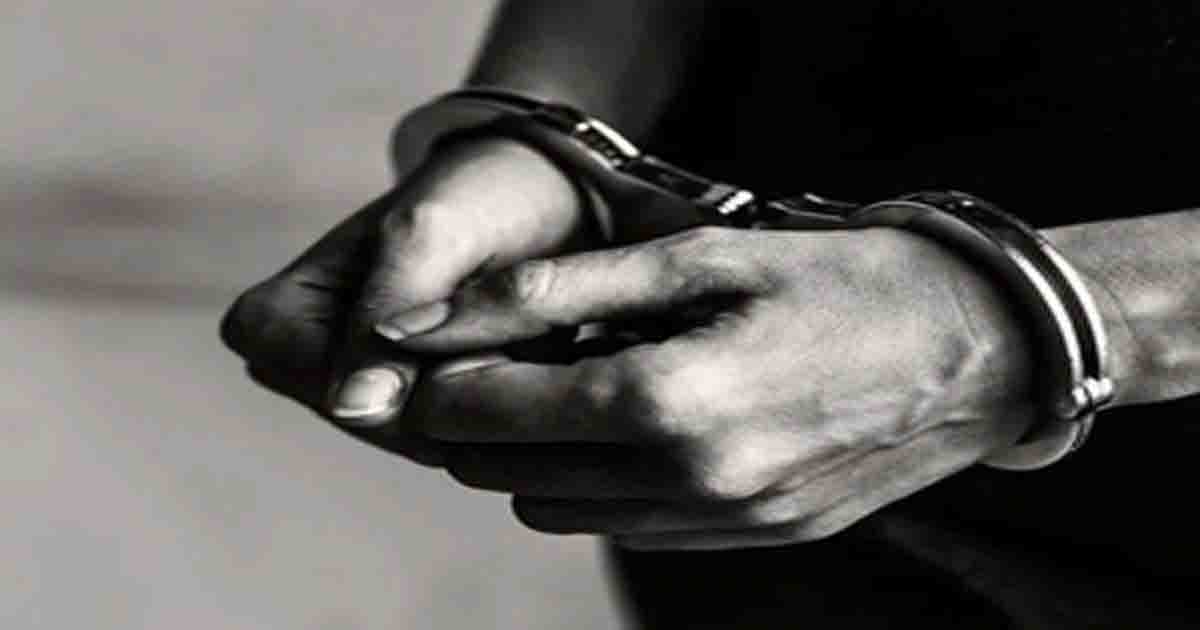
Two brothers have been arrested for allegedly shooting a 19-month-old male cheetah in Madhya Pradesh’s Sheopur district, and the licensed gun used in the incident has been recovered from a forest area in neighbouring Morena district, the Forest Department’s Special Task Force (STF) said on Monday.
The accused, identified as Bhagwan Singh and Pritam Singh, were arrested during the investigation into the death of cheetah KNG-22, which was found seriously injured in the territorial forests of Sheopur on October 25.
According to an official statement, Bhagwan Singh, a resident of Navalpura-Behrara village in Morena district, was arrested on October 31. During interrogation, he allegedly disclosed that he and his brother had gone hunting in the forest near Nitanwas village in Vijaypur on October 24.
“On spotting the cheetah in the area, he fired at it with his licensed double-barrel muzzle-loading gun and fled from the spot,” the statement said.
Acting on the information provided by Bhagwan Singh, the STF, with the assistance of Morena Police, also took his brother Pritam Singh into custody.
Both accused were taken to the suspected crime scene for identification, and the firearm used in the shooting was recovered from the Morena forest area during their identification.
The STF said a four-member team comprising forest and police officials was constituted by the state government to investigate the incident.
The team developed an informer network and conducted search operations with the assistance of a dog squad. It also collected information with the help of Morena Police and the forest divisions of Sheopur and Morena. A case has been registered against both accused under Sections 9 and 51 of the Wildlife (Protection) Act, 1972, as amended in 2022.
“During the investigation conducted so far, no involvement of any commercial illegal wildlife trade or organised wildlife crime gang has been found in this case,” the statement said.
Notably, KNG-22, a male cheetah born to female cheetah Nirva at Kuno National Park, was rescued from forest compartment number 748 in Sheopur on October 25 after being found in an injured condition.
It was initially taken to Kuno and later shifted to Nanaji Deshmukh Veterinary Science University in Jabalpur for specialised treatment. During emergency surgery, veterinarians recovered five firearm pellets from its body.
Despite medical treatment, the cheetah died on October 27.
The Centre had also deputed a three-member team comprising officials of the National Tiger Conservation Authority and the Wildlife Crime Control Bureau to investigate the circumstances surrounding the incident and examine the protection measures for cheetahs under Project Cheetah.
The incident has raised concerns over the safety of cheetahs moving outside the protected areas of Kuno National Park.

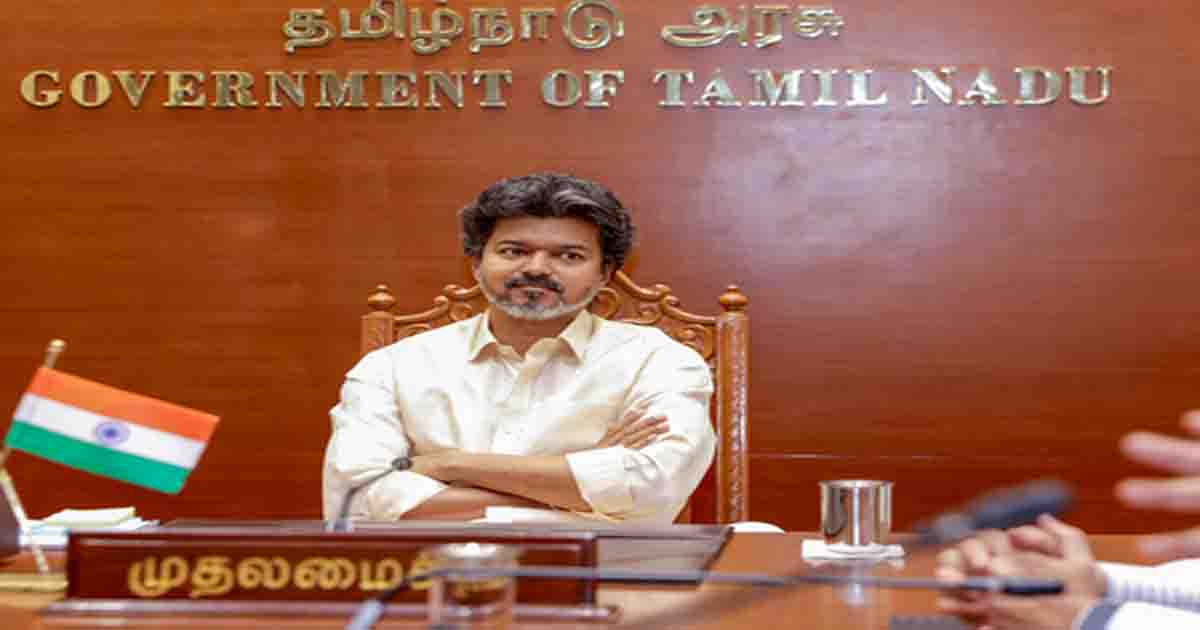
Tamil Nadu Chief Minister C. Joseph Vijay will present scholarships and certificates to students from five districts who secured top ranks in their Class 10 and Class 12 examinations at a ceremony in Neelankarai on Thursday.
The event, scheduled to begin at 2 p.m., marks the second phase of the Tamilaga Vettri Kazhagam’s (TVK) annual education awards. Students from Coimbatore, Erode, Tiruppur, the Nilgiris and Perambalur will receive their awards on Thursday.
Their parents will also attend the function at the coastal venue in Chennai, where the party held the opening round of this year’s programme earlier this month.
Minister Anand has directed the party’s district secretaries to ensure that the students and their parents are seated in the hall by noon, two hours before the scheduled start.
Vijay will present the awards and certificates to the students during the afternoon programme.
A further round of presentations is scheduled for Friday, November 27, when Vijay will give scholarships and certificates to students from Salem, Namakkal, Karur and Tiruchirappalli.
The two rounds scheduled for Thursday and Friday will therefore cover nine districts, with students from each district attending on the day allotted to them.
The TVK presents the awards every year to recognise students who finish among the top three in the Class 10 or Class 12 examinations.
The rankings are determined either district-wise or by Assembly constituency.
Students in both examination groups are eligible for the scholarships and receive certificates in recognition of their academic performance. The first phase of this year’s awards programme took place on November 4 at a private hall on the Neelankarai coast.
Thursday’s function brings the programme back to the same locality just over three weeks later, this time for a group drawn largely from western Tamil Nadu. Coimbatore, Erode, Tiruppur and the Nilgiris make up the western districts represented at Thursday’s presentation, while Perambalur students will join them from central Tamil Nadu.
Friday’s group also draws from both regions, bringing together Salem and Namakkal students with recipients from Karur and Tiruchirappalli. For families attending Thursday’s ceremony, noon is the reporting time set by the organisers.
The 2 p.m. start applies to the awards presentation for the five districts listed for Thursday. Students from the remaining four districts are scheduled to receive their awards from the Chief Minister the following day.
National News
Terrorism can never break spirit of nation united in courage, resilience: President Murmu on 26/11 anniversary

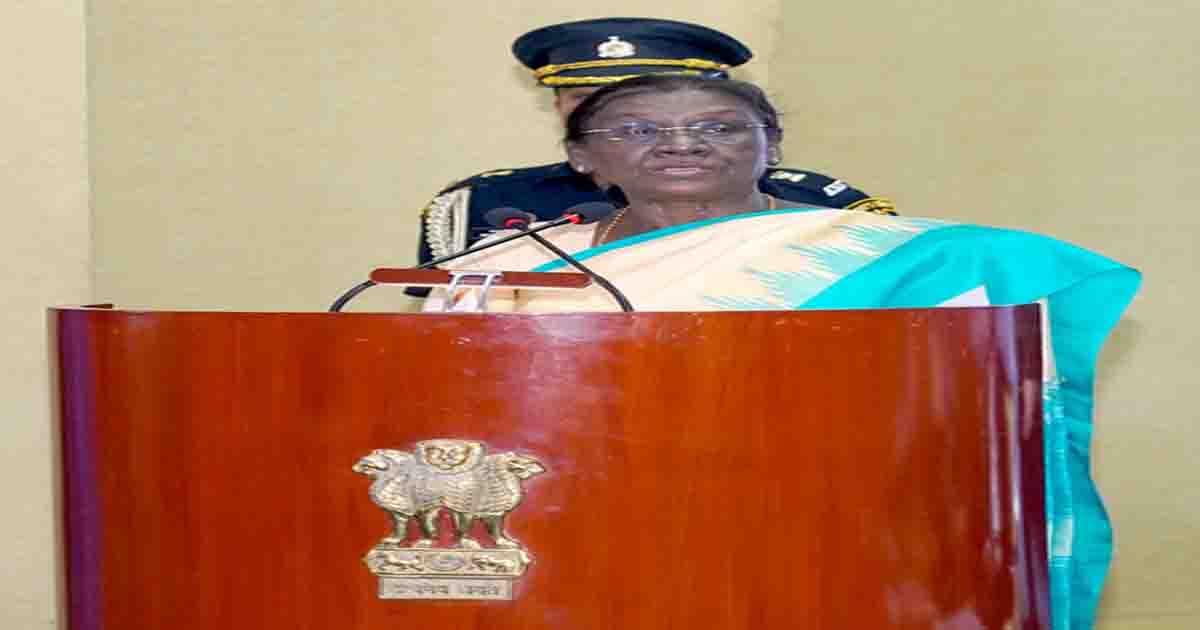
President Droupadi Murmu on Thursday paid homage to the victims and the martyrs of the 26/11 Mumbai terror attacks, as she asserted that terrorism can never break the spirit of a nation that stands united.
“On this solemn anniversary of the 26/11 Mumbai terror attacks, I bow my head in remembrance of the innocent lives lost and salute the courage of our brave soldiers, police personnel, and all those who stood fearlessly against terror. Their sacrifice and selfless service will forever remain etched in our nation’s soul,” President Murmu said in a statement.
“Terrorism may shatter lives, but it can never break the spirit of a nation united in courage, compassion, and resilience,” she said.
“Today, we stand with the survivors and their families, reaffirming our collective resolve to eliminate terrorism in all its forms and work towards a more peaceful and humane world,” President Murmu added.
The 26/11 attacks, carried out by 10 terrorists associated with Pakistan-based Lashkar-e-Taiba, began on the night of November 26, 2008, and continued until November 29. Mumbai witnessed a series of coordinated strikes targeting prominent public places, hotels and other establishments.
The terrorists attacked several locations, including Chhatrapati Shivaji Terminus railway station, Leopold Cafe, two hospitals, Nariman House and the Taj Mahal Palace and Oberoi-Trident hotels.
The four-day siege claimed 166 lives and left around 300 people injured. Nine of the 10 attackers were killed during operations by security forces, while Ajmal Amir Kasab was captured alive. He was sentenced to death in 2010 and executed in 2012.
The attacks remain one of the darkest chapters in India’s history and a reminder of the sacrifices made by security personnel in the fight against terrorism.
National News
Years after Mumbai 26/11, India evolves from dossier-led response to proactive counterterrorism
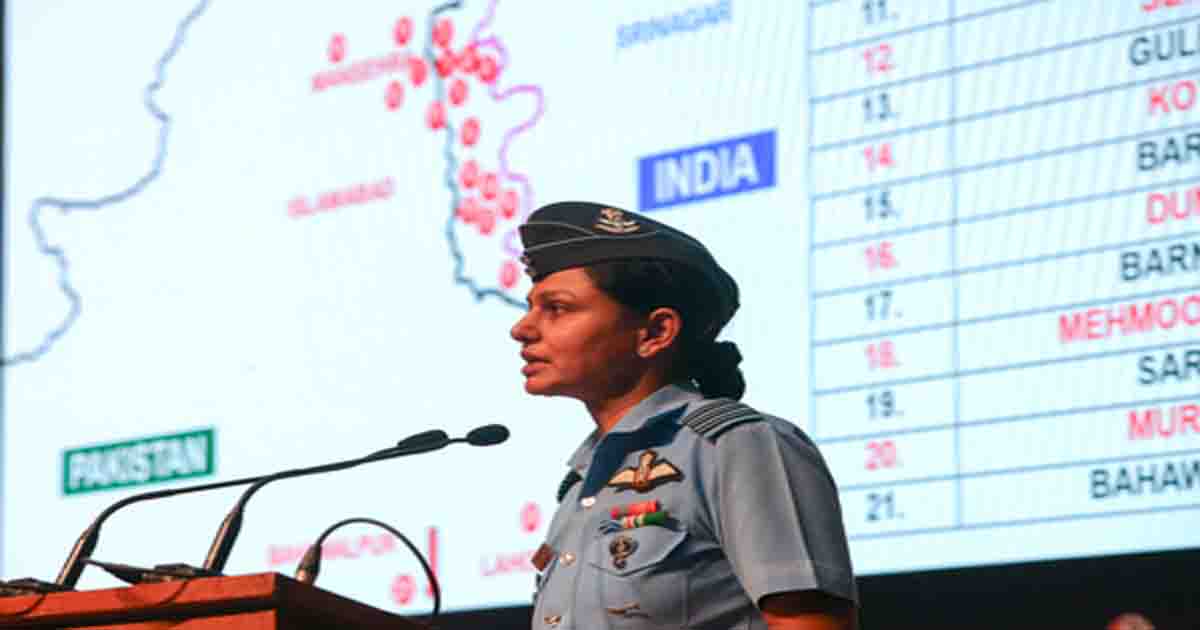
The 26/11 attacks were one of the most horrific and audacious attacks that India has witnessed, with a siege of Mumbai that lasted nearly 60 hours, and led to the killing of 166 people by ten terrorists of the Lashkar-e-Taiba who spread across multiple locations.
While the attack was audacious in nature, many argue that the response was quite weak and Pakistan needed to be punished harder for nurturing and harbouring the Lashkar.
The investigators were fortunate enough to capture one of the terrorists (Ajmal Kasab) alive. Had it not been for his interrogation, it would have been very hard to link the attack to Pakistan.
Despite the confession by Kasab, Pakistan continued to deny any link with the attack and even wiped out all traces of his home and family members in Faridkot, a village in the Kara district of Punjab province.
The experts note that while the response post the attack may not have been up to the mark, there were several lessons learnt.
Prime Minister Narendra Modi post his swearing in, in May 2014 vowed to fight terror. This led to the evolution of the kinetic strategy, which involved a more muscular approach to counterterrorism.
During the attacks, there were multiple flaws that were exposed. This included a complete lack of Intelligence, ill-equipped personnel of the Mumbai police, lack of coordination on the ground, and delayed response in bringing in the National Security Guard (NSG) to Mumbai from Delhi, the official said.
There were several misses when it came to Intelligence.
The landing of the ten terrorists in Mumbai prior to the attacks remained largely unknown.
The reconnaissance by David Headley, who flew in and out of India from the United States, was a completely unknown fact until the Americans tipped off the Indian security agencies much after the attacks were over.
Fixing the gaps relating to intelligence became a priority. The agencies became much more proactive and, most importantly, began coordinating seamlessly with the local police and Intelligence agencies.
The results of such coordination are visible in the battle against the terrorists in Jammu and Kashmir and also during the multiple operations that led to the complete wiping out of the Naxalite (Maoist) movement.
An Intelligence Bureau official said that over a period of ten years, the entire strategy relating to counterterrorism evolved, which eventually led to the unveiling of the PRAHAAR doctrine. This doctrine provides India with a counterterrorism framework, which involves preventing and responding to a terror attack.
Most importantly, the doctrine addresses these objectives through an intelligence-led proactive framework.
In a nutshell, the entire counterterrorism strategy is proactive through real-time Intelligence sharing and not reactive.
Officials say that the counterterrorism strategy has moved beyond just dossiers.
Post the Mumbai attacks, several dossiers were shared, but all of them are just gathering dust in Pakistan. The entire purpose of gathering evidence and handing out dossiers had become futile, as Pakistan always remained in denial mode.
It was more important to hit terror networks hard and destroy their infrastructure.
One of the most decisive actions was seen post the Uri attacks of 2016. The Indian Army carried out a surgical strike during which multiple launchpads and terrorist camps were destroyed in Pakistan-occupied Kashmir (PoK), the primary staging ground for outfits such as the Lashkar, the Jaish-e-Mohammad, and the Hizbul Mujahideen.
The rules of engagement changed, and a new doctrine was in the making.
This, however, did not deter the Pakistanis from carrying out another attack. This time it was in Pulwama, in which 40 soldiers were killed by a suicide bomber of the Jaish. The Indian Air Force carried out the Balakot air strike, destroying a major facility of the Jaish.
The 2025 Pahalgam attack shook the entire nation, as it not only killed innocent tourists, but the victims were first identified on the basis of their religion before being shot at point-blank range.
This attack led to Operation Sindoor, during which the Indian armed forces destroyed terrorist camps not just in PoK but deep inside Pakistan also. India called out Pakistan’s nuclear bluff and sent a loud message that any act of terror would be treated as an act of war and not a cross-border strike.
Counterterrorism experts say that the biggest lesson that India learnt years after the Mumbai 26/11 attacks is that fighting terror takes complete precedence when it comes to national security, especially when one has neighbours such as Pakistan.
Post the Mumbai 26/11 attacks, India witnessed a wave of blasts carried out by the Indian Mujahideen. However, once the outfit was wiped out, terror shifted largely towards Jammu and Kashmir, while the rest of the country remained quiet. Decisions such as the abrogation of Article 370 and the fall of separatism ensured development in Jammu and Kashmir. This led to the creation of jobs, and the youth were no longer willing to pick up arms to earn their money.
Although late, the Mumbai 26/11 attacks changed India’s perception when it came to its national security doctrine. To say that the threat is completely eliminated would be wrong.
Pakistan continues to back terrorists and is looking to rebuild networks.
Radicalisation drives have peaked, and adding to this headache are the latest waves of disinformation campaigns and honey-trapping incidents.
The fight would go on, but it is more important that India’s resolve remains strong and the doctrine keeps adapting to the new challenges posed by Pakistan and other state as well as non-state actors, an official said.

TN CM Vijay to present scholarships to Class 10, 12 toppers from five districts today

Terrorism can never break spirit of nation united in courage, resilience: President Murmu on 26/11 anniversary

Nine Russian, Ukrainian children reunited with families: White House

Years after Mumbai 26/11, India evolves from dossier-led response to proactive counterterrorism

‘Rural India facing acute economic distress’: Congress targets Centre over rising inflation

Congress trying to protect 3 crore Bangladeshi infiltrators in voter list: HM Shah

Red Fort car blast probe exposes blueprint for spread of terror modules across India

Trump flags Iran targets as talks continue

‘Conspiracy, not accident’: NCP on Ajit Pawar death

BJP, Shiv Sena slam Mallikarjun Kharge for terming Diwali ‘Khushiyon ka Eid’
-

 Crime4 years ago
Class 10 student jumps to death in Jaipur
-

 Maharashtra2 years ago
Mumbai Local Train Update: Central Railway’s New Timetable Comes Into Effect; Check Full List Of Revised Timings & Stations
-

 Maharashtra2 years ago
Mumbai To Go Toll-Free Tonight! Maharashtra Govt Announces Complete Toll Waiver For Light Motor Vehicles At All 5 Entry Points Of City
-

 Maharashtra2 years ago
False photo of Imtiaz Jaleel’s rally, exposing the fooling conspiracy
-

 National News2 years ago
Ministry of Railways rolls out Special Drive 4.0 with focus on digitisation, cleanliness, inclusiveness and grievance redressal
-

 Maharashtra2 years ago
Maharashtra Elections 2024: Mumbai Metro & BEST Services Extended Till Midnight On Voting Day
-

 National News2 years ago
J&K: 4 Jawans Killed, 28 Injured After Bus Carrying BSF Personnel For Poll Duty Falls Into Gorge In Budgam; Terrifying Visuals Surface
-

 Crime2 years ago
Baba Siddique Murder: Mumbai Police Unable To Get Lawrence Bishnoi Custody Due To Home Ministry Order, Says Report