
Politics
KK’s demise: Mamata cuts short Bankura visit, rushes to Kolkata


In view of the sudden demise of the playback singer Krishnakumar Kunnath, popularly known as KK, West Bengal Chief Minister, Mamata Banerjee, decided to cut short her scheduled political programme in erstwhile Maoist-infested Bankura district on Wednesday morning and rushed back to Kolkata.
A mega public rally at Bankura was scheduled on Wednesday at 12 noon. However, the Chief Minister arrived at the rally venue at 10.45 a.m. and completed her speech within 20 minutes.
“I will take a flight to Kolkata from Andal Airport. If I am able to reach Kolkata in time, I will interact with KK’s family members who have already arrived there. I have spoken to KK’s wife. My ministers are there to oversee all the necessary arrangements. Gun salute by Kolkata Police personnel will also be arranged to pay respect to the deceased singer at the Kolkata airport only,” the Chief Minister said.
Wednesday’s rally at Bankura was quite crucial for the Chief Minister considering that this erstwhile Maoist-infested district shifted towards BJP since the 2019 Lok Sabha elections. Both the Lok Sabha constituencies in the district, namely Bankura and Bishnupur, have elected BJP Parliamentarians now. Even in the 2021 West Bengal assembly elections, Trinamool Congress conceded defeat in four assembly constituencies.
Understanding that the negative public sentiment about Trinamool Congress is still prevailing in this erstwhile left- wing extremism (LWE)-affected belt of the state, the Chief Minister confided that people of the area went away from her party because of the wrongdoings by some of her partymen.
Speaking on the occasion, she called for block-level stirs in Bankura district to demand the immediate release of the central dues to the state government.
While addressing a similar public rally at another erstwhile Maoist-infested district of Purulia on Tuesday, the Chief Minister asserted that that since the Central dues to Bengal is the greatest barrier in accelerating the pace of development projects in the state, there is a need for block level agitation, where common people will put pressure on the local BJP leaders to ensure the clearance of the Central dues.
Also understanding that the consecutive defeats have negatively impacted the morale of the grassroots level party workers in Bankura district, the Chief Minister said, “If after facing defeat I can come to Bankura again, why will you keep yourselves confined at home.”


National News
Delhi Police defend Jantar Mantar de-notification, says decision taken after MHA panel report

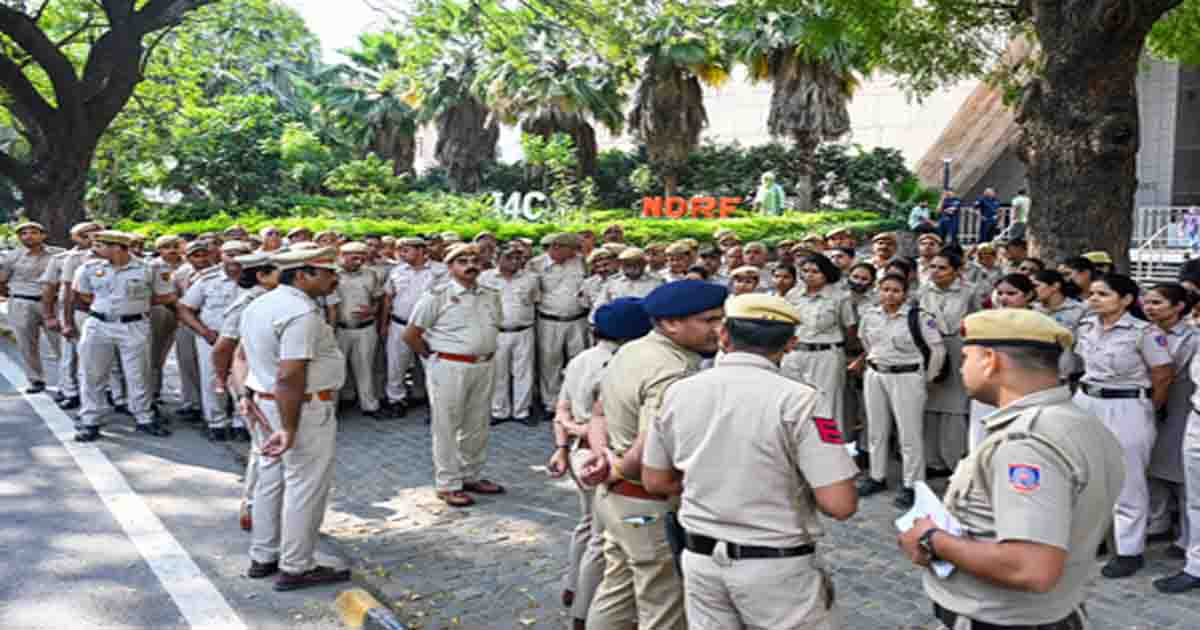
The Delhi Police have told the Supreme Court that the decision to de-notify Jantar Mantar as a designated protest site was taken after considering changed ground realities, public safety concerns and recommendations of a committee constituted by the Ministry of Home Affairs (MHA).
In a counter affidavit filed before the apex court, Delhi Police Commissioner Anurag Kumar said the decision was taken independently and was not prompted by the Supreme Court’s October 9 order, as the proposal to shift the designated protest venue had been under consideration of the Central government for a considerable period.
The affidavit was filed in response to a petition challenging the de-notification of Jantar Mantar as a designated protest venue.
The Commissioner said the MHA had constituted a committee on August 26, 2026, to examine the suitability of continuing Jantar Mantar as a protest site and identify alternative locations. Its report was received in September and forwarded to him on September 14.
“The decision to denotify Jantar Mantar as the designated site for protests was taken by me after due consideration of the relevant factors and criteria relevant for such decision making, and upon consideration of the recommendations of the Committee constituted by the Ministry of Home Affairs,” the affidavit stated.
The Commissioner submitted that the ground situation around Jantar Mantar had changed substantially since the Supreme Court’s 2018 order directing the authorities to devise an appropriate mechanism for regulating protests and demonstrations at Jantar Mantar Road, with increasing concerns over public order, traffic management, crowd control, emergency access and the security of sensitive installations.
Describing Jantar Mantar as a public road rather than a designated protest site in the conventional sense, the affidavit said the stretch witnessed more than 1,300 protests and demonstrations annually, frequently constraining access for emergency services such as ambulances and fire brigades.
The affidavit said the venue had an assessed maximum capacity of approximately 1,500 people, while the number of protesters on July 20, 2026, had far exceeded its capacity, creating concerns over a possible stampede and disruption of normal activities in Janpath and Connaught Place.
Highlighting the impact on the surrounding areas, Kumar said 78 foreign embassies, diplomatic missions and offices of international organisations were situated within a radius of around 3-4 km of Jantar Mantar. It added that 99 Central government offices, ministries and autonomous institutions, including the Reserve Bank of India, were located in the vicinity and had a combined daily footfall of approximately 1.46 lakh people.
It further said that traffic congestion and disruptions caused by protests also affected commercial establishments and the functioning of Ram Manohar Lohia Hospital, particularly the movement of patients and ambulances requiring immediate medical attention.
The Commissioner said the MHA committee had unanimously concluded that Jantar Mantar Road was no longer a suitable location for protests and demonstrations. It recommended Ramlila Maidan in Central Delhi, CBD Ground in East Delhi and Burari Ground in North-West Delhi as alternative venues.
The affidavit said the alternative locations were identified after assessing public safety, law and order, traffic management, emergency response requirements and the need to protect vital installations.
The Delhi Police maintained that the right to protest must be balanced against the rights of other citizens, including their right to earn a livelihood, conduct business and move freely within the national capital.
“The petitioners cannot claim any vested right to insist upon a particular site for the purpose of exercising their right to protest,” it stated. It further argued that the decision was an administrative and executive measure taken in the larger public interest and urged the Supreme Court not to interfere with it.
Maharashtra
Pune, Pimpri-Chinchwad, and PMR region to become India’s major mobility hub by 2030: Maha CM Fadnavis
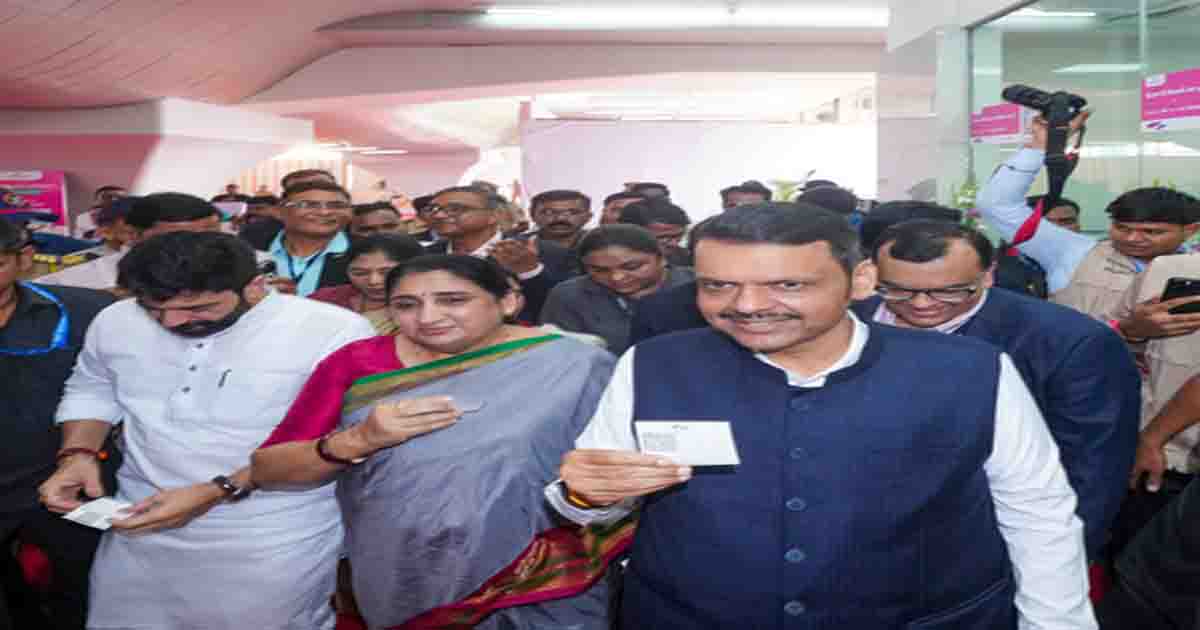
Maharashtra Chief Minister Devendra Fadnavis on Tuesday expressed confidence that with a robust network of modern transport facilities—including the metro, electric buses, inner ring roads, outer ring roads, tunnels, and a new airport—being developed across Pune, Pimpri-Chinchwad, and the Pune Metropolitan Region (PMR), the region will emerge as a major mobility hub of the country by 2030.
He was speaking at an event after Prime Minister Narendra Modi virtually inaugurated Mann-Hinjawadi to Shivajinagar Line-3 and laid foundation stone for the Pune Metro Phase-2.
“Hinjawadi and its surrounding areas form a critical IT hub in India, visited daily by thousands of employees who often face heavy traffic congestion, losing one to two hours of their time. The launch of the Metro will bring immense relief to IT professionals, particularly the youth,” the Chief Minister said.
He expressed joy that the project, whose foundation stone was laid by Prime Minister Modi in 2018, was now being dedicated to the nation by him as well.
The Shivajinagar-Hinjawadi corridor is the country’s first Metro project implemented through a Public-Private Partnership (PPP) model. Built by Tata Projects and Siemens on a DBOT (Design, Build, Operate, and Transfer) basis, the project reached completion with the cooperation of the Central and state governments, viability gap funding (VGF), and land acquisition facilitated by the Maharashtra government.
Acknowledging the vital contribution of women from construction to operations, the Chief Minister noted that this ‘Pink Powered’ metro symbolises the active participation of women power.
Around 120 kilometers of metro lines have been developed in Pune, with work ongoing on several other corridors.
Maharashtra has been a major beneficiary of the country’s metro expansion, with metro systems operational or under construction across 12 municipal corporation areas.
“The Metro is not merely a transport facility but an engine driving economic development, fostering investments, employment, and surrounding economic ecosystems,” the Chief Minister said.
To develop the Pune Metropolitan Region into a major urban growth centre, the Central government has provided a fund of Rs 5,000 crore, which will be utilised to build modern transport infrastructure in Pune and the PMR. Developed as a ‘Green Metro’, Pune Metro will generate 30 per cent of its required energy independently.
“With the comprehensive network of metro lines, electric buses, inner and outer ring roads, CMTR (Common Mobility Transport Route), underground routes, and tunnels taking shape, Pune is poised to become a key centre not only for IT and manufacturing but also for frontier technologies, contributing significantly to the national economy,” CM Fadnavis said.
Emphasising that the Central government under Prime Minister Modi prioritises poverty eradication and youth employment alongside infrastructure development, the Chief Minister expressed hope that Maharashtra will continue to receive the Centre’s steadfast support and guidance.
Deputy Chief Minister Eknath Shinde said that the metro will play a pivotal role in easing traffic congestion in Pune and making citizen commutes faster, safer, and more comfortable.
Metro Line-3 is a game-changing project for Pune’s public transport network that will reshape the city’s future and resolve daily commuting challenges.
Terming the metro an historic Diwali gift to the residents of Pune, Deputy CM Shinde commended the state government’s track record of keeping its promises and executing projects on time, reflecting Maharashtra’s rapid developmental strides.
Pune Metro Line-3 is India’s first metro project executed under a PPP model using the DBFOT framework under the National Metro Rail Policy 2017.
The Deputy CM congratulated the Pune Metropolitan Region Development Authority, Maha-Metro, Tata Projects, Siemens, and all concerned officials for completing the project on a mission mode.
Highlighting women’s substantial participation in building and operating the metro, Eknath Shinde remarked that this project reaffirms that women are second to none in any field.
“The Mumbai-Pune Expressway has significantly boosted Pune’s growth, and the upcoming ‘Missing Link’ project will further reduce travel time between the two cities, alongside the development of a ring road encircling Pune. These projects will collectively ease traffic congestion and bring immense relief to citizens, making Pune’s mobility more dynamic and seamless,” the Deputy CM said.
He also made a special mention of the late Deputy Chief Minister Ajit Pawar’s enduring contributions to Pune’s development.
Citing initial scepticism regarding public ridership when the Metro was first launched, Eknath Shinde noted that more than nine million passengers have chosen the Metro so far, underlining its popularity as a comfortable, time-saving transit option that strengthens public transport.
The state government remains firmly committed to making Pune a congestion-free, modern city, he added.
Deputy Chief Minister Sunetra Pawar said that given Pune’s rising population and transportation demands as a cultural, educational, and industrial hub, building a modern, safe, and eco-friendly public transport system is imperative.
Pune Metro Line-3 is India’s first metro corridor executed through a PPP, completed at a cost of around Rs 8,313 crores.
“Notably, it will be the country’s first 100 per cent women-operated metro line, with around 100 women train pilots and 50 per cent of station staff being women—a matter of immense pride,” Deputy CM Sunetra Pawar added.
The foundation stone for this corridor was laid by Prime Minister Modi in 2018.
The Union Cabinet has also approved four extended corridors under Phase-2, the foundation stone for which was laid on Tuesday. These 31-kilometer, 28-station corridors, cleared by the Central government at an estimated cost of Rs 9,858 crore, will connect areas such as Vanaz to Chandani Chowk, Ramwadi to Vitthalwadi, Kothrud, Bavdhan, Viman Nagar, Kharadi, and Wagholi. Once completed, the total Pune Metro network will exceed 100 kilometers.
“Stations like the R.K. Laxman Museum and Savitribai Phule Pune University on this route will pay tribute to the ideals of the ‘Common Man’ and Krantijyoti Savitribai Phule, respectively,” Sunetra Pawar noted.
The late Deputy Chief Minister Ajit Pawar made invaluable contributions from the inception of every Detailed Project Report (DPR) to its final approval.
As Finance Minister, he ensured necessary fund allocations and personally reviewed the progress of Hinjawadi metro stations in July, instructing officials to maintain high quality and adhere to timelines.
A special task force under the leadership of the District Collector has been constituted to address infrastructure needs in Hinjawadi, Mann, and Marunji, covering roads, transport, water, electricity, waste management, and metro connectivity.
Approvals worth Rs 426 crore have been granted for internal approach roads leading to metro stations, and as Guardian Minister, she would closely oversee the execution of these works, she assured.
Minister of State Murlidhar Mohol described the inauguration of the metro and the groundbreaking of new lines as a historic milestone for Pune’s development.
The 23-km Hinjawadi-Shivajinagar route will expand the Pune Metro network to 55 km, benefiting IT employees and millions of citizens.
In September alone, 9,58,603 passengers travelled via Pune Metro, cementing its status as the city’s lifeline.
“The foundation stone was also laid on Tuesday for nearly 46 km of new routes—namely Khadakwasla–Kharadi, Vanaz–Chandani Chowk, Ramwadi–Wagholi, and Manikbaug–Nal Stop—which will strengthen connectivity across the eastern, western, and southern parts of the city and help ease traffic congestion,” he said.
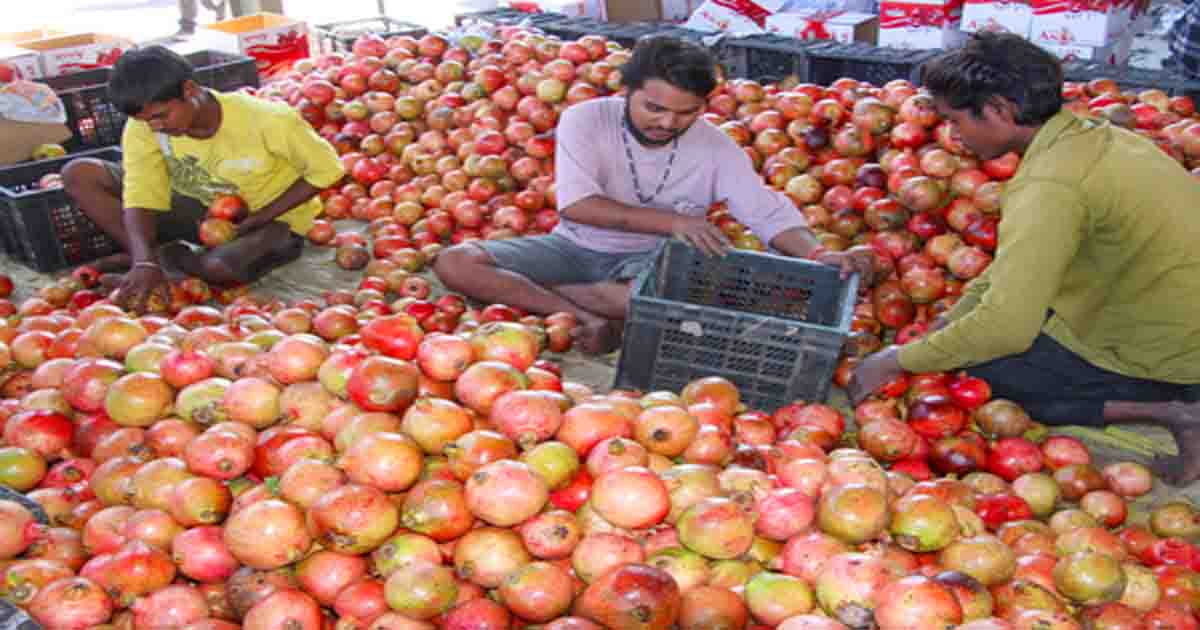
Fresh consignments of India’s pomegranates and kiwi fruit exports have hit the Dubai market, opening new markets for the country’s farmers, backed by the Centre’s Agricultural and Processed Food Products Export Development Authority (APEDA).
APEDA has facilitated the export of 1.3 metric tonnes (MT) of Sinduri variety pomegranates from Himachal Pradesh’s Kullu district and the trial export of 1.5 metric tonnes (MT) of kiwi from Arunachal Pradesh’s Ziro to Dubai in the United Arab Emirates (UAE), according to a Commerce Ministry statement issued on Tuesday.
The consignment of pomegranates, comprising 650 boxes of 2 kg each, was exported by Uttar Pradesh-based Amama Exports. The initiative connects local growers and a Farmer Producer Organisation (FPO) with an exporter, creating opportunities for Himachal Pradesh’s horticultural produce to access international markets. The pomegranates were sourced directly from local farmers and the Bhuntar FPO, which is associated with approximately 600 farmers. The Kullu district horticulture administration supported the initiative by facilitating procurement and coordination, the statement said.
The initiative demonstrates the role of direct procurement and collective participation through FPOs in strengthening market linkages for farmers. The export enabled participating farmers to achieve 50 per cent higher price realisation compared with the prevailing domestic market benchmark.
The Sinduri variety is among the pomegranate varieties grown in Himachal Pradesh, alongside Bhagwa and Kandhari. Known for its attractive red skin, juicy arils, and sweet-tart flavour, Sinduri pomegranates are suitable for fresh consumption and offer potential for export markets.
The trial export consignment of 1.5 metric tonnes (MT) of kiwi from Arunachal Pradesh successfully reached Dubai and was showcased at LuLu Hypermarket in Al Qusais. The initiative marks a step towards assessing the fruit’s potential in international markets.
The initiative, undertaken under the Ministry of Development of North Eastern Region (MDoNER), seeks to promote and strengthen Arunachal Pradesh’s kiwi sector under the branding initiative “Kiwi: USP of Arunachal Pradesh”. Implemented in collaboration with the state government, the initiative aims to introduce the state’s kiwis to international markets, assess consumer response and develop stronger market linkages to expand export opportunities for local growers.
Arunachal Pradesh’s high-altitude growing conditions and natural environment support the cultivation of kiwi with distinctive fruit quality and flavour. The state’s produce offers potential in premium domestic markets, export promotion and value-added products. The major varieties grown in the region include Hayward, Monty, Allison and Bruno, with the Hayward variety showing good demand in international markets.
The initiative also seeks to connect local kiwi growers with potential overseas markets, creating additional sales channels and opportunities for improved farmer returns through future shipments. The trial export is expected to provide a basis for assessing market response and identifying requirements for expanding the presence of Arunachal Pradesh kiwi in international markets.

Delhi Police defend Jantar Mantar de-notification, says decision taken after MHA panel report

Pune, Pimpri-Chinchwad, and PMR region to become India’s major mobility hub by 2030: Maha CM Fadnavis

India’s pomegranates, kiwi fruit exports hit Dubai market

Bihar: Women confront official during protest over Madhubani police firing

‘PDA repeatedly being targeted’: Abu Azmi as Azam Khan sent to 14-day judicial custody

Rahul, Cong ecosystem want to force regime change: BJP after Neha Bora praises B’desh Gen-Z protest

Attack on democratic rights: INDIA Bloc leaders on detentions of anti-ECI protestors

BJP pays tribute to ex-President Abdul Kalam, recalls his enduring influence on generations of India’s youth

INDIA bloc begins protest march against ECI

Online betting: ED conducts searches at 20 premises in Mumbai, Pune, Hyderabad
-

 Crime4 years ago
Class 10 student jumps to death in Jaipur
-

 Maharashtra2 years ago
Mumbai Local Train Update: Central Railway’s New Timetable Comes Into Effect; Check Full List Of Revised Timings & Stations
-

 Maharashtra2 years ago
Mumbai To Go Toll-Free Tonight! Maharashtra Govt Announces Complete Toll Waiver For Light Motor Vehicles At All 5 Entry Points Of City
-

 Maharashtra2 years ago
False photo of Imtiaz Jaleel’s rally, exposing the fooling conspiracy
-

 National News2 years ago
Ministry of Railways rolls out Special Drive 4.0 with focus on digitisation, cleanliness, inclusiveness and grievance redressal
-

 Maharashtra2 years ago
Maharashtra Elections 2024: Mumbai Metro & BEST Services Extended Till Midnight On Voting Day
-

 National News2 years ago
J&K: 4 Jawans Killed, 28 Injured After Bus Carrying BSF Personnel For Poll Duty Falls Into Gorge In Budgam; Terrifying Visuals Surface
-

 Crime2 years ago
Baba Siddique Murder: Mumbai Police Unable To Get Lawrence Bishnoi Custody Due To Home Ministry Order, Says Report