
National News
Khalistan row: Delhi lawyer files complaint against Kejriwal on Kumar Vishwas’ statement

A Delhi-based lawyer on Thursday filed a complaint with Home Minister Amit Shah, the National Investigation Agency and Delhi Police against Chief Minister Arvind Kejriwal over a statement of Kumar Vishwas.
Kumar Vishwas, one of the founding members of the Aam Aadmi Party (AAP), has allegedly talked about the collaboration between Kejriwal and the Khalistani separatists in an interview.
In his complaint, Advocate Vineet Jindal said he saw the video of Vishwas on Twitter on Wednesday. It further alleged that in the video Vishwas discloses that Arvind Kejriwal is very well connected with pro-Khalistan supporters and taken their support for political purposes in the past also.
“Khalistanis wish to divide our country by separating ‘Punjab’ from the Union of India and if the Delhi CM has taken support from them, he too becomes an active part of the conspiracy to divide India,” the petition contended.
It further alleged that even as per Kumar Vishwas, “Arvind Kejriwal has no problem with the funding of ISI and other separatist groups to pro-Khalistanis, who as per Kumar Vishwas’s statement are in contact with Kejriwal, and his act of taking support from them shows his willingness to become PM of so-called Independent country ‘Khalistan’ out of the Union of India and his support to the Khalistanis.”
“For the past many years, Khalistanis have been indulging in anti-national activities and posing a threat to the unity of India with the ambition of dividing our country by separating Punjab from the Union of India,” the petition said.
Terming the allegation against the Delhi Chief Minister as very grave in nature as the said statement accuses him of being actively involved with anti-national activists, the petition said these allegations fall under the category of criminal conspiracy against the Union of India, and therefore it must be investigated.
A similar complaint by Congress leader Sandeep Dixit has already been filed against Kejriwal at a police station in Mohali in Punjab over his alleged ‘collaboration with the Khalistani separatists’.

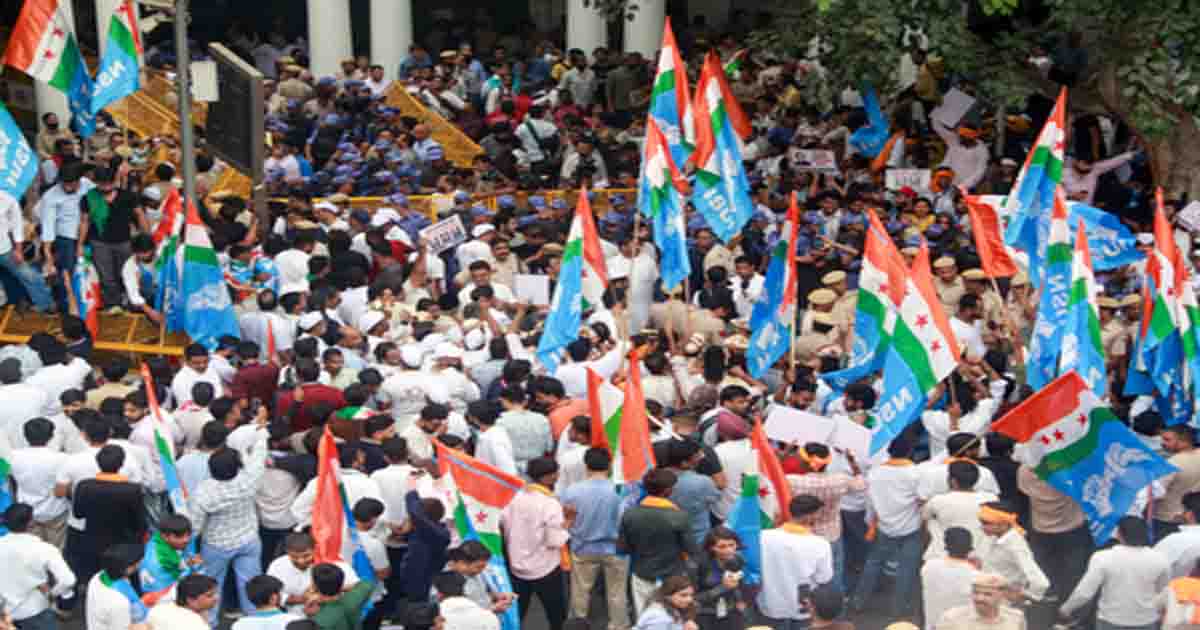
New Delhi, Oct 9: The Opposition’s intensified campaign against Chief Election Commissioner (CEC) Gyanesh Kumar, alleging irregularities in electoral roll revisions and claiming that the exercise has disproportionately benefited the ruling Bharatiya Janata Party (BJP), has revived the debate over the right to protest in a parliamentary democracy and the responsibility to safeguard public convenience.
The agitation has spread across several cities and has again brought the Cockroach Janta Party (CJP) onto the streets along with Opposition leaders, activists, and student organisations.
In a constitutional democracy, citizens and political parties have the right to protest against government policies, public institutions, and administrative officials.
Protestors thus argue that raising concerns over the conduct of elections is not only political, but a democratic obligation. In fact, many landmark reforms in India have come after pressure from civil society movements, parliamentary resistance, judicial intervention, and public demonstrations, furthering the right to dissent as indispensable.
However, questions arise when the exercise of one’s right infringes upon the rights of others. With demonstrations intensifying, authorities have responded with large-scale security arrangements.
Earlier protests in central Delhi led to the closure of several major Metro stations, including Rajiv Chowk, Central Secretariat, Janpath and New Delhi, while large sections of the city faced traffic restrictions and barricading.
For any demonstration planned or anticipated, especially over Friday and Saturday, security agencies have now proposed heightened strictures.
The Delhi Police recommended closure of entry and exit gates at 57 Metro stations beginning Friday night, citing concerns about crowd mobilisation and attempts to enter high-security zones. Train frequency at affected stations was also proposed to be reduced.
Meanwhile, the Railways announced cancellation of trains as a precaution against anticipated congestion or trouble around the capital’s railway hubs.
Authorities justified the move by referring to earlier disruptions in which thousands of passengers reportedly struggled to reach stations because of road blockades and crowding.
Such traffic snarls also put commuters at a disadvantage on roads. On the other hand, protestors argue that governments rarely respond to peaceful petitions, memoranda, or symbolic protests; they even cancel assemblies at designated locations.
According to this view, public disruption becomes necessary because authorities act only when the political cost of ignoring grievances becomes too high. There are indeed examples that lend some support to this argument. However, the counterargument is equally compelling.
Rights and duties are often described as two sides of the same coin. The right to assemble peacefully exists alongside the duty to respect the rights of fellow citizens.
Freedom of expression does not eliminate responsibility. The constitutional promise of liberty is accompanied by an expectation of civic restraint. If a protest disrupts public transport, prevents citizens from commuting, or imposes costs on people who have no direct role in the dispute, the balance between democratic dissent and public responsibility becomes increasingly difficult to maintain.
Sometimes, the inconvenience may be indirect, coming as security restrictions imposed by authorities. Yet, the outcome remains the same for the common citizen.
Protests should occur in a democracy; criticism of public institutions should be allowed; but what matters are the methods by which dissent is expressed. While governments need to avoid dismissing criticism until demonstrations become impossible to ignore, protest organisers must recognise that, with intensity, they also need to mobilise public support without imposing high costs on the common people.
As the confrontation over the Election Commission continues, the dispute is likely to remain politically charged. The right to protest is fundamental; but so is the right of millions of citizens to go about their daily lives without avoidable disruption. The challenge is not about choosing one over the other, but ensuring that both can coexist.
National News
CM Adityanath announces renaming of Noida airport as Narendra Modi International Airport

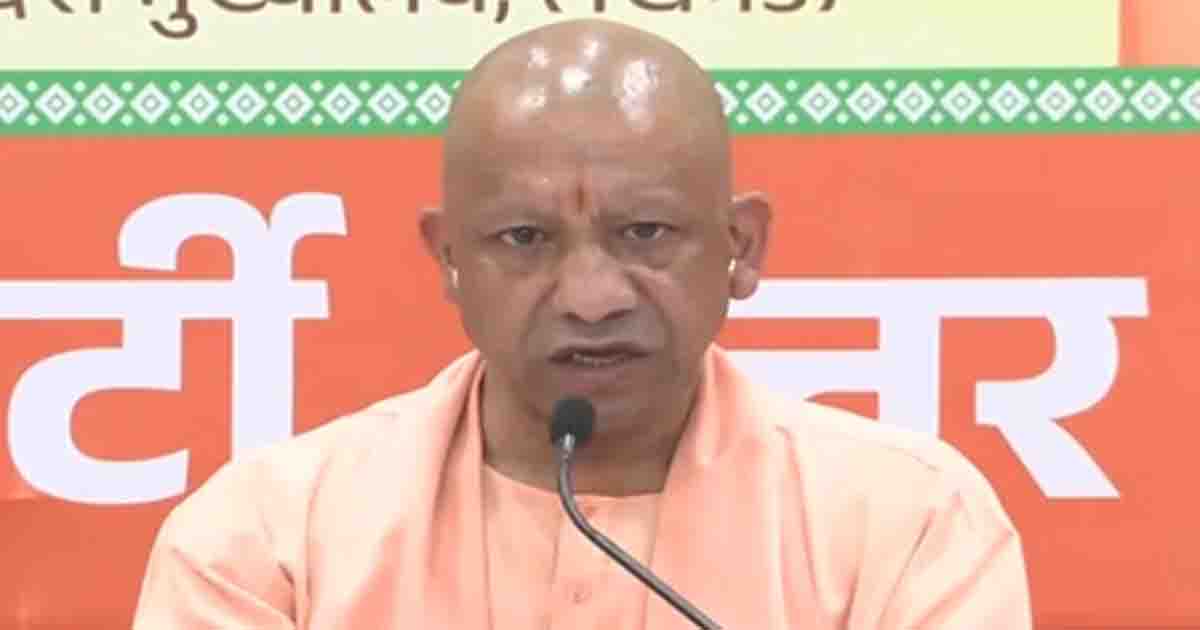
Lucknow, Oct 9: Uttar Pradesh Chief Minister, Yogi Adityanath, on Friday announced the renaming of the Noida International Airport in Jewar to Narendra Modi International Airport, following a resolution passed by his Cabinet to mark PM Modi’s 25 years in public service.
During a meeting on Friday, the Cabinet approved a total of 39 proposals.
While announcing the decision after the meeting, the Chief Minister highlighted the Prime Minister’s 25-year tenure of public service as “pivotal to the development” of both the nation and the state.
Addressing a press conference, the Chief Minister said: “It is a moment of immense pride for the UP Cabinet as it is from the land of UP (Varanasi) that PM Modi was elected as MP.”
He noted that the Prime Minister shares a deep, personal bond with UP, and under his leadership, the state is scaling new heights of development.
Leaders from alliance partners, along with Deputy Chief Ministers Keshav Prasad Maurya and Brajesh Pathak, were present alongside the Chief Minister.
CM Adityanath added that the Prime Minister has made service, dedication, and nation-building his mission, and that India’s global stature has strengthened under his leadership.
Linking the construction of the Ram Temple in Ayodhya to the end of a 500-year wait, the Chief Minister cited the development of the Kashi Vishwanath Corridor and the repatriation and installation of the idol of Goddess Annapurna from abroad as significant examples of the Prime Minister’s efforts.
He observed that while the state lacked basic infrastructure prior to 2017, connectivity has now improved significantly through projects such as expressways, highways, the Metro, and the Regional Rapid Transit System.
“The UP Cabinet is grateful to PM Modi for gifting Noida International Airport to the state, which is UP’s biggest airport and is going to become the country’s biggest aviation hub in the future,” CM Adityanath said.
“Therefore, the Cabinet has passed the resolution to rename the airport as Narendra Modi International airport, Jewar, Noida,” he added.
The development of Jewar Airport is expected to boost UP’s air connectivity and economic activity. PM Modi had inaugurated the first phase of the airport in March this year.
Its initial annual passenger capacity is estimated at approximately 12 million. Upon the completion of all four phases, it is scheduled to rank among Asia’s largest airports.
Highlighting industrial development in the state, CM Adityanath noted that projects such as the BrahMos missile manufacturing unit and the PM MITRA Textile Park in Lucknow will generate new opportunities for investment and employment.
“Uttar Pradesh is also strengthening its position as a logistics hub through improved road and air connectivity,” he mentioned.
Meanwhile, Energy and Urban Development Minister Arvind Kumar Sharma announced that 1,725 new electric buses would be deployed across 18 municipal corporation areas to enhance the urban transport system. Under the established procurement policy, 50 per cent of the buses will be purchased from the company quoting the lowest rate in the tender, while the remaining buses will be sourced from companies manufacturing buses within Uttar Pradesh.
Further, the UP CM highlighted schemes implemented for the poor, farmers, women, and marginalised sections of society. He stated that over 65 lakh houses have been provided under the ‘Pradhan Mantri Awas Yojana’, and free food grains are being distributed to 3.67 crore ration cardholders.
He asserted that the UP Cabinet reaffirms its commitment to work towards realising the vision of ‘Viksit Bharat’ 2027.
Kutch, Oct 9: At least seven workers were killed and more than 20 others injured after a truck collided head-on with a pickup carrying workers inside the Renewable Energy (RE) Park near Khavda in Gujarat’s Kutch district in the early hours of Friday, police said.
The accident occurred around 4 a.m. when the two vehicles, travelling in opposite directions, collided. The impact left the pickup badly mangled, trapping seven workers inside the wreckage.
“A truck and a pickup truck travelling in opposite directions collided. The impact left the pickup truck mangled. All the victims were occupants of the Bolero Camper,” an official said.
The seven trapped workers were extricated with the help of a crane, but all died in the accident. More than 20 injured workers were taken to a hospital by ambulance for treatment.
Preliminary reports indicated that the pickup truck was carrying more than 20 workers at the time of the collision.
However, the exact number of occupants and the identities of those killed were not immediately available in the police account.
Officials said the bodies were being transported from Khavda to Bhuj for post-mortem examinations.
Police have launched an investigation to establish the circumstances leading to the collision and are examining whether negligence contributed to the accident.
The precise cause of the crash and whether any safety violations were involved remain under investigation.
The accident occurred within the Khavda renewable energy development area, where large-scale clean-energy projects are being developed across the arid region of Kutch. The construction activity has brought a substantial workforce and supporting infrastructure to the area.
Investigators are expected to establish how the two vehicles collided and whether any lapses contributed to the deaths and injuries.
Further details, including the identities of the deceased and the condition of those injured, were not immediately available.
Police have not yet disclosed whether any case has been registered against the drivers or whether any arrests have been made in connection with the accident.

Protest politics: Can dissent coexist with public convenience?

Fadnavis criticises Congress on SIR; releases parliamentary footage of Kapil Sibal defending process

CM Adityanath announces renaming of Noida airport as Narendra Modi International Airport

Seven killed as truck collides with workers’ vehicle in Kutch

Israel to award brave Indian pilot Captain Smit Machchhar with Presidential Award for Civilian Heroism

Gift to President Putin part of PM Modi bid to globally display India’s heritage

PM Modi’s warm camaraderie with Putin, Xi on full display at BRICS Summit

Complaint against Netflix & Mukesh Chhabra for inappropriate language on ‘India’s Got Latent 2’

INDIA bloc begins protest march against ECI

Maha Congress stages agitation against Gyanesh Kumar
-

 Crime4 years ago
Class 10 student jumps to death in Jaipur
-

 Maharashtra2 years ago
Mumbai Local Train Update: Central Railway’s New Timetable Comes Into Effect; Check Full List Of Revised Timings & Stations
-

 Maharashtra2 years ago
Mumbai To Go Toll-Free Tonight! Maharashtra Govt Announces Complete Toll Waiver For Light Motor Vehicles At All 5 Entry Points Of City
-

 Maharashtra2 years ago
False photo of Imtiaz Jaleel’s rally, exposing the fooling conspiracy
-

 National News2 years ago
Ministry of Railways rolls out Special Drive 4.0 with focus on digitisation, cleanliness, inclusiveness and grievance redressal
-

 Maharashtra2 years ago
Maharashtra Elections 2024: Mumbai Metro & BEST Services Extended Till Midnight On Voting Day
-

 National News2 years ago
J&K: 4 Jawans Killed, 28 Injured After Bus Carrying BSF Personnel For Poll Duty Falls Into Gorge In Budgam; Terrifying Visuals Surface
-

 Crime2 years ago
Baba Siddique Murder: Mumbai Police Unable To Get Lawrence Bishnoi Custody Due To Home Ministry Order, Says Report