
Business
India’s pomegranates, kiwi fruit exports hit Dubai market

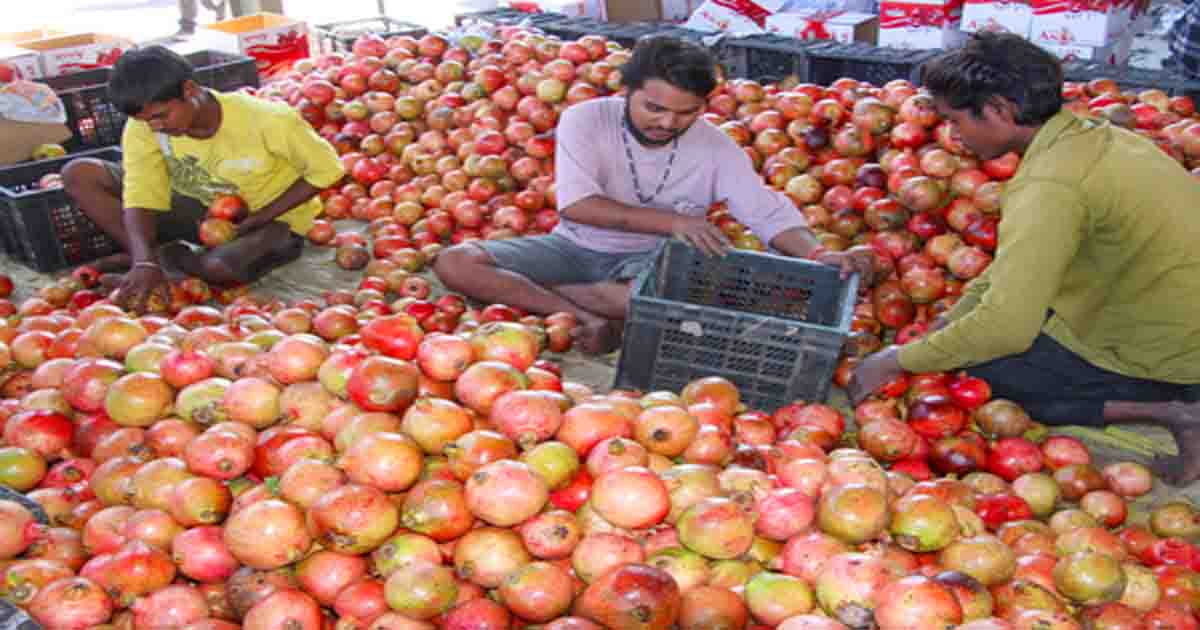
Fresh consignments of India’s pomegranates and kiwi fruit exports have hit the Dubai market, opening new markets for the country’s farmers, backed by the Centre’s Agricultural and Processed Food Products Export Development Authority (APEDA).
APEDA has facilitated the export of 1.3 metric tonnes (MT) of Sinduri variety pomegranates from Himachal Pradesh’s Kullu district and the trial export of 1.5 metric tonnes (MT) of kiwi from Arunachal Pradesh’s Ziro to Dubai in the United Arab Emirates (UAE), according to a Commerce Ministry statement issued on Tuesday.
The consignment of pomegranates, comprising 650 boxes of 2 kg each, was exported by Uttar Pradesh-based Amama Exports. The initiative connects local growers and a Farmer Producer Organisation (FPO) with an exporter, creating opportunities for Himachal Pradesh’s horticultural produce to access international markets. The pomegranates were sourced directly from local farmers and the Bhuntar FPO, which is associated with approximately 600 farmers. The Kullu district horticulture administration supported the initiative by facilitating procurement and coordination, the statement said.
The initiative demonstrates the role of direct procurement and collective participation through FPOs in strengthening market linkages for farmers. The export enabled participating farmers to achieve 50 per cent higher price realisation compared with the prevailing domestic market benchmark.
The Sinduri variety is among the pomegranate varieties grown in Himachal Pradesh, alongside Bhagwa and Kandhari. Known for its attractive red skin, juicy arils, and sweet-tart flavour, Sinduri pomegranates are suitable for fresh consumption and offer potential for export markets.
The trial export consignment of 1.5 metric tonnes (MT) of kiwi from Arunachal Pradesh successfully reached Dubai and was showcased at LuLu Hypermarket in Al Qusais. The initiative marks a step towards assessing the fruit’s potential in international markets.
The initiative, undertaken under the Ministry of Development of North Eastern Region (MDoNER), seeks to promote and strengthen Arunachal Pradesh’s kiwi sector under the branding initiative “Kiwi: USP of Arunachal Pradesh”. Implemented in collaboration with the state government, the initiative aims to introduce the state’s kiwis to international markets, assess consumer response and develop stronger market linkages to expand export opportunities for local growers.
Arunachal Pradesh’s high-altitude growing conditions and natural environment support the cultivation of kiwi with distinctive fruit quality and flavour. The state’s produce offers potential in premium domestic markets, export promotion and value-added products. The major varieties grown in the region include Hayward, Monty, Allison and Bruno, with the Hayward variety showing good demand in international markets.
The initiative also seeks to connect local kiwi growers with potential overseas markets, creating additional sales channels and opportunities for improved farmer returns through future shipments. The trial export is expected to provide a basis for assessing market response and identifying requirements for expanding the presence of Arunachal Pradesh kiwi in international markets.



Indian stock markets traded higher in early deals on Thursday, supported by sustained foreign fund inflows and gains in information technology (IT) stocks even as global investors continued to grapple with volatility in artificial intelligence-related shares.
Sensex rose 388.12 points or 0.46 per cent to 84,326.40, while Nifty advanced 60.75 points or 0.23 per cent to 25,880 by around 9:20 am.
Technology stocks led the gains as Nifty IT surged over 2 per cent. Metal and private banking indices also traded in positive territory, helping offset weakness in sectors such as media, cement, oil and gas and automobiles.
India continues to benefit from a shift in global investment flows amid concerns surrounding AI-linked trades elsewhere in Asia, market experts said.
“The weakening trend in AI stocks globally continues. FIIs are avoiding the concentration risks in AI trade, particularly in South Korea and Taiwan. This weakening of the AI trade, along with the impressive revival in earnings growth in India, is powering the FII inflows into India,” they said.
Foreign institutional investors (FIIs) have invested about $14.15 billion in Indian equities so far this month, helping the rupee strengthen to around 92.21 against the US dollar.
Analysts attributed the inflows to stronger-than-expected corporate earnings, with Nifty companies reporting robust profit growth during the second quarter, reinforcing India’s position as one of the best-performing major equity markets globally.
On Wednesday, FIIs remained net buyers for the 11th consecutive session, purchasing equities worth Rs 4,479 crore, while domestic institutional investors (DIIs) also turned buyers and invested Rs 4,018 crore.
Asian markets moved higher after bargain buying helped Wall Street recover from steep intraday losses overnight.
US stocks ended lower on Wednesday as an AI-led selloff persisted, although late-session buying ahead of the Thanksgiving holiday helped major indices rebound from their lows.
Meanwhile, investors also monitored trade developments after the United States proposed tariffs on a number of countries, including India.
The Indian government said concerns raised by US authorities regarding alleged structural excess capacity were being examined and reiterated that all trade-related issues should be addressed through the ongoing negotiations for a bilateral trade agreement.
However, market analysts said that the tariff proposals are unlikely to have a significant near-term impact on Indian equities, with earnings momentum and foreign inflows remaining the primary drivers of sentiment.
Chief Minister Devendra Fadnavis announced on Wednesday that the Maharashtra government has set an ambitious target to attract $100 billion in infrastructure investments over the next five years.
As part of this vision, approximately $50 billion is being invested in the Mumbai Metropolitan Region (MMR) to develop metro networks, roads, flyovers, tunnels, and other civic infrastructure.
Additionally, the state plans to develop a ‘Third Mumbai’ around the Navi Mumbai airport area and a ‘Fourth Mumbai’ along the Virar-Vadhavan belt.
Addressing the Third World Mayors’ Conference in Mumbai—organised to mark the centenary year of the All India Institute of Local Self-Government—CM Fadnavis emphasised the need to view cities not as problems, but as engines of economic growth.
The event was attended by Union Minister of State for Housing and Urban Affairs Tokhan Sahu, Mumbai Mayor Ritu Tawde, and mayors, municipal administrators, and urban development representatives from India and abroad.
Highlighting the economic weight of urban centres, CM Fadnavis noted that cities contribute roughly 65% to the country’s GDP, and more than half of Maharashtra’s population resides across nearly 400 cities.
Planned urban development, he said, can simultaneously drive economic progress and improve living standards. Reflecting on past policies, he stated that earlier attempts to curb urbanisation led to unplanned growth, slums, inadequate civic amenities, water shortages, and waste management issues.
He credited Prime Minister Narendra Modi for shifting the narrative after 2014 to view urbanisation as an opportunity for development.
Planned around the Navi Mumbai International Airport, CM Fadnavis informed that Third Mumbai will feature dedicated hubs including an Edu-City, Sports City, Medi-City, Innovation City, and a Global Capability Centre (GCC) City. The educational hub will accommodate around one lakh students and host campuses of 12 world-class universities, seven of which have already commenced operations.
According to the CM, the Virar-Vadhavan corridor is slated to become the Fourth Mumbai. One of the country’s largest ports is being constructed at Vadhavan, which Fadnavis expressed confidence would rank among the top 10 ports globally. The region will be connected to Mumbai via the bullet train and a super expressway. Over $50 billion is being poured into MMR for a 300-km-plus metro network, roads, tunnels, water supply, and sewage treatment projects.
CM Fadnavis pointed out that the 22-km Atal Setu has already reduced travel time to the Navi Mumbai airport to about 40 minutes, with plans to bring it down to 30 minutes next year.
Referring to the Dharavi redevelopment project, the Chief Minister stated that residents will be provided with well-equipped housing. Within the next decade, Dharavi is projected to transform into a major commercial hub, complementing the Bandra-Kurla Complex (BKC). Alongside building new cities, the state has adopted a policy of redeveloping and rejuvenating older urban centres across Mumbai, Pune, Nagpur, Nashik, and Chhatrapati Sambhajinagar, he said.
CM Fadnavis noted that global capital is readily available, but attracting investment requires political willpower, determination, and viable, high-quality projects rather than funding alone.
Chief Minister—drawing from his own experience as the Mayor of Nagpur—reminded mayors that they are the first point of accountability for citizens regarding roads, water, sanitation, and basic amenities. He urged municipalities to study and replicate successful urban models from cities like Indore, Ahmedabad, and Mumbai.
Concluding his address, CM Fadnavis assured delegates that the state government would positively review and implement actionable recommendations emerging from the conference’s discussions.
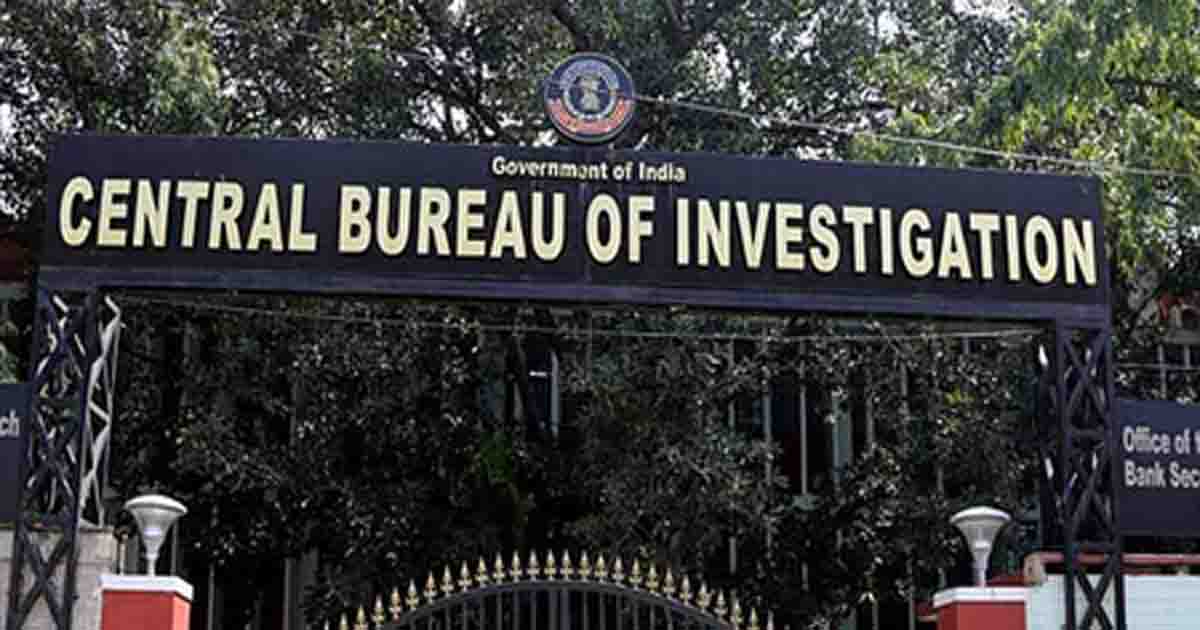
The Central Bureau of Investigation (CBI) has conducted searches at six locations in Udaipur and Mumbai in connection with an alleged bank fraud case involving M/s Star Housing Finance Ltd. and its directors, officials said on Wednesday.
The National Housing Bank (NHB) is alleged to have suffered a wrongful loss of Rs 80.15 crore.
According to a CBI statement, the agency carried out searches at the premises of the company’s directors and other associated persons as part of its ongoing investigation into the alleged financial irregularities.
The case was registered following a written complaint lodged by the National Housing Bank against M/s Star Housing Finance Ltd., its directors, and unknown public servants. The accused have been booked for offences including criminal conspiracy, cheating, criminal breach of trust, falsification of accounts, and criminal misconduct.
Investigators alleged that the housing finance company siphoned off funds by disbursing a number of fictitious or “phantom” loans. These loans were allegedly shown as genuine lending transactions, enabling the diversion of funds and resulting in a substantial financial loss to NHB.
The searches led to the recovery of several documents and other materials that the agency believes could be relevant to establishing the flow of funds and identifying the individuals responsible for the alleged fraud. The seized records are being examined as part of the investigation.
The CBI said further investigation is underway to ascertain the extent of the alleged diversion of funds, identify any additional beneficiaries, and determine whether any public officials played a role in facilitating the fraud.
The action comes amid the agency’s continued crackdown on financial crimes and corruption in the banking sector.
Last week, the CBI arrested a bank manager in Dehradun along with two alleged accomplices in a separate case involving the alleged demand and acceptance of a bribe for sanctioning a bank loan worth Rs 1.80 crore.

Man accused of killing 26-year-old near Delhi Minister’s office arrested in police encounter

‘Terrorism is humanity’s greatest enemy’: CM Yogi pays tributes to 26/11 victims

TN CM Vijay to present scholarships to Class 10, 12 toppers from five districts today

Terrorism can never break spirit of nation united in courage, resilience: President Murmu on 26/11 anniversary

Nine Russian, Ukrainian children reunited with families: White House

Congress trying to protect 3 crore Bangladeshi infiltrators in voter list: HM Shah

Red Fort car blast probe exposes blueprint for spread of terror modules across India

Trump flags Iran targets as talks continue

‘Conspiracy, not accident’: NCP on Ajit Pawar death

BJP, Shiv Sena slam Mallikarjun Kharge for terming Diwali ‘Khushiyon ka Eid’
-

 Crime4 years ago
Class 10 student jumps to death in Jaipur
-

 Maharashtra2 years ago
Mumbai Local Train Update: Central Railway’s New Timetable Comes Into Effect; Check Full List Of Revised Timings & Stations
-

 Maharashtra2 years ago
Mumbai To Go Toll-Free Tonight! Maharashtra Govt Announces Complete Toll Waiver For Light Motor Vehicles At All 5 Entry Points Of City
-

 Maharashtra2 years ago
False photo of Imtiaz Jaleel’s rally, exposing the fooling conspiracy
-

 National News2 years ago
Ministry of Railways rolls out Special Drive 4.0 with focus on digitisation, cleanliness, inclusiveness and grievance redressal
-

 Maharashtra2 years ago
Maharashtra Elections 2024: Mumbai Metro & BEST Services Extended Till Midnight On Voting Day
-

 National News2 years ago
J&K: 4 Jawans Killed, 28 Injured After Bus Carrying BSF Personnel For Poll Duty Falls Into Gorge In Budgam; Terrifying Visuals Surface
-

 Crime2 years ago
Baba Siddique Murder: Mumbai Police Unable To Get Lawrence Bishnoi Custody Due To Home Ministry Order, Says Report