
Maharashtra
Pune, Pimpri-Chinchwad, and PMR region to become India’s major mobility hub by 2030: Maha CM Fadnavis

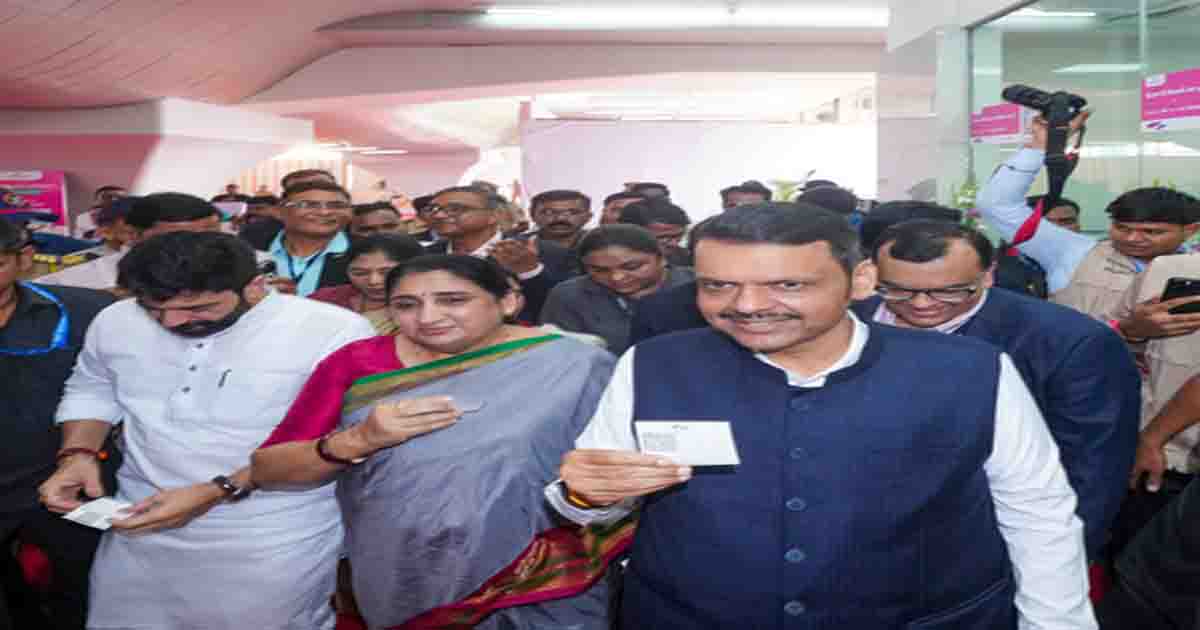
Maharashtra Chief Minister Devendra Fadnavis on Tuesday expressed confidence that with a robust network of modern transport facilities—including the metro, electric buses, inner ring roads, outer ring roads, tunnels, and a new airport—being developed across Pune, Pimpri-Chinchwad, and the Pune Metropolitan Region (PMR), the region will emerge as a major mobility hub of the country by 2030.
He was speaking at an event after Prime Minister Narendra Modi virtually inaugurated Mann-Hinjawadi to Shivajinagar Line-3 and laid foundation stone for the Pune Metro Phase-2.
“Hinjawadi and its surrounding areas form a critical IT hub in India, visited daily by thousands of employees who often face heavy traffic congestion, losing one to two hours of their time. The launch of the Metro will bring immense relief to IT professionals, particularly the youth,” the Chief Minister said.
He expressed joy that the project, whose foundation stone was laid by Prime Minister Modi in 2018, was now being dedicated to the nation by him as well.
The Shivajinagar-Hinjawadi corridor is the country’s first Metro project implemented through a Public-Private Partnership (PPP) model. Built by Tata Projects and Siemens on a DBOT (Design, Build, Operate, and Transfer) basis, the project reached completion with the cooperation of the Central and state governments, viability gap funding (VGF), and land acquisition facilitated by the Maharashtra government.
Acknowledging the vital contribution of women from construction to operations, the Chief Minister noted that this ‘Pink Powered’ metro symbolises the active participation of women power.
Around 120 kilometers of metro lines have been developed in Pune, with work ongoing on several other corridors.
Maharashtra has been a major beneficiary of the country’s metro expansion, with metro systems operational or under construction across 12 municipal corporation areas.
“The Metro is not merely a transport facility but an engine driving economic development, fostering investments, employment, and surrounding economic ecosystems,” the Chief Minister said.
To develop the Pune Metropolitan Region into a major urban growth centre, the Central government has provided a fund of Rs 5,000 crore, which will be utilised to build modern transport infrastructure in Pune and the PMR. Developed as a ‘Green Metro’, Pune Metro will generate 30 per cent of its required energy independently.
“With the comprehensive network of metro lines, electric buses, inner and outer ring roads, CMTR (Common Mobility Transport Route), underground routes, and tunnels taking shape, Pune is poised to become a key centre not only for IT and manufacturing but also for frontier technologies, contributing significantly to the national economy,” CM Fadnavis said.
Emphasising that the Central government under Prime Minister Modi prioritises poverty eradication and youth employment alongside infrastructure development, the Chief Minister expressed hope that Maharashtra will continue to receive the Centre’s steadfast support and guidance.
Deputy Chief Minister Eknath Shinde said that the metro will play a pivotal role in easing traffic congestion in Pune and making citizen commutes faster, safer, and more comfortable.
Metro Line-3 is a game-changing project for Pune’s public transport network that will reshape the city’s future and resolve daily commuting challenges.
Terming the metro an historic Diwali gift to the residents of Pune, Deputy CM Shinde commended the state government’s track record of keeping its promises and executing projects on time, reflecting Maharashtra’s rapid developmental strides.
Pune Metro Line-3 is India’s first metro project executed under a PPP model using the DBFOT framework under the National Metro Rail Policy 2017.
The Deputy CM congratulated the Pune Metropolitan Region Development Authority, Maha-Metro, Tata Projects, Siemens, and all concerned officials for completing the project on a mission mode.
Highlighting women’s substantial participation in building and operating the metro, Eknath Shinde remarked that this project reaffirms that women are second to none in any field.
“The Mumbai-Pune Expressway has significantly boosted Pune’s growth, and the upcoming ‘Missing Link’ project will further reduce travel time between the two cities, alongside the development of a ring road encircling Pune. These projects will collectively ease traffic congestion and bring immense relief to citizens, making Pune’s mobility more dynamic and seamless,” the Deputy CM said.
He also made a special mention of the late Deputy Chief Minister Ajit Pawar’s enduring contributions to Pune’s development.
Citing initial scepticism regarding public ridership when the Metro was first launched, Eknath Shinde noted that more than nine million passengers have chosen the Metro so far, underlining its popularity as a comfortable, time-saving transit option that strengthens public transport.
The state government remains firmly committed to making Pune a congestion-free, modern city, he added.
Deputy Chief Minister Sunetra Pawar said that given Pune’s rising population and transportation demands as a cultural, educational, and industrial hub, building a modern, safe, and eco-friendly public transport system is imperative.
Pune Metro Line-3 is India’s first metro corridor executed through a PPP, completed at a cost of around Rs 8,313 crores.
“Notably, it will be the country’s first 100 per cent women-operated metro line, with around 100 women train pilots and 50 per cent of station staff being women—a matter of immense pride,” Deputy CM Sunetra Pawar added.
The foundation stone for this corridor was laid by Prime Minister Modi in 2018.
The Union Cabinet has also approved four extended corridors under Phase-2, the foundation stone for which was laid on Tuesday. These 31-kilometer, 28-station corridors, cleared by the Central government at an estimated cost of Rs 9,858 crore, will connect areas such as Vanaz to Chandani Chowk, Ramwadi to Vitthalwadi, Kothrud, Bavdhan, Viman Nagar, Kharadi, and Wagholi. Once completed, the total Pune Metro network will exceed 100 kilometers.
“Stations like the R.K. Laxman Museum and Savitribai Phule Pune University on this route will pay tribute to the ideals of the ‘Common Man’ and Krantijyoti Savitribai Phule, respectively,” Sunetra Pawar noted.
The late Deputy Chief Minister Ajit Pawar made invaluable contributions from the inception of every Detailed Project Report (DPR) to its final approval.
As Finance Minister, he ensured necessary fund allocations and personally reviewed the progress of Hinjawadi metro stations in July, instructing officials to maintain high quality and adhere to timelines.
A special task force under the leadership of the District Collector has been constituted to address infrastructure needs in Hinjawadi, Mann, and Marunji, covering roads, transport, water, electricity, waste management, and metro connectivity.
Approvals worth Rs 426 crore have been granted for internal approach roads leading to metro stations, and as Guardian Minister, she would closely oversee the execution of these works, she assured.
Minister of State Murlidhar Mohol described the inauguration of the metro and the groundbreaking of new lines as a historic milestone for Pune’s development.
The 23-km Hinjawadi-Shivajinagar route will expand the Pune Metro network to 55 km, benefiting IT employees and millions of citizens.
In September alone, 9,58,603 passengers travelled via Pune Metro, cementing its status as the city’s lifeline.
“The foundation stone was also laid on Tuesday for nearly 46 km of new routes—namely Khadakwasla–Kharadi, Vanaz–Chandani Chowk, Ramwadi–Wagholi, and Manikbaug–Nal Stop—which will strengthen connectivity across the eastern, western, and southern parts of the city and help ease traffic congestion,” he said.


Maharashtra
NCP’s Umesh Patil flags concerns over fielding of candidates, choice of office bearers in case of merger with NCP-SP

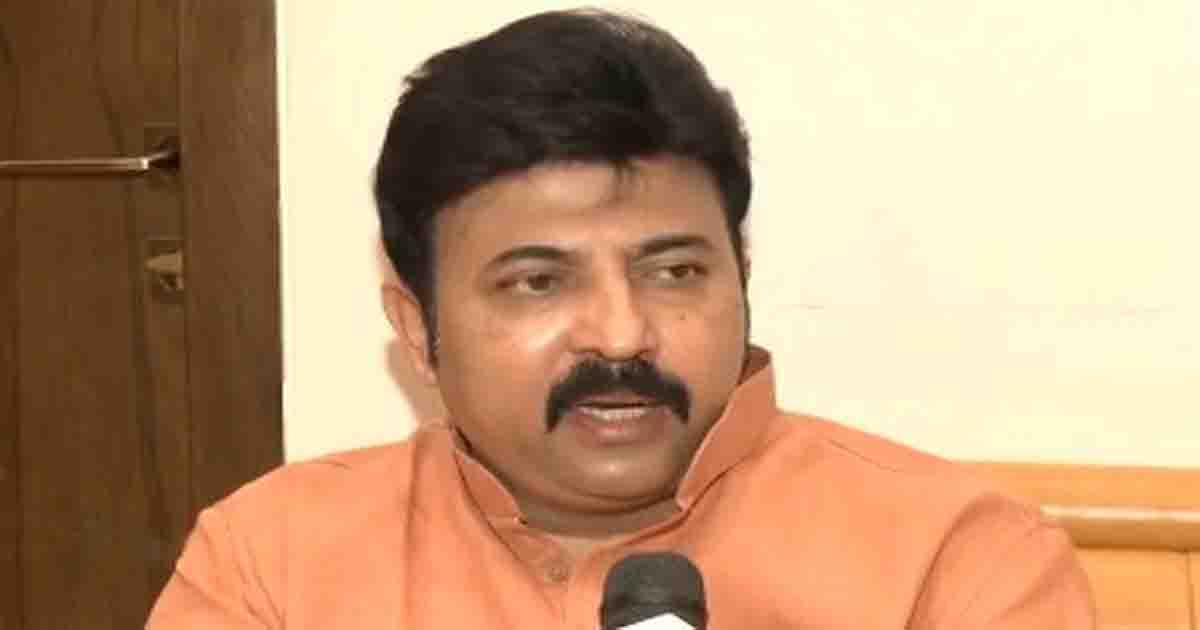
Nationalist Congress Party (NCP) National Spokesperson Umesh Patil on Wednesday flagged concerns over the merger of NCP and NCP-SP, saying no one speaks about which faction’s candidates be fielded during elections and also the choice of office bearers in case the factions are united.
Speaking to media, Patil acknowledged that circumstances have certainly changed after the passing away of former Maharashtra Deputy Chief Minister late Ajit Pawar, who was also the NCP Chief.
However, he said that the current NCP Chief Sunetra Pawar is effectively handling the role of the Maharashtra Deputy Chief Minister and strengthening the organisation.
Noting that the news of NCP’s merger keep resurfacing every now and then, the NCP Spokesperson said: “But if there is to be a merger, how exactly will it happen? In Maharashtra, there are 78 organisational districts. Both factions of NCP have 78 district presidents. If a merger takes place, whose district president will remain in office and who will be removed? How will those removed be accommodated? What formula will be followed?”
Umesh Patil recalled that in the 2024 Lok Sabha and Assembly elections, both factions of the NCP had contested against each other in almost every constituency, while saying: “Those who won are confident that they will receive the party ticket in 2029. Even those who lost believe they will get another opportunity from their faction. But if the two parties become one, then what will the defeated candidates think?”
“The winning candidate will obviously be given the ticket again, and preparations are already underway. The others may have no other option except to leave the party,” he added.
Expressing concern, the NCP leader said that while everyone talks about a merger, no one explains how it will actually be implemented.
“What will happen to leaders, their workers, and their supporters? In the same constituency, these people have been fighting against each other,” Patil added.
Citing an example, the NCP spokesperson said: “In Islampur, Jayant Patil won from the NCP-SP faction, while our candidate, Nishikant Patil, lost by around 12,000 to 13,000 votes. He is already preparing for the next election. If the parties merge, that seat will naturally go to Jayant Patil. Then what will Nishikant Patil do? How will we ensure justice for him after a merger? What options will remain for him?”
Adding to his concern, Patil said that even if such adjustments can be made in a few places, how can this be managed across in every district, every Assembly constituency, and every Lok Sabha constituency in Maharashtra, where the two factions are essentially each other’s opposition?
He also questioned that who will become the Maharashtra NCP President in case of a merger, while also questioning the future roles of NCP-SP Chief Sharad Pawar and senior leaders like Supriya Sule and Rohit Pawar.
“Will it be someone from the trumpet (NCP-SP) faction or the clock faction (NCP)? What will happen to the position of national president? What role will Pawar ‘Saheb’ (Sharad Pawar) play? What role will Supriya Sule play? What about Rohit Pawar? There are many such issues,” Patil said.
Meanwhile, NCP MP and party’s Maharashtra unit president Sunil Tatkare on Monday clarified that the issue of party merger is completely closed, emphasising that the party’s primary focus is on strengthening its organisation and working collectively under the leadership of party president and Deputy CM Sunetra Pawar.
Maharashtra
The Uniform Civil Code (UCC) is not actually a ‘Uniform Civil Code’, but a ‘Control Code’ by the government: Abu Asim Azmi
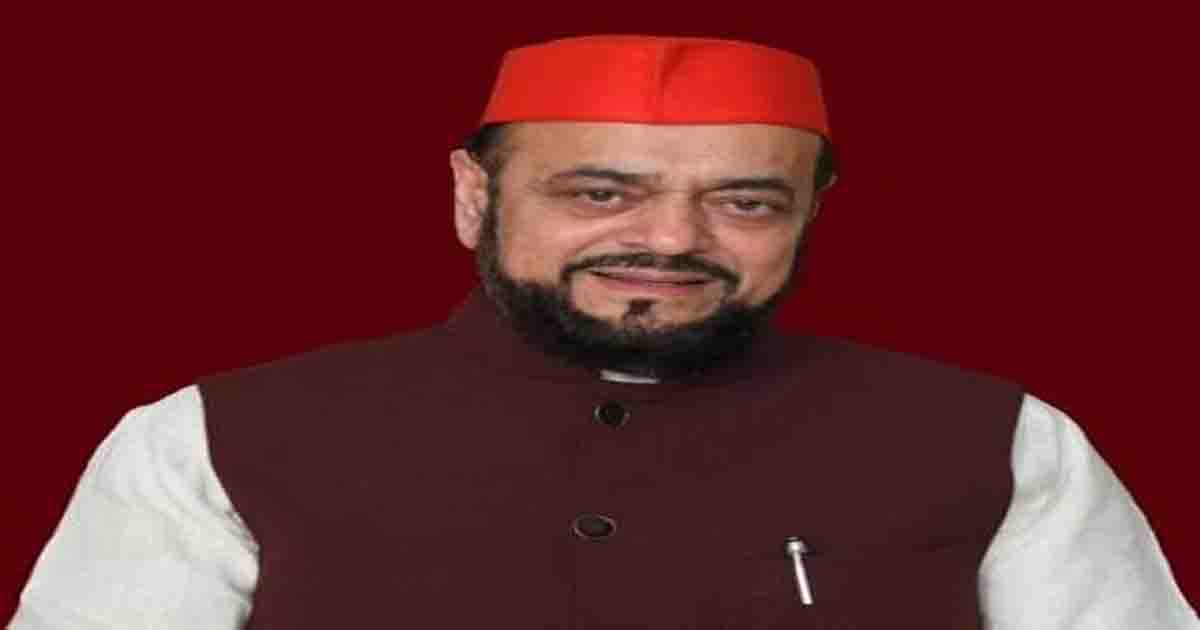
Mumbai: Addressing a press conference held at the Mumbai Marathi Patrakar Sangh, Abu Asim Azmi—the Maharashtra State President of the Samajwadi Party and a Member of the Legislative Assembly (MLA)—sharply criticized the central government’s proposed ‘Uniform Civil Code’ (UCC). He alleged that the UCC bill is not, in fact, a ‘Uniform Civil Code,’ but rather a ‘Control Code’ imposed by the government. During the press conference, Azmi questioned the deadline set for submitting objections and suggestions regarding the UCC bill. He argued that the current deadline—November 15—is insufficient and demanded that it be extended. Commenting further on the process, Azmi noted that citizens are being asked about their caste and religion when submitting their suggestions. Moreover, he pointed out that the questions included in the process are framed inappropriately. It is due to these irregularities and flawed methods that committee member Ashish Chauhan has resigned from the committee. Accusing the government of employing double standards regarding civil rights, Azmi stated, “When it comes to civil rights, the government is focusing its actions solely on matters related to religion.”
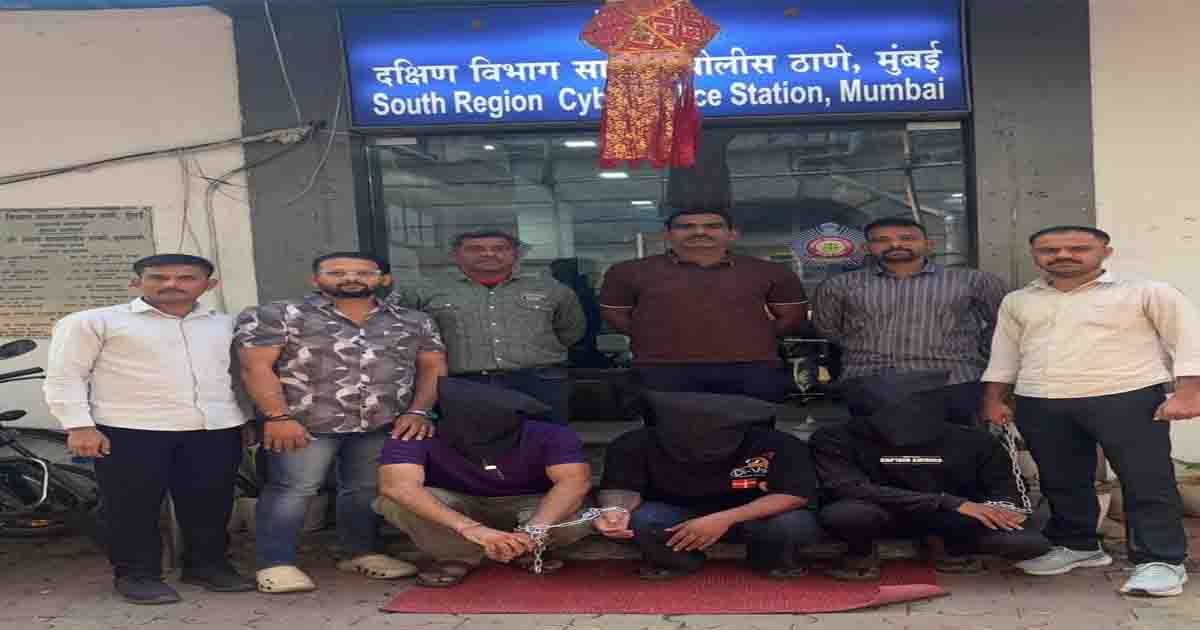
The Mumbai South Cyber Police have taken significant action regarding a share trading investment fraud case. By arresting three suspects in Nagpur, the police claim to have solved six cases in Mumbai, as well as a total of 73 cases across various jurisdictions.
Between June 10, 2026, and September 8, 2026, a woman named Meera Iyer and her associates defrauded the complainant by enticing them with the promise of high returns through share trading investments. The complainant was persuaded to transfer a total of ₹5,872,410 into various bank accounts. A case has been registered at the Cyber Police Station in Mumbai (Case No. 79/2026) under Sections 318(4), 319(2), 338, 340, and 61(2) of the Bharatiya Nyaya Sanhita (BNS), as well as Sections 66(C) and 66(D) of the Information Technology Act.
During the investigation, it was discovered that ₹2,475,000 of the defrauded amount had been transferred to a current account held at the Central Bank of India (Nagpur branch) in the name of a company called “Green Garden Delights Prali.” Based on technical analysis and data from the National Cyber Crime Portal, the account holder—one of the suspects—was traced to Nagpur. On October 2, three suspects, including the mastermind behind the fraud, were arrested. The accused hatched a conspiracy: Aniruddha Oke and the primary ringleader, Amit Diliprao Kale, established a company named “Green Garden Delights” in the name of another accused, Rithik Shailesh Dhargave, by creating a fraudulent agreement. The ringleader, Amit Diliprao Kale, accessed and used a mobile phone registered to his accomplice, Rithik Dhargave, to facilitate the fraudulent operations; he also shared this mobile number with other associates to enable the online transfer of illicit funds—a fact revealed during the investigation. The following items were seized from the arrested individuals: 1) Checkbooks and passbooks for 11 different bank accounts; 2) SIM cards associated with 25 different companies; 3) Rubber stamps for 11 fictitious companies, along with 3 stamp pads; 4) Debit/ATM cards and QR codes; and 5) Documents and PAN cards belonging to these fictitious companies. The arrested individuals have been identified as: 1) Amit Diliprao Kale (age 34), residing at Plot No. 18, Watoda Road, Chetnishwar Nagar, Watoda, Nagpur; 2) Rithik Shailesh Dhargave (age 25), residing at New Indira Republican Nagar, Line No. 2, Jaripatka, Nagpur; and 3) Aniruddha Satish Oke (age 30), residing at Plot No. 3564 A/1, near Bodh Gaya Buddha Vihar, Saraswati Nagar, Jaripatka, Nagpur. The South Cyber Police Station, Mumbai, has successfully arrested the main ringleader and two of his accomplices in connection with the aforementioned crime. This commendable operation was carried out under the leadership of Mumbai Police Commissioner Deven Bharti, Joint Police Commissioner Anil Kumbhare, and DCP Bajrang Bansode.

NCP’s Umesh Patil flags concerns over fielding of candidates, choice of office bearers in case of merger with NCP-SP

The Uniform Civil Code (UCC) is not actually a ‘Uniform Civil Code’, but a ‘Control Code’ by the government: Abu Asim Azmi

‘An Abdul will now become a leader in UP’, says Owaisi after victory of Democratic candidate Abdul El-Sayed in US

3 arrested for fraud in the name of investment in Mumbai share trading

Encroachment removal drive completed in Borivali East, 27 commercial units demolished.

Rahul, Cong ecosystem want to force regime change: BJP after Neha Bora praises B’desh Gen-Z protest

Attack on democratic rights: INDIA Bloc leaders on detentions of anti-ECI protestors

BJP pays tribute to ex-President Abdul Kalam, recalls his enduring influence on generations of India’s youth

INDIA bloc begins protest march against ECI

Congress trying to protect 3 crore Bangladeshi infiltrators in voter list: HM Shah
-

 Crime4 years ago
Class 10 student jumps to death in Jaipur
-

 Maharashtra2 years ago
Mumbai Local Train Update: Central Railway’s New Timetable Comes Into Effect; Check Full List Of Revised Timings & Stations
-

 Maharashtra2 years ago
Mumbai To Go Toll-Free Tonight! Maharashtra Govt Announces Complete Toll Waiver For Light Motor Vehicles At All 5 Entry Points Of City
-

 Maharashtra2 years ago
False photo of Imtiaz Jaleel’s rally, exposing the fooling conspiracy
-

 National News2 years ago
Ministry of Railways rolls out Special Drive 4.0 with focus on digitisation, cleanliness, inclusiveness and grievance redressal
-

 Maharashtra2 years ago
Maharashtra Elections 2024: Mumbai Metro & BEST Services Extended Till Midnight On Voting Day
-

 National News2 years ago
J&K: 4 Jawans Killed, 28 Injured After Bus Carrying BSF Personnel For Poll Duty Falls Into Gorge In Budgam; Terrifying Visuals Surface
-

 Crime2 years ago
Baba Siddique Murder: Mumbai Police Unable To Get Lawrence Bishnoi Custody Due To Home Ministry Order, Says Report