
Business
Jio surpassed BSNL to become the country’s largest fixed broadband provider

JioFiber added 0.19 million subscribers to become the number 1 operator in the fixed broadband segment in just about two years from commercial launch, with 4.34mn FBB subs.
JioFiber’s market share improved 85bp month on month to 16.9 per cent (launched commercially in Sep-19), Nomura said in a report.
Bharti added 0.1mn subs to reach 4.08mn FBB subs (up 68% since May-20), with market share up 60bp m-m to 15.9 per cent.
Bharat Sanchar Nigam Limited’s (BSNL) market share further declined by 185 bp to 16.4 per cent share (vs 44 per cent pre-JioFiber launch in September’19), the report said.
Without significant fund-raising, Vodafone Idea’s network investments and 5G rollout would likely remain constrained, at least in the near term. Hence, we expect market share gains to continue for Bharti and R-Jio, the report said.
TRAI data for November shows a slight improvement in industry numbers, with Jio gaining market share at the expense of VIL, UBS said in a report.
After a large decline in September (driven by the 19mn subscriber loss reported by Jio) and flattish numbers in October, the industry witnessed a slight improvement in November, with overall subscriber base expanding by 1.2mn. Bharti gained 1.3mn subs (-0.5mn in Oct), Jio added 2mn subs (+1.8mn in Oct), while VIL continued to lose market share: it lost 1.9mn subs (versus loss of 1mn and 1.1mn in Oct and Sept respectively).
Jio remains the market leader, with a subscriber market share (SMS) of 36.7 per cent (+10bps). Bharti and VIL ended Nov with SMS of 30.4 per cent (flat MoM) and 22.9 per cent (down 20bps) respectively. It is important to note that the tariff hikes were largely applicable from end-November / December, and therefore, December is likely to see some churn, UBS said.
In fixed broadband, Jio surpassed BSNL to become the country’s largest FBB provider. Jio now has 4.3mn FBB subs (+0.2mn in Nov), followed by BSNL with 4.2mn subs (-0.5mn in Nov) and Airtel with 4.1mn subs (+0.1mn in Nov).


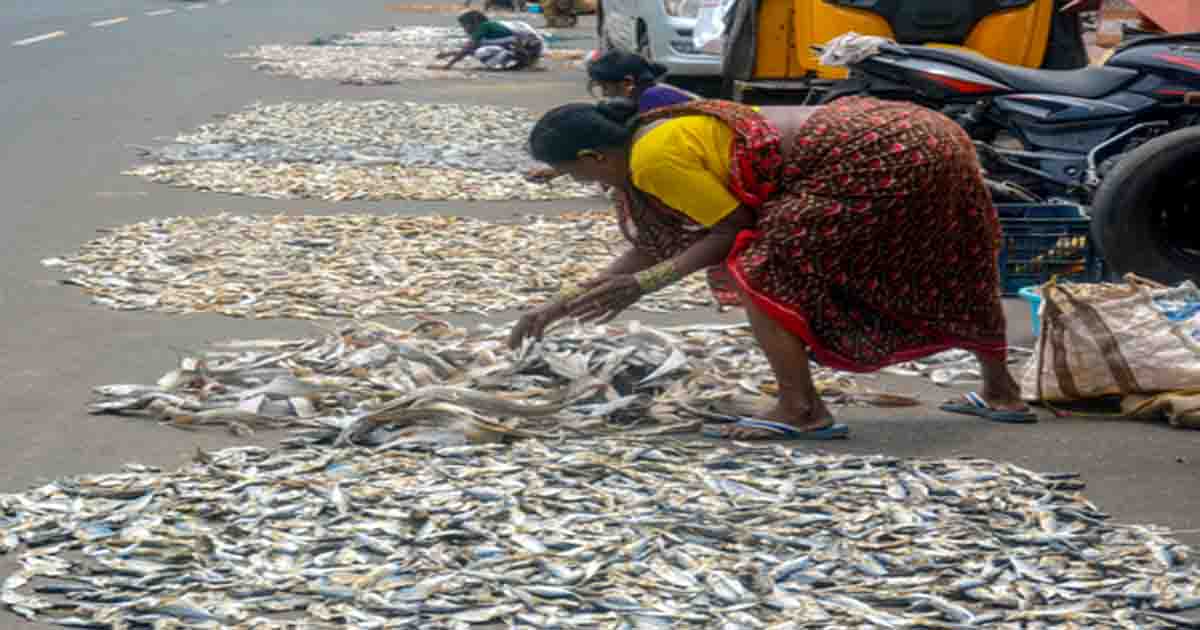
New Delhi, Oct 8: India’s decision to ratify Phase 1 of the World Trade Organization’s Agreement on Fisheries Subsidies is a pragmatic step to curb illegal, unreported and unregulated fishing while preserving its policy space on issues that directly affect small-scale and artisanal fishers, an official statement said on Thursday.
The statement from the Ministry of Fisheries, Animal Husbandry & Dairying said India deposited its Instrument of Acceptance on July 20, 2026, and that the ratified phase targets IUU fishing, overfished stocks and unregulated high‑seas fishing.
“It does not cover the more difficult questions of overcapacity and overfishing, including subsidies for fuel, gear, ice, vessel construction and modernisation,”
“Those issues belong to Phase 2, where India continues to seek fair and differentiated treatment for developing countries,” the statement said citing views of Dr. M. Krishnan, former Principal Scientist & Head, ICAR – CIFE and Dr. P. Krishnan, Director, BOBP-IGO.
India supports measures aimed at the most harmful fishing practices but insists conservation rules must not reduce the development space of coastal communities that depend on marine fisheries for livelihoods.
“For India, the challenge is not whether to support conservation, but how to ensure that conservation does not come at the cost of equity,” the statement, calling the country’s position principled and practical.
India made clear that its ratification of Phase 1 does not weaken its demand for a longer transition period and more flexible treatment in Phase 2. The call for a 25-year transition period for developing countries within their exclusive economic zones remains part of the broader negotiating position.
India also insists that subsidy disciplines should be assessed using a per-fisher benchmark, rather than through comparisons that overlook vast differences in scale, capacity and state support.
Across the Bay of Bengal region, fisheries are a source of food security, employment and social stability for millions of small-scale fishers rather than merely an economic activity.
Hence, any multilateral discipline on subsidies must recognise the realities of artisanal and coastal fisheries in developing countries, where support is often aimed at livelihood protection rather than industrial expansion.
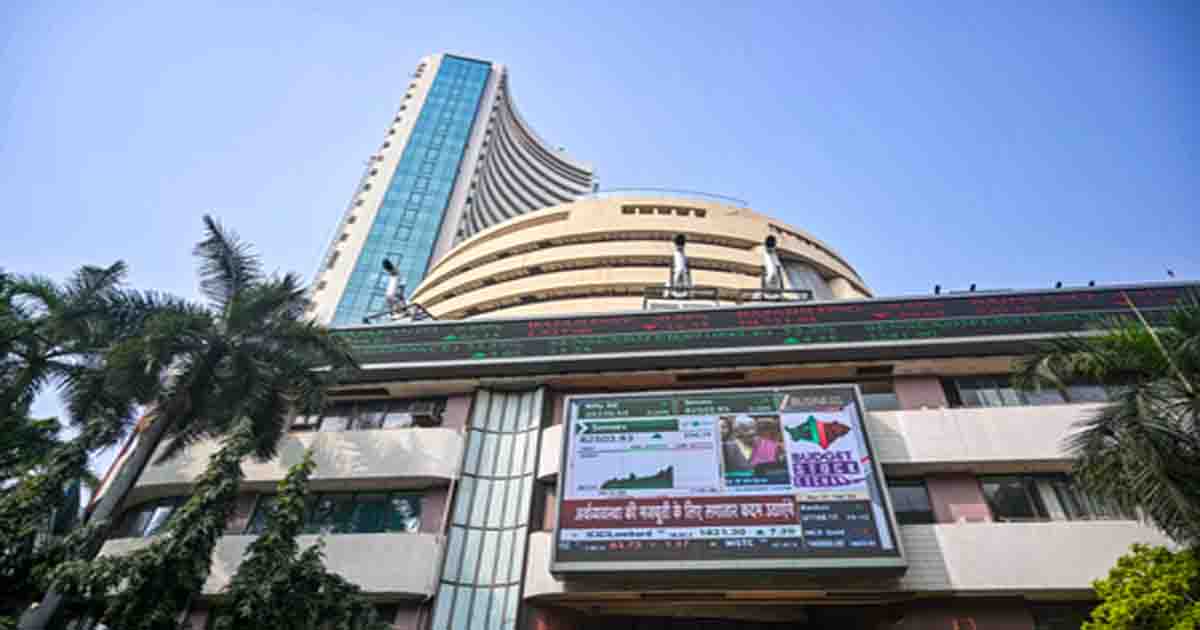
New Delhi, Oct 8: Domestic equity benchmarks opened largely flat on Thursday with Nifty opening around 22,600 mark as gains in IT and pharma stocks were offset by weakness across financial, FMCG and auto stocks.
Nifty opened at 22,599.05, down 4 points or 0.02 per cent.
Similarly, Sensex started at 72,668, up 29.30 points or 0.04 per cent.
Sector-wise, Nifty IT, Nifty MidSmall Healthcare, Nifty Pharma were top gainers with advancing up to 0.59 per cent.
Meanwhile, metal, consumer durables and chemicals also traded marginally higher.
On the other hand, Nifty Financial Services ex-Bank, Nifty FMCG slipped up to 0.38 per cent.
Market experts said the RBI’s calibrated tightening stance could put pressure on equity valuations as higher interest rates make fixed-income investments relatively more attractive.
They also expect investor preference to shift marginally towards relatively interest-inelastic sectors such as pharmaceuticals.
Experts noted that growth stocks have continued to attract investor interest despite high valuations, while value stocks have remained subdued.
“Sustained selling by foreign investors in large-cap stocks, coupled with the US 10-year Treasury yield staying above 5.3 per cent, could keep large-cap stocks under pressure,” they added.
“Yesterday’s multiple attacks at 22574 calls for an extended period of consolidation, before setting a direction. Though considerably weakened, the 23100-220 view is still in play, with downside marker at 22439,” according to them.
Experts added that a sustained reversal in the market trend would require foreign investors to turn buyers, while value stocks could offer opportunities over the longer term.
In addition, foreign institutional investors remained net sellers on Wednesday and offloaded equities worth more than Rs 6,121 crore.
While domestic institutional investors provided some support and purchased equities of around Rs 4,596 crore.
Moreover, market sentiment remained cautious amid concerns over elevated US Treasury yields and oil prices, while Asian markets traded on a cautious note following a softer session on Wall Street.
New Delhi, Oct 7: Meta on Wednesday announced a series of new AI-powered measures aimed at strengthening its fight against child sexual exploitation on Facebook and Instagram, as the company revealed it took action against 5.3 million pieces of child sexual exploitation content in India during the first six months of 2026.
The social media giant said more than 98 per cent of the violative content removed in India between January and June this year was proactively detected by its systems before being reported by users.
“Between January to June 2026, we actioned 5.3 million pieces of child sexual exploitation content on Facebook and Instagram in India, with over 98 per cent found and proactively addressed before anyone reported it,” the tech giant said.
Globally, Meta said it actioned 33.2 million pieces of child sexual exploitation content across Facebook and Instagram during the same period, with over 97 per cent identified proactively.
“Globally between January to June 2026, we actioned 33.2 million pieces of child sexual exploitation content from Facebook and Instagram, over 97 per cent found and proactively addressed before anyone reported it,” it added.
According to the company, online predators are increasingly using sophisticated tactics to evade detection, including advertisements that appear harmless but covertly direct users to illegal content hosted outside Meta’s platforms.
In response, the company has upgraded its ad review systems and deployed additional artificial intelligence tools to identify such activity more effectively.
Meta said the new safeguards include large language model (LLM)-based detection systems designed to identify “signposting” content that may appear benign but is suspected of directing users to child sexual exploitation material or related harmful activities.
The company has also enhanced its ability to assess the destination of advertisements, enabling it to block links leading to violative content and take action against the accounts responsible.
“Once a link is blocked, we search for and then delete other content – such as ads, posts or comments – that contain the link. We take steps to prevent people from posting content containing a blocked link on Facebook, Instagram and Threads, and ads containing blocked links would be rejected at upload,” Meta said in its official statement.

‘Chief Minister should contest election from here’: Akhilesh Yadav’s dare to Adityanath in Ayodhya

PACL investment fraud: ED attaches properties worth Rs 567 crore in Mumbai, Pune

Kanpur woman given triple talaq after 16 years of marriage, demands husband arrest

2021 Antilia bomb-scare: Bombay HC expresses surprise over Vaze’s high-end cars, long stay in hotel

NHRC seeks report from Delhi Police over women journalists’ sexual harassment allegations

Gift to President Putin part of PM Modi bid to globally display India’s heritage

PM Modi’s warm camaraderie with Putin, Xi on full display at BRICS Summit

Complaint against Netflix & Mukesh Chhabra for inappropriate language on ‘India’s Got Latent 2’

INDIA bloc begins protest march against ECI

Maha Congress stages agitation against Gyanesh Kumar
-

 Crime4 years ago
Class 10 student jumps to death in Jaipur
-

 Maharashtra2 years ago
Mumbai Local Train Update: Central Railway’s New Timetable Comes Into Effect; Check Full List Of Revised Timings & Stations
-

 Maharashtra2 years ago
Mumbai To Go Toll-Free Tonight! Maharashtra Govt Announces Complete Toll Waiver For Light Motor Vehicles At All 5 Entry Points Of City
-

 Maharashtra2 years ago
False photo of Imtiaz Jaleel’s rally, exposing the fooling conspiracy
-

 National News2 years ago
Ministry of Railways rolls out Special Drive 4.0 with focus on digitisation, cleanliness, inclusiveness and grievance redressal
-

 Maharashtra2 years ago
Maharashtra Elections 2024: Mumbai Metro & BEST Services Extended Till Midnight On Voting Day
-

 National News2 years ago
J&K: 4 Jawans Killed, 28 Injured After Bus Carrying BSF Personnel For Poll Duty Falls Into Gorge In Budgam; Terrifying Visuals Surface
-

 Crime2 years ago
Baba Siddique Murder: Mumbai Police Unable To Get Lawrence Bishnoi Custody Due To Home Ministry Order, Says Report