
Maharashtra
Authorities Crack Down on Firecrackers: Thane Bans Sky Rockets, Civic Bodies Issue Strict Guidelines


MUMBAI — In a decisive move to curb air pollution and prevent fire hazards, civic authorities and district administrations across the Mumbai Metropolitan Region (MMR) and neighboring cities have rolled out strict restrictions on the use of firecrackers. Taking serious note of a recent surge in fire emergencies, the Thane district administration has imposed a blanket ban on sky rockets and similar aerial firecrackers. The prohibitory order comes into immediate effect and will remain in force for an extended period. This emergency measure was prompted by a series of fire incidents reported across the district during recent celebrations, where burning residues from aerial fireworks fell onto residential buildings and flammable materials, damaging property and endangering lives.
In tandem with the district’s orders, the Thane Municipal Corporation (TMC) has issued its own stringent guidelines. Authorities have mandated that only environmentally friendly “green crackers” are permitted. The bursting of any fireworks is now strictly prohibited in public spaces, including main roads, alleys, footpaths, and public grounds, as well as in designated “silence zones” such as hospitals, courts, and educational institutions.
Furthermore, a strict nighttime curfew has been implemented; bursting crackers is completely banned between 10:00 PM and 6:00 AM. The new regulations also prohibit the use of laser lights and mandate strict authorization and safety protocols for all firecracker vendors. Similar preventive measures are being echoed by surrounding civic bodies, including the Brihanmumbai Municipal Corporation (BMC), Navi Mumbai Municipal Corporation (NMMC), and Pune Municipal Corporation (PMC). These authorities have restricted the bursting of firecrackers in public spaces and set up dedicated helplines to report noise and air pollution violations.
This sweeping crackdown comes amid escalating health concerns. Officials highlighted that high noise levels and toxic smoke pose severe health risks to young children, senior citizens, pregnant women, and individuals with cardiovascular or respiratory conditions.
Authorities have appealed to all citizens to cooperate with the regulations and prioritize public safety. Residents wishing to report any violations, illegal vendor stalls, or excessive noise can log complaints directly via the pollution control board helplines or through the respective municipal grievance portals and toll-free numbers.

Maharashtra
The police will investigate the fire in Mumbai’s Dongri area as well as other incidents; action will be taken once the causes are determined.

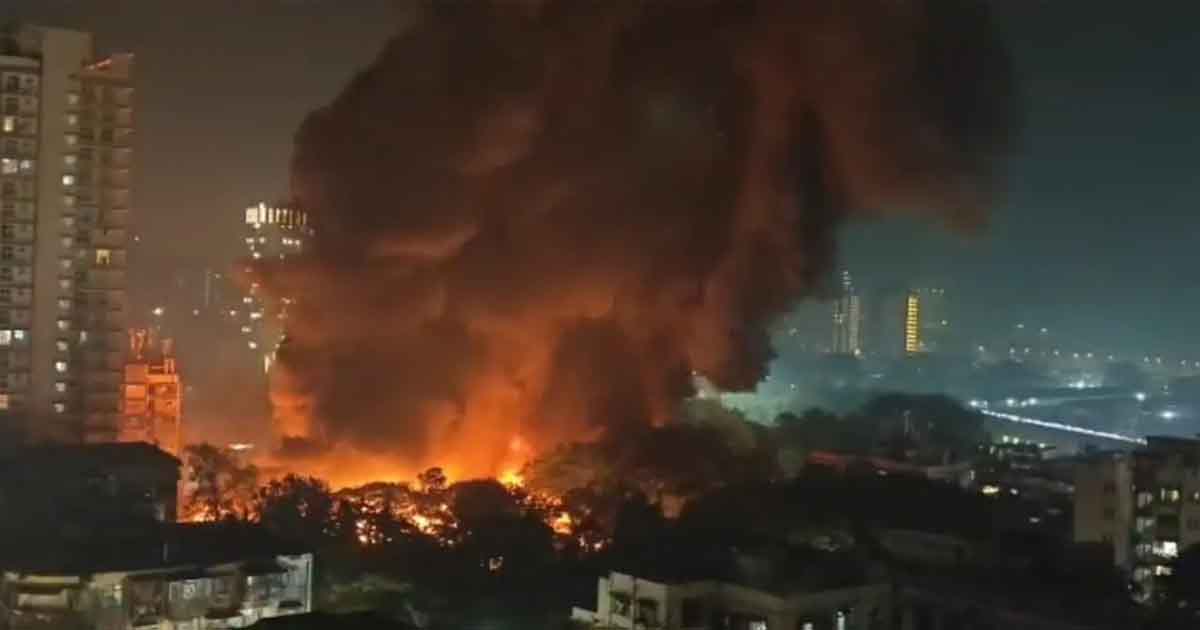
Following a fire that broke out last night—during the Diwali festival—at a warehouse and garage in the Dongri area of Mumbai, the police are set to initiate an investigation, pending the fire department’s report and the determination of the causes. Significant damage has also been reported due to fires in several suburban areas, including Kurla, Ghatkopar, and Borivali. In the wake of the Dongri incident, local residents were immediately evacuated; given the severity of the blaze, the police will conduct a formal inquiry. In light of the recurring fire incidents during Diwali, the Mayor of Mumbai has urged the public to exercise caution when using firecrackers and has expressed concern over the spate of fires across the city. The police have now launched an investigation into these Diwali-related fire incidents, and a formal case will be registered following the submission of an initial report. This was confirmed by DCP (Operations) Akbar Pathan, who stated that investigations into these incidents are currently underway, though the specific causes have yet to be determined. Once the exact causes are established, appropriate action will be taken.
General
Mumbai’s air quality better than last year on Diwali, but firecrackers trigger sharp pollution spike
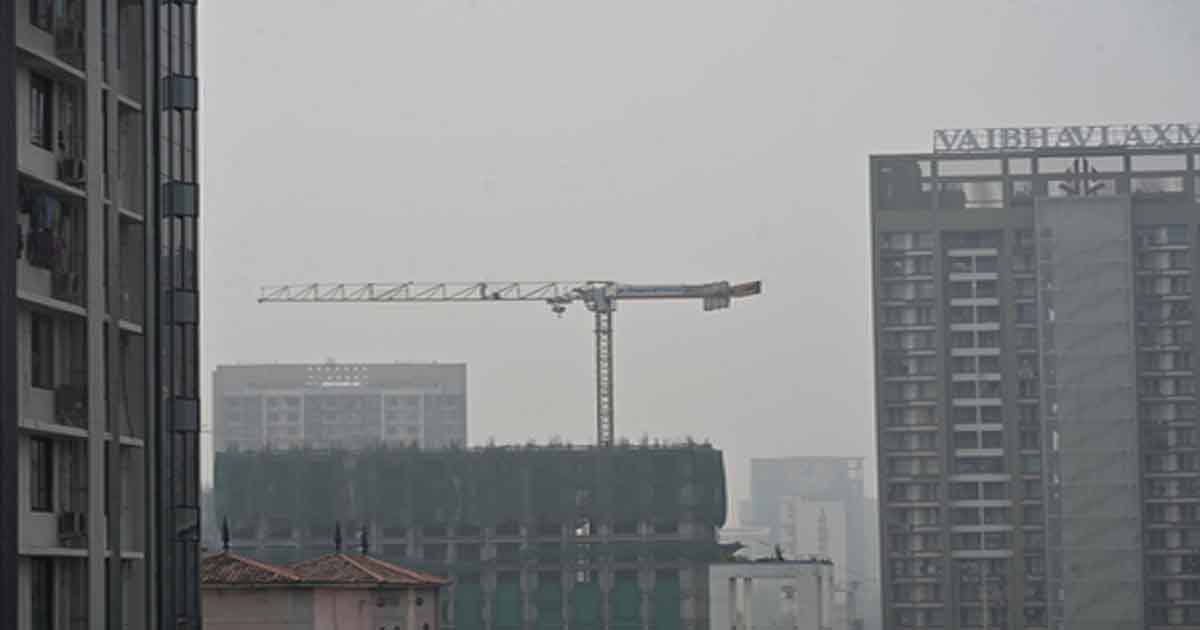
Mumbai : Mumbai’s air quality deteriorated sharply following Diwali celebrations, with firecracker emissions contributing to a significant rise in particulate pollution and a layer of smog covering several parts of the city. Although Mumbai recorded comparatively better air quality this Diwali than in 2025, the improvement proved temporary as pollution levels surged during the evening celebrations. The city recorded an Air Quality Index (AQI) of 132 on Sunday, nearly 30 per cent lower than the 188 recorded during the corresponding period last year. However, the relatively cleaner air during the daytime gave way to a sharp deterioration as people began bursting firecrackers in the evening.
In Andheri, PM2.5 levels jumped from 42 at 8 p.m. to 597 within two hours. Malad recorded an even higher PM2.5 concentration of 606, while Chembur reported PM10 levels of 480 at 10 p.m. The overnight spike highlighted the continuing impact of firecracker emissions on the city’s air quality despite growing environmental awareness. By Monday morning, pollution levels remained elevated in several locations. The AQI around Bandra Reclamation and Kala Nagar stood at 231, falling in the ‘Poor’ category, according to the Central Pollution Control Board (CPCB).
Meanwhile, Mumbai and neighbouring Thane witnessed a substantial deterioration in air quality on Diwali night, with pollution levels entering the severe category amid widespread firecracker use. According to live readings on AQI.in, Mumbai’s AQI stood at 278 at 9.34 p.m. on Sunday. The PM2.5 concentration was recorded at 192 micrograms per cubic metre, while PM10 levels reached 232 micrograms per cubic metre. These readings came just hours after the city experienced its cleanest Diwali afternoon air in four years. According to an earlier report by a leading English daily, Mumbai recorded an AQI of 131 around 1 p.m. on Sunday, as per the CPCB dashboard. The figure was considerably lower than the corresponding Diwali afternoon readings of 194 in 2025, 181 in 2024 and 149 in 2023. Favourable weather conditions, particularly strong sea breezes that helped disperse pollutants, were considered a major factor behind the improved daytime air quality.
The city’s air quality had already begun showing signs of deterioration during the first week of October. On Diwali afternoon, 20 of Mumbai’s 26 monitoring stations recorded AQI levels above 100. Among the worst-affected locations, Bandra East (Kherwadi) recorded an AQI of 195, followed by Shivaji Nagar in Mankhurd at 183, Bandra Kurla Complex at 173, Ghatkopar at 170, Chembur at 168 and Mazgaon at 133. Following Diwali celebrations, the National Capital Region of Delhi also witnessed a significant deterioration in air quality, with dense smoke and haze spreading across the region. Reduced visibility has been reported in several areas, further intensifying concerns about rising pollution levels. Air Quality Index (AQI) readings and the government’s efforts to tackle the pollution crisis have remained key topics of discussion in the national Capital over the past few days.
Ahead of the Diwali festivities, the Commission for Air Quality Management (CAQM) implemented Stage III restrictions under the Graded Response Action Plan (GRAP) across Delhi-NCR. According to the commission’s order, the decision was taken as a precautionary step in anticipation of a possible decline in air quality during the festive period. Data available on the Central Pollution Control Board’s (CPCB) Sameer application showed that Delhi’s overall AQI reached 373 at 11:05 PM on November 8, 2026, placing it in the ‘very poor’ category. During the same period, Noida recorded an average AQI of 319. The corresponding readings for Ghaziabad, Gurugram and Faridabad stood at 360, 280 and 297, respectively, all falling within the ‘very poor’ category. The situation was particularly concerning in several parts of Delhi, where pollution levels crossed the 400 mark, entering the ‘severe’ category. Areas reporting such high AQI readings included Alipur, Bawana, Burari, Chandni Chowk, Mundka, Punjabi Bagh, Rohini and Vivek Vihar, among others.
MUMBAI : Despite widespread safety campaigns, the first two days of Diwali witnessed a significant surge in fire-related emergencies across Mumbai and the neighboring Thane district. Back-to-back distress calls were triggered primarily by firecrackers and unattended diyas. Over a 48-hour period, exactly 89 fire incidents occurred across the city. Of these emergencies, at least 28 were directly linked to firecrackers. A similar trend was observed in Thane, which saw multiple major blazes, including severe fires in high-rise residential societies in Wagle Estate and Kasarvadavali.
While rapid firefighting responses prevented further escalation in many areas, the weekend was not without tragedy. One fatality occurred in Andheri West, where a 56-year-old security guard died of suffocation after becoming trapped in a lift during a fire on the 17th floor of a high-rise, suspected to have been caused by an unattended diya. At least four other injuries took place across the region, including residents who suffered burns and severe smoke inhalation requiring hospital admission. Extensive property damage was recorded across both cities. Fires engulfed scrap shops, commercial corridors, and residential apartments. In several high-rises, entrance doors, household items, and internal electrical wiring were completely gutted by stray rockets and indoor fires.
Prompt reporting of fires and quick evacuations—such as the successful rescue of around 50 residents from a single building in Thane—played a crucial role in saving lives. However, the blatant flouting of safety norms in congested residential areas remains a major concern. With the festival continuing, fresh safety advisories urge citizens to burst crackers only in designated open spaces, keep buckets of water or sand nearby, and ensure that unattended diyas are extinguished before leaving the house to prevent further mishaps.

Authorities Crack Down on Firecrackers: Thane Bans Sky Rockets, Civic Bodies Issue Strict Guidelines

Sonia Gandhi shed tears over Babri Masjid demolition, but not for kar sevaks: Giriraj Singh

BJP, Shiv Sena slam Mallikarjun Kharge for terming Diwali ‘Khushiyon ka Eid’

The police will investigate the fire in Mumbai’s Dongri area as well as other incidents; action will be taken once the causes are determined.

Post-Diwali pollution chokes Delhi; AQI nears 450 in Sonia Vihar, multiple areas record severe air quality

Rahul, Cong ecosystem want to force regime change: BJP after Neha Bora praises B’desh Gen-Z protest

BJP pays tribute to ex-President Abdul Kalam, recalls his enduring influence on generations of India’s youth

Attack on democratic rights: INDIA Bloc leaders on detentions of anti-ECI protestors

Congress trying to protect 3 crore Bangladeshi infiltrators in voter list: HM Shah

Online betting: ED conducts searches at 20 premises in Mumbai, Pune, Hyderabad
-

 Crime4 years ago
Class 10 student jumps to death in Jaipur
-

 Maharashtra2 years ago
Mumbai Local Train Update: Central Railway’s New Timetable Comes Into Effect; Check Full List Of Revised Timings & Stations
-

 Maharashtra2 years ago
Mumbai To Go Toll-Free Tonight! Maharashtra Govt Announces Complete Toll Waiver For Light Motor Vehicles At All 5 Entry Points Of City
-

 Maharashtra2 years ago
False photo of Imtiaz Jaleel’s rally, exposing the fooling conspiracy
-

 National News2 years ago
Ministry of Railways rolls out Special Drive 4.0 with focus on digitisation, cleanliness, inclusiveness and grievance redressal
-

 Maharashtra2 years ago
Maharashtra Elections 2024: Mumbai Metro & BEST Services Extended Till Midnight On Voting Day
-

 National News2 years ago
J&K: 4 Jawans Killed, 28 Injured After Bus Carrying BSF Personnel For Poll Duty Falls Into Gorge In Budgam; Terrifying Visuals Surface
-

 Crime2 years ago
Baba Siddique Murder: Mumbai Police Unable To Get Lawrence Bishnoi Custody Due To Home Ministry Order, Says Report