
Business
JCRA assigns landmark ratings to Adani Ports, Adani Green and Adani Energy Solutions

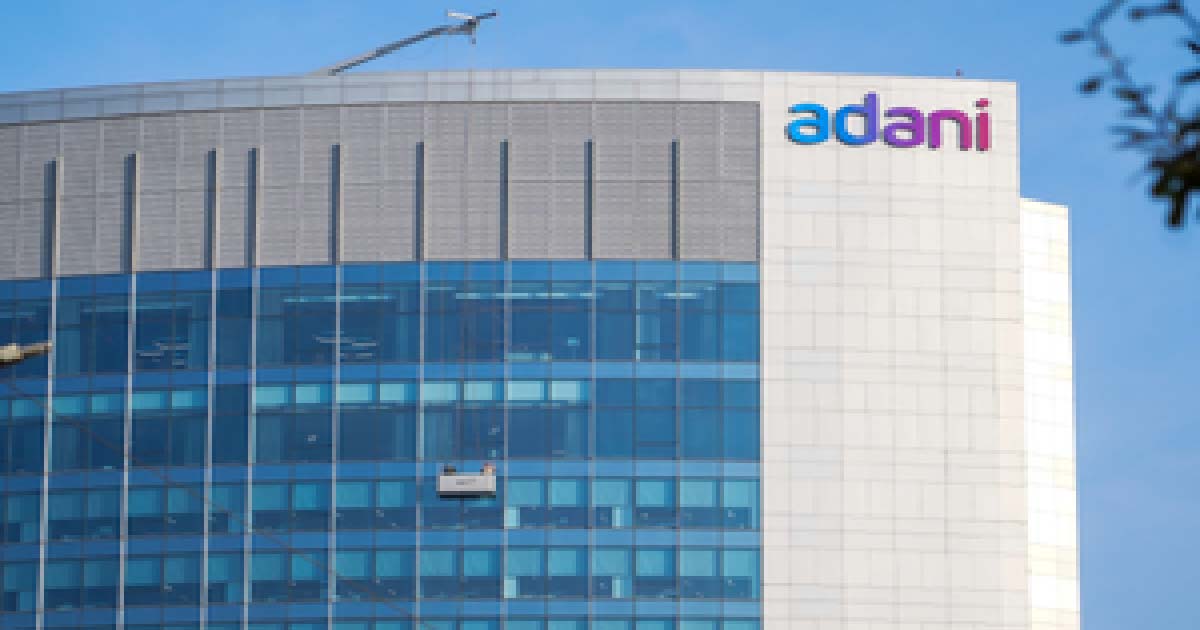
Ahmedabad, Jan 30: In a significant milestone for the Adani Group’s global credit journey, Japan Credit Rating Agency (JCRA) has initiated ratings of three Portfolio companies — Adani Ports and SEZ (APSEZ), Adani Green Energy Ltd. (AGEL) and Adani Energy Solutions Ltd. (AESL) — assigning long-term foreign currency credit ratings with a ‘Stable’ outlook to all three companies, it was announced on Friday.
Japan’s leading rating agency assigned Adani Ports and Special Economic Zone Ltd. (APSEZ) a A- (Stable) rating, representing a rare breach of the sovereign threshold by an Indian corporate by an international rating agency.
Moreover, Adani Green Energy Ltd. (AGEL) and Adani Energy Solutions Ltd. (AESL) have each been rated BBB+ (Stable). These ratings are at par with India’s sovereign rating of BBB+.
“These landmark ratings reflect the Adani Group’s commitment to disciplined financial management, strengthening balance sheet fundamentals, and world-class execution across our diversified infrastructure platform,” said Jugeshinder Singh, Group CFO, Adani Group.
“They reaffirm the depth and resilience of our business model and reflect the confidence global lenders, institutional investors, and capital markets place in our long-term strategy. This endorsement further strengthens our position as a leading partner in India’s infrastructure buildout and reinforces our commitment to delivering sustainable, high-quality growth,” Singh added.
Adani Ports’ strong rating underlines its strong credit profile, diversified asset base, and resilient cash-flow generation, and places it among a select group of Indian infrastructure companies to achieve an above-sovereign rating from a leading international rating agency.
The ratings also mark one of the first instances of Indian infrastructure platforms being assessed by JCRA at these levels, highlighting the Adani Group’s growing engagement with global rating agencies and its increasing alignment with international credit benchmarks.
APSEZ’s creditworthiness is at par with its subsidiary group, said the ratings agency, citing its superior infrastructure capabilities, consistently strong profitability, stable long-term cash flows, and prudent financial management — positioning the company above India’s sovereign foreign-currency rating, though capped by the country ceiling.
It continues to reinforce its leadership through a diversified portfolio of 15 domestic and 4 international ports, handling nearly 30 per cent of India’s cargo and 50 per cent of container volumes, supported by a comprehensive four-segment integrated logistics platform spanning ports, SEZs, logistics, and marine services.
Adani Ports delivered rapid EBITDA expansion — from Rs 7,566 crore in FY20 to Rs 19,025 crore in FY25, and Rs 11,046 crore in H1 FY26 — while maintaining a conservative 1.8x net-debt-to-EBITDA, long-tenor funding structure, and strong liquidity position.
On the other hand, AESL continues to strengthen India’s energy backbone through rapid expansion in transmission, distribution, smart metering, and cooling solutions — backed by stable, regulated cash flows and strong governance that support its consolidated credit profile, said the ratings agency.
“With a fast-growing network of 26,705 ckm of transmission lines, 97,236 MVA capacity, award-winning distribution reliability, and a rapidly expanding 7.37 million-meter smart metering portfolio, AESL is delivering far superior growth to the sector and redefining benchmarks in efficiency, customer service, and operational performance,” it noted.
With over 16.7 GW of operational capacity as of September 2025 and more than 90 per cent of EBITDA generated from renewables, AGEL has rapidly expanded from just 2.5 GW in FY20 — supported by best-in-class development, superior plant load factors, cost efficiency, and advanced ENOC-driven operations.
“EBITDA growth from Rs 1,855 crore (FY20) to Rs 10,532 crore (FY25) and Rs 6,324 crore in H1 FY26, coupled with improved equity levels, diversified global funding access, and extended 9.4-year average debt maturity, positions AGEL to sustain its ambitious growth pipeline while maintaining financial stability,” said JCRA.


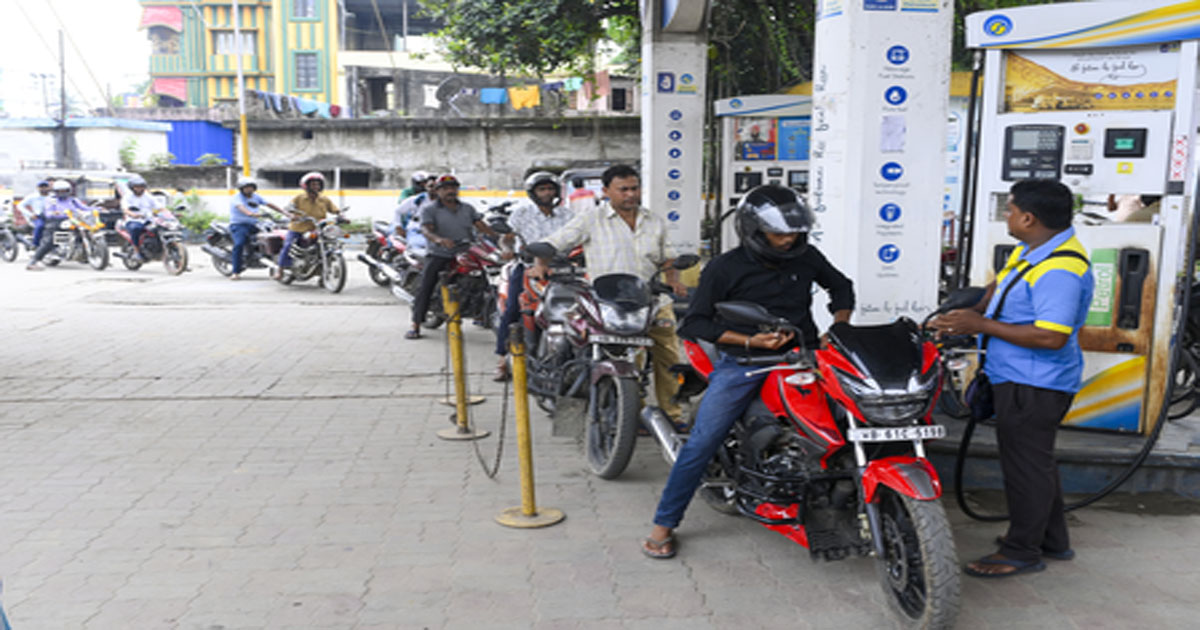
New Delhi, May 21: There is no shortage of petrol, diesel or LPG in the country and petrol pumps that are not giving fuel or giving fuel in reduced quantities are being pulled up, according to senior government officials on Thursday.
The government is receiving feedback about petrol pumps across India and full supply of fuels is being maintained to all retail outlets. There has also been no reduction in oil imports coming from Russia in order to ensure adequate crude supplies to the refineries of oil marketing companies, the officials pointed out.
There has been an increase in sales at some pumps because of the higher demand for diesel due to the harvesting season. There has also been a shift in customers from private oil marketing companies, who have started charging higher prices, to retail filling stations belonging to public sector oil companies.
Besides, institutional or commercial sales, which are priced around Rs 20 higher as per actual international price, have also shifted to petrol pumps, they added.
The officials also pointed out that India’s increase of Rs 3.91 per litre in the prices of petrol and diesel announced this week, works out to 4.4 per cent, which is the smallest hike of any major economy outside the directly subsidising Gulf producers such as Saudi Arabia, according to figures compiled by GlobalPetrolPrices.com.
An IndianOil official pointed out that the Rs 3.91 increase, which restores only part of the rise of cost in crude, has been undertaken after 76 days of complete absorption of costs by the public sector oil companies. In sharp contrast, the rest of the world has been adjusting price for the rise in crude costs through increases ranging from 10 to 90 per cent in the retail prices of the two fuels.
The pass-through has been steepest in liberalised emerging markets directly exposed to West Asian supply and freight, where governments do not absorb volatility. The Pakistani consumer is paying about 55 per cent more for petrol today than three months ago, the Malaysian about 56 per cent more, and the Emirati consumers about 52 per cent higher prices, the figures show.
In the advanced economies, the increases are smaller in percentage terms but still substantial. American petrol prices, which respond quickly to crude because federal and state excise loadings are modest, have risen by close to 45 per cent and diesel by 48 per cent.
In Europe, where excise duties dampen the swing, the United Kingdom is up about 19 per cent on petrol and 34 per cent on diesel, Germany about 14 per cent on petrol and 20 per cent on diesel, France about 21 per cent and 30 per cent, respectively.
In the case of Japan, South Korea and Singapore, the hike in petrol prices has been held below 20 per cent and the price of diesel has risen considerably faster, with Singapore registering a 65 per cent jump in the price of diesel.

Mumbai, May 21: Indian equity markets traded higher on Thursday in early deals amid hopes of easing tensions in West Asia after Iran said it was reviewing latest proposal to end the conflict.
In the morning trade, Sensex jumped as much as 0.83 per cent or 627 points to hit an intraday high of 75,945, while Nifty traded 0.84 per cent or 200 points higher at 23,859.
On the sectoral front, realty stocks led the gains, with the Nifty Realty index rising 1.5 per cent. Nifty Cement advanced 1 per cent, while chemicals, auto and media indices also traded higher. PSU Bank and metal stocks too remained in positive territory during the session, with all sectoral indices trading in the green.
Meanwhile, from the 50-share benchmark pack, Infosys, Nestle India, Trent, SBI Life Insurance, Sun Pharma, Tata Consumer Products and ONGC were among the top laggards.
Category-wise, smallcap and midcap shares outperformed the benchmarks in early trade. The Nifty Microcap 250 climbed over 1 per cent, while the Nifty Smallcap 500 and Nifty Midcap 150 indices gained up to 1 per cent.
Meanwhile, India VIX declined over 4 per cent to around 18, signalling easing volatility.
Analysts said the recent momentum suggests investors are continuing to adopt a “buy on dips” strategy, supported by easing volatility and improving sentiment around foreign fund flows.
According to market experts, concerns over elevated valuations in AI-linked stocks in South Korean and Taiwanese markets could potentially divert foreign investor interest towards India, where valuations are seen as relatively fair in several pockets.
They added that the trajectory of crude oil prices and rupee stability would remain key factors driving near-term market direction.
Experts further noted that while fourth-quarter earnings have remained largely healthy so far, the impact of higher energy prices may become visible from the first quarter of FY27.
Moreover, market sentiment improved after Iran said it was reviewing Washington’s latest proposal to end the conflict, raising hopes of easing geopolitical tensions in West Asia.
The remarks came after US President Donald Trump indicated that Washington was willing to wait a few days for Tehran’s response, while also warning of renewed attacks if negotiations failed.
In the commodities market, international benchmark Brent crude rose 1.32 per cent to $106.41 per barrel, while US WTI crude jumped nearly 2 per cent to $100.11 per barrel.
Global market sentiment also remained positive. Asian stocks traded in the green, with Japan’s Nikkei rising over 3 per cent, South Korea’s KOSPI surging more than 7 per cent, and Hong Kong’s Hang Seng trading marginally higher.
In the US, Wall Street ended on a bullish note, with the S&P 500 closing 1 per cent higher and the Nasdaq settling 1.54 per cent up.

Mumbai, May 20: Gold and silver prices declined sharply on Wednesday, with both precious metals falling over 1 per cent amid rising concerns over higher US interest rates.
On the Multi Commodity Exchange (MCX), gold futures (June 5) declined as much as 0.7 per cent or Rs 1,121 to hit an intraday low of Rs 1,57,959 as of 11:17 am. The yellow metal was trading at Rs 1,58,369, down 0.45 per cent or Rs 711. It touched an intraday high of Rs 1,60,378, rising 0.81 per cent or Rs 1,298, according to the exchange.
Meanwhile, silver futures (July 3) also witnessed selling pressure, slipping 1.21 per cent, or Rs 3,269, to Rs 2,66,850, its intraday low so far. The white metal was trading at Rs 2,68,970, down 0.43 per cent or Rs 1,149. It recorded an intraday high of Rs 2,69,605, lower by 0.19 per cent or Rs 514.
Earlier in the day, gold and silver opened on the MCX at Rs 1,58,974 and Rs 2,67,230, respectively.
In the international market as well, precious metals were trading lower. COMEX gold declined 0.49 per cent to $4,462 per ounce, while COMEX silver slipped 0.17 per cent to $73.868 per ounce.
According to commodity market experts, gold prices remained under pressure as investors assessed rising inflation risks and the possibility of higher US interest rates.
They noted that geopolitical tensions also continued to weigh on sentiment after US President Donald Trump warned that Washington could resume strikes on Iran within “two or three days” if Tehran failed to accept Washington’s peace terms.
The ongoing conflict has disrupted shipping through the Strait of Hormuz, pushing crude oil prices higher and intensifying global inflationary pressures.
Analysts added that rising inflation concerns have reduced expectations of US Federal Reserve rate cuts while increasing speculation around possible rate hikes later this year.
For silver, experts said the metal has additionally erased recent gains that were supported by optimism around AI-linked stocks and rising demand from data-centre infrastructure expansion.
Meanwhile, domestic stock markets opened lower on Wednesday, with benchmark indices Sensex and Nifty trading in negative territory during early trade.

Navi Mumbai Crime Branch Arrests 3 Nigerian Nationals, Seizes Cocaine Worth ₹1.26 Crore In Vashi’s Juhugaon Raid

Mumbai Bandra Mosque martyred, violence, protest: Police accused of stone pelting, situation tense, peace maintained, 10 people arrested, operation launched for more arrests

No shortage of petrol, diesel or LPG at retail outlets: Govt officials

Trump says Iran talks ‘in final stages’ as US waits for ‘right answer’

Mumbai’s Garib Nagar Demolition Update: Nearly 85% Of Work Completed In Bandra, Western Railway Says Dealing Matter With ‘Humanitarian Aspect’

Maharashtra Shock: 22-Year-Old Arrested For Exploiting & Blackmailing Multiple Women In Kolhapur; Love Jihad Angle Suspected

Google to invest up to $40 billion in Anthropic amid global AI race

27 Years After Gangster Sadiq Kalia’s Encounter By Daya Nayak, His Nephew Arrested For Alleged Revenge Killing In Mumbai

Chembur Police Arrest Four For Trying To Sell Elephant Tusks Worth ₹3.5 Crore; Forest Department Confirms Seizure

India, New Zealand set to sign FTA for improved market access on April 27
-

 Crime4 years ago
Class 10 student jumps to death in Jaipur
-

 Maharashtra2 years ago
Mumbai Local Train Update: Central Railway’s New Timetable Comes Into Effect; Check Full List Of Revised Timings & Stations
-

 Maharashtra2 years ago
Mumbai To Go Toll-Free Tonight! Maharashtra Govt Announces Complete Toll Waiver For Light Motor Vehicles At All 5 Entry Points Of City
-

 Maharashtra2 years ago
False photo of Imtiaz Jaleel’s rally, exposing the fooling conspiracy
-

 National News2 years ago
Ministry of Railways rolls out Special Drive 4.0 with focus on digitisation, cleanliness, inclusiveness and grievance redressal
-

 Maharashtra2 years ago
Maharashtra Elections 2024: Mumbai Metro & BEST Services Extended Till Midnight On Voting Day
-

 National News2 years ago
J&K: 4 Jawans Killed, 28 Injured After Bus Carrying BSF Personnel For Poll Duty Falls Into Gorge In Budgam; Terrifying Visuals Surface
-

 Crime2 years ago
Baba Siddique Murder: Mumbai Police Unable To Get Lawrence Bishnoi Custody Due To Home Ministry Order, Says Report