
National News
Years after Mumbai 26/11, India evolves from dossier-led response to proactive counterterrorism

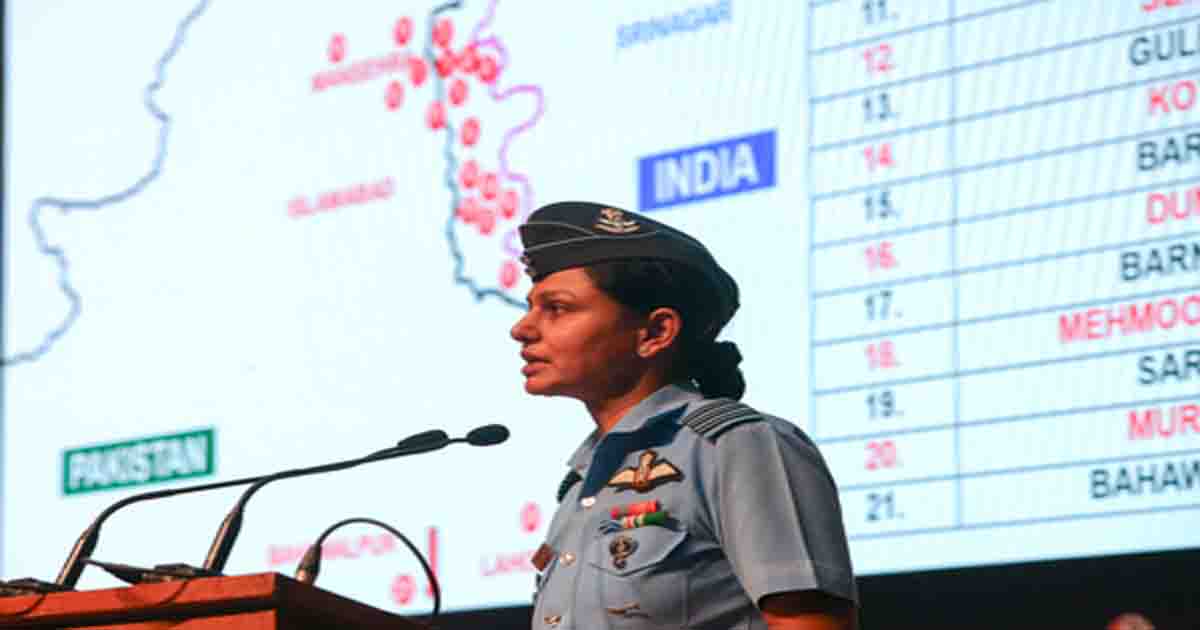
The 26/11 attacks were one of the most horrific and audacious attacks that India has witnessed, with a siege of Mumbai that lasted nearly 60 hours, and led to the killing of 166 people by ten terrorists of the Lashkar-e-Taiba who spread across multiple locations.
While the attack was audacious in nature, many argue that the response was quite weak and Pakistan needed to be punished harder for nurturing and harbouring the Lashkar.
The investigators were fortunate enough to capture one of the terrorists (Ajmal Kasab) alive. Had it not been for his interrogation, it would have been very hard to link the attack to Pakistan.
Despite the confession by Kasab, Pakistan continued to deny any link with the attack and even wiped out all traces of his home and family members in Faridkot, a village in the Kara district of Punjab province.
The experts note that while the response post the attack may not have been up to the mark, there were several lessons learnt.
Prime Minister Narendra Modi post his swearing in, in May 2014 vowed to fight terror. This led to the evolution of the kinetic strategy, which involved a more muscular approach to counterterrorism.
During the attacks, there were multiple flaws that were exposed. This included a complete lack of Intelligence, ill-equipped personnel of the Mumbai police, lack of coordination on the ground, and delayed response in bringing in the National Security Guard (NSG) to Mumbai from Delhi, the official said.
There were several misses when it came to Intelligence.
The landing of the ten terrorists in Mumbai prior to the attacks remained largely unknown.
The reconnaissance by David Headley, who flew in and out of India from the United States, was a completely unknown fact until the Americans tipped off the Indian security agencies much after the attacks were over.
Fixing the gaps relating to intelligence became a priority. The agencies became much more proactive and, most importantly, began coordinating seamlessly with the local police and Intelligence agencies.
The results of such coordination are visible in the battle against the terrorists in Jammu and Kashmir and also during the multiple operations that led to the complete wiping out of the Naxalite (Maoist) movement.
An Intelligence Bureau official said that over a period of ten years, the entire strategy relating to counterterrorism evolved, which eventually led to the unveiling of the PRAHAAR doctrine. This doctrine provides India with a counterterrorism framework, which involves preventing and responding to a terror attack.
Most importantly, the doctrine addresses these objectives through an intelligence-led proactive framework.
In a nutshell, the entire counterterrorism strategy is proactive through real-time Intelligence sharing and not reactive.
Officials say that the counterterrorism strategy has moved beyond just dossiers.
Post the Mumbai attacks, several dossiers were shared, but all of them are just gathering dust in Pakistan. The entire purpose of gathering evidence and handing out dossiers had become futile, as Pakistan always remained in denial mode.
It was more important to hit terror networks hard and destroy their infrastructure.
One of the most decisive actions was seen post the Uri attacks of 2016. The Indian Army carried out a surgical strike during which multiple launchpads and terrorist camps were destroyed in Pakistan-occupied Kashmir (PoK), the primary staging ground for outfits such as the Lashkar, the Jaish-e-Mohammad, and the Hizbul Mujahideen.
The rules of engagement changed, and a new doctrine was in the making.
This, however, did not deter the Pakistanis from carrying out another attack. This time it was in Pulwama, in which 40 soldiers were killed by a suicide bomber of the Jaish. The Indian Air Force carried out the Balakot air strike, destroying a major facility of the Jaish.
The 2025 Pahalgam attack shook the entire nation, as it not only killed innocent tourists, but the victims were first identified on the basis of their religion before being shot at point-blank range.
This attack led to Operation Sindoor, during which the Indian armed forces destroyed terrorist camps not just in PoK but deep inside Pakistan also. India called out Pakistan’s nuclear bluff and sent a loud message that any act of terror would be treated as an act of war and not a cross-border strike.
Counterterrorism experts say that the biggest lesson that India learnt years after the Mumbai 26/11 attacks is that fighting terror takes complete precedence when it comes to national security, especially when one has neighbours such as Pakistan.
Post the Mumbai 26/11 attacks, India witnessed a wave of blasts carried out by the Indian Mujahideen. However, once the outfit was wiped out, terror shifted largely towards Jammu and Kashmir, while the rest of the country remained quiet. Decisions such as the abrogation of Article 370 and the fall of separatism ensured development in Jammu and Kashmir. This led to the creation of jobs, and the youth were no longer willing to pick up arms to earn their money.
Although late, the Mumbai 26/11 attacks changed India’s perception when it came to its national security doctrine. To say that the threat is completely eliminated would be wrong.
Pakistan continues to back terrorists and is looking to rebuild networks.
Radicalisation drives have peaked, and adding to this headache are the latest waves of disinformation campaigns and honey-trapping incidents.
The fight would go on, but it is more important that India’s resolve remains strong and the doctrine keeps adapting to the new challenges posed by Pakistan and other state as well as non-state actors, an official said.

National News
‘Rural India facing acute economic distress’: Congress targets Centre over rising inflation

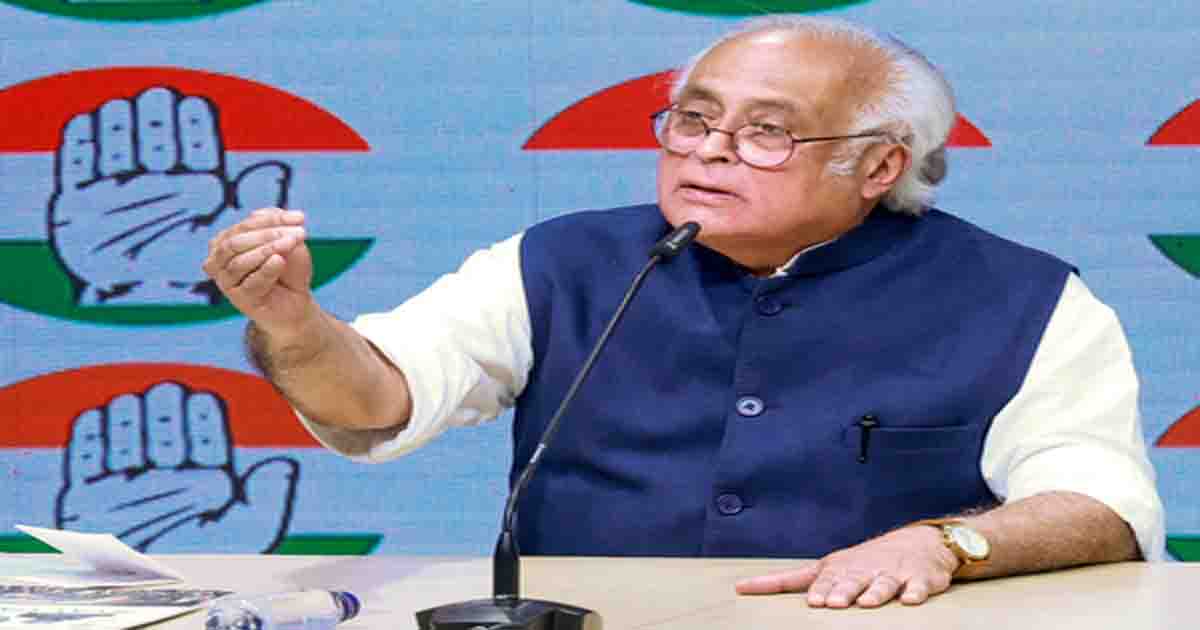
Congress General Secretary Jairam Ramesh on Thursday launched a sharp attack on the Central government over rising inflation, alleging that the growing cost of essential commodities has placed an additional financial burden on people, particularly those living in rural areas.
Taking to X, Ramesh said that while the entire country was grappling with inflation, its impact was significantly more severe in rural India, where limited employment opportunities and stagnant incomes had further aggravated the situation.
“The entire nation is reeling under the burden of inflation, but its impact on rural India is far more severe — it is in a state of acute distress. There is a lack of sufficient employment opportunities, incomes are stagnant, and on top of that, the cost of daily necessities continues to climb due to inflation,” he said.
The Congress leader argued that people in villages were finding it increasingly difficult to cope with rising prices because their incomes were already limited. He said the decline in purchasing power was more pronounced in rural areas compared to urban centres.
“Just imagine — how does a farmer’s or an agricultural labourer’s family manage to survive? From basic food items like salt, sugar, lentils, spices, onions and mustard oil to cooking gas, children’s education, medical expenses and transportation — the cost of every single necessity is rising. Skyrocketing prices are placing an unrelenting burden on their pockets,” he said.
“Stagnant incomes coupled with year-on-year runaway inflation — this is the ‘price’ the Modi government has exacted from the people!” he added.
Questioning how ordinary households could manage their finances under such circumstances, Ramesh said families were being pushed into a situation where they had to either compromise on essential needs or borrow money to meet their daily expenses.
He further said that inflation was affecting socially and economically marginalised communities the most, as they often lacked savings, stable employment, and adequate financial resources to deal with unexpected economic difficulties.
“Such families now face a grave crisis regarding their livelihoods, social security and the ability to lead a life with dignity,” Ramesh said.
The Congress General Secretary also criticised the government’s handling of the Mahatma Gandhi National Rural Employment Guarantee Act (MGNREGA), alleging that the scheme, which provided employment security to rural households, had been effectively dismantled.
“By weakening this system, the Modi government has created new anxieties regarding the employment security of the rural poor,” he further said.
Ramesh also claimed that anger over inflation, unemployment and declining incomes was growing in rural India. Referring to the recent Panchayati Raj elections in Rajasthan, he said the discontent among rural voters was reflected in the electoral outcome, which he described as a major setback for the BJP’s ‘double-engine’ government.
He also claimed that rural India is “seething with anger” over the inflation situation.
“This pain and discontent were also evident in Rajasthan’s recent Panchayati Raj elections, where the ‘double-engine’ government suffered a major setback. In the upcoming elections, too, the BJP is likely to face further such setbacks, driven by issues like inflation, unemployment and declining incomes,” he added.
The Congress leader’s remarks came amid the party’s continued criticism of the Centre over the cost of living, rural employment and the economic difficulties faced by low-income households.
Four young men were shot dead in a suspected gang-related attack at a dhaba near Kharawar village in Haryana’s Rohtak district late on Wednesday when five armed assailants allegedly arrived in a car and opened indiscriminate fire.
The crime occurred in the vicinity of the police station.
Eyewitnesses told the police that after the shooting, the attackers roamed the spot for several minutes, brandishing weapons, before fleeing.
The incident took place at Milan Dhaba, where the victims were reportedly having dinner when the attackers opened fire. The gunshots triggered panic among customers, who rushed for cover and hid behind tables and chairs.
The gunfire caused a stampede-like condition at the restaurant. The gunshots triggered panic among customers, who rushed for cover and hid behind tables and chairs to save their lives.
The criminals fired more than 50 rounds.
According to preliminary reports, three of the victims were killed while seated at the dining table, while the fourth was chased by assailants and shot dead as he attempted to escape.
The deceased have been identified as Rinku, Vineet, Ganju, and Himanshu.
The first three reportedly belonged to Dighal village in Jhajjar district, while Himanshu was from Beri.
Senior police officials, including Inspector General, Rohtak Range, Hamid Akhtar and Superintendent of Police Gaurav Rajpurohit, reached the spot following the incident.
Teams from the Crime Investigation Agency (CIA), the Special Cell, and the Forensic Science Laboratory (FSL) also examined the crime scene and collected evidence.
Investigators are probing a possible connection with the rivalry between the Bhau and Sunny Ritolia gangs. However, the motive behind the attack and the identities of the shooters have not yet been officially established.
“We have registered an FIR (first information report), and the identification process is underway. Whether this is a gang war or not is a matter of investigation. We have deployed several teams to investigate the case and hope to find some important clues soon,” Deputy Superintendent of Police Rishikant told the media.
Police are reviewing footage from nearby CCTV cameras and have deployed multiple teams to trace and apprehend the absconding assailants.
National News
PM Modi again calls out ‘Dimagi Naxals’ for trying to derail India’s growth trajectory
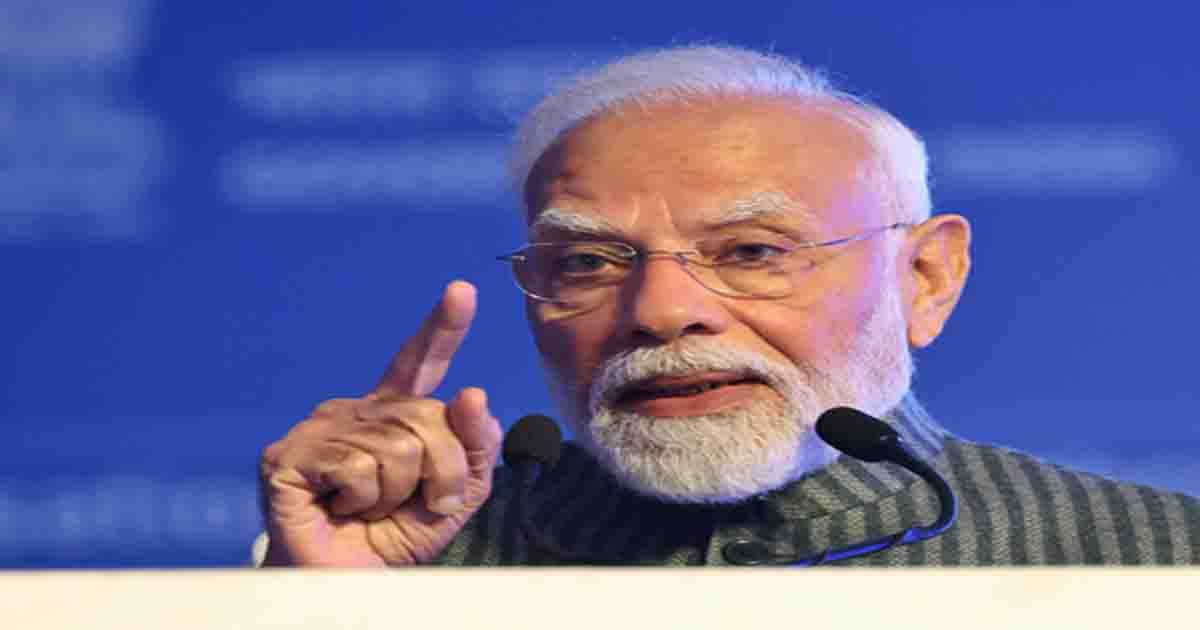
Prime Minister Narendra Modi on Thursday once again used the term ‘Dimagi Naxal’, saying that while armed Naxalism had been eliminated, people with such an ideology continued to pose a challenge to the country’s growth.
Sharing his Op-Ed on the occasion of the Constitution Day, the Prime Minister said: “For decades, in several parts of India, particularly in tribal areas, Naxalites used the might of the gun to deny the poorest people the rights guaranteed to them by our Constitution. The successful elimination of Naxalism this year is particularly heartwarming because it has ensured that the poorest of the poor can finally exercise their constitutional rights without fear. Now, we are left only with ‘Dimagi Naxals’, far removed from the realities of our times but persistent in their efforts to derail our growth trajectory.”
This is not the first time PM Modi has used the expression. He had used the phrase during his Independence Day address from the Red Fort on August 15, while speaking about the decline of armed Naxalism and warning that what he described as an ideological threat continued to exist.
The term ‘Dimagi Naxal’ does not have an official legal definition. In the context of the Prime Minister’s remarks, it refers to people whom he described as having a Naxal or Maoist mindset, rather than armed Naxalites operating in forest areas. PM Modi did not name any individuals or provide a detailed list of those he was referring to during his Independence Day speech.
The expression subsequently triggered a political debate, with Union Minister Kiren Rijiju offering further context on the government’s position. Opposition leaders and critics, including former Union Minister P. Chidambaram, questioned the use of the phrase.
The controversy also found its way onto social media, with an Instagram account named ‘Dimagi Naxal Party’ attracting hundreds of thousands of followers.
PM Modi again used the term on October 31 while addressing the Rashtriya Ekta Diwas celebrations marking the 151st birth anniversary of Sardar Vallabhbhai Patel at Ekta Nagar in Gujarat.
On that occasion, he had warned that ‘Dimagi Naxals’ continued to pose a threat and were attempting to create unrest. He had urged people to remain vigilant against forces allegedly spreading misinformation and seeking to divide the country.

Nine Russian, Ukrainian children reunited with families: White House

Years after Mumbai 26/11, India evolves from dossier-led response to proactive counterterrorism

‘Rural India facing acute economic distress’: Congress targets Centre over rising inflation

Saudi-led coalition intercepts three Houthi missiles

Four men shot dead in suspected gang-related attack in Haryana

Congress trying to protect 3 crore Bangladeshi infiltrators in voter list: HM Shah

Red Fort car blast probe exposes blueprint for spread of terror modules across India

Trump flags Iran targets as talks continue

‘Conspiracy, not accident’: NCP on Ajit Pawar death

BJP, Shiv Sena slam Mallikarjun Kharge for terming Diwali ‘Khushiyon ka Eid’
-

 Crime4 years ago
Class 10 student jumps to death in Jaipur
-

 Maharashtra2 years ago
Mumbai Local Train Update: Central Railway’s New Timetable Comes Into Effect; Check Full List Of Revised Timings & Stations
-

 Maharashtra2 years ago
Mumbai To Go Toll-Free Tonight! Maharashtra Govt Announces Complete Toll Waiver For Light Motor Vehicles At All 5 Entry Points Of City
-

 Maharashtra2 years ago
False photo of Imtiaz Jaleel’s rally, exposing the fooling conspiracy
-

 National News2 years ago
Ministry of Railways rolls out Special Drive 4.0 with focus on digitisation, cleanliness, inclusiveness and grievance redressal
-

 Maharashtra2 years ago
Maharashtra Elections 2024: Mumbai Metro & BEST Services Extended Till Midnight On Voting Day
-

 National News2 years ago
J&K: 4 Jawans Killed, 28 Injured After Bus Carrying BSF Personnel For Poll Duty Falls Into Gorge In Budgam; Terrifying Visuals Surface
-

 Crime2 years ago
Baba Siddique Murder: Mumbai Police Unable To Get Lawrence Bishnoi Custody Due To Home Ministry Order, Says Report