
International News
India responds to Imran: Pak a ‘supporter of terrorists, suppressor of minorities’


India has denounced Pakistan as a patron of terrorism and a suppressor of minorities in reply to Pakistan Prime Minister Imran Khan’s tirade against the country.
“This is the country which is an arsonist disguising itself as a firefighter,” Sneha Dubey, a First Secretary in India’s UN Mission, said on Friday.
“Pakistan nurtures terrorists in their backyard in the hope that they will only harm their neighbours. Our region, in fact, the entire world has suffered because of their policies.
“Today, the minorities in Pakistan, the Sikhs, Hindus, Christians, live in constant fear and state-sponsored suppression of their rights. This is a regime where anti-Semitism is normalised by its leadership and even justified,” she said.
Responding to Khan’s claims about treatment of minorities in India, Dubey said: “Pluralism is a concept which is very difficult to understand for Pakistan which constitutionally prohibits its minorities from aspiring for high offices of the State. The least they could do is introspect before exposing themselves to ridicule on the world stage.
“Unlike Pakistan, India is a pluralistic democracy with a substantial population of minorities who have gone on to hold highest offices in the country including as President, Prime Minister, Chief Justices and Chiefs of Army staff. India is also a country with a free media and an independent judiciary that keeps a watch and protects our Constitution.”
As for Khan’s allegations of “war crimes” by India, Dubey recalled the genocide perpetrated in Bangladesh in 1971 during and before the War of Independence in which more than 300,000 people were killed by Pakistan and hundreds of thousand women raped.
Pakistan “still holds the despicable record in our region of having executed a religious and cultural genocide against the people of what is now Bangladesh. As we mark the 50th anniversary this year of that horrid event in history, there is not even an acknowledgement, much less accountability”, she said.
Khan in his speech said that after the 9/11 terrorist attacks, “terrorism has been associated with Islam by some quarters” and “increased the tendency of right-wing, xenophobic and violent nationalists, extremists and terrorist groups to target Muslims”.
He then went on to link this to the BJP and the RSS.
Dubey said: “We marked the solemn occasion of the 20th anniversary of the 9/11 terror attacks a few days back. The world has not forgotten that the mastermind behind that dastardly event, Osama Bin Laden, got shelter in Pakistan. Even today, Pakistan leadership glorify him as a ‘martyr’.
“Regrettably, even today we heard the leader of Pakistan trying to justify acts of terror. Such defence of terrorism is unacceptable in the modern world.”
Pakistan has made an annual ritual of using up most it time at the high-level General Assembly session to attack India, which it also does at all meetings, regardless of the topic.
Dubey said: “This is not the first time the leader of Pakistan has misused platforms provided by the UN to propagate false and malicious propaganda against my country, and seeking in vain to divert the world’s attention from the sad state of his country where terrorists enjoy free pass while the lives of ordinary people, especially those belonging to the minority communities, are turned upside down.
“This is a country which has been globally recognized as one openly supporting, training, financing and arming terrorists as a matter of State policy. It holds the ignoble record of hosting the largest number of terrorists proscribed by the UN Security Council.”
Khan said that Pakistan “desires peace with India” but it is “contingent upon resolution of the Jammu and Kashmir dispute, in accordance with the relevant UN Security Council resolutions, and the wishes of the Kashmiri people”.
Pakistan, however, is in violation of Security Council Resolution 47 adopted in 1948 that requires it to withdraw all its personnel from Kashmir.
Dubey declared: “Let me reiterate here that the entire Union Territories of Jammu and Kashmir and Ladakh were, are and will always be an integral and inalienable part of India. This includes the areas that are under the illegal occupation of Pakistan. We call upon Pakistan to immediately vacate all areas under its illegal occupation.”
On the conditions for peace, she said: “We desire normal relations with all our neighbours, including Pakistan. However, it is for Pakistan to work sincerely towards creating a conducive atmosphere, including by taking credible, verifiable and irreversible actions to not allow any territory under its control to be used for cross border terrorism against India in any manner.”
Khan blamed the US for the developments in Afghanistan, recalling the support Washington under President Ronald Reagan gave mujahidin fighting the Soviet Union in the 1980s.
“We were left with sectarian militant groups which were never existed before,” he said.
After 9/11, the US needed Pakistan’s help to invade Afghanistan, he said.
As a result, the same Mujahidin also turned against Pakistan and the Taliban attacked his country, he claimed.
After Dubey gave the right of reply speech, a Counsellor in Pakistan’s UN Mission, Saima Saleem, replied to the right of reply.
Saleem repeated many elements of Khan’s speech, in addition to quoting Amnesty International, Human Rights Watch and UN human rights bodies, ignoring their scorching criticism of her country.

disaster
Landslide triggering Budhi Gandaki River floods in Nepal unleashed energy equivalent to 3.5-magnitude quake: Report


Kathamandu, Oct 14: A massive landslide in the high Himalayas of Nepal Gorkha district on October 11, which triggered devastating floods in the Budhi Gandaki River, generated energy equivalent to that of a 3.5-magnitude earthquake, according to a preliminary assessment by the Department of Mines and Geology.
The landslide occurred in the upper reaches of the Ungdilung Khola, a tributary of the Budhi Gandaki River, triggering destructive flood surges after a large volume of debris blocked and subsequently released river flows, the technical report said.
The report provides an initial explanation of how the high-altitude landslide and the repeated blockage and release of river flows contributed to the flooding downstream.
The National Disaster Risk Reduction and Management Authority (NDRRMA) said in a social media post, citing the department’s report, that the Budhi Gandaki River experienced repeated flood surges in a single day following the massive landslide involving snow, water and glacial debris in the high Himalayas.
The latest disaster left at least five people missing and destroyed several hydropower projects, roads and bridges, according to the NDRRMA.
The October 11 flooding was the second major flooding disaster, which occurred around one and a half months after devastating floods struck the Bhote Koshi and Trishuli rivers on August 26, which killed nearly 1,500 people and left more than 5,000 missing while devastating communities, houses, hydropower plants, roads and bridges along the affected rivers, the authority said.
Citing the department’s technical report, the NDRRMA said the largest of the repeated flood surges reached an estimated height of 20 to 25 metres.
The incident occurred at around 4:20 a.m. in the upper reaches of the Ungdilung Khola, between Chamar Himal and Syerangi Himal, in Chumnubri Rural Municipality, which borders China.
According to the report, an avalanche originated at an altitude of approximately 6,000 metres in the Tibetan Tethys Himalaya, an area characterised by relatively weak rock formations, and a landslide occurred at around 5,500 metres.
“The massive landslide, comprising a mixture of snow, water and debris, flowed southward along the Ungdilung Khola, depositing a large volume of debris at the narrow confluence of the Ungdilung Khola and Syar Khola, another tributary of the Budhi Gandaki River, at an altitude of around 2,000 metres,” the authority said in its social media post.
The debris repeatedly blocked and released the flow of the Syar Khola, potentially generating successive flood surges. A similar process may also have occurred at the confluence of the Syar Khola and the Budhi Gandaki River, contributing to repeated flooding downstream, it said.
However, the report suggests that the enormous volume of debris carried by the Ungdilung Khola played a more significant role in generating the largest flood surge than the water accumulated behind the blockage of the Syar Khola.
The first mud-laden flood reached the Salleri area at around 4:30 a.m., where a camp for the 341-MW Budhi Gandaki Hydroelectric Project was located.
“The largest surge arrived at the hydropower camp in Salleri at around 6:30 a.m., reaching an estimated height of 20 to 25 metres before sweeping away the camp,” the report said.
The powerful surge caused major damage downstream, particularly in the Jagat area along the Budhi Gandaki River, where several buildings were affected. Permanent bridges over the Soti Khola and the Budhi Gandaki River were also among the damaged structures, the report said.
Field observations further indicated that the flow of the Syar Khola had stopped following the landslide approximately one hour before the largest flood surge arrived.
“Water had accumulated over a stretch of around 1.5 kilometres in the upper reaches of the river. Smaller flood surges continued even after the largest surge had passed,” the report said.
International News
Indians in Saudi Arabia advised to stay indoors during aerial attacks; Embassy opens 24×7 control room
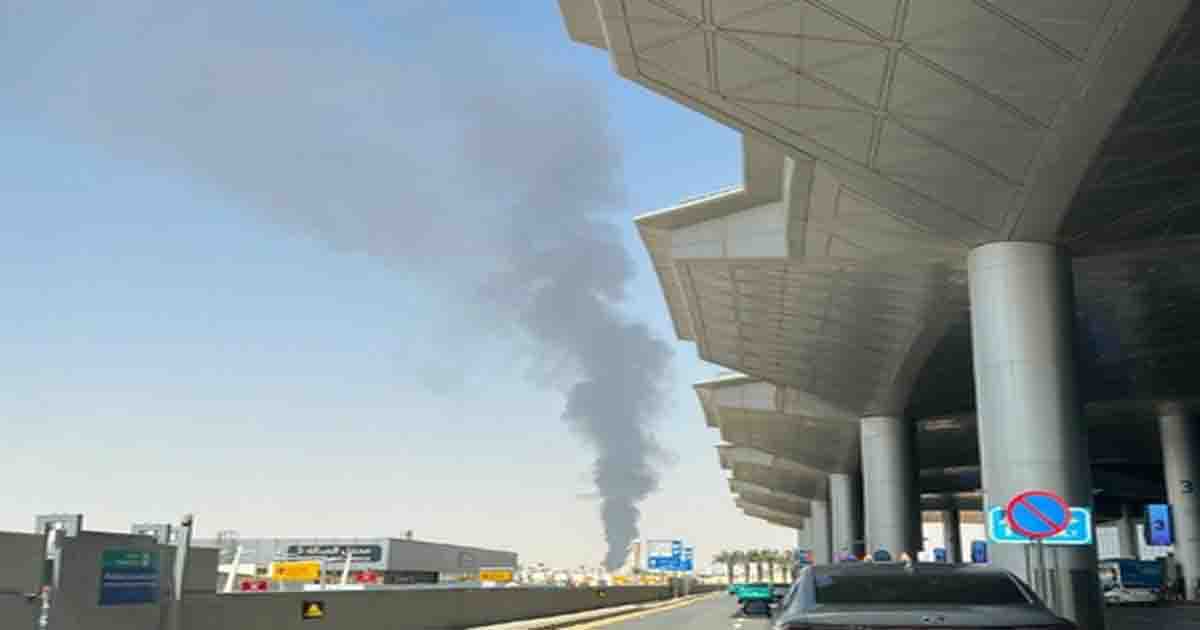
Riyadh, Oct 13: Indian nationals in Saudi Arabia have been advised to remain calm, vigilant and stay indoors in case of an aerial attack, the Indian Embassy in Riyadh said on Tuesday as it opened a 24×7 control room to assist the community.
“In view of the current situation, all Indian nationals in the Kingdom of Saudi Arabia are advised to remain calm and vigilant, stay indoors in case of an aerial attack, and follow the instructions issued by local authorities through official channels,” the Embassy said in an advisory.
It also “strongly advised” Indian nationals to refrain from circulating or reposting any videos or news related to the ongoing events.
Indian nationals were advised to remain in regular contact with their airlines and verify the latest status of their flights. Those in an emergency who wish to leave Saudi Arabia may avail flights from airports in neighbouring Gulf countries, particularly Qatar and Bahrain, subject to obtaining visas as per their rules, the Embassy said.
“In view of the evolving situation, the Embassy has opened 24×7 Control Room to provide necessary assistance to Indian nationals in Saudi Arabia,” it said.
Giving an update on the Indian nationals injured in the October 10 attack on Riyadh airport, the Embassy mentioned that four people remain in the ICU, four are receiving medical care in the normal ward, and three have been discharged.
“The Embassy officials continue to visit the hospitals where the injured Indian nationals are receiving medical treatment, and are in constant touch with their family members and providing all possible support,” it added.
The funeral rites of Mohammed Yousuf Ali, the Indian national who lost his life in the attack, were completed in Riyadh on October 12 as per the wishes of his family, with the Ambassador and Embassy officials in attendance.
On October 11, India condemned the attack on Saudi Arabia’s King Khalid International Airport, saying that attacks on civilians and civilian infrastructure were “unacceptable” and calling for an immediate cessation of hostilities.
“The repeated attacks on civilians and civilian infrastructure are completely unacceptable and must cease immediately,” the Ministry of External Affairs (MEA) said in a statement.
“We stand in solidarity with the people and the government of the Kingdom of Saudi Arabia in defence of their sovereignty, and hope that peace and normalcy returns to the region at the earliest,” it added.
On October 10, Saudi Arabia’s General Authority of Civil Aviation said that the attack targeting King Khalid International Airport on Saturday afternoon killed 12 people and injured 309 others.
International News
Pakistan: Emergency rule in Khyber Pakhtunkhwa intensifies volatile political confrontation
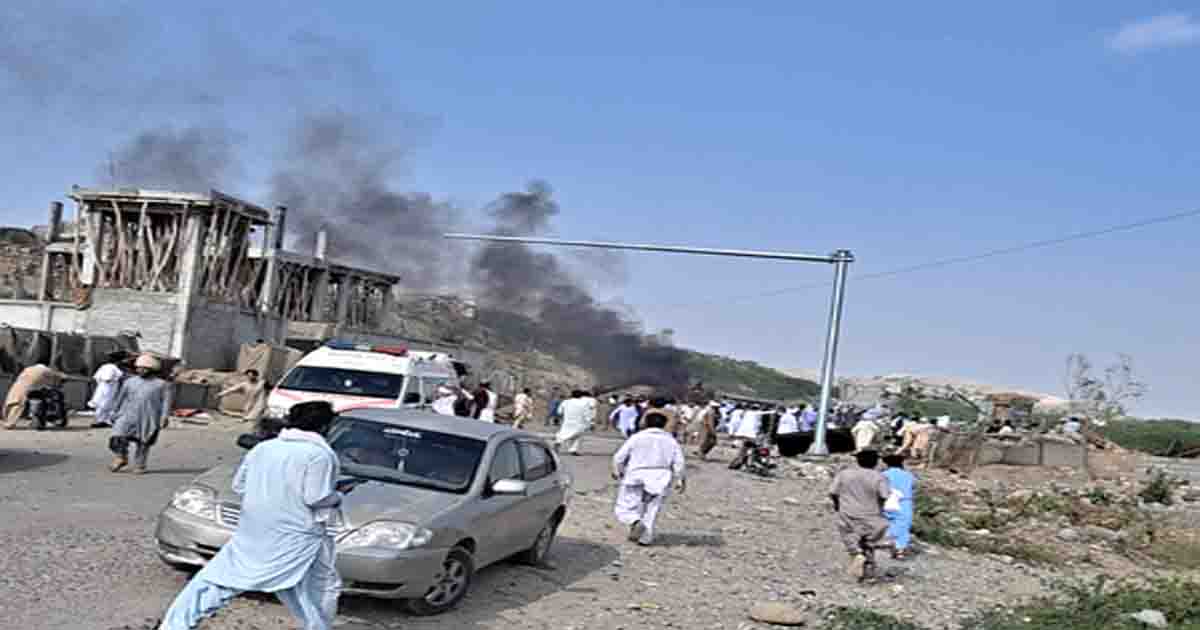
Islamabad, Oct 13: Pakistan government’s decision to impose emergency rule in the Khyber Pakhtunkhwa province has intensified an already volatile political confrontation between the federal government and the opposition. It has reignited long-standing debates regarding governance, security and the state’s relationship with its Pashtun-majority frontier region, a report has detailed.
Pakistan government effectively removed the Pakistan Tehreek-e-Insaf (PTI)-led provincial government and presented it as a “necessary response” to militancy. However, critics have described the decision by Pakistani authorities as a political intervention disguised as a security measure, an opinion piece in Afghan Diaspora Network detailed.
On October 11, Pakistan President Asif Ali Zardari approved emergency measures after recommendations made by Prime Minister Shehbaz Sharif’s cabinet. The move suspended the provincial government led by former Pakistan Prime Minister Imran Khan-founded PTI and transferred authority to a Governor. In addition, the federal government announced the deployment of forces in Khyber Pakhtunkhwa. The decision comes at a politically sensitive moment as PTI has been preparing major demonstrations demanding the release of Imran Khan.
PTI spokesperson Zulfikar Bukhari has condemned the Pakistan government’s decision to impose Governor’s rule in Khyber Pakhtunkhwa, terming it as a “coup disguised as emergency.”
“Strongly condemn the arrest of the only mandated Chief Minister Sohail Afridi and of Junaid Akbar. This coup disguised as emergency or Governor rule has squashed the only little bit of democracy left in Pakistan. Further instability and collateral damage to follow. The regime must be feeling very proud,” Bukhari wrote on X.
PTI chairman Gohar Ali Khan condemned the imposition of emergency and Governor’s rule in Khyber Pakhtunkhwa, describing the federal government’s decision as a “political mistake and undemocratic.” He emphasised that there is no disagreement on eliminating terrorism; however, the fight against terrorism cannot be used as justification to suppress the voice of the people, achieve political objectives and restrict the constitutional authority of the province.
“We strongly condemn the imposition of emergency in the province in the strongest terms and completely reject this action. This is an extremely alarming and grave political mistake and an undemocratic measure — the people will never accept such actions against their rights,” Khan posted on X.
Former Member of Pakistan’s National Assembly, Mohsin Dawar, accused the Pakistan government of following “colonial” policies towards Khyber Pakhtunkhwa and said that the decisions impacting the province are once again imposed without a democratic mandate. He said that emergency rule in Khyber Pakhtunkhwa could push the region “into further darkness.”
Veteran Pashtun nationalist leader Afrasiab Khattak said that Pakistan government’s imposition of emergency rule in Khyber Pakhtunkhwa, which has already faced decades of conflict, was another experiment in authoritarian governance. According to the Afghan Diaspora Network report, he asked whether Pashtuns should see the decision as proof of how they continue to be treated as subjects of a colony instead of equal citizens within the federation.
“Whether one accepts these arguments or not, they reflect a broader perception found among many critics of Pakistan’s security policies: that the country’s current security challenges cannot be separated from decisions made over several decades. The emergency declaration therefore represents more than an administrative measure. It sits at the intersection of three overlapping crises: rising militancy, deep political polarisation, and unresolved questions about the governance of Pakistan’s Pashtun borderlands,” the report in Afghan Diaspora Network stated.
“Supporters see decisive action against a deteriorating security situation. Opponents see a dangerous precedent in which elected governments can be sidelined under the banner of counterterrorism. As troops move into Khyber Pakhtunkhwa and federal authorities assume greater control, the province has once again become the focal point of Pakistan’s most important national debate: whether security and democracy can coexist or whether one will continue to be used to justify curtailing the other,” the author added.

Man shot dead by two bike-borne assailants in Delhi Sonia Vihar

Shiv Sena(UBT) accuses Centre of institutionalising authoritarianism in ‘Samaana’

Saurav Das, Ranka arrested for repeated law violations, instigating others: Delhi Police

Farhana Bhatt shares unseen glimpses with Rubina Dilaik, Avinash Mishra from ‘Khatron Ke Khiladi 15’ shoot

Landslide triggering Budhi Gandaki River floods in Nepal unleashed energy equivalent to 3.5-magnitude quake: Report

INDIA bloc begins protest march against ECI

Maha Congress stages agitation against Gyanesh Kumar

Complaint against Netflix & Mukesh Chhabra for inappropriate language on ‘India’s Got Latent 2’

Delhi court grants three-week interim bail to influencer Swatantra Bhardwaj

Bombay HC warns Vijay Mallya against posting court documents on social media
-

 Crime4 years ago
Class 10 student jumps to death in Jaipur
-

 Maharashtra2 years ago
Mumbai Local Train Update: Central Railway’s New Timetable Comes Into Effect; Check Full List Of Revised Timings & Stations
-

 Maharashtra2 years ago
Mumbai To Go Toll-Free Tonight! Maharashtra Govt Announces Complete Toll Waiver For Light Motor Vehicles At All 5 Entry Points Of City
-

 Maharashtra2 years ago
False photo of Imtiaz Jaleel’s rally, exposing the fooling conspiracy
-

 National News2 years ago
Ministry of Railways rolls out Special Drive 4.0 with focus on digitisation, cleanliness, inclusiveness and grievance redressal
-

 Maharashtra2 years ago
Maharashtra Elections 2024: Mumbai Metro & BEST Services Extended Till Midnight On Voting Day
-

 National News2 years ago
J&K: 4 Jawans Killed, 28 Injured After Bus Carrying BSF Personnel For Poll Duty Falls Into Gorge In Budgam; Terrifying Visuals Surface
-

 Crime2 years ago
Baba Siddique Murder: Mumbai Police Unable To Get Lawrence Bishnoi Custody Due To Home Ministry Order, Says Report