
Business
GST for packaged food: Rice will become costlier in TN

The decision of the government of India to levy 5 per cent Goods and Service Tax (GST) on packaged food may increase the price of rice from Rs 3 to Rs 5 per kilogram in Tamil Nadu from Monday.
The Tamil Nadu rice mills association and traders in a statement on Sunday said that the centre has issued notification bringing rice, maize, and other essential food commodities under 5 per cent GST from July 18 onwards.
The rice merchants and rice mill association have urged the Tamil Nadu government to exert pressure on the Union government for a roll back to bring the food products under GST. Around 3000 rice mills and thousands of rice merchants had protested against bringing the essential commodities under GST slab and had shut shop on Saturday.
The rice mill owners and rice merchants had in a petition to Chief Minister M.K. Stalin, stated that according to the Supreme Court rulings, GST recommendations are not binding for the state government.
M. Sivanandan, State Secretary, Tamil Nadu Rice mill owners association, while speaking to media persons said: “The GST council had imposed taxes on registered rice brands in 2017 but had exempted unregistered brands. The exemption is now withdrawn and all pre-packed rice brands will now have 5 per cent GST.
While loose rice may not fall under the ambit of GST, the state food department has directed all shopkeepers to ensure that rice and other food products are sold in packed form under the FSSAI Act.
Several mill owners, however, said that implementing 5 per cent GST from Monday may not be practical as many of these mills don’t have GST numbers. The mill owners want more time for the mills to get GST numbers.


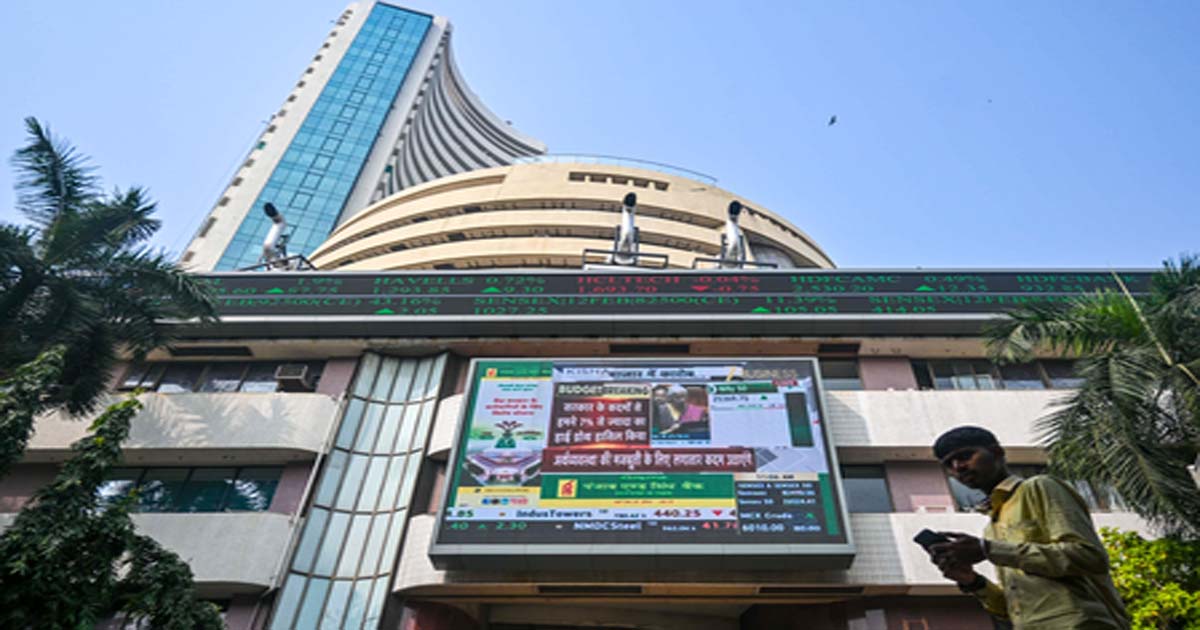
Mumbai, The Indian stock markets witnessed a strong rebound last week after six consecutive weeks of decline, supported by favourable global cues, according to analysts.
Sentiment remained buoyant amid optimism surrounding a temporary US–Iran ceasefire, although lingering geopolitical uncertainties capped the pace of gains as the week progressed.
“The rally was further aided by a stable domestic macro backdrop, with broader markets outperforming the benchmarks. Despite elevated volatility marked by sharp mid-week gains and subsequent profit booking, indices trended higher,” said Ajit Mishra – SVP, Research, Religare Broking Ltd.
The Nifty and Sensex gained around 6 per cent to close near the week’s highs at 24,050.60 and 77,550.25, respectively.
According to analysts, global developments remained a key influence, with the temporary ceasefire between the US and Iran improving risk appetite, though uncertainty around its sustainability persisted.
Meanwhile, a sharp decline in crude oil prices below the $100 mark eased domestic concerns and triggered a strong rebound across markets.
On the domestic front, the RBI maintained the repo rate at 5.25 per cent and retained a neutral stance, highlighting the need to balance inflation risks with growth support.
The central bank also revised FY26 GDP growth upward to 7.6 per cent while projecting FY27 growth at 6.9 per cent.
Inflation projections were raised to 4.6 per cent for FY27, reflecting risks from elevated energy prices and potential weather-related disruptions.
Market watchers said that overall sentiment remains balanced but cautious, shaped by global cues, crude oil price movements and ongoing foreign investor activity.
Downside appears to be relatively contained, but upside momentum remains constrained, pointing to a recovery that is still tentative and low in conviction, they added.
Economic indicators showed signs of moderation, with the Services PMI easing to 57.5 and the Composite PMI to 57.0 in March.
However, global agencies remained constructive, with the World Bank raising India’s growth outlook, supported by strong domestic demand and structural factors, said analysts.
New Delhi, April 8: Global crude oil prices on Wednesday plunged sharply up to 20 per cent, after US President Donald Trump announced a two-week ceasefire with Iran that includes a pledge to restore navigation through the Strait of Hormuz — the narrow waterway at the heart of the world’s most acute energy crisis in decades.
The international benchmark Brent crude futures shed nearly 16 per cent or $17.39 to $91.88, hitting an intraday low, while US WTI crude declined almost 20 per cent or $21.90 to $91.05.
The Strait of Hormuz, through which roughly a fifth of global oil flows, has been at the centre of the conflict. Iran had restricted passage for several weeks, contributing to rising prices and supply concerns. Markets had been on edge ahead of Trump’s deadline for Iran to reach a deal, with traders fearing a major escalation could disrupt shipments across the Gulf and send prices sharply higher.
Oil prices had surged in recent weeks amid fears that the strait could be closed or severely restricted. The waterway handles shipments critical to global supply chains, including crude oil and liquefied natural gas.
The US-Israel-Iran conflict has been paused for two weeks after approximately 40 days of hostilities that began in February.
President Trump’s shift in stance came just ahead of his stated deadline for Iran to reopen the Strait of Hormuz or risk extensive strikes on its civilian infrastructure.
Meanwhile, Iran indicated it would halt its military operations provided attacks against it ceased simultaneously. Foreign Minister Abbas Araghchi, in a formal statement, confirmed that safe passage through the Strait of Hormuz would be ensured for two weeks in coordination with Iranian armed forces.
The conflict had triggered an unprecedented surge in oil prices in March, with gains exceeding 60 per cent during the period.
Additionally, Indian equity benchmarks also rallied sharply on the development, trading more than 3 per cent higher in early trade. The Sensex jumped nearly 4 per cent, while the Nifty surged 3.5 per cent to their respective intraday highs.
Business
Employees’ body to meet on April 13 as Central govt staff keen on 8th Pay Commission decisions


New Delhi, April 7: Millions of Central government employees and pensioners await the outcome of the drafting committee of the National Council (Joint Consultative Machinery) on April 13 to get cues on the 8th Pay Commission salary revision, a report said on Tuesday.
The drafting committee meeting scheduled for 11:00 am at the JP Choubey Memorial Library (AIRF office premises) here will review a final common memorandum and discuss pay scale revisions, annual increments, allowances and other benefits, the report from NDTV Profit said.
“The April 13 meeting is in continuation of the March 12, 2026, meeting when all drafting committee members of the 8th Pay Commission met to discuss the common memorandum of all employee and pensioner bodies,” said NC-JCM secretary, Shiv Gopal Mishra, in a letter to members of the drafting committee.
The government has not yet announced the official date for the salary increase. Arrears will be calculated based on the date fixed for the implementation of the 8th Pay Commission
even as employee and pensioner groups press for arrears to be calculated from January 1, 2026, the report said.
The Federation of National Postal Organisations has asked the government to merge the 58 per cent dearness allowance with basic pay and give interim relief from the same date.
The salary increase will hinge on the fitment factor the government adopts which analysts expect to exceed 2.5. Some employee groups have sought a fitment factor of 3.15, even though the official decision may take over a year, the report said.
Pankaj Chaudhary, MoS Finance, told Parliament in March that the 8th Pay Commission will make its recommendations on pay, allowances, pensions, and other benefits for central government employees. The 8th Pay Commission is expected to complete this work within 18 months from November 2025.

US failed to gain Iran’s trust during talks: Iranian Parliament Speaker Ghalibaf

47-Year-Old Custody Escapee Arrested In Virar After Tea Stall Dispute Raised Suspicion

‘3-Hour Concert On 90th Birthday…’: Maha CM Fadnavis Pays Heartfelt Tribute To Ashatai, Recalls Her Passion For Music

Asha Bhosle’s son says last respects to be paid at residence in Lower Parel, followed by last rites at Shivaji Park

We have not forgotten US breaches: Iran hardens stand amid peace talks

Dhurandhar 2 Box Office Collection Day 1: Ranveer Singh Starrer Takes An Exceptional Opening; Crosses ₹100 Crore Mark

Mumbai Police Busts Fake Apple Accessories Racket In Ghatkopar, ₹16.33 Lakh Goods Seized; Six Booked

Thane Horror: Man Slashed With Chopper In Naupada For Refusing ‘Vargani’, Caught On Camera

Mumbai: 28-Year-Old Ghatkopar Woman Killed By Speeding Tanker While Crossing Road, Driver Arrested

Dhurandhar 2 Box Office Collection Day 9: Ranveer Singh Starrer Earns ₹41.55 Crore On Its Second Friday; Enters ₹700 Crore Club
-

 Crime4 years ago
Class 10 student jumps to death in Jaipur
-

 Maharashtra2 years ago
Mumbai Local Train Update: Central Railway’s New Timetable Comes Into Effect; Check Full List Of Revised Timings & Stations
-

 Maharashtra1 year ago
Mumbai To Go Toll-Free Tonight! Maharashtra Govt Announces Complete Toll Waiver For Light Motor Vehicles At All 5 Entry Points Of City
-

 Maharashtra2 years ago
False photo of Imtiaz Jaleel’s rally, exposing the fooling conspiracy
-

 National News2 years ago
Ministry of Railways rolls out Special Drive 4.0 with focus on digitisation, cleanliness, inclusiveness and grievance redressal
-

 Maharashtra1 year ago
Maharashtra Elections 2024: Mumbai Metro & BEST Services Extended Till Midnight On Voting Day
-

 National News2 years ago
J&K: 4 Jawans Killed, 28 Injured After Bus Carrying BSF Personnel For Poll Duty Falls Into Gorge In Budgam; Terrifying Visuals Surface
-

 Crime1 year ago
Baba Siddique Murder: Mumbai Police Unable To Get Lawrence Bishnoi Custody Due To Home Ministry Order, Says Report