
National News
Mahaparinirvan Diwas 2025: Dr Ambedkar’s Mumbai Memorial To Near Completion By Dec 2026 | All You Need To Know

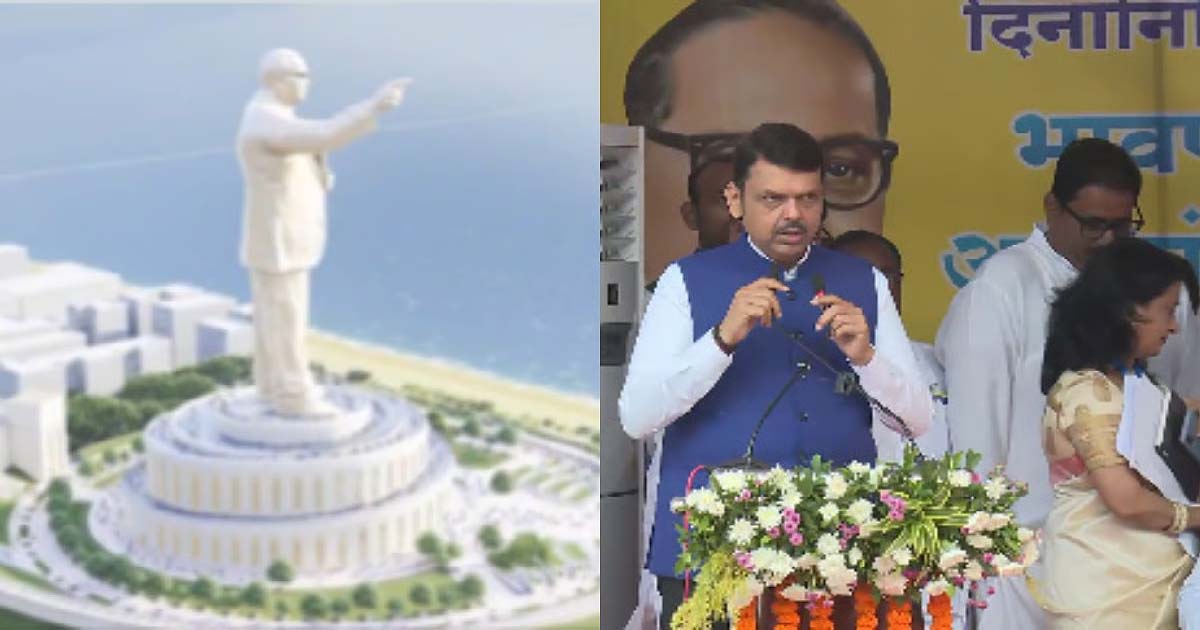
Mumbai: Maharashtra Chief Minister Devendra Fadnavis on Saturday, December 6, said all efforts will be taken to ensure completion of the grand memorial of Babasaheb Ambedkar at Indu Mill in Mumbai’s Dadar area by next year. While speaking at a function at Dadar’s ‘Chaityabhoomi’ to mark the 69th Mahaparinirvan Day (death anniversary), the CM said, “Construction work is on, and all efforts will be taken to complete it by December 6 next year.”
– The under-construction 450-foot memorial of Bharat Ratna Dr Babasaheb Ambedkar, taking shape very close to the sacred ground of Chaityabhoomi, features a 350-foot-tall statue and a 100-foot-high pedestal.
– A steel and bronze statue, standing 350 feet tall, is being prepared in Ghaziabad by the firm of renowned sculptor Ram Sutar, a Maharashtra Bhushan and Padma Bhushan awardee.
– More than 1,478 tonnes of steel and 107 tonnes of bronze have already been procured; intricate bronze panels covering 661 square metres are complete.
– The 4-hectare memorial also features a 1,000-seater auditorium, a research centre with seminar halls, a library, a meditation area, a promenade, a Parikrama Path, two-story parking area.
– In an update by MMRDA, it stated that over 54 per cent of the work on the monument is complete.
– The Maharashtra govt had in 2013 appointed the Mumbai Metropolitan Region Development Authority as the Special Planning Authority (SPA) for the development of the memorial on a 4.84-hectare plot. Its ‘bhoomi pujan’ was held on October 11, 2015, at the hands of Prime Minister Narendra Modi.
– The site is close to ‘Chaityabhoomi’, where lakhs of followers converge every year on December 6 to mark the death anniversary of Ambedkar. He died on this day in 1956.
NCP (SP) working president Supriya Sule has questioned the delay in the construction of the memorial complex. While speaking to reporters
Speaking to reporters after paying tribute at ‘Chaityabhoomi’ on the 69th Mahaparinirvan Diwas of Babasaheb Ambedkar, she said, “Even after land was given for the grand memorial, why is it taking so long to complete it? Big road and infrastructure projects of the state are being completed, but this memorial is a place of faith for all of us. Why is it still not complete? The state government must answer.”


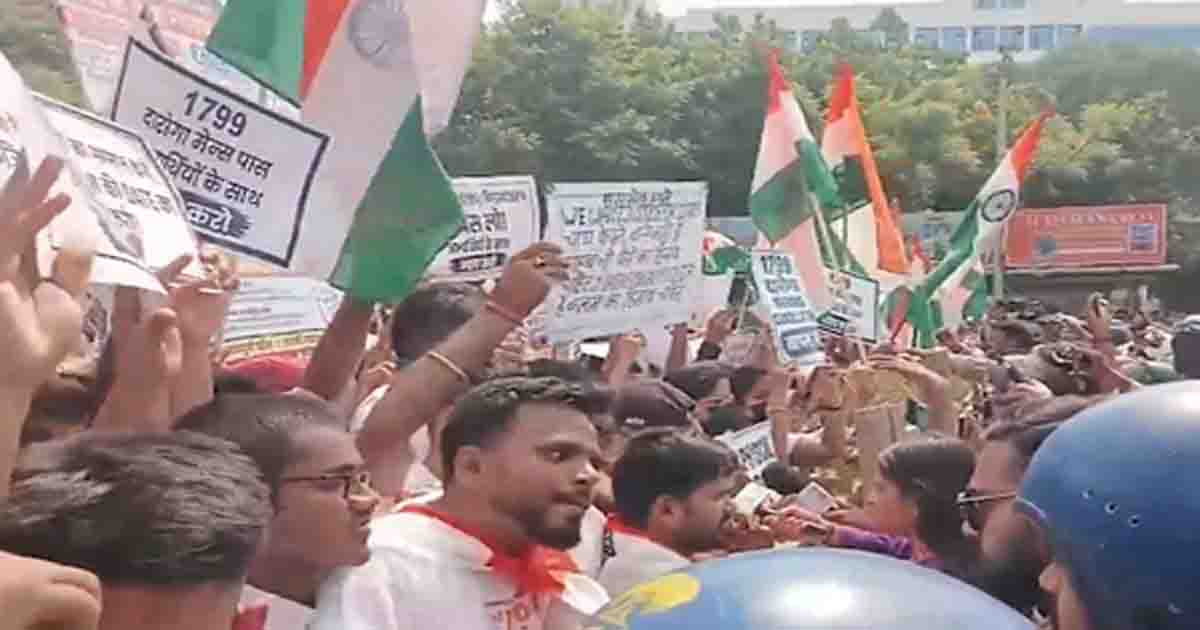
Patna, Oct 5: A protest by candidates in Patna turned tense on Monday as aspirants opposed the cancellation of the main examination for the recruitment of 1,799 Bihar Police Sub-Inspectors.
A large number of candidates marched from Gandhi Maidan towards JP Golambar, where police had erected barricades to stop them from proceeding further.
A confrontation subsequently broke out between the protesters and the police, with reports of a lathi-charge.
After being stopped near JP Golambar, the protesters sat on the road and demanded a meeting with the Chief Minister.
Police officials appealed to the candidates to maintain peace and suggested that they submit their demands through a delegation.
They asked the protesters to nominate a five-member delegation for discussions.
However, the candidates remained firm in their demand for a direct meeting with the Chief Minister.
The situation became tense as the protesters and police personnel confronted each other.
According to reports, police used batons to disperse the protesters and bring the situation under control.
Videos showing male and female candidates confronting police personnel have also surfaced.
The complete context and sequence of events in the individual videos could not be independently verified.
A separate video circulating from the protest shows Masaurhi DSP Raghav Dayal at the demonstration.
Claims have emerged that the officer was holding a baton and attempting to push protesters back during the police action.
However, the footage alone does not establish the full circumstances or sequence of events surrounding his actions.
Local reports have confirmed the presence of DSP Raghav Dayal at the protest site, where police used batons during the confrontation.
The candidates were protesting against the cancellation of the main examination for the recruitment of 1,799 Sub-Inspectors and demanding clarity on the recruitment process.
The situation remained tense as the protesters continued to press their demands and sought direct intervention from the Chief Minister.
Crime
‘Create fear among criminals’: SC tells Delhi Police in suo motu case on recent rape incidents

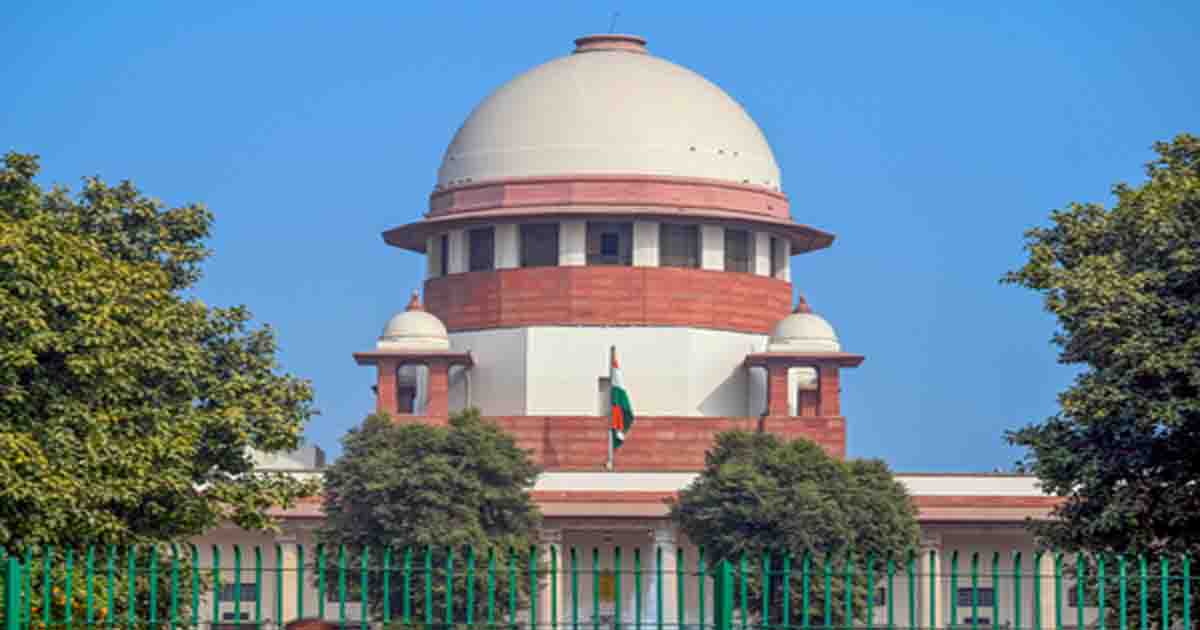
New Delhi, Oct 5: The Supreme Court on Monday directed the Delhi Police and the Union Ministry of Home Affairs (MHA) to place their responses on record within four weeks in its suo motu proceedings concerning recent rape and sexual assault incidents in Delhi-NCR, orally observing that it was important to prevent crimes rather than taking follow-up action.
A Bench of Justices J.B. Pardiwala and K. Vinod Chandran stressed the need for effective preventive measures and continuous monitoring of vulnerable public spaces to ensure the safety of women and children.
The apex court orally remarked that merely putting measures on paper would not be sufficient and said that authorities must take concrete action to prevent crimes.
“We have to work together. We must ensure that every woman in Delhi-NCR should feel safe even at 11 p.m. whether travelling on the roads or the metro,” the Justice Pardiwala-led Bench observed.
It further said that the focus should be on preventing crime rather than merely acting after an offence has taken place.
“What is important is to prevent a crime, not what you do after a crime is committed,” the top court said, stressing that the police must create fear among “goons and anti-social elements” who are prone to committing such crimes.
The Supreme Court also questioned the Delhi Police on the effectiveness of CCTV surveillance in the absence of continuous monitoring and asked whether there was a mechanism for continuous monitoring of vulnerable areas.
It also questioned the absence of a dedicated “war room” for monitoring and responding to incidents, asking how crime could be prevented without such a mechanism.
“You have to create fear in the mind of a person who is ready to commit a crime,” the bench observed, adding that the police were required to instil the fear that committing such offences would have severe consequences.
The proceedings arise from the Supreme Court’s suo motu cognisance of a series of disturbing reports of rape and sexual assault across Delhi-NCR.
In its order passed on September 28, the apex court had expressed serious concern over the safety of public spaces, including parks, roads, buses, metro stations, subways and footbridges, observing that such places could not be allowed to become high-risk zones due to inadequate lighting, poor surveillance, or lax patrolling.
The bench had also sought a comprehensive status report on the safety arrangements in public places, the use of the National Database on Sexual Offenders (NDSO), the Investigation Tracking System for Sexual Offences (ITSSO), the Mission Shakti programme, emergency response systems, women’s helplines, CCTV coverage, women help desks and One Stop Centres.
It had directed the Delhi Police to constitute dedicated teams for each police district to identify vulnerable locations and prepare district-wise vulnerability maps. It had further ordered audits of lighting and CCTV infrastructure and intensified patrolling in identified vulnerable areas.
The proceedings came against the backdrop of several reported sexual offences, including the alleged gang rape of a 17-year-old girl at Aastha Kunj Park and the alleged sexual assault of a minor inside a moving sleeper bus travelling from Greater Noida to Delhi. The apex court had observed that the latter incident raised painful parallels with the 2012 Nirbhaya case.
The matter is now tentatively listed for further hearing on November 16.
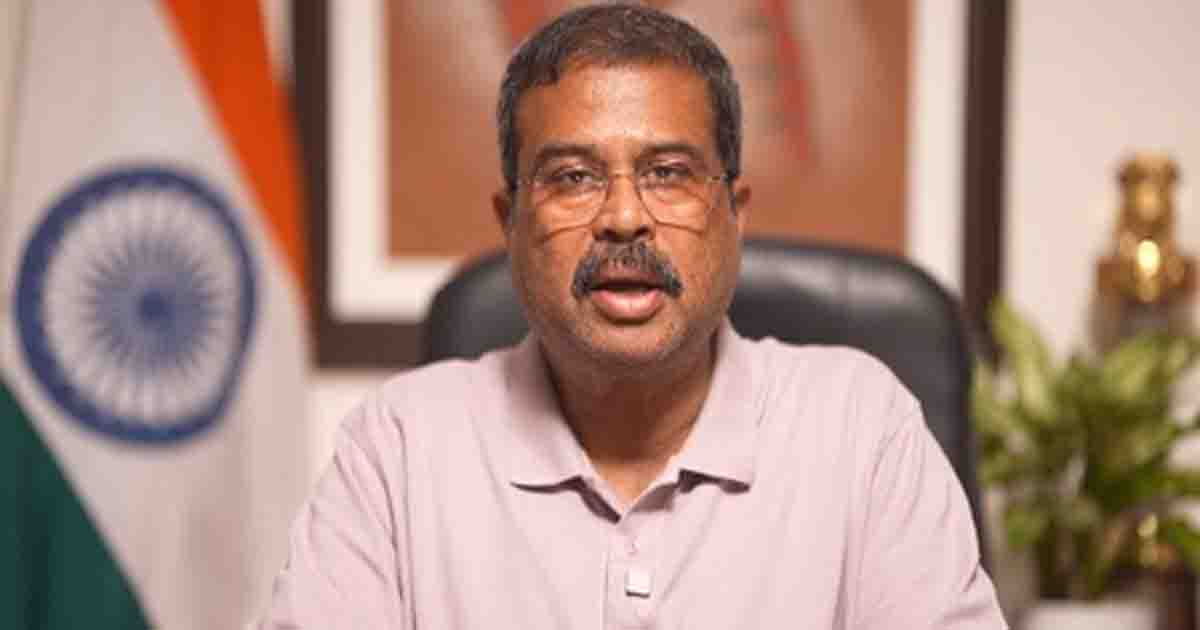
Bhubaneswar, Oct 5: Sambalpur MP and former Union Minister Dharmendra Pradhan on Monday appealed to the people from all sections of society in his constituency to participate in a massive cleanliness drive, ‘Swachhta Abhiyan’, to be organised in Sambalpur district on October 10 under the Seva Sankalp Abhiyan.
In a video message shared on his X handle, Pradhan said, “I appeal to every citizen of Sambalpur, my young friends, mothers and sisters, people’s representatives and members of various organisations to participate in this drive and contribute to cleaning their villages, hamlets, wards, localities and public places. Come, let us turn the cleanliness drive (Swachhta Abhiyan) into a mass movement and make Sambalpur a clean, beautiful and healthy district.”
Highlighting the importance attached to cleanliness and purity in Odia traditions and culture, he said, “Cleanliness is not confined merely to the four walls of our homes. Cleanliness is our way of life, our values and our character.”
The former Union minister further added that in the religious text ‘Lakshmi Purana’, it is clearly said that where there is cleanliness, Goddess Lakshmi resides there. Pradhan emphasised that no puja or religious ritual in an Odia household can be complete without cleanliness and purity.
“This is not merely an ordinary task; it is a spiritual and social value handed down to us by our ancestors,” he added.
The Sambalpur MP noted that Mahatma Gandhi regarded cleanliness not merely as a personal habit, but as the foundation of a healthy society and a better life.
Gandhiji himself participated in cleanliness drives and taught the entire nation the importance of cleanliness through his example. Pradhan also highlighted that Prime Minister Narendra Modi has repeatedly emphasised one message: “Swachhata Hi Seva” — cleanliness is service.
“When we keep our surroundings clean, we are serving society, the nation and our future generations. To carry forward this principle, this noble thought and the values of our culture, a massive cleanliness drive is being organised in Sambalpur district on the morning of October 10 under the Seva Sankalp Abhiyan,” noted Pradhan.
Referring to the great personalities from Sambalpur and the spiritual significance of the region, the former Union minister stated that Sambalpur is the heartland of Odia literature, culture, art and values.
“It is our paramount duty to keep this sacred land clean, beautiful, free from waste and healthy,” noted Pradhan.

Navi Mumbai Airport expands multimodal transport network ahead of winter flight schedule

Bihar: SI recruitment protest turns tense as candidates clash with police

Man arrested in Mumbai for defrauding senior citizens and others using fake APK files.

MPSC paper leak row: Maha CM seeks Guv’s nod for judicial probe

Mumbai: NCW chief Vijaya Rahatkar holds POSH workshop, reviews security with top cop

Gift to President Putin part of PM Modi bid to globally display India’s heritage

PM Modi’s warm camaraderie with Putin, Xi on full display at BRICS Summit

Corporators of all parties in trouble! Corporators of all major parties including Shiv Sena (UBT), BJP and Congress are facing legal challenges.

Complaint against Netflix & Mukesh Chhabra for inappropriate language on ‘India’s Got Latent 2’

Maha Congress stages agitation against Gyanesh Kumar
-

 Crime4 years ago
Class 10 student jumps to death in Jaipur
-

 Maharashtra2 years ago
Mumbai Local Train Update: Central Railway’s New Timetable Comes Into Effect; Check Full List Of Revised Timings & Stations
-

 Maharashtra2 years ago
Mumbai To Go Toll-Free Tonight! Maharashtra Govt Announces Complete Toll Waiver For Light Motor Vehicles At All 5 Entry Points Of City
-

 Maharashtra2 years ago
False photo of Imtiaz Jaleel’s rally, exposing the fooling conspiracy
-

 National News2 years ago
Ministry of Railways rolls out Special Drive 4.0 with focus on digitisation, cleanliness, inclusiveness and grievance redressal
-

 Maharashtra2 years ago
Maharashtra Elections 2024: Mumbai Metro & BEST Services Extended Till Midnight On Voting Day
-

 National News2 years ago
J&K: 4 Jawans Killed, 28 Injured After Bus Carrying BSF Personnel For Poll Duty Falls Into Gorge In Budgam; Terrifying Visuals Surface
-

 Crime2 years ago
Baba Siddique Murder: Mumbai Police Unable To Get Lawrence Bishnoi Custody Due To Home Ministry Order, Says Report