
International News
Gaza ceasefire to end if hostages not returned by Saturday: Israeli PM

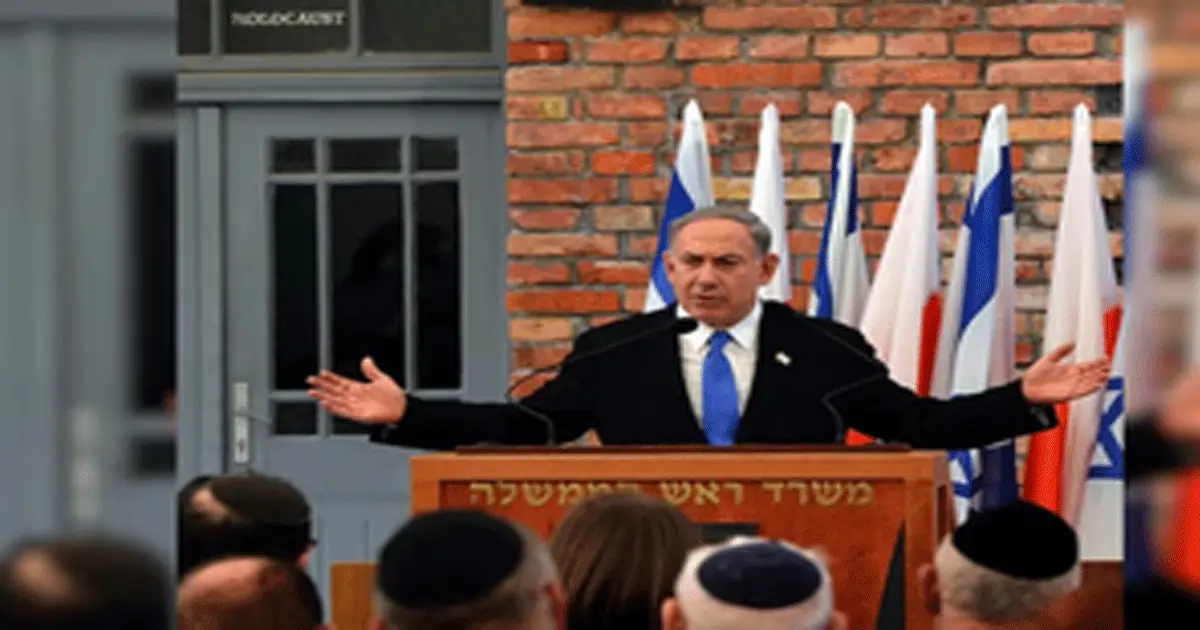
Jerusalem, Feb 12: Israeli Prime Minister Benjamin Netanyahu has said that if the Israeli hostages held in Gaza were not returned by Saturday, the ceasefire with Hamas will be cancelled, and Israel will resume “intensive fighting” in the war-torn enclave.
In a video statement, Netanyahu said on Tuesday that the move was unanimously approved by his Cabinet Ministers during a four-hour meeting held in the afternoon.
Under the decision, “if Hamas does not return our hostages by noon on Saturday, the ceasefire will end, and the IDF (Israel Defense Forces) will resume intense fighting until Hamas is decisively defeated,” he said.
All of Israel’s Cabinet Ministers welcomed US President Donald Trump’s Gaza takeover plan and his ceasefire ultimatum, the Prime Minister added.
Netanyahu’s remarks came a day after Hamas announced that the handover of hostages scheduled for Saturday would be postponed until further notice.
On Monday, Abu Obeida, spokesman for the Al-Qassam Brigades, the armed wing of Hamas, said in a statement that during the past three weeks, the resistance leadership had monitored Israel’s failures to abide by the terms of the ceasefire agreement.
Accordingly, the handover of the hostages will be postponed until further notice and until Israel ensures adherence to the deal and compensates for the past weeks retroactively, Obeida noted.
“We affirm our commitment to the terms of the agreement as long as the occupation commits to them.”
In response, Israeli Defence Minister Israel Katz said on Monday in a statement that Hamas’ announcement is “a complete violation of the Gaza ceasefire and hostage release deal”.
Katz said he had ordered the IDF to “prepare at the highest level of readiness for any possible scenario in Gaza and to defend the communities near the enclave”.
The Israeli military announced on Tuesday that it would increase its forces near the Gaza Strip and call up reservists after the Israeli Cabinet decided to cancel the ceasefire with Hamas if the Israeli hostages were not returned by Saturday.
A military spokesperson confirmed in a statement, “It was decided to reinforce the area with additional troops, including reservists.”
The spokesperson emphasised that this decision was made “in accordance with the situational assessment”.
The spokesperson further said, “The reinforcements and mobilisation of reservists are being implemented to prepare for various scenarios.”
Trump also issued an ultimatum to Hamas on Monday, saying if all Israeli hostages were not released from Gaza by noon on Saturday, he would propose cancelling the ceasefire agreement and letting “all hell break loose”.
These developments came after an Israeli delegation returned from Qatar, where indirect talks were held regarding the next phase of the ceasefire agreement between Israel and Hamas, and amid continuous regional and international outcry against Trump’s and Netanyahu’s remarks made recently concerning Gaza.
On February 4, Trump announced a controversial plan to take over the Gaza Strip and relocate Palestinians from the enclave during a joint press conference with Netanyahu in Washington.
Two days later, Netanyahu suggested during an interview with Israel’s Channel 14 that “Saudis can establish a Palestinian state in Saudi Arabia; they have plenty of land there.”
On Monday, when being asked in an interview with Fox News if the Palestinians now residing in Gaza, who under Trump’s proposal will face forced displacement to make way for the rebuilding of the enclave, would “have the right to return,” Trump said, “No, they wouldn’t.”
Reacting to Trump’s and Netanyahu’s remarks, many countries have voiced their rejection of displacing Palestinians from their homeland and their support for the two-state solution.
Under the current ceasefire, which took effect on January 19 after 15 months of war, 21 hostages — 16 Israelis and five Thais — were released from Gaza in exchange for hundreds of Palestinian detainees freed from Israeli jails. During the first phase of the agreement, which spans six weeks, 33 Israeli hostages and about 2,000 Palestinian detainees are expected to be released.


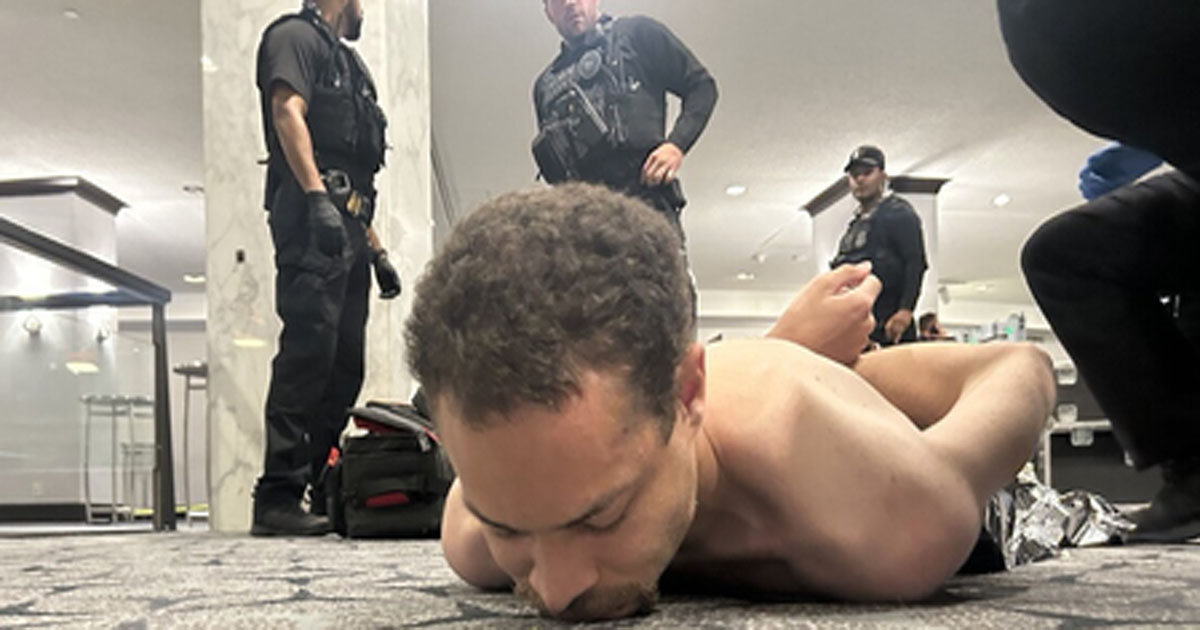
Washington, April 26: A lone gunman armed with a shotgun, handgun and multiple knives charged a Secret Service checkpoint at the Washington Hilton before being tackled by law enforcement, officials said, revealing new details about the weapons and sequence of events in the shooting near the White House Correspondents’ Association dinner.
Washington’s interim Police Chief Jeff Carroll said the suspect was heavily armed when he attempted to breach security. “He was armed with a shotgun, a handgun, and multiple knives as he ran through that checkpoint,” Carroll told reporters.
The incident occurred at about 8:36 p.m. in the hotel lobby, where multiple layers of security had been set up for the high-profile event attended by the president and senior officials.
Carroll said law enforcement personnel immediately engaged the suspect. “Members of the United States Secret Service intercepted that individual,” he said, adding that officers “exchanged gunfire with the individual.”
A Secret Service officer was struck during the exchange but survived after the bullet hit his protective vest. “He was transported to a local hospital for treatment… he seems to be in good spirits at this time,” Carroll said.
Officials said the suspect was subdued without being shot. “He was not struck by gunfire… however, he was transported to a local hospital to be evaluated,” Carroll said.
Authorities emphasised that the suspect never reached the ballroom where thousands of guests were gathered. “That checkpoint worked,” US Attorney Jeanine Pirro said, crediting the layered security system for preventing a potentially mass-casualty incident.
Pirro said the suspect’s actions indicated intent to cause significant harm. “It is clear… that this individual was intent on doing as much harm and as much damage as he could where thousands of people were situated,” she said.
She confirmed that the defendant is already facing federal charges. “The defendant is being charged with two counts… using a firearm during a crime of violence and… assault on a federal officer using a dangerous weapon,” Pirro said, adding that additional charges are expected as the investigation progresses.
Officials said the suspect was tackled and restrained by officers at the scene. “They actually… took him to the ground and handcuffed (him),” Carroll said, describing how the arrest unfolded.
Despite the scale of the incident, authorities said there is no ongoing threat to the public. “There does not appear to be any sort of danger to the public at this time,” Carroll said, noting that investigators believe the suspect acted alone.
Washington Mayor Muriel Bowser said, “We have no reason to believe at this time that anyone else was involved,” confirming early assessments that the attacker was a lone gunman.
Officials are now working to determine how the suspect gained access to the hotel with multiple weapons. Carroll said investigators are reviewing surveillance footage and conducting searches. “We’ll go through video across the hotel to figure out how the gun got in, how it got down here,” he said.
He added that authorities have secured a room at the hotel believed to be linked to the suspect. “We do believe he was a guest here at the hotel… we have secured a room here,” Carroll said.
The FBI has deployed its Joint Terrorism Task Force and evidence response teams to assist in the investigation. Assistant Director Darren Cox said agents were pursuing all leads. “There will be no stone unturned during this investigation,” he said.
Cox also praised the rapid response by law enforcement. “The American public should be proud of the quick response and heroic actions from law enforcement officers tonight,” he said.
Secret Service Director Sean Kern said the incident demonstrated the effectiveness of layered security protocols. “It shows that our multi-layered protection works,” he said, noting that agents were able to stop the suspect before he could reach protected individuals.
Officials said the investigation remains in its early stages, with agencies continuing to analyse forensic evidence, interview witnesses and examine the suspect’s background.
They have not yet determined a motive or whether the president was specifically targeted, saying those questions remain under investigation.
Authorities indicated that further charges could be filed as more information emerges, with the suspect expected to be arraigned in federal court in the coming days.
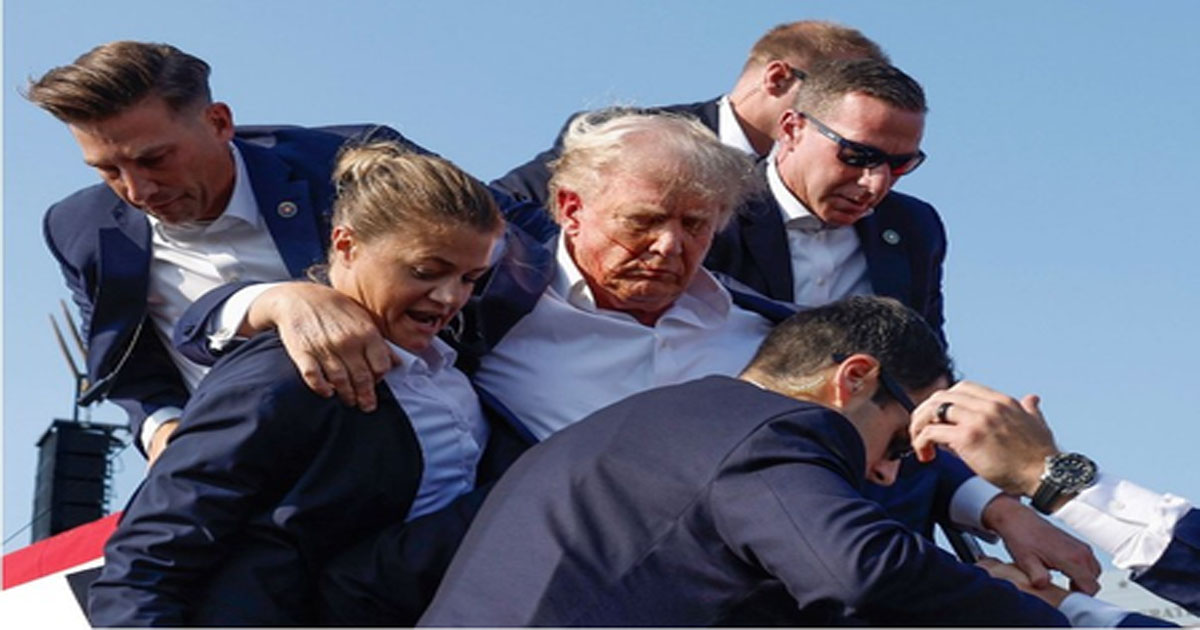
New York, April 26: “It’s a dangerous profession”, US President Donald Trump said when a reporter asked him about the latest assassination attempt against him.
It indeed is: He has faced three assassination attempts, the latest on Saturday, with one attempt during his presidential campaign injuring him.
Like him, many US presidents have come under violent attacks, and four were killed.
On July 13, 2024, when Trump was campaigning for president’s elections in Pennsylvania, he had a miraculous escape with the bullet only grazing his ear as he tilted his head to look at a chart projected on a giant screen.
It fatally struck a man on the stage behind him, and the gunman who fired at him at the open-air venue from a nearby building was killed by a Secret Service sharpshooter.
There was a furore over the security lapse, and several Secret Service personnel faced action.
Two months later, on September 15, 2024, a man was discovered hidden in the shrubbery with a rifle at the fence around Trump’s golf course in Florida.
A Secret Service agent fired at him, but he fled and was later captured, put on trial and sentenced in February to life in prison.
Like many politicians across the ideological spectrum and judges and other officials, Trump continually gets death threats in a sharply polarised nation.
The Hilton Hotel, where Saturday’s attempt against Trump took place, featured in another presidential assassination attempt: It was against Ronald Reagan, who was shot and wounded in March 1981 outside the hotel.
Reagan suffered a puncture to his lung in the attack by a man who was declared insane and escaped trial.
The man, John Hinckley, claimed he tried to kill Reagan to impress the actress, Jodie Foster, on whom he had a fixation.
John F. Kennedy was a presidential victim to die. He was killed in Dallas, Texas, on November 22, 1963, by an American who had defected to the Soviet Union and returned to the US.
That man, Lee Harvey Oswald, was, in turn, killed by Jack Ruby, who was said to be angry at him, but it gave rise to several conspiracy theories.
Oswald shot Kennedy from a building while the president was riding in an open car.
John Kennedy’s brother, Robert, was killed five years later in California while he was campaigning for the Democratic Party’s presidential nomination.
Gerald Ford came close to being killed by a member of a cult in September 1975 in California.
But the gun pointed at him from a close range failed, and the woman wielding it spent 34 years in prison for it.
An Indian origin man, Sai Varshith Kandula, who rammed a truck at a barrier to the White House in May 2023, said he planned to kill Joe Biden and take over the country.
He had a Nazi flag in his truck and expressed admiration for Adolf Hitler. He was sentenced to eight years in prison.
President Abraham Lincoln was the first president to be assassinated. He was shot dead on April 18, 1865, inside a Washington theatre.
Lincoln had led the nation in the Civil War, in which he defeated the secessionist states that opposed the abolition of slavery.
Other presidents killed are James Garfield in 1881 and William McKinley in 1901.
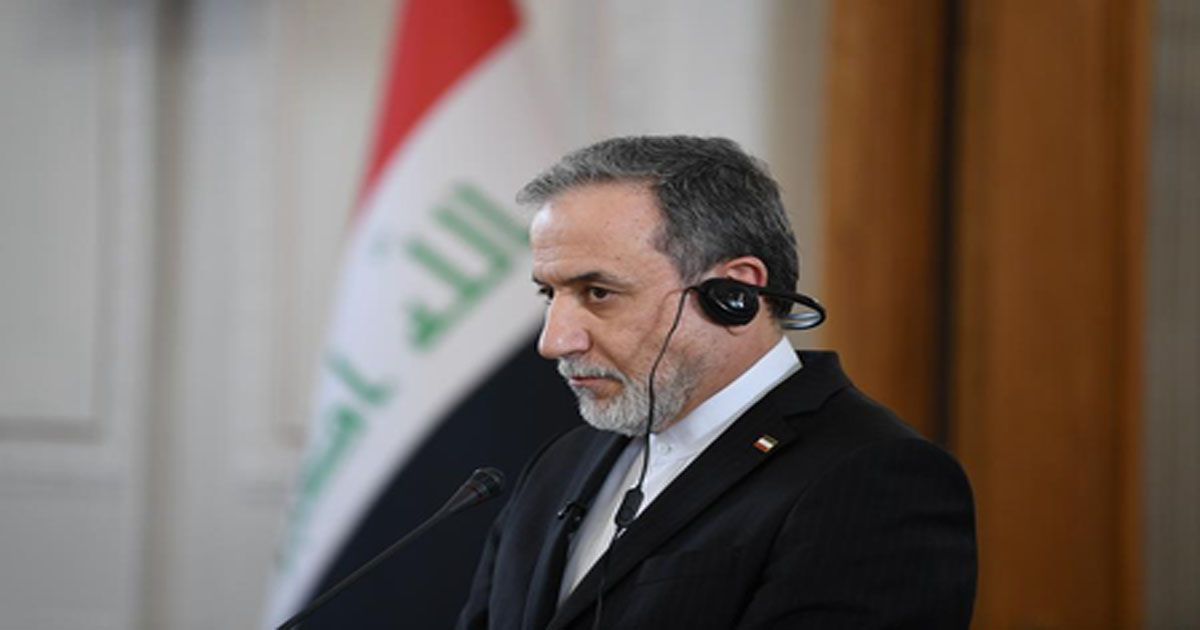
Tehran/Islamabad, April 25: Iranian Foreign Minister Seyed Abbas Araghchi will convey Iran’s considerations regarding the end of the war with the United States and Israel in his visit to Pakistan’s capital, Islamabad, the semi-official Tasnim news agency reported.
Heading a diplomatic delegation, Araghchi is scheduled to visit Pakistan, Oman and Russia, the report said, adding the visits are aimed at ensuring close coordination with Iran’s partners regarding bilateral issues, and holding consultations on the latest regional developments.
Araghchi will not hold any negotiations with US officials during his visit, reports Xinhua news agency, quoting Tasnim.
According to Tasnim, in the Omani capital Muscat, the Iranian foreign minister will discuss regional issues as well as the war, and in Russia, he will hold consultations on the latest developments pertaining to bilateral, regional and international developments.
Commenting on his tour in a post on social media platform X on Friday, Araghchi said, “Embarking on a timely tour of Islamabad, Muscat, and Moscow. The purpose of my visits is to closely coordinate with our partners on bilateral matters and consult on regional developments. Our neighbours are our priority.”
Tasnim also reported that Iran currently has no plans to negotiate with the United States, and that Araghchi’s visit to Islamabad is not for talks with the US side.
Iran’s state-run IRIB TV reported that while Araghchi does not have a plan to meet with the Americans, “Islamabad, as a bridge of communication, will ‘convey’ Iran’s considerations for ending the conflicts.”
Pakistan’s Ministry of Foreign Affairs confirmed that the Iranian delegation led by Araghchi arrived in Pakistan on Friday night.
On February 28, Israel and the United States launched joint attacks on Tehran and other Iranian cities, killing Iran’s then Supreme Leader Ali Khamenei, senior commanders, and civilians. Iran responded with waves of missile and drone strikes targeting Israel and US bases and assets in the Middle East.
A ceasefire was achieved between the warring parties on April 8, which was followed by lengthy talks between the Iranian and US delegations in Islamabad on April 11 and 12. After the peace negotiations in Islamabad collapsed, the United States imposed a blockade on the Strait of Hormuz, preventing ships travelling to and from Iranian ports from transiting the waterway.
The Iranian and US delegations were reportedly expected to hold another round of peace talks in Pakistan this week, but Iran refrained from attending, citing the US’ continued naval blockade and “excessive” demands as main reasons.

Mumbai MGL Scam: APK File Download Tricks Over 100 Users, Including Teachers, Govt Employees; ₹2.7 Crore Lost In A Month: Report

Six Police Personnel Suspended in Raigad; Action by SP Anchal Dalal Creates Stir

‘Gunman carried shotgun, knives,’ police say after shooting at White House event

‘A dangerous profession’: Many US presidents have faced assassination attempts

Kalyan Traffic Chaos Triggers Political Firestorm As Shiv Sena (UBT) Accuses Police Of Nexus With Auto Drivers

Bharti Airtel Receives ₹1,74,000 Penalty Notice From DoT For Subscriber Verification Lapses

Dhurandhar 2 Box Office Collection Day 9: Ranveer Singh Starrer Earns ₹41.55 Crore On Its Second Friday; Enters ₹700 Crore Club

PM Modi & US President Donald Trump Hold Crucial Talks As West Asia Crisis Deepens; Musk Joins Call

Mumbai Local Train Tragedy: Fatal Accident Reported At Bhayandar Station’s Platform No 1 – Disturbing Video Surfaces

Ashok Kharat Sexual Exploitation Case: 2 More Cases Filed Against Self-Styled Astrologer & Godman; Total Complaints Rise To 10 In Nashik
-

 Crime4 years ago
Class 10 student jumps to death in Jaipur
-

 Maharashtra2 years ago
Mumbai Local Train Update: Central Railway’s New Timetable Comes Into Effect; Check Full List Of Revised Timings & Stations
-

 Maharashtra2 years ago
Mumbai To Go Toll-Free Tonight! Maharashtra Govt Announces Complete Toll Waiver For Light Motor Vehicles At All 5 Entry Points Of City
-

 Maharashtra2 years ago
False photo of Imtiaz Jaleel’s rally, exposing the fooling conspiracy
-

 National News2 years ago
Ministry of Railways rolls out Special Drive 4.0 with focus on digitisation, cleanliness, inclusiveness and grievance redressal
-

 Maharashtra1 year ago
Maharashtra Elections 2024: Mumbai Metro & BEST Services Extended Till Midnight On Voting Day
-

 National News2 years ago
J&K: 4 Jawans Killed, 28 Injured After Bus Carrying BSF Personnel For Poll Duty Falls Into Gorge In Budgam; Terrifying Visuals Surface
-

 Crime2 years ago
Baba Siddique Murder: Mumbai Police Unable To Get Lawrence Bishnoi Custody Due To Home Ministry Order, Says Report