
National News
Eight year old Muslim boy slapped by classmates at teacher’s egging in Uttar Pradesh

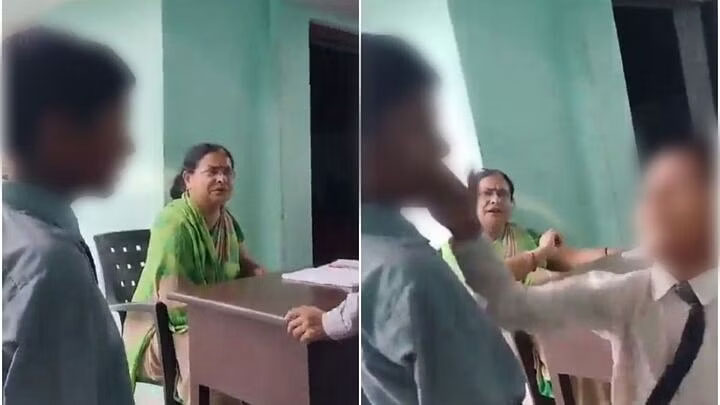
Muzaffarnagar: The teacher who is accused of asking students to hit their classmate as a punishment to the kid has today issued a clarification. The teacher who is identified as Tripta Tyagi defended her actions after the video of the incident went viral on social media. The teacher said that she was physically handicapped so she could not stand up to personally punish the kid. Hence, she asked the other students of the class to hit the kid. The incident occurred at Neha Public School in Muzaffarnagar.
Teacher Tripta Tyagi issues clarification
Tripta Tyagi in her statement claimed that the video is fake and also it has been hampered to defame her. She said “I made a mistake by getting the child beaten up by the students. I am handicapped and could not get up, so I asked the students to beat the child. The video has been tampered with.” The video of the incident is going viral on social media and the teacher is facing ire for her inhumane actions against the child. Bharatiya Janata Party (BJP) is also facing criticism after the video of the teacher has gone viral on social media.
The teacher while speaking to News Agency said that “The video that was made viral was edited and cut, I had no such intentions. In our place, Hindus and Muslims stay with unity and we have more Muslim students in our school. There was pressure from the parents of the child to be strict with him. I am handicapped I can’t get up. He was not doing homework for last 2 months. So I made 2-3 students beat him up so that he would start doing his work. What I said was ‘Muhamdan mothers must not take their kids to their uncles’ homes as the exam is approaching. But they cut this video and took the ‘Muhamdan’ word. I had no such intentions. I have made a mistake and I seek apology with folded hands.”
Father reacts, seeks justice
The father of the kid who was beaten in the school appealed that law should take its course and that juistice must prevail. He said that the video was shot by his nephew who went to the school for some work. The student’s father said that “My son is seven years old. This incident happened on 24th August. The teacher made the students beat my child again & again. My nephew made the video and had gone to school for some work. My seven-year-old child was tortured for an hour or two. He is scared. This is not a Hindu-Muslim matter. We want the law should take its own course.”
Incident that occurred in the school
The teacher can be heard in the viral video saying that the mothers of these minority students do not pay attention to the education of their kids and this hampers the studies of other students. She then ordered other students in the class to hit the kid. Other kids in the video can be seen hitting and slapping the student on his face and back. The teacher also filmed the incident on camera. Probe has been ordered in connection with the incident. The teacher also accepted in her statement that she did wrong by asking other students to beat the kid.
Opposition attacks BJP
Opposition is attacking BJP for the teacher’s action. They are blaming BJP for spreading hate against the minority community in the country. Earlier, Samajwadi Party chief Akhilesh Yadav shared the video of the Uttar Pradesh Police’s statement on social media and said that BJP is to be blamed for the teacher’s actions. He also said that the BJP must show this video in the G20 Summit and also prove to the world that their hate-spreading agenda in the country is correct.
Akhilesh Yadav slams BJP over the incident
Akhilesh Yadav said that “In a viral video from Muzaffarnagar, a teacher is seen getting a minority child thrashed by other children. In this she is guilty of double crime because she is beating and making other children violent. The BJP government should show this video in the G20 meeting to prove how its hate agenda is correct. Such a teacher is a blot on the society, teachers of the whole country should raise their voice to punish that teacher.”

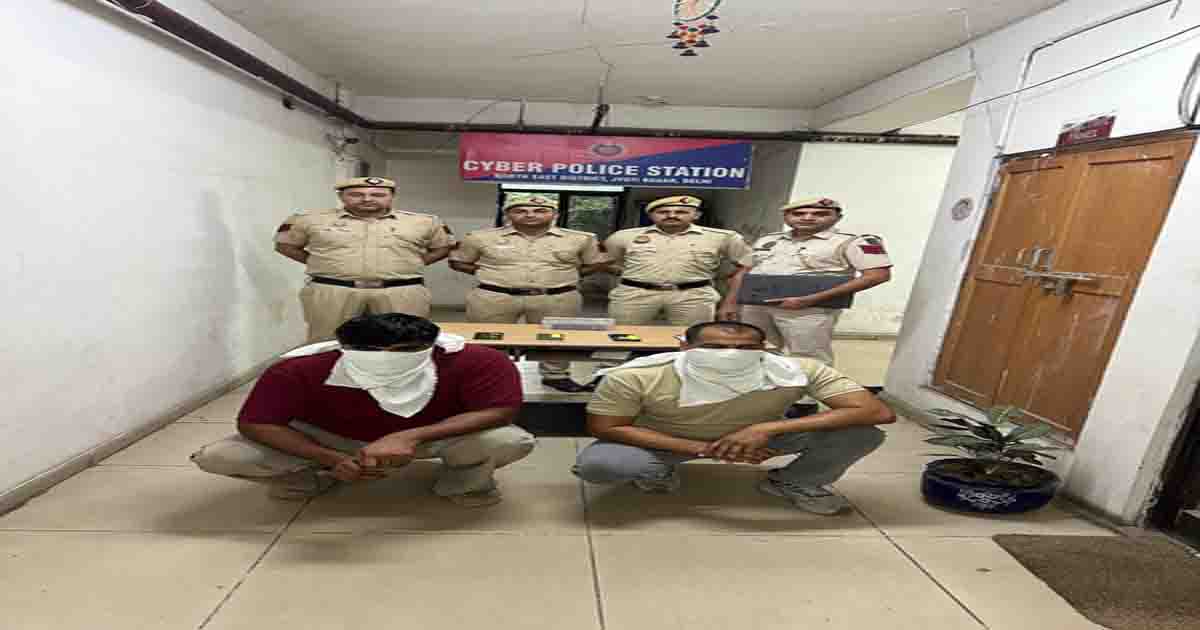
The Cyber Police Station of Delhi North-East district has arrested two men for their involvement in a cyber-fraud case involving a reported loss of Rs 22.50 lakh. Four mobile phones were seized from the accused, police said on Wednesday.
The case was registered under FIR No. 0011/2026, dated April 29, under Section 318(4) of the Bharatiya Nyaya Sanhita (BNS), at the Cyber Police Station in the North-East district, following a complaint by Amit Kumar.
According to the complaint, the victim was induced to invest money through an online platform called ‘E-Seller Store’ by individuals operating through a Facebook profile under the name ‘Naha Sharma’. On the pretext of online investments and promised financial returns, the complainant transferred money on multiple occasions, suffering a reported loss of Rs 22.50 lakh.
During the investigation, police analysed the transaction trail and found that a bank account in the name of Raj Kumar had received Rs 1 lakh of the suspected proceeds of the cyber-fraud.
Acting on technical Intelligence and investigative leads, the police traced and arrested Raj Kumar, 34, a resident of Mathura, Uttar Pradesh, on October 17. One mobile phone was seized from his possession.
During interrogation, Raj Kumar disclosed that he had opened the bank account at the request of his brother-in-law, Vipin Kumar, in exchange for Rs 15,000. He further revealed that he had handed over the ATM card, bank kit, related documents and registered mobile connection associated with the account to Vipin.
Based on the information obtained during the investigation and subsequent technical analysis, the police team traced and arrested Vipin Kumar, 29, also a resident of Mathura, from Tappal in Uttar Pradesh on October 18. Three mobile phones were recovered from his possession.
During interrogation, Vipin disclosed that he had obtained the bank account from Raj Kumar and subsequently handed over the account-related banking instruments to another person. He also admitted to procuring and supplying other bank accounts in exchange for money and commission.
Police said both accused had no previous criminal involvement on record.
A total of four mobile phones were seized during the operation. Further investigation is underway to establish the wider network involved in the alleged fraud, identify other suspects and trace the remaining proceeds of the crime.
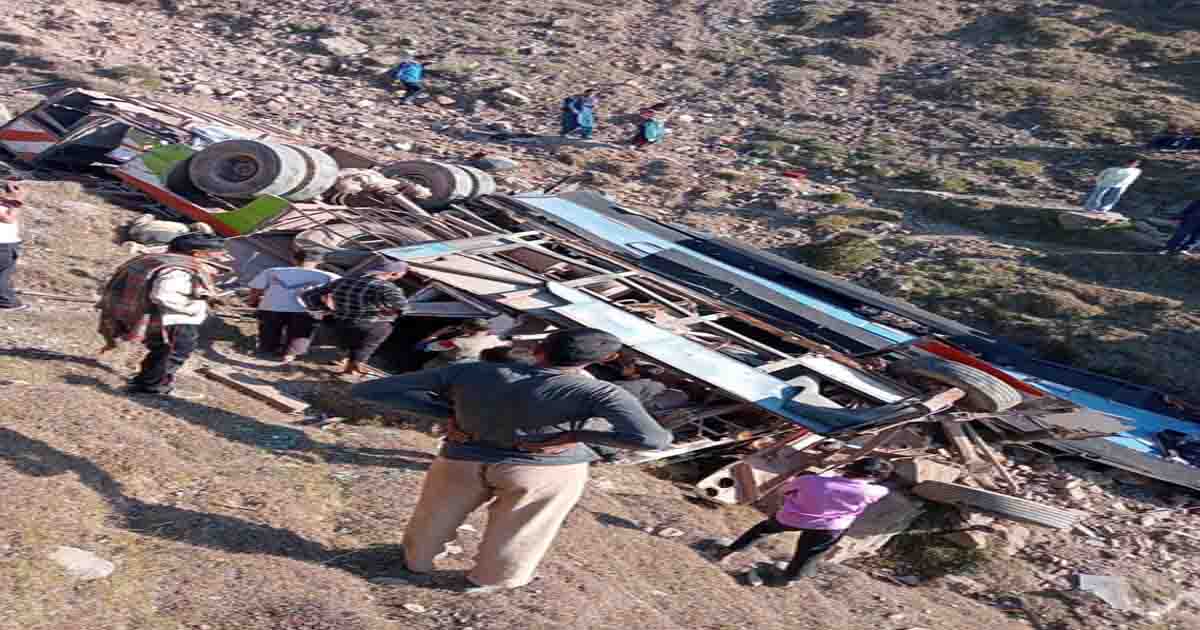
At least 10 passengers were injured when a bus veered off the road and rolled down into a gorge in Latti-Basantgarh tehsil in Jammu and Kashmir’s Udhampur district
Officials said a bus travelling from Pachiound to Ramnagar met with an accident at Gulli Gula, resulting in injuries to the passengers.
“The accident occurred when the driver lost control of the wheel, and the vehicle skidded off the road,” an official said.
“All the injured have been shifted to Ramnagar district hospital for treatment. No casualty has been reported in this accident. Police had taken cognisance of the incident,” the officials said.
Minister of State (PMO) and Lok Sabha member from Kathua-Udhampur constituency, Dr Jitendra Singh, said on X, “Just spoke to DC Udhampur Sh. Ananth Dwivedi, after receiving news of a bus accident on the Basantgarh-Ramnagar road. All passengers were promptly evacuated with the timely intervention of local residents.”
“Meanwhile, the rescue team has reached the spot, and 9-10 injured passengers are being shifted to the Sub-District Hospital, Ramnagar. No casualties have been reported so far. “All necessary assistance is being provided. My office is in constant touch with the administration,” he said.
Road accidents in the hilly areas of Jammu and Kashmir are primarily caused by a combination of treacherous mountain terrain, poor road infrastructure (such as narrow, winding curves and missing crash barriers), driver negligence (over-speeding and reckless driving), vehicle overloading, and extreme weather conditions like rain, fog, and landslides.
Narrow, single-lane or tight double-lane roads with steep gradients and sharp, blind curves, absence or damage to safety barriers, parapet walls, and guardrails along deep gorges (common in Chenab Valley districts like Ramban and Doda) can lead to accidents.
The other reasons can be — inadequate road engineering, loose earthen shoulders and unpaved or poorly maintained surfaces; over-speeding and loss of vehicle control on steep slopes or sharp turns; overloading of passenger buses, tempos, and commercial vehicles beyond permitted capacity; and inexperience with navigating high-altitude, hazardous mountain passes.
National News
Delhi HC agrees to urgent hearing on plea seeking release of CJP leaders Saurav Das, Ashutosh Ranka

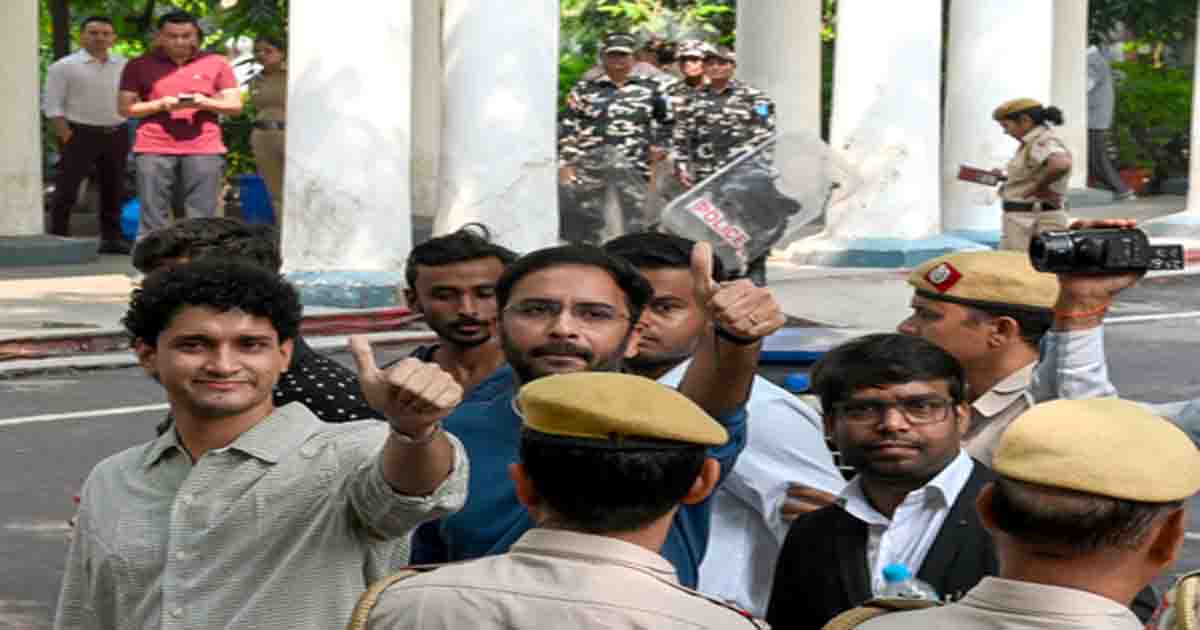
The Delhi High Court on Wednesday agreed to hear urgently a plea filed by Cockroach Janta Party (CJP) activists Saurav Das and Ashutosh Ranka seeking their release from custody in connection with the Jantar Mantar trespassing case.
The development comes on the day their judicial custody is due to end, with the two activists also scheduled to be produced before the Special Executive Magistrate (SEM) court.
CJP’s legal affairs head, Ratna Singh, said on Tuesday that the duo had moved the High Court and requested an urgent hearing at night.
“We have moved the Delhi High Court and requested an urgent night hearing. Saurav and Ashutosh should not spend a single minute behind bars. Their liberty must not be curtailed because of political games. Justice must not wait,” she said in a post on X.
On Monday, SEM Ritu Raj had extended their custody, observing that their conduct “shows no respect for law” and reflects their “habitualness in calling protest at de-notified areas”.
In its order, the SEM court said the Investigating Officer had placed substantial material on record, raising concerns over the likelihood of a breach of peace and disturbance of public tranquillity.
It also recorded that the two leaders had allegedly breached the bonds furnished by them before the SEM, South-West District, on October 11 and subsequently committed a breach of peace in the present case.
The SEM further observed that their assurance that they would not repeat the alleged offence did not inspire confidence in view of their past conduct and the material placed on record by the Investigating Officer.
Das and Ranka, along with party member Ajinkya Shinde, were among 14 people detained on October 13 after they allegedly entered Jantar Mantar through private premises and obstructed police personnel from discharging their official duties.
The CJP members were protesting against alleged irregularities in the Special Intensive Revision (SIR) of electoral rolls and had raised slogans against Chief Election Commissioner Gyanesh Kumar.
Delhi Police had justified their continued custody, citing repeated violations of law and apprehensions that their release could lead to further violations and instigation of others.
The SEM court had also found the sureties furnished on behalf of the two leaders unfit following an enquiry, citing discrepancies in identity documents and their inability to provide basic details about the persons for whom they stood surety. It had directed them to furnish fresh sureties.

Two arrested in Rs 22.50 Lakh cyber-fraud case in Delhi; four mobile phones seized

This is how Saif Ali Khan reacted after learning that you cannot earn from Instagram

Two killed in fire at scrap godown in Mumbai Andheri

Nine injured as bus rolls down into gorge in J&K’s Udhampur

Manipur burns while Delhi barricades: Shiv Sena(UBT) in ‘Samaana’

Rahul, Cong ecosystem want to force regime change: BJP after Neha Bora praises B’desh Gen-Z protest

BJP pays tribute to ex-President Abdul Kalam, recalls his enduring influence on generations of India’s youth

Attack on democratic rights: INDIA Bloc leaders on detentions of anti-ECI protestors

INDIA bloc begins protest march against ECI

Maha Congress stages agitation against Gyanesh Kumar
-

 Crime4 years ago
Class 10 student jumps to death in Jaipur
-

 Maharashtra2 years ago
Mumbai Local Train Update: Central Railway’s New Timetable Comes Into Effect; Check Full List Of Revised Timings & Stations
-

 Maharashtra2 years ago
Mumbai To Go Toll-Free Tonight! Maharashtra Govt Announces Complete Toll Waiver For Light Motor Vehicles At All 5 Entry Points Of City
-

 Maharashtra2 years ago
False photo of Imtiaz Jaleel’s rally, exposing the fooling conspiracy
-

 National News2 years ago
Ministry of Railways rolls out Special Drive 4.0 with focus on digitisation, cleanliness, inclusiveness and grievance redressal
-

 Maharashtra2 years ago
Maharashtra Elections 2024: Mumbai Metro & BEST Services Extended Till Midnight On Voting Day
-

 National News2 years ago
J&K: 4 Jawans Killed, 28 Injured After Bus Carrying BSF Personnel For Poll Duty Falls Into Gorge In Budgam; Terrifying Visuals Surface
-

 Crime2 years ago
Baba Siddique Murder: Mumbai Police Unable To Get Lawrence Bishnoi Custody Due To Home Ministry Order, Says Report