
National News
Don’t want to think about averages, strike rates: Gambhir on India’s bold approach in T20Is

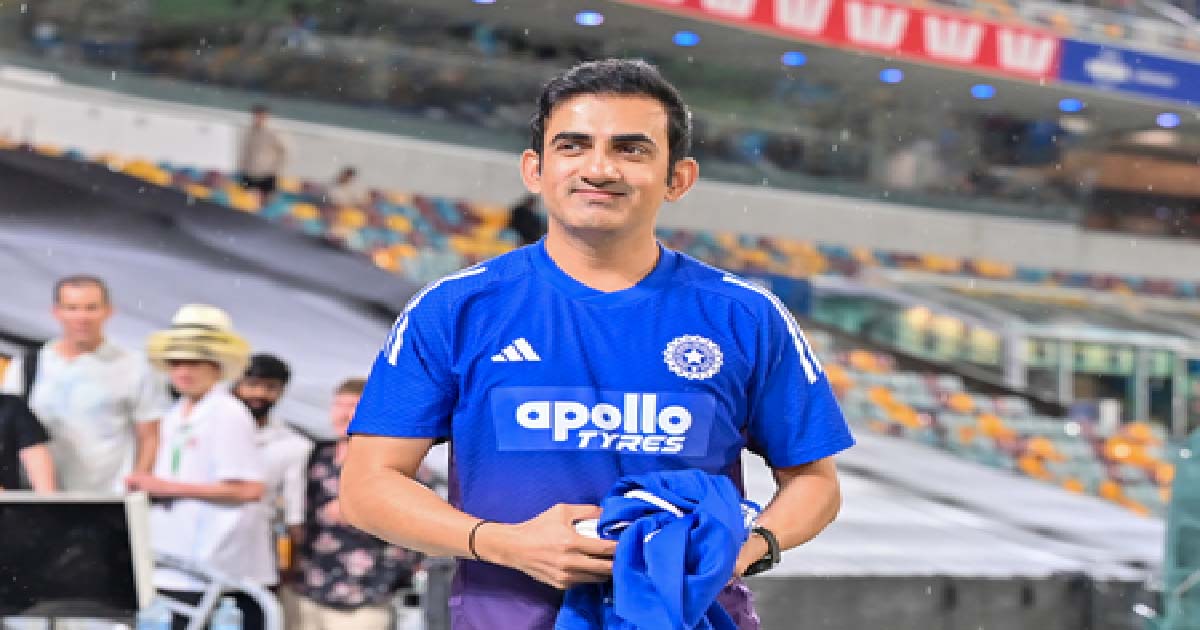
New Delhi, Nov 10: India head coach Gautam Gambhir said the team doesn’t approach a game thinking about averages and strike rates but instead focuses on the impact that a player can create in a given situation. His remarks came after India’s recent 2-1 T20I victory over Australia Down Under.
In a video interview shared by the BCCI on Monday, Gambhir spoke on Team India’s dynamic and flexible batting order in the T20Is and the bold approach adopted by the players.
“That has been the ideology from day one. When I took over as the head coach, from Sri Lanka till now, it hasn’t changed. Batting orders are very overrated, except the openers obviously, because they’re permanent. Everything shuffles because it’s not the amount of runs that matter in T20 cricket; it’s the impact that matters. People sometimes miscalculate or do not differentiate between the batting order, the runs, and the impact. Runs are different and impact is different in T20 cricket; it is all about the impact, it’s 120 balls, and every ball is an event.
“Everyone needs to have the maximum impact that we can have, and that’s the reason from day 1, has been a very fluid batting order, and that is how we want to play this game as well. We don’t want to play a game thinking about averages, strike rates and all that stuff. We are thinking about how much impact a person can create in what situation. That is going to be very important for this T20 side because, with time, T20 cricket will evolve. We as coaches don’t evolve. We want to be ahead of T20 cricket, ahead of time. The most important thing is that these guys, the young boys, have adopted, and hopefully they continue adapting and evolving in future,” Gambhir told bcci.tv.
India played Australia in three ODIs and five T20Is Down Under, with the Men in Blue losing the 50-over series 2-1 and winning the 20-over series by the same margin. Giving his honest opinion on the team’s performances, Gambhir said that while individual performances can be appreciated and celebrated, they would never celebrate a series loss.
“I have always been a believer that it’s not about the individual performances. Yes, I can be very happy with individual performances, and I will always remain happy with individual performances, but ultimately, we lost the one-day series. That’s the bottom line. And I can never celebrate a series loss as a coach. As a player, I can appreciate individuals, but as a coach, it is my moral responsibility that we as the nation and we as individuals should never, never celebrate a series loss. Ultimately, we are representing the country. Yes,the T20 series was different, and we won the series. A lot of positive, but a lot of learning as well. We are still not where we want to be in three months down the line because the bigger picture is not the series, but the World Cup as well. We are in that space where we want to be before the World Cup,” he added.


New Delhi, June 16: In a major move aimed at curbing examination-related fraud, the Central government has imposed a temporary restriction on the messaging platform Telegram across India until June 22, following recommendations from the National Testing Agency (NTA). The measure has been taken to prevent alleged paper leaks, misinformation campaigns and cheating networks ahead of the NEET (UG) 2026 re-examination scheduled for June 21.
According to an NTA statement, the Ministry of Electronics and Information Technology (MeitY) has issued a direction under Section 69A of the Information Technology Act, 2000, restricting access to Telegram in India for a limited period ending June 22. The restriction covers the examination day and its immediate aftermath.
In addition, Telegram has been directed to disable its message-editing feature in India until June 30. The NTA stated that the feature has been misused in the past to create fabricated “paper leak” evidence by editing older messages and inserting examination papers after the tests had already been conducted, while retaining the original timestamp.
The NTA said both measures were implemented in the interest of public order and to counter the organised activities of cheating syndicates that allegedly used the platform to defraud candidates appearing for the re-examination. The agency expressed gratitude to MeitY for what it described as a timely intervention aimed at ensuring a fair and secure examination process.
The agency further highlighted the role of the Indian Cyber Crime Coordination Centre (I4C), operating under the Ministry of Home Affairs, which has coordinated efforts against Telegram-based fraud and misinformation targeting NEET candidates.
The NTA has said that state police forces and its own monitoring mechanisms, I4C, reportedly facilitated the removal of numerous Telegram channels, groups and automated bots that openly advertised fraudulent examination-related services.
According to the NTA, this action was supported by MeitY and formed part of a broader inter-agency effort involving central and state authorities. The agency described the intelligence-sharing and enforcement measures undertaken by I4C and other agencies as critical in limiting the impact of examination-related fraud.
The NTA said the latest restrictions were imposed only after other measures, including channel-specific takedowns and enforcement actions, were found insufficient to address the scale of the problem. Officials described the move as a calibrated and temporary response designed to impose the minimum restrictions necessary during a sensitive examination period.
The agency alleged that several Telegram channels operating under names such as “Paper Leaked NEET”, “Re-NEET 2026”, “Private Mafia” and similar titles had been demanding payments ranging from a few thousand rupees to several lakh rupees in exchange for purported access to the examination paper. The NTA reiterated that no examination paper had been leaked and warned that any claims offering advance access to question papers were fraudulent.
The direction relating to Telegram’s message-editing feature was introduced to address concerns over the creation of manipulated digital evidence. According to the NTA, the feature allows administrators to edit previously posted messages and replace attached files while retaining the original posting time. Authorities believe this capability has been exploited to falsely suggest that examination papers were available before the test.
State law-enforcement agencies have also launched independent actions against alleged fraud networks.
The Bihar Police Economic Offences Unit recently issued a public advisory warning students against fraudulent claims of access to examination papers through social media and messaging platforms.
The Ahmedabad City Cyber Crime Branch arrested members of an inter-state cyber fraud network allegedly operating multiple Telegram channels linked to examination scams. Investigators are also pursuing related cases in several other states.
Acknowledging that Telegram is widely used for legitimate educational, professional and personal communication, the NTA expressed regret for the inconvenience caused to genuine users. However, it stressed that the temporary restriction was necessary to safeguard the integrity of one of India’s most important entrance examinations.
The agency reassured students and parents that the NEET (UG) 2026 re-examination will be conducted as scheduled on June 21 and maintained that the security of the examination process remains intact. Candidates have been advised to focus on their preparation, avoid unverified information circulating online and rely solely on official NTA channels for examination-related updates.
The NTA also urged citizens to report any fraudulent approaches or suspicious claims through the National Cyber Crime Helpline at 1930 or the National Cyber Crime Reporting Portal. It reiterated its commitment to ensuring a fair, transparent and credible examination process for all candidates.
The agency further thanked MeitY, the Ministry of Home Affairs, I4C, the Central Bureau of Investigation and police forces across multiple states for their coordinated efforts in protecting the integrity of the examination system and safeguarding the interests of students.

Jaipur, June 16: Ahead of Congress leader Rahul Gandhi’s scheduled visit to Kota on June 17 to launch a protest against a paper leak, a NEET aspirant was found dead in Rajasthan’s education hub of Sikar, highlighting the continuing mental health crisis among competitive exam candidates.
Twenty-two-year-old Umesh Mali, a NEET aspirant preparing for his third attempt at the medical entrance examination, was found hanging in his family’s flat in Sikar on Monday. Police recovered a suicide note from the scene and have launched an investigation.
The incident marks the second reported suicide involving a NEET aspirant in Sikar within the last month.
According to Udyog Nagar SHO Rajesh Kumar Budania, Umesh, a resident of Kari village in Nawalgarh, was living in a private residential complex with his mother, elder sister and younger brother while preparing for the examination. Family members discovered him after returning home in the afternoon. Following a post-mortem examination, the body was handed over to the family. Umesh’s father, Laxmanram Mali, works as a tiles contractor in Mumbai. The family owns the flat where Umesh had been staying for studies.
The NEET re-examination is scheduled for June 21, and this would have been his third attempt. Family members told police that Umesh had returned to Sikar on Monday morning after dropping his mother at their native village.
His death comes barely a month after another NEET aspirant, 23-year-old Pradeep Mahich from Jhunjhunu district, died by suicide in Sikar. Pradeep had been living in rented accommodation and preparing for NEET for the past three years. His family had said he was academically strong and expected to perform well in the examination but had been experiencing emotional distress in the days leading up to his death.
Pradeep’s death had drawn national attention after NSUI national president Vinod Jakhar facilitated a conversation between the bereaved family and Rahul Gandhi. The family later met Gandhi in New Delhi, where he expressed condolences and assured them of support. The latest tragedy comes just ahead of Gandhi’s visit to Kota on June 17.
The Congress leader is scheduled to participate in a programme focused on student suicides and the intense pressures faced by students in the country’s largest coaching hub. The Congress workers said that Rahul Gandhi will spend approximately four and a half hours, from 5:00 p.m. to 9:30 p.m., among students, engaging in direct dialogue with them. A key feature of the event is that there will be no speeches by political leaders. Rahul Gandhi will interact one-on-one with students to listen to their issues, suggestions, and experiences.
Students preparing for various competitive examinations, including NEET aspirants, have been invited to the event.
With this event, the Congress party is set to launch a nationwide student outreach campaign focusing on issues affecting young people, including alleged irregularities in competitive examinations, the NEET paper leak controversy, and broader concerns related to the education system.
Meanwhile, with another aspirant losing his life on the eve of the visit, the issue of student well-being in Rajasthan’s coaching centres has once again come into sharp focus, raising fresh questions about the effectiveness of existing support mechanisms and the need for systemic reforms, said officials.
National News
From promise to reality, 13 lakh Kerala women travel for free; private operators cry foul

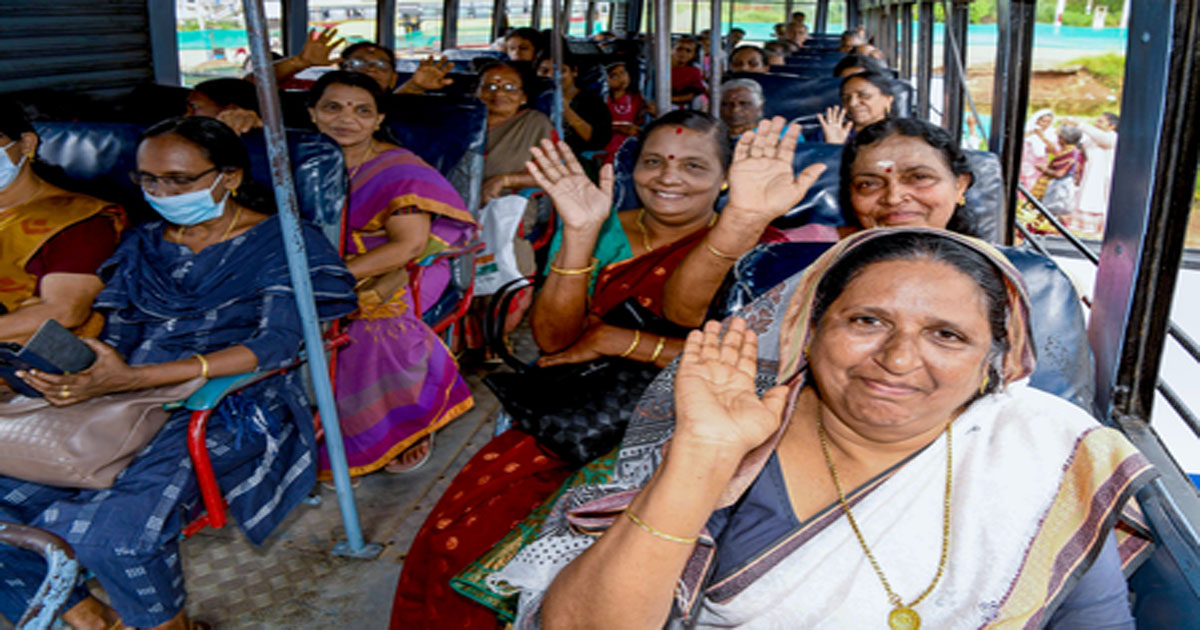
Thiruvananthapuram, June 16: Kerala’s first free travel initiative for women and transgender persons has received a massive public response, with the newly launched Priyadarshini Free Travel Scheme turning into a major success story on its very first day.
On the flip side, the private bus operators through this scheme have been rubbed the wrong way. The private operators said that, at the end of Monday night, a first assessment revealed that they failed to get even the money for diesel.
“We will assess things, and we are waiting to meet Chief Minister V.D. Satheesan to explain our side,” said an office-bearer of the operators.
The free travel scheme, launched on Monday by the Satheesan-led state government, witnessed more than 13 lakh women travelling free on KSRTC ordinary buses on the inaugural day, marking a significant moment in Kerala’s public transport sector.
The response was reflected in the sharp rise in the number of women passengers.
Compared to the previous Monday, the number of women travellers on KSRTC ordinary services nearly doubled.
While 7,34,693 women had used KSRTC ordinary buses on June 8 (Monday), the figure jumped to 13,29,938 on Monday.
The increase means that nearly six lakh additional women opted for KSRTC services after the introduction of the free travel facility.
As many as 5,95,245 more women passengers travelled on Monday than a week before, underlining the immediate impact of the initiative.
The first-day figures have also given the government a strong boost, with the estimated value of women’s tickets issued under the scheme alone reaching Rs 2.20 crore.
The overwhelming turnout has strengthened the government’s assessment that the scheme could bring more women into public transport usage in the days ahead.
The initiative was formally inaugurated at 9 a.m. on Monday at the KSRTC Complex in Thampanoor, Thiruvananthapuram. Satheesan marked the launch by ringing the traditional double bell, signalling the start of a programme described as a landmark welfare measure.
Under the scheme, women and transgender persons are provided zero-fare tickets for travel on KSRTC ordinary buses across the state.
The government has projected the move as an effort to enhance mobility, reduce travel burdens and improve access to education, employment and essential services.
With Kerala witnessing such a strong response on day one, the Priyadarshini scheme has emerged as a key achievement for the new government and a significant step towards making public transport more inclusive, but leaving the private operators in distress.

Telegram temporarily banned in India till June 22 ahead of NEET (UG) 2026 re-exam

NEET aspirant preparing for his 3rd attempt dies by suicide in Rajasthan’s Sikar

From promise to reality, 13 lakh Kerala women travel for free; private operators cry foul

Democracy in peril amid signs of authoritarian shift: Shiv Sena(UBT) in ‘Saamana’

UNGA convenes 5th interactive dialogue with candidate for next UN secretary-general

Trump, Netanyahu hold phone talks after Iranian missile fire: Israeli state media

The Municipal Corporation and the Railway Administration should work together to make Mumbai flood-free, directs Standing Committee Chairman Prabhakar Shinde

Virar Citizens Protest Demolition Drive In Arnala; Police Block Lal Bawta March, Sit-in Held On Road

Indian equity markets trade higher as Iran-Israel tensions ease

Dangerous Love Triangle In Mira-Bhayandar: Youth Kidnapped, Brutally Beaten, & Burned With Cigarettes Over Affair With Same Girl
-

 Crime4 years ago
Class 10 student jumps to death in Jaipur
-

 Maharashtra2 years ago
Mumbai Local Train Update: Central Railway’s New Timetable Comes Into Effect; Check Full List Of Revised Timings & Stations
-

 Maharashtra2 years ago
Mumbai To Go Toll-Free Tonight! Maharashtra Govt Announces Complete Toll Waiver For Light Motor Vehicles At All 5 Entry Points Of City
-

 Maharashtra2 years ago
False photo of Imtiaz Jaleel’s rally, exposing the fooling conspiracy
-

 National News2 years ago
Ministry of Railways rolls out Special Drive 4.0 with focus on digitisation, cleanliness, inclusiveness and grievance redressal
-

 Maharashtra2 years ago
Maharashtra Elections 2024: Mumbai Metro & BEST Services Extended Till Midnight On Voting Day
-

 National News2 years ago
J&K: 4 Jawans Killed, 28 Injured After Bus Carrying BSF Personnel For Poll Duty Falls Into Gorge In Budgam; Terrifying Visuals Surface
-

 Crime2 years ago
Baba Siddique Murder: Mumbai Police Unable To Get Lawrence Bishnoi Custody Due To Home Ministry Order, Says Report