
National News
Don’t fear, work for India’s progress: Mohan Bhagwat to Muslims


Wooing the minority community, Rashtriya Swayamsevak Sangh chief Mohan Bhagwat has reiterated that Muslims have nothing to fear in India, and they must work unitedly with the majority community for the common goal of the country’s progress.
Addressing an event — ‘Nation First, Nation Supreme’ — organized by the Pune-based Global Strategic Policy Foundation (GSPF), here late on Monday, the RSS Sarsanghchalak asserted that Hindus don’t harbour animosity towards anyone, and the two communities should join hands for the country’s development.
“Hindus and Muslims in India have common ancestry… It is a well-known historical fact that Islam came to India along with the invaders, and this should not be concealed,” Bhagwat urged.
He said that our beloved motherland and the rich heritage form the basis of integrity in the country, both have the same DNA and should strive together for the common good of the nation.
According to Bhagwat, Indians have always worked for the wellbeing of others, one and all, and the word ‘Hindu’ is synonymous with the country’s rich heritage, the ancestors and its varied culture, and “in this this context, every Indian is a Hindu for us”.
“In tune with our great culture, which accepts all diverse opinions, we commit that there won’t be disrespect for other aiths, but, for that we will have to ensure and think of dominance of India and not that of a particular faith as has been happening through appeasement or vote-bank politics for many years,” he said.
While the bonding and bonhomie are inevitable for the progress of the nation and the motherland, Bhagwat called upon the saner voices among the Muslims to speak out against the ‘insanity’ committed by some sections of the community, given the emerging geo-political developments in India’s neighbourhood.
“They must firmly oppose the hardliners in the community. This could be a long drawn task that will have to be done with great care and efforts. It’s like a tough, long test which we will have to pass. The quicker we begin, the lesser the damage to the society,” Bhagwat pointed out.
Other speakers at the event included Kerala Governor Arif Mohammad Khan and Vice-Chancellor of Kashmir Central University Lt. Gen. (Retd) Sayyad Ata Hussain, in the presence of GSPF President Anant Bhagwat, Secretary John Verghese and Coordinator Zafar Lari.


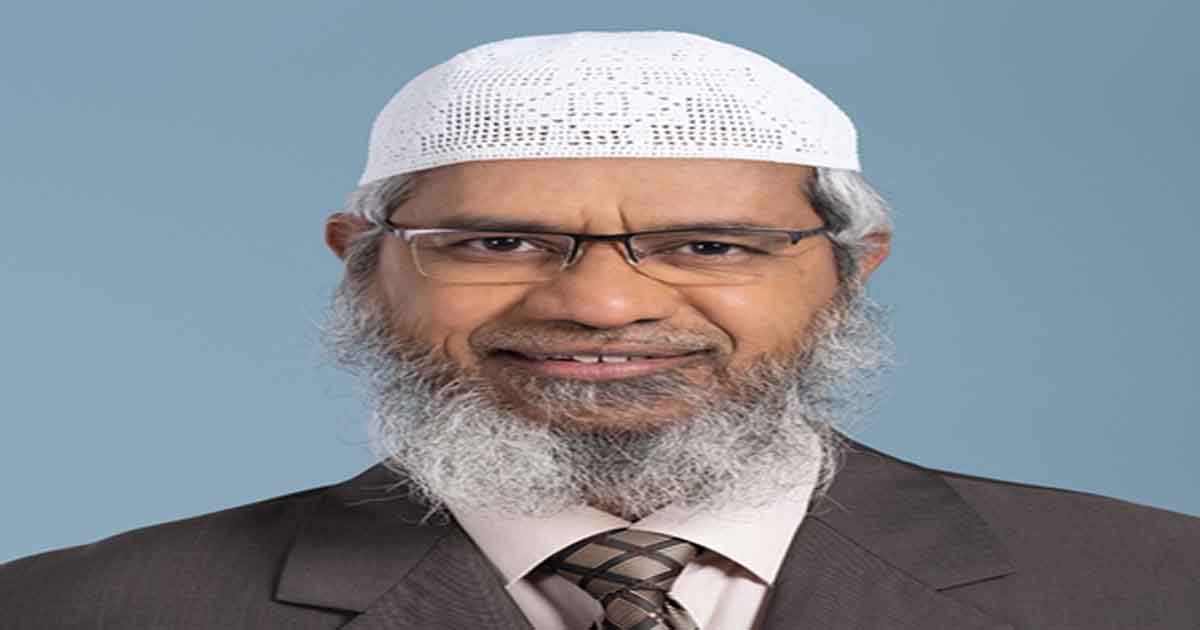
The Union Ministry of Home Affairs on Friday announced the extension of the ban on the Islamic Research Foundation (IRF), headed by Dr Zakir Naik, as an “unlawful association” for another five years.
The Central government had declared the IRF as an “unlawful association” on November 15, 2021, under Sub-section (1) of Section 3 of the Unlawful Activities (Prevention) Act, 1967 (37 of 1967).
The Home Ministry has accused the IRF of indulging in activities, “which are prejudicial to the security of the country and have the potential of disturbing peace and communal harmony and disrupting the secular fabric of the country”.
In an official statement, the MHA said that the duration of the ban under Sub-section (1) of Section 6 of the Unlawful Activities (Prevention) Act, 1967, shall cease on the 14th day of November, 2026.
It said that the Central government is of the opinion that the IRF and its members, particularly, the founder and President of the IRF, Dr Zakir Abdul Karim Naik alias Dr Zakir Naik, “has been encouraging and aiding its followers to promote or attempt to promote, on grounds of religion, disharmony or feelings of enmity, hatred or ill-will between different religious communities and groups which are prejudicial to the integrity and security of the country on the basis”.
The grounds cited by the Ministry for the extension of the ban include the “objectionable and subversive” statements and speeches made by Zakir Naik.
According to the MHA, Naik has been promoting “enmity and hatred” amongst different religious groups and inspiring youths of a particular religion in India and abroad to commit “terrorist acts” through such speeches and statements.
The Centre has further accused Zakir Naik of making “radical statements and speeches” to millions of people worldwide through international satellite TV network, internet, print and social media.
The MHA also said that if the unlawful activities of the IRF are not curbed and controlled immediately, it will take the opportunity to continue its subversive activities and re-organise its activists who are still absconding, disrupt the secular fabric of the country by polluting the minds of the people by creating communal disharmony, propagate anti-national sentiments, escalate secessionism by supporting militancy, and undertake activities which are prejudicial to the sovereignty, integrity and security of the country.
Therefore, the Central government said it was necessary to declare the IRF an unlawful association with immediate effect, the statement read.
International News
Sheikh Hasina says India-Bangladesh ties too important to be held hostage to political differences

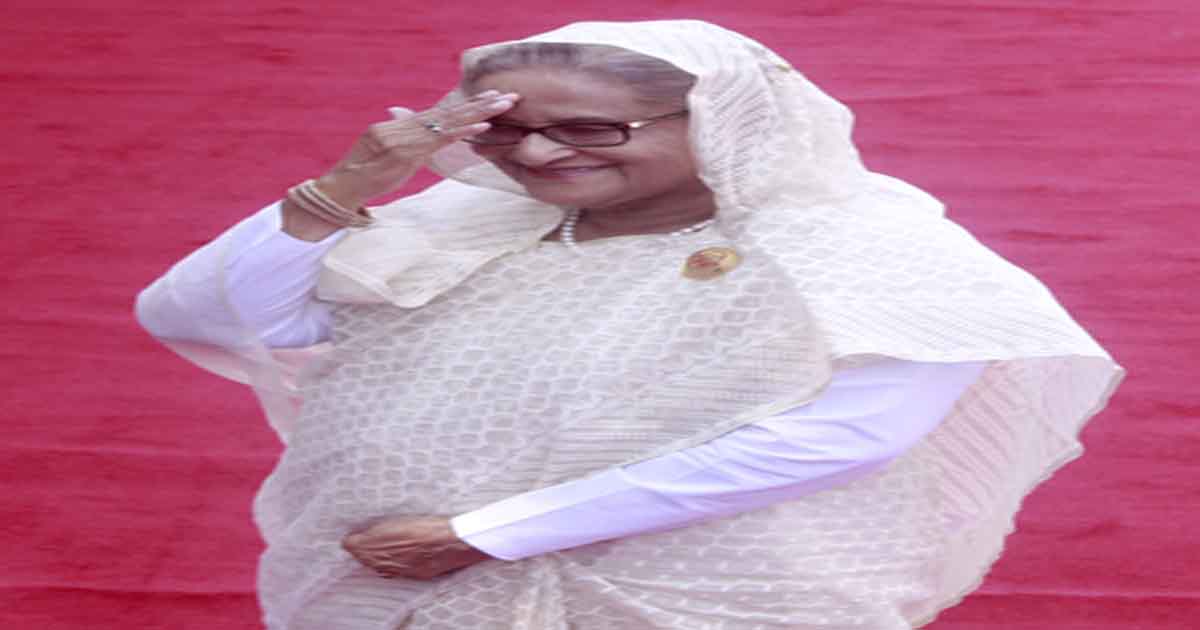
Former Bangladesh Prime Minister Sheikh Hasina expressed hope that her personal circumstances would not come in the way of bilateral relations between India and Bangladesh, highlighting the longstanding historical ties and shared strategic interests between the two countries.
Speaking exclusively to media, Hasina said that ties between the two countries should not be held hostage to political differences surrounding any individual.
“I do not think it would be appropriate for me to comment on the decisions of the Indian government. India is a sovereign country. It has its own laws and procedures, and its government will decide accordingly. But I certainly hope my personal situation will not become an obstacle to relations between Bangladesh and India. Our relations go back to the Liberation War of 1971. We share a long border, a common history, and important interests in trade, energy, connectivity and security. These relations are far too important to be held hostage to political disagreements involving any individual,” the former PM stated.
Hasina said that both the former Muhammad Yunus-led interim government and the ruling BNP administration had repeatedly called for her return to Bangladesh.
She further questioned why her decision to return voluntarily should now invite objections.
“Both the Yunus administration and the present government have repeatedly demanded my return to Bangladesh. Now, I have decided to return myself. So, why should there be any objection?” the former PM told media in a rare audio interview.
When asked about preserving India-Bangladesh ties amid Dhaka’s attempts to link bilateral relations to her extradition, Hasina said she did not think it would be appropriate for her to comment on India’s diplomatic policy or suggest what Prime Minister Narendra Modi should do.
“I do not think it would be appropriate for me to comment on India’s diplomatic policy or suggest what Prime Minister Modi should do. The Awami League has always believed in maintaining good relations with our neighbours while protecting Bangladesh’s sovereignty and national interests. During our time, we strengthened relations with India while also working closely with China, Japan, the United States and other countries,” she mentioned.
Hasina emphasised that lasting bilateral cooperation between New Delhi and Dhaka required a representative government in Bangladesh with democratic legitimacy and broad public support, rather than one that excluded significant sections of the population from the political process.
“I also believe that lasting relations between Bangladesh and India require democratic legitimacy and public confidence. A genuinely representative government provides a stronger foundation for cooperation than one that excludes a large section of its own people from political life,” she noted.
Emphasising that a peaceful, democratic and stable Bangladesh was in India’s interest, just as a friendly and cooperative India benefited Bangladesh, Hasina said that the two countries should preserve the relationship built during her tenure.
“That is the relationship we worked to build, and I believe it should be preserved. Neighbouring countries may have disagreements, and Bangladesh may have differences with India. But those differences should be resolved through dialogue and mutual respect, not through hostility for political advantage,” she told media.
Referring to issues such as the land boundary, Ganges water-sharing and maritime boundaries, Hasina said that her government had demonstrated during its tenure that differences could be resolved through dialogue.
“Our foreign policy has always been based on friendship towards all and malice towards none. This was the principle articulated by the Father of the Nation, Bangabandhu Sheikh Mujibur Rahman, and we have followed it,” the former PM stated.
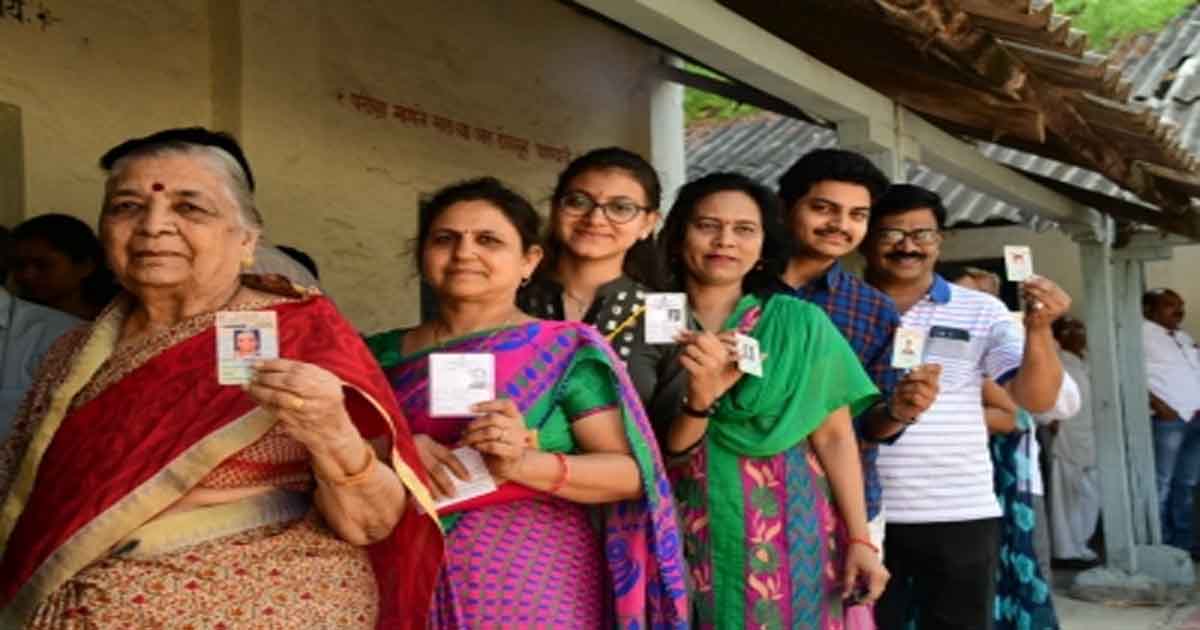
Polling for elections to 23 Urban Local Bodies (ULBs) in Andhra Pradesh will be held on November 26, the State Election Commission announced on Thursday.
The poll panel issued notification for elections to four Municipal Corporations and 19 Municipalities/Nagar Panchayats.
Elections to 100 ULBs were held on November 1 and their results have also been declared.
Elections for the remaining 23 ULBs could not be conducted due to court cases.
State Election Commissioner, Anil Chandra Punetha, said polling for the posts of Mayors and Chairpersons and Corporators and Ward Members of the ULBs will be held on November 26.
Re-polling, if any, will be conducted on November 27 while counting of votes will be taken up on November 27.
Elections will be held for the Mayors and Corporators of Srikakulam, Kakinada, Rajamahendravaram and Mangaiagiri-Tadepalli Municipal Corporations and chairpersons and ward members of 19 Municipalities/Nagar Panchayats.
The ULBs have a total of 1,009 wards including 269 in the four Municipal Corporations.
He said November 16 will be the last date of receipt of nominations while scrutiny will be taken up the next day. November 19 will be the last date for withdrawal of nominations.
These ULBs have a total of 24,98,152 voters. Polling will be conducted at a total of 2,801 polling centres.
The SEC directed District Collectors and Superintendents of Police to work in coordination to ensure that the local body elections across the state are conducted in a peaceful and transparent manner, without any untoward incidents.
He emphasised that the utmost priority must be given to maintaining law and order, ensuring robust police deployment, and implementing comprehensive security arrangements.
Speaking during a video conference, Commissioner Anil Chandra Punetha noted that in the past, violent incidents had occurred in certain sensitive districts during local body elections. He highlighted that, following interventions by the Supreme Court and the implementation of stringent security measures, there has been a significant positive shift in how these elections are conducted.
He further acknowledged that the recent MPTC and ZPTC elections, as well as the elections for Urban Local Bodies, were successfully managed through the collective efforts of the administrative and police machinery.
It was stated that the election process for the MPTC and ZPTC elections, as well as the first phase of elections for 100 ULBs, has already been completed. It was announced that the subsequent elections for MPP Presidents will be held on November 19, and for ZPP Chairpersons on November 20.
The Commissioner announced that Gram Panchayat elections in the state will be held in three phases. Notifications for the first, second, and third phases will be issued on November 13, November 16, and November 19, respectively.

Centre extends five-year ban on Zakir Naik Islamic Research Foundation

Sheikh Hasina says India-Bangladesh ties too important to be held hostage to political differences

Microsoft services, including Outlook and Teams, face outage globally including India

Sensex, Nifty trade lower in early deals amid weak global cues

Bangur Nagar: Drugs worth ₹21 crore seized, two accused arrested.

Rahul, Cong ecosystem want to force regime change: BJP after Neha Bora praises B’desh Gen-Z protest

BJP pays tribute to ex-President Abdul Kalam, recalls his enduring influence on generations of India’s youth

Attack on democratic rights: INDIA Bloc leaders on detentions of anti-ECI protestors

Congress trying to protect 3 crore Bangladeshi infiltrators in voter list: HM Shah

Online betting: ED conducts searches at 20 premises in Mumbai, Pune, Hyderabad
-

 Crime4 years ago
Class 10 student jumps to death in Jaipur
-

 Maharashtra2 years ago
Mumbai Local Train Update: Central Railway’s New Timetable Comes Into Effect; Check Full List Of Revised Timings & Stations
-

 Maharashtra2 years ago
Mumbai To Go Toll-Free Tonight! Maharashtra Govt Announces Complete Toll Waiver For Light Motor Vehicles At All 5 Entry Points Of City
-

 Maharashtra2 years ago
False photo of Imtiaz Jaleel’s rally, exposing the fooling conspiracy
-

 National News2 years ago
Ministry of Railways rolls out Special Drive 4.0 with focus on digitisation, cleanliness, inclusiveness and grievance redressal
-

 Maharashtra2 years ago
Maharashtra Elections 2024: Mumbai Metro & BEST Services Extended Till Midnight On Voting Day
-

 National News2 years ago
J&K: 4 Jawans Killed, 28 Injured After Bus Carrying BSF Personnel For Poll Duty Falls Into Gorge In Budgam; Terrifying Visuals Surface
-

 Crime2 years ago
Baba Siddique Murder: Mumbai Police Unable To Get Lawrence Bishnoi Custody Due To Home Ministry Order, Says Report