
Business
Demand for office space to rise 15-20% YoY in 2022: Colliers


Demand for office space segment is expected to rise 15-20 per cent year-on-year in 2022 as there is a great appetite in this segment, global real-estate consultancy firm Colliers said on Monday.
With more than 25 years presence, Colliers, a Nasdaq-listed company, is a professional consultancy firm which provides advice to real estate occupiers, owners and investors with operations in 67 countries.
.
“Demand continues to be led by technology companies. However, we are seeing greater appetite for office space by startups. The year 2022 will be even better, even if the concerns of Covid-19 persist,” said Ramesh Nair, CEO, India and Managing Director, Market Development, Asia, Colliers.
In 2021, total leasing of office spaces in top cities of India rose 10 per cent higher year-on-year to about 33 million sq feet, the consultancy firm said.
“Pan-India absorption during the year (2021) surpassed the annual gross absorption during 2016-2018 by 7 per cent, signalling a strong revival in occupier confidence. Occupancy levels rose in prominent office micro markets across the top three cities at the end of 2021 from Q32021, led by a gradual revival in demand and fewer occupier exits,” it said.
The year 2021 has emerged to be better than expected for the office space segment.
On a city level, all cities, except Bengaluru and Delhi-NCR have surpassed the annual average absorption of 2016-2018 in the year 2021, the global consultancy firm said.
“Hyderabad had seen strong recovery gains in 2020 and maintained its streak in 2021 as well. It was followed by Chennai and Mumbai which gained significant scale during the year. This is attributable to a strong fourth quarter, building on the momentum witnessed during the previous quarter of the year,” it added
Submarkets such as NCR’s MG Road, Mumbai’s BKC and Bengaluru’s SBD and Whitefield saw higher occupancy.


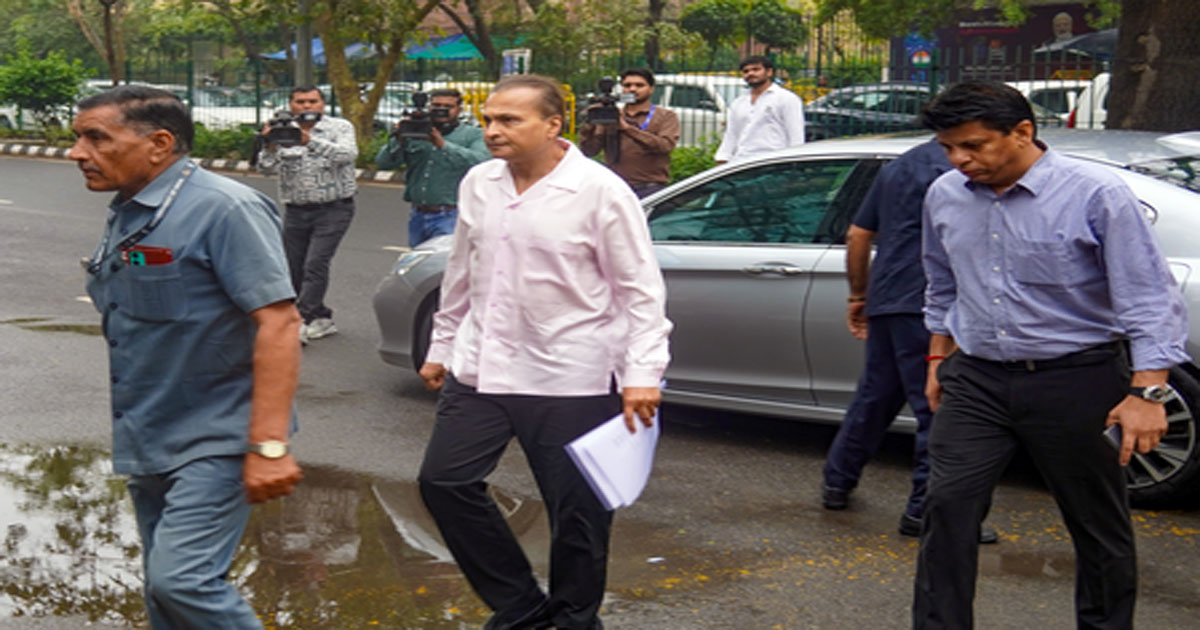
New Delhi, April 1: The Central Bureau of Investigation on Wednesday registered a case against Reliance Communications Ltd (RCom), Anil Ambani, unknown public servants, and unknown others on allegations of causing wrongful loss of Rs 3,750 crore to Life Insurance Corporation (LIC) of India.
The case has been registered on the basis of a complaint received from Life Insurance Corporation of India Ltd. for offences of conspiracy, cheating, misappropriation, and offences under the Prevention of Corruption Act, according to an official statement.
It is alleged that LIC was fraudulently induced to subscribe to Non Convertible Debentures (NCDs) worth Rs 4,500 crore on the basis of false representations made by Reliance Communications Ltd. and its management regarding the financial health of the company, and security and asset cover offered to LIC while subscribing to the NCDs.
The LIC has made this complaint on basis of a forensic audit report dated October 15, 2020 conducted by BDO India LLP, which reported that RCom and its management had resorted to misutilisation of funds raised from banks and financial institutions, routing of funds through subsidiaries, misuse of sale invoice financing, discounting of fictitious bills, systematic siphoning of funds through inter-company deposits and shell related entities, creating and write-off of fictitious debtors and receivables and gross overstatement of security. There was a mismatch between the charges and the assets.
Investigation of the case is in progress, the statement added.
The CBI had earlier registered three cases against RCom Ltd, Anil Ambani, and others on allegations of defrauding a number of banks.
Anil Ambani was also interrogated by the CBI at its head office in Delhi for two days in a row in connection with the alleged Rs 2,929.05 crore SBI fraud case.
The CBI had registered an FIR on August 21, 2025, following a complaint filed by the SBI, in which Reliance Communications Limited, Anil D. Ambani and others, including unknown public servants, are accused.
The State Bank of India (SBI) is the lead bank in the consortium of 11 banks — Bank of India, Central Bank of India, UCO Bank, Union Bank of India, e-Corporation Bank, Canara Bank, e-Syndicate Bank, Indian Overseas Bank, IDBI Bank Limited, and e-Oriental Bank of Commerce that had extended loans to the Anil Ambani group.
The complaint is based on a forensic audit report that alleges large-scale diversion and misutilisation of loan funds through interlinked and circuitous transactions among group entities during the period 2013-17, resulting in wrongful loss of Rs 2929.05 crore to the SBI out of total exposure of Rs 19, 694.33 crores involving 17 public sector banks, according to an official statement.
Subsequent to the registration of the case, separate complaints were received from the Punjab National Bank, the Bank of India, the Union Bank of India, the UCO Bank, the Central Bank of India, the IDBI Bank, and the Bank of Maharashtra. Further, another case has been registered against Reliance Communications Limited, Anil Ambani and others unknown, including unknown public servants, on February 25 on the basis of a complaint dated February 24, received from the Bank of Baroda, which includes exposure of e-Dena Bank and e-Vijaya Bank.

New Delhi, March 31: Gold loans have emerged as the leading segment in India’s retail credit market, accounting for loan volumes at 36 per cent and around 40 per cent by value, driven by rising gold prices and increasing consumer preference for secured borrowing, a report said on Tuesday.
The report by TransUnion CIBIL showed that the surge has been supported by a sharp increase in ticket sizes, with the average gold loan amount rising significantly over the past two years to around Rs 1.9 lakh in the December 2025 quarter.
The report also noted that the consumer market indicator (CMI) — a major gauge of credit market health — rose to 102 in the December 2025 quarter, up from 97 a year ago and 100 in the preceding September quarter which is the third consecutive quarter of improvement.
It further highlighted that gold prices have encouraged consumers to unlock value from their holdings, leading to a strong rise in both loan demand and disbursements.
Notably, gold loans are witnessing expansion beyond their traditional stronghold in southern India, with faster growth now seen in northern and western states such as Uttar Pradesh, Madhya Pradesh and Rajasthan.
The segment is also attracting a more diverse borrower base, with over half of the loans being availed by prime and above-category customers, indicating growing acceptance of gold loans as a mainstream credit product.
The report noted that while credit supply eased following festive demand and GST-related momentum, the moderation reflects seasonal trends rather than a structural slowdown.
Demand for credit remained strong, particularly in semi-urban and rural areas, with non-metro regions accounting for 54 per cent of the total borrower base, up three percentage points year-on-year. The share of new-to-credit consumers also increased to 15 per cent.
Meanwhile, auto loans saw stable volumes during the post-festive period, supported by demand in the affordable mid-segment category, while supply in the segment rose on a daily average basis compared to the previous year.

New Delhi, March 30: The government has approved the proposal of New Mangalore Port Authority (NMPA) for the redevelopment of Berth No. 9 for handling liquid bulk cargo on a Public-Private Partnership (PPP) basis under the DBFOT model, it was announced on Monday.
The approval for implementation was conveyed on March 25, 2026, in a major step towards augmenting India’s port infrastructure and strengthening maritime logistics, according to the Minister of Ports, Shipping and Waterways.
With an estimated project cost of Rs 438.29 crore, the redevelopment will be undertaken by a private concessionaire selected through an open competitive bidding process (single-stage, two-envelope system).
The project will have a capacity of 10.90 MTPA, and the concessionaire will commit to a Minimum Guaranteed Cargo (MGC) of 7.63 MTPA by the 5th year of operations. The construction period is 2 years, with a concession period of 30 years, inclusive of construction.
The project envisages the dismantling of legacy infrastructure and comprehensive redevelopment of Berth No. 9 to handle liquid bulk cargo such as crude oil, petroleum products (POL), and LPG.
“As part of the modernisation, the berth draft will be enhanced from the existing 10.5 metres to 14 metres, with a future-ready design provision up to 19.8 metres, enabling the port to accommodate vessels up to 2,00,000 DWT, including Very Large Gas Carriers (VLGCs),” said the ministry.
“This transformative project is a reflection of the visionary leadership of Prime Minister Narendra Modi, under whom India’s maritime infrastructure is being modernised at an unprecedented pace,” said Minister of Ports, Shipping and Waterways, Sarbananda Sonowal.
By replacing ageing facilities with world-class marine infrastructure, enhancing cargo handling capacity to 10.90 MTPA, and enabling the handling of larger vessels including VLGCs, “we are positioning our ports to meet future energy and trade demands while strengthening India’s role as a global maritime leader”, he added.
The project will replace nearly 50-year-old structures with modern marine infrastructure designed for a 50-year structural life, ensuring long-term sustainability and resilience.
The enhanced capacity will strengthen the port’s ability to meet the growing regional demand for liquid bulk cargo, particularly energy commodities.
By enabling the handling of larger vessels and VLGCs, the project will improve economies of scale, reduce logistics costs, and enhance overall port competitiveness, said the ministry.

CBI files case against Anil Ambani, RCom in Rs 3,750 crore LIC case

Mumbai: CM Devendra Fadnavis, Ritu Tawde Congratulate Ashwini Bhinde On Becoming Mumbai’s First Female Municipal Commissioner

Mumbai Municipal Corporation collects record Rs 7,610.9 crore in property tax in financial year 2025-26

Maharashtra: No need to be afraid of SIR, Abu Asim appeals to the public, SIR needs time

Trump to attend court on birthright case

Married Mumbai Woman Mocked In Andheri Society Over ‘Lift Kissing’ CCTV Video, Files Police Complaint

LPG Crisis In Maharashtra: Cyber Crime On Rise Amid Shortage, 2 Women Lose ₹4 Lakh In ‘Gas Update’ Online Scam In Kalyan-Dombivli

Mahayoti’s big gift to the people of Mumbai… Now there is no tax for houses up to 500 square feet, the Municipal Corporation has increased this limit to 700 square feet.

Rashmika Mandanna-Vijay Deverakonda Wedding: Virosh Turn Modern Day Prince & Princess For Their Dreamy Sangeet Ceremony

Dhurandhar 2 Box Office Collection Day 1: Ranveer Singh Starrer Takes An Exceptional Opening; Crosses ₹100 Crore Mark
-

 Crime4 years ago
Class 10 student jumps to death in Jaipur
-

 Maharashtra1 year ago
Mumbai Local Train Update: Central Railway’s New Timetable Comes Into Effect; Check Full List Of Revised Timings & Stations
-

 Maharashtra1 year ago
Mumbai To Go Toll-Free Tonight! Maharashtra Govt Announces Complete Toll Waiver For Light Motor Vehicles At All 5 Entry Points Of City
-

 Maharashtra2 years ago
False photo of Imtiaz Jaleel’s rally, exposing the fooling conspiracy
-

 National News1 year ago
Ministry of Railways rolls out Special Drive 4.0 with focus on digitisation, cleanliness, inclusiveness and grievance redressal
-

 Maharashtra1 year ago
Maharashtra Elections 2024: Mumbai Metro & BEST Services Extended Till Midnight On Voting Day
-

 National News2 years ago
J&K: 4 Jawans Killed, 28 Injured After Bus Carrying BSF Personnel For Poll Duty Falls Into Gorge In Budgam; Terrifying Visuals Surface
-

 Crime1 year ago
Baba Siddique Murder: Mumbai Police Unable To Get Lawrence Bishnoi Custody Due To Home Ministry Order, Says Report