
International News
Japan deploys long-range counterstrike missiles for 1st time despite opposition

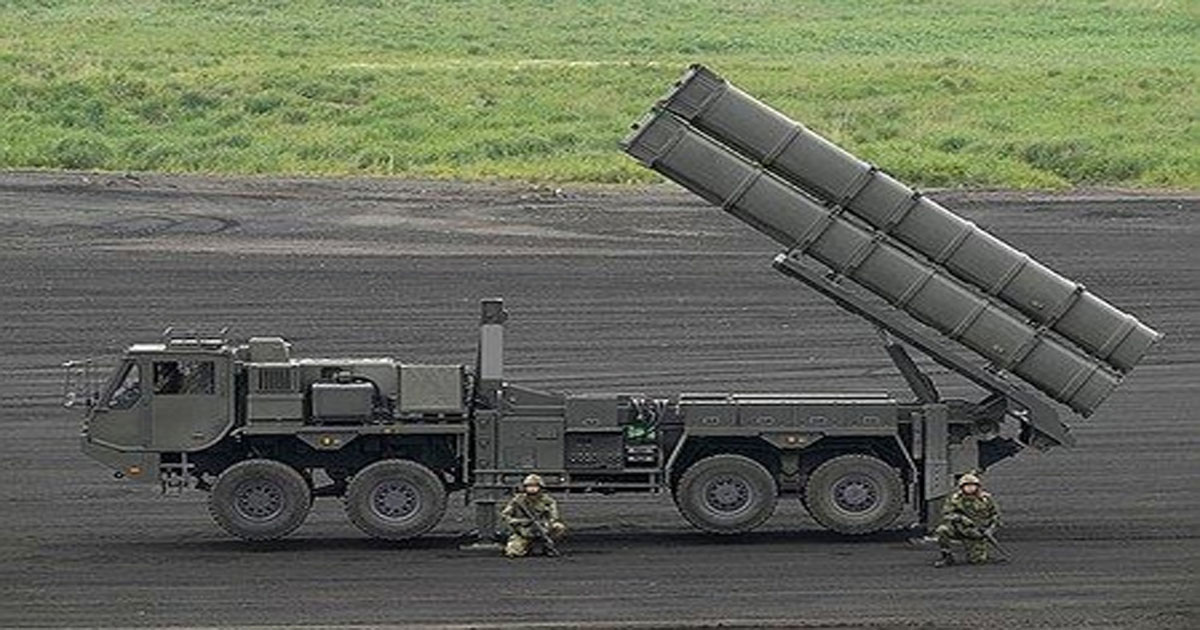
Tokyo, March 31: Japan’s Defence Ministry said on Tuesday that long-range missiles with counterstrike capabilities have been brought into service for the first time at two Ground Self-Defense Force (GSDF) bases in the country, a move that has sparked domestic opposition.
The deployment of the missiles at Camp Kengun in Kumamoto Prefecture, southwestern Japan, and Camp Fuji in Shizuoka Prefecture, central Japan, marks a significant shift from the country’s long-standing exclusively defence-oriented policy under its war-renouncing Constitution, reports Xinhua, quoting Kyodo News.
Camp Kengun has been equipped with a ground-launched version of the upgraded Type 12 land-to-ship guided missile that can fly about 1,000 kilometres, far exceeding Japan’s territorial boundaries and widely seen as having clear offensive capabilities.
Meanwhile, hyper velocity gliding projectiles have been equipped at a training unit at Camp Fuji. Designed for island defence, the deployed model has a range of several hundred kilometres, with the ministry working to upgrade it to around 2,000 kilometres.
Kyodo News noted that “enemy base strike capability” refers to Japan’s ability to launch counterstrikes against adversary bases before actual damage occurs, if it determines that an attack is imminent. However, analysts warn that misjudgments could risk violating international law by constituting a preemptive strike.
Atsushi Koketsu, emeritus professor at Yamaguchi University in Japan, told Xinhua that while the government frames the capability as a means of strengthening deterrence, it “clearly goes beyond the scope of self-defence.”
On Tuesday, local residents in Kumamoto staged protests near Camp Kengun, holding placards reading “Oppose deployment” and “No missiles needed,” Kyodo News reported.
Protesters expressed concern that the deployment could turn the area into a potential military target, and have repeatedly called on the defence ministry to hold public briefings, which have yet to take place, the report said.
Separately, more than a dozen citizen representatives met with defence ministry officials in Tokyo on Monday, urging the government to halt its military expansion measures, including the missile deployment in Kumamoto. Participants criticised officials for providing vague responses and frequently avoiding transparency.
Citizen representative Kujirai said after the meeting that the government’s replies followed a “routine pattern,” increasingly citing “confidentiality” as a pretext when declining to answer specific questions. He also criticised Prime Minister Sanae Takaichi’s push to “make Japan strong and wealthy,” arguing it amounts to large-scale military expansion without adequate public accountability. “This is a misinterpretation of the citizens’ demands and a very dangerous stance,” he said.
Another representative, Akira Saito, told Xinhua that the government officials’ response remained very limited. Going forward, in addition to directly questioning Takaichi at the parliamentary level, “it is crucial to continuously expand and amplify our voices through civic movements,” he said.


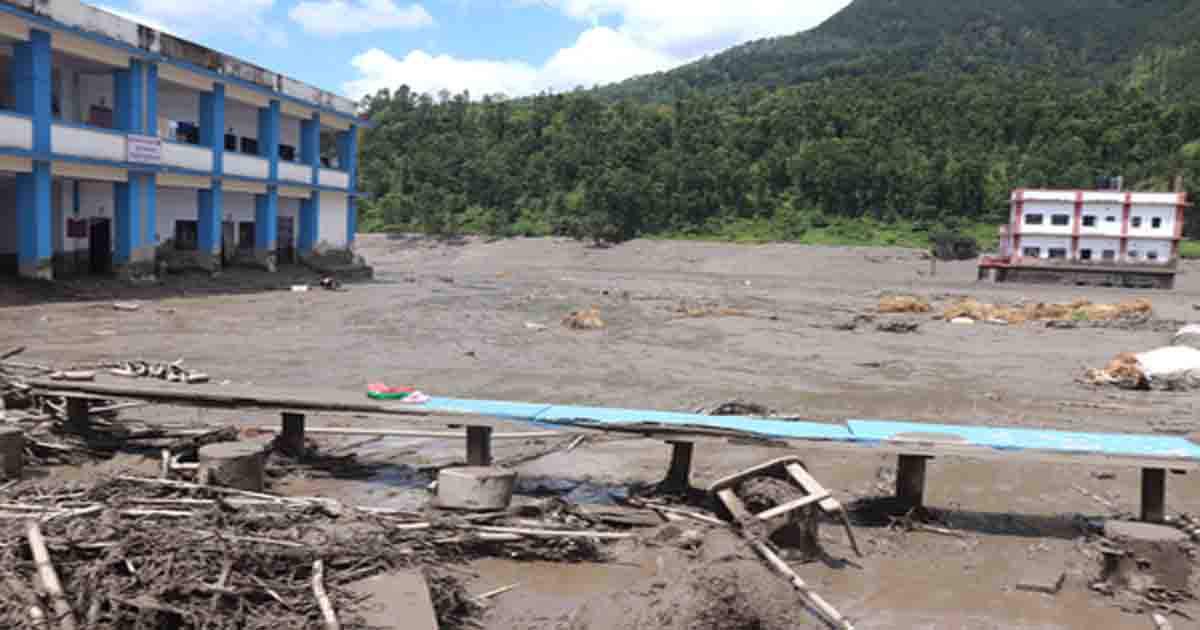
Kathmandu, Oct 6: The devastating August floods in Nepal are expected to have a material negative impact on the country’s economic prospects in the short term, the World Bank said on Tuesday as it lowered its economic growth projection for the Himalayan nation.
The global development lender said Nepal’s economic growth is projected to slow to 3.7 per cent in the current fiscal year 2026-27, which began in mid-July, from the 4.2 per cent projected in April, reflecting disruptions to industry and services.
In its report titled Nepal Development Update: Building Back Differently for the Future, released on Tuesday, the World Bank said the August 2026 floods are expected to affect Nepal’s economy through four primary transmission channels: energy, transportation, trade and tourism.
“Agriculture and banking and insurance are also channels through which the economy would be affected, but with relatively lower potential impact,” it said.
According to the bank’s report, energy, particularly hydropower, is the most critical transmission channel. The floods affected 12 hydropower projects, including seven operational projects with a combined capacity of 256.1 MW and five projects under construction with a combined capacity of 395.02 MW, as well as a 25 MW solar facility.
“Damage to transmission infrastructure disrupted an additional 149.6 MW, bringing total affected generation and transmission capacity to approximately 430.7 MW, equivalent to 10.6 per cent of Nepal’s FY26 installed hydropower and solar capacity,” the bank said.
Transportation and trade are other key transmission channels, given the concentration of Nepal’s international and domestic trade along a limited number of corridors, according to the World Bank.
As many as 1,455 people have been confirmed dead and 5,285 remain missing to date following the disaster, which destroyed communities and infrastructure along the Bhotekoshi and Trishuli river corridors, according to the National Disaster Risk Reduction and Management Authority.
According to the Rapid Disaster Needs Assessment (RDNA) report prepared by a joint technical team of the National Planning Commission and the National Disaster Risk Reduction and Management Authority, the recent floods are estimated to have caused physical damage worth 274.48 billion Nepali rupees (about 1.93 billion US dollars), while overall losses and damages have reached 408.28 billion rupees (about 2.87 billion US dollars).
The preliminary assessment suggests that more than 723 billion rupees will be required for the reconstruction and recovery of affected infrastructure and assets. The Nepali government is now working on a Post-Disaster Needs Assessment involving a more extensive assessment of the damage.
The World Bank said industry is expected to be the main drag on growth, reflecting extensive damage to hydropower, solar energy, electricity transmission and transport infrastructure, which will constrain electricity generation and production and disrupt the movement of goods.
“For instance, it took nearly a year to fully restore generation at the 111 MW Rasuwagadhi Hydropower Project, which was severely damaged by the July 8, 2025, Bhotekoshi (Lhende River) flood,” it said.
The same project has once again been badly affected by the August floods.
“This illustrates the potential for flood-related damage to disrupt electricity supply and impose substantial reconstruction costs,” the global development lender said.
“Hydropower construction in areas not directly affected by the flood is expected to continue, although projects could face higher insurance premiums, financing reassessments, and cost overruns,” it added.
“Services are expected to be affected through disruptions to trade, transport, tourism, and financial activity, while agricultural losses are expected to have limited effects on aggregate output but significant impacts on livelihoods in affected areas,” the bank said in the report.
Tourism is expected to face a potentially prolonged impact, reflecting both physical disruptions and heightened perceptions of travel risks, according to the report.
It said more than 200 hotels and restaurants were damaged across the affected districts, while access to major trekking and pilgrimage destinations—including Langtang, Gosaikunda and the Kailash Mansarovar corridor—has been disrupted.
However, economic activity is expected to gradually recover in fiscal year 2027-28 as reconstruction activity begins to gain momentum and damaged infrastructure and productive capacity are progressively restored, the bank said.
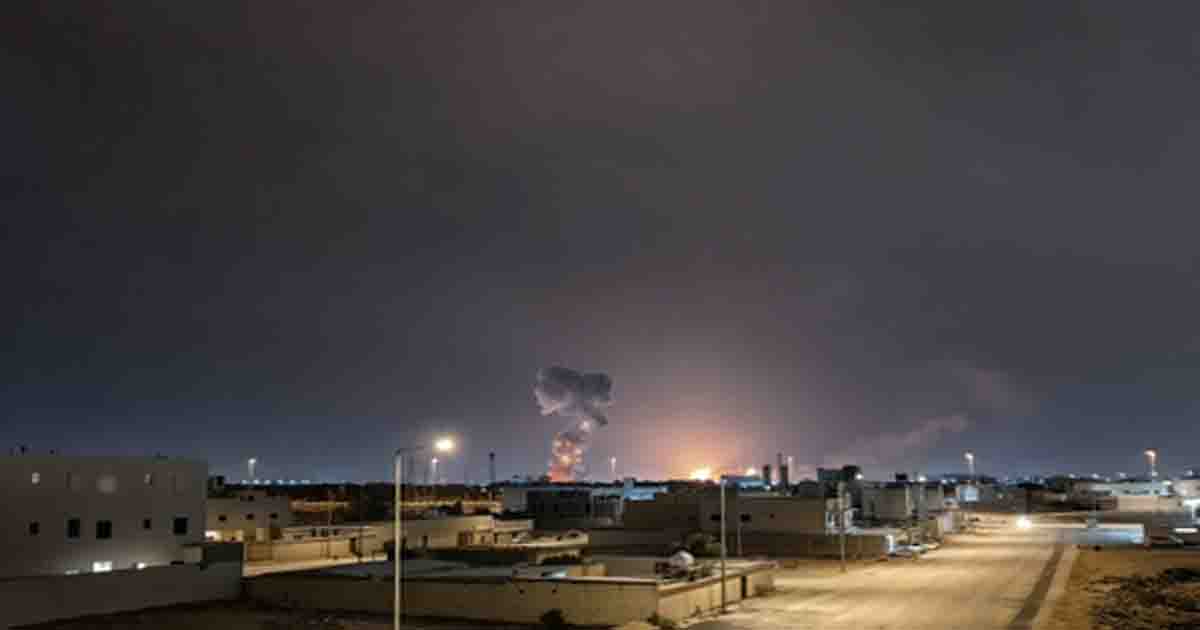
Riyadh, Oct 6: As many as three people were injured, and property was damaged after attacks targeted two airports in Saudi Arabia on Monday evening, according to the country’s civil aviation authority.
In a statement shared on X, Saudi Arabia’s General Authority of Civil Aviation (GACA) said King Abdullah bin Abdulaziz International Airport in Jazan and Najran International Airport were targeted on Monday evening. It said that emergency response teams and relevant authorities responded immediately under established emergency plans.
The three injured people were taken to hospital for medical treatment. GACA said it was working with the relevant authorities to assess the damage, verify the safety of the airport facilities and take measures to ensure the safety of passengers and maintain the safety and security of Saudi Arabia’s civil aviation system.
On Monday, the Houthis claimed responsibility for the attacks targeting sites in southern Saudi Arabia, including military facilities and airports, Gulf News reported.
Meanwhile, Saudi Arabia’s Ministry of Foreign Affairs condemned the Houthis ‘ targeting of civilians and civilian and economic facilities in the country and Saudi vessels in the southern Red Sea and the Bab al-Mandab Strait.
“The Ministry of Foreign Affairs expresses the Kingdom of Saudi Arabia’s strongest condemnation and denunciation of the terrorist Houthi militia’s continued targeting of civilians and civilian and economic facilities in the Kingdom; its blatant and repeated attacks against the holiest sites on earth-Makkah and Madinah— the capital Riyadh, and the cities of Abha, Khamis Mushait, Jazan, Najran, Taif, and Yanbu; and its targeting of Saudi vessels in the southern Red Sea and the Bab al-Mandab Strait,” the ministry posted on X.
“The Kingdom affirms that, since the terrorist Houthi militia’s coup against Yemen’s legitimate government in 2014, the Kingdom has made sustained and tireless efforts to support a comprehensive and lasting political solution in Yemen. However, consistent with its rejection of peace, the terrorist Houthi militia has instead chosen continued military escalation, dragging Yemen and the brotherly Yemeni people into further humanitarian and economic suffering to serve and advance external agendas,” it added.
Saudi Arabia reaffirmed its right to defend its territory, resources, sovereignty, and the safety of its citizens and residents, and to take all necessary measures to protect its security in accordance with international law. It also renewed its political and military support for the Presidential Leadership Council, the Yemeni government, and the brotherly Yemeni people to end the coup and restore the state and its institutions from the control of the Houthi militia.
Saudi Arabia’s Ministry of Foreign Affairs reiterated its call on the international community, particularly the permanent members of the Security Council, to fulfil its responsibilities, implement the relevant Security Council resolutions, and provide full support to Yemen’s legitimate government in confronting the Houthi militia and ending the threat it poses to Yemen, the region, and the world.
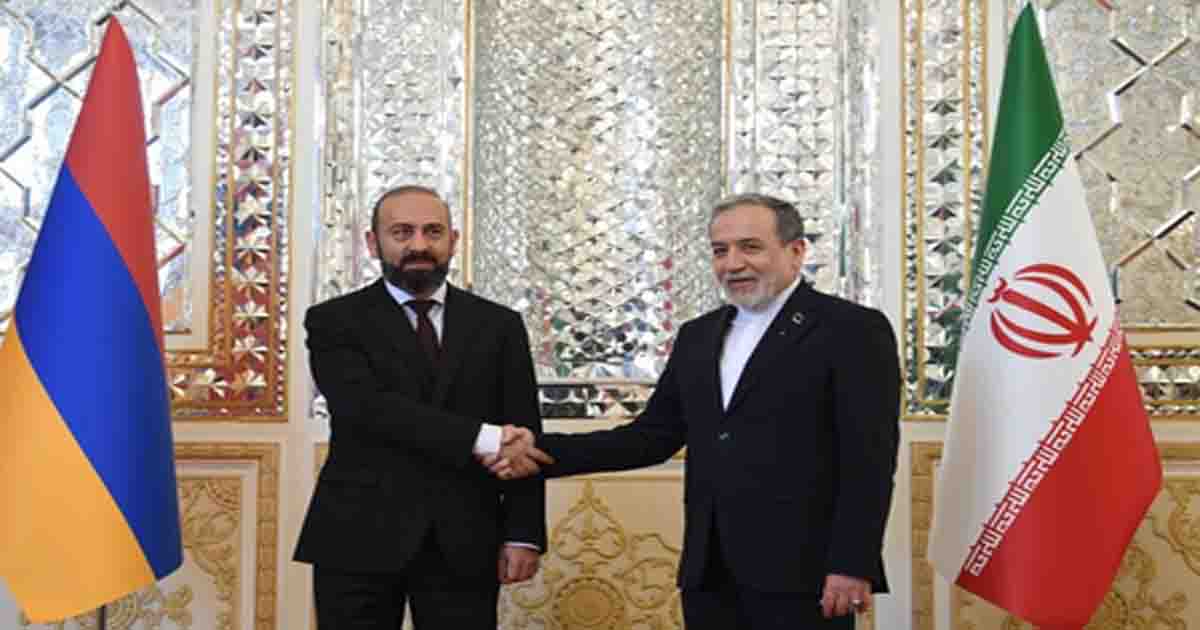
Tehran, Oct 6: Iran President Masoud Pezeshkian and Foreign Minister Seyed Abbas Araghchi met with visiting Armenian Foreign Minister Ararat Mirzoyan in Tehran seperately, each stressing Iran’s resolve to defend its national interests and security.
“Negotiation is meaningless with an enemy that resorts to acts of assassination, sanctions, pressure, and threats on a daily basis, and breaks its promises,” Pezeshkian said in his meeting with Mirzoyan on Monday, according to a statement published on the website of his office.
“So far, they (the United States) have attacked us three times following talks, which demonstrates that they are not seeking dialogue, but rather aiming to overthrow the Islamic Republic of Iran’s establishment,” Pezeshkian said.
Pezeshkian noted that Washington offers no answer to the killing of 168 innocent children at a school in Iran’s southern city of Minab on February 28, Xinhua news agency reported.
“None of their actions and behaviors towards Iran complies with international law,” he added.
Araghchi said Iran will “decisively” defend its national interests and security, but has never hesitated to use diplomacy to prevent escalation of tensions, according to a statement released by the Iranian Foreign Ministry.
He said the “precarious” consequences of the US-Israeli military “aggression” against Iran are the main cause of the insecurity imposed on commercial shipping in the Strait of Hormuz.
Mirzoyan, for his part, emphasised the “strategic nature” of relations between Armenia and Iran, and Yerevan’s continued commitment to expanding cooperation with Tehran, the statement said.
In his meeting with Iranian Parliament Speaker Mohammad Baqer Qalibaf, Mirzoyan stressed that his country will not allow its territory to be used for any action against Iran, according to Iran’s official news agency IRNA.
On February 28, Israel and the United States launched joint attacks on Tehran and other Iranian cities. Iran responded with waves of missile and drone attacks targeting Israel and US bases and assets in the region, and tightened its grip on the Strait of Hormuz.

AAP students’ wing to join protests against CEC on Oct 10

Drug-free Maharashtra: CM Devendra Fadnavis, NCB D-G Anurag Garg discuss strategy

CM Yadav promises more job opportunities for youth, announces twice-yearly PSC exams

Maha CM launches ‘Participate Mumbai’ platform to boost CSR-led development partnerships

Navi Mumbai International Airport steps up mobility, hospitality and airline support

Gift to President Putin part of PM Modi bid to globally display India’s heritage

PM Modi’s warm camaraderie with Putin, Xi on full display at BRICS Summit

Corporators of all parties in trouble! Corporators of all major parties including Shiv Sena (UBT), BJP and Congress are facing legal challenges.

Complaint against Netflix & Mukesh Chhabra for inappropriate language on ‘India’s Got Latent 2’

Maha Congress stages agitation against Gyanesh Kumar
-

 Crime4 years ago
Class 10 student jumps to death in Jaipur
-

 Maharashtra2 years ago
Mumbai Local Train Update: Central Railway’s New Timetable Comes Into Effect; Check Full List Of Revised Timings & Stations
-

 Maharashtra2 years ago
Mumbai To Go Toll-Free Tonight! Maharashtra Govt Announces Complete Toll Waiver For Light Motor Vehicles At All 5 Entry Points Of City
-

 Maharashtra2 years ago
False photo of Imtiaz Jaleel’s rally, exposing the fooling conspiracy
-

 National News2 years ago
Ministry of Railways rolls out Special Drive 4.0 with focus on digitisation, cleanliness, inclusiveness and grievance redressal
-

 Maharashtra2 years ago
Maharashtra Elections 2024: Mumbai Metro & BEST Services Extended Till Midnight On Voting Day
-

 National News2 years ago
J&K: 4 Jawans Killed, 28 Injured After Bus Carrying BSF Personnel For Poll Duty Falls Into Gorge In Budgam; Terrifying Visuals Surface
-

 Crime2 years ago
Baba Siddique Murder: Mumbai Police Unable To Get Lawrence Bishnoi Custody Due To Home Ministry Order, Says Report