
Crime
Cruiser drugs case: NCB drops charges against 6, including Aryan Khan

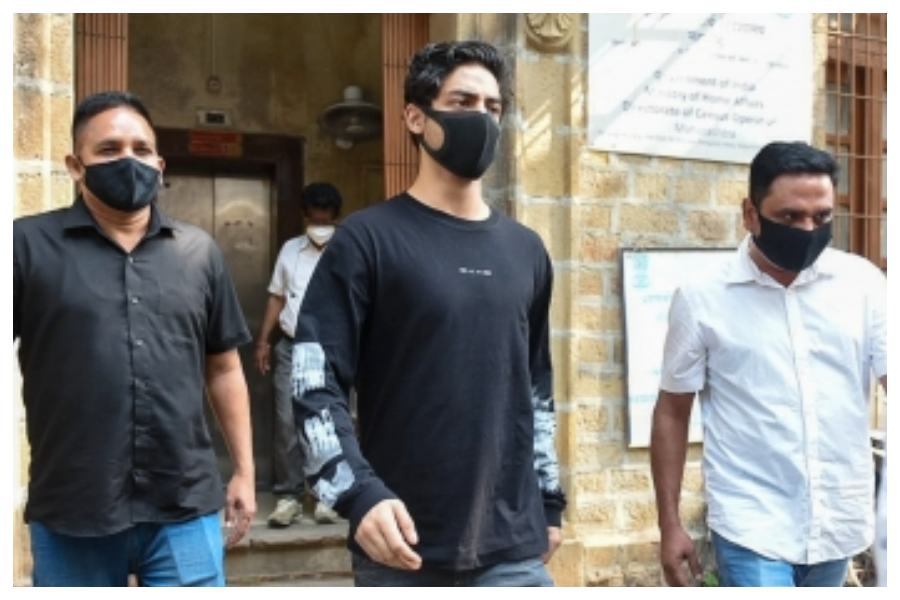
In a huge anti-climax, the Narcotics Control Bureau (NCB) on Friday dropped charges of drug possession against 6 prime accused – including Aryan Khan, son of Bollywood mega-star Shah Rukh Khan, an official said here.
The NC’s clean chit has gone to Aryan, Avin Sahu, Gopal Anand, Samir Sehgal, Bhaskar Arora and Manav Singhal, as per its charge sheet in the sensational case filed before a Special Court.
While Sahu was a guest on the ship Cordelia Cruise that was swooped on by a team led by the then NCB Zonal Director Sameer Wankhede, the others were the organisers of the alleged rave party on board.
The NCB has said in its charge sheet that narcotics were found on all — except Aryan Khan and Mohak Jaiswal – in the case that hogged international media attention for months.
In a terse statement, NCB Deputy Director-General Sanjay Kumar Singh said that the Special Investigation Team (SIT) carried out its investigations in an ‘objective manner’, applying the touchstone of the ‘principle of proof beyond reasonable doubt’.
Accordingly, the NCB will pursue the case against 14 of the total 20 accused and has dropped the charges against the aforementioned 6 accused “due to lack of sufficient evidence”, said Singh, who took over the probe on November 6 last year.
Adv Taraq Sayed, lawyer for one of the prime accused, talking to IANS briefly, indicated that the six persons will be free now as there’s “no evidence to proceed against them, and the charges have been dropped” by the NCB.
The development comes as a major relief for Aryan Khan who was among those nabbed in a high-profile raid on the ship with 1,800 people on board by Wankhede on October 2 last year, and underwent nearly a month in police and judicial custody.
Based on intel, the NCB Mumbai had raided the Cordelia Cruise and detained, besides Aryan, Arbaaz Merchant, Nupur Sarika, Munmun Dhamecha, Ismeet Singh, Mohak Jaiswal, Gomit Chopra and Vikrant Chhokar.


Crime
Ashok Kharat Sexual Exploitation Case: 2 More Cases Filed Against Self-Styled Astrologer & Godman; Total Complaints Rise To 10 In Nashik

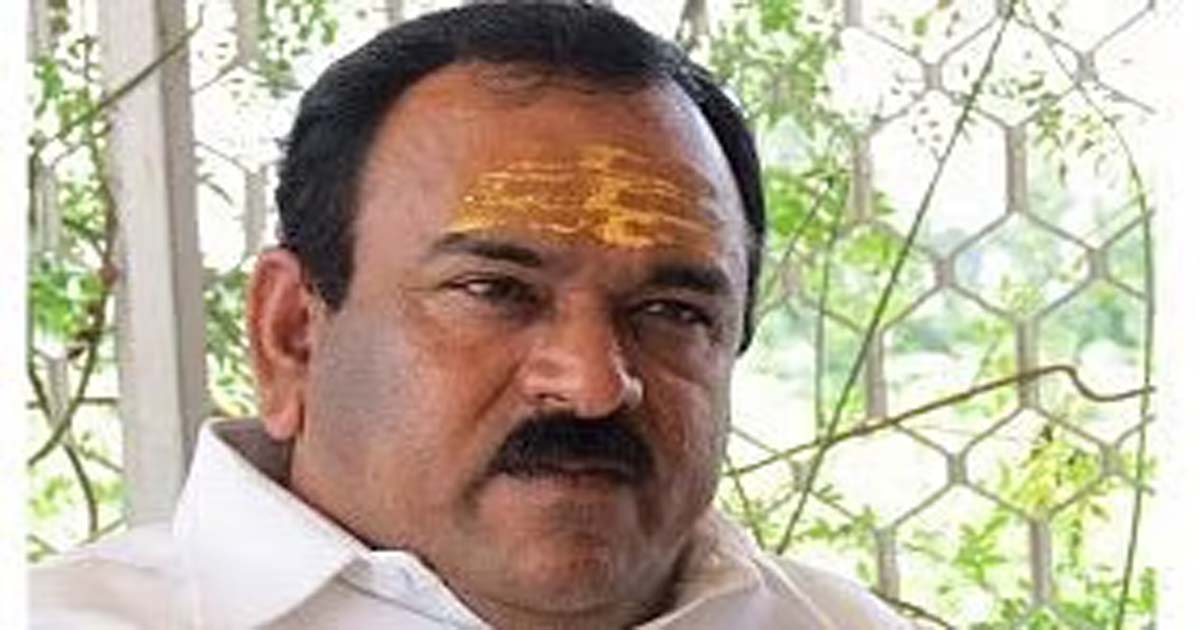
Nashik: Troubles continue to mount for self-styled astrologer Ashok Kharat as Nashik Police have registered two more criminal cases against him, including a fresh rape complaint, taking the total number of cases to 10.
According to police officials, eight of these cases relate to rape and sexual exploitation, while two involve allegations of cheating and financial fraud. The latest FIRs were registered by the Sarkarwada Police Station on Friday night,
Details On The Recent Complaints
In the most recent complaint, a married woman alleged that Kharat sexually assaulted her four times between August and December 2024. The complainant stated that she had visited Kharat’s office at Canada Corner in Nashik along with her husband. Following a pattern seen in earlier cases, Kharat allegedly asked her husband to wait outside before sedating and assaulting her inside his chamber.
Police said the woman approached authorities only after Kharat’s arrest on March 18, indicating that more victims may come forward as the investigation progresses.
In a separate case, a trader from Ahilyanagar district, Rajendra Nanasaheb Bhagwat (39), accused Kharat of cheating him of Rs 2.62 lakh over three years. Bhagwat told police that Kharat had advised him to wear gemstone rings to improve his business fortunes. However, after the accused’s arrest, the complainant discovered that the stones were fake and the rings were made of copper instead of gold. Bhagwat also alleged that he had given Kharat gold rings weighing over 20 grams.
Kharat, who built a reputation as a numerologist advising clients, including prominent individuals, on business and personal matters, is now under investigation for multiple serious offences, including rape, extortion, and cheating.
Meanwhile, the district administration has taken parallel action by suspending Kharat’s firearm licence. Ayush Prasad confirmed that a show-cause notice has been issued, asking why the licence should not be permanently cancelled.
Officials said the move followed the recovery of five used cartridges from Kharat’s farmhouse. Authorities are now probing whether the firearm was used in any незакон activities. Records show that the licence was first granted in 2014 and renewed as recently as 2024.
With multiple cases emerging and investigations intensifying, the Kharat case has taken a serious turn, raising concerns over alleged abuse of influence and the exploitation of vulnerable individuals under the guise of spiritual guidance.

Mumbai: Two police constables have been arrested for allegedly kidnapping a forex company executive and robbing him of $10,000 (`8.65 lakh) in Juhu. The police said the stolen cash has not yet been recovered, and efforts are on to trace three other accused.
Sandeep Shinde, 33, posted at the BKC police station, and Gajendra Rajput, 40, attached to the Jogeshwari police station, were among five persons who allegedly carried out the abduction on Wednesday afternoon. The incident unfolded when the 30-year-old delivery executive travelled to Juhu to hand over foreign currency to a client.
At 2 pm, near Juhu Circle, he was allegedly cornered and forced into a car, where he was allegedly assaulted. The captors also threatened to frame him in a false case. The group drove him to Dahisar, where they snatched the bag containing $10,000. The victim’s cries for help drew the attention of passers-by, leading to a commotion that caught the eye of a police patrol unit. As the accused tried to flee, Shinde was caught on the spot by Dahisar patrol officers.
He was initially taken to the Dahisar police station before being handed over to the Juhu police. During questioning, investigators uncovered Rajput’s involvement, who was arrested on Friday at his residence in Thane. A case was registered on Thursday under charges including kidnapping, extortion, dacoity, and impersonating a public servant. Shinde was produced before a court and remanded for 10 days of police custody.
Mumbai, March 27: The Enforcement Directorate (ED), Mumbai Zonal Office, has provisionally attached an immovable property worth Rs 19.12 crore under the Prevention of Money Laundering Act (PMLA), 2002, in connection with the National Spot Exchange Limited (NSEL) case, officials said on Friday.
Sources said the attached property is linked to the LOIL Group, one of the key defaulters in the NSEL case.
The money laundering probe stems from an FIR registered at MRA Marg police station, which is being investigated by the Economic Offences Wing (EOW) of the Mumbai Police under various sections of the IPC against NSEL, its directors, key officials and 25 defaulters.
According to the ED, its probe has revealed that NSEL and its defaulting members were involved in criminal conspiracy, cheating and forgery by allowing trading in commodities without actual underlying stocks, allegedly defrauding around 13,000 investors of nearly Rs 5,600 crore.
The investigation further revealed that three defaulting members—LOIL Overseas Foods Ltd, LOIL Continental Foods Ltd and LOIL Health Foods Ltd (collectively referred to as the LOIL Group)—fraudulently raised funds through fictitious sale transactions of paddy on the NSEL platform.
The agency said the total liability of the LOIL Group towards NSEL stands at Rs 720.30 crore. Scrutiny of bank records revealed that around Rs 569.04 crore was siphoned off from NSEL settlement accounts of the group entities.
A substantial portion of the diverted funds was allegedly layered through various group entities, including Lakshmi Energy & Foods Limited, and used for repayment of bank loans, business operations, working capital requirements and acquisition of immovable properties.
With this latest action, the ED has now issued 34 provisional attachment orders in the NSEL case, bringing the total value of seized assets to approximately Rs 3,452.16 crore. To date, seven prosecution complaints have been filed against 148 accused persons before the Special PMLA Court, which has already taken cognizance of the charges.

Ashok Kharat Sexual Exploitation Case: 2 More Cases Filed Against Self-Styled Astrologer & Godman; Total Complaints Rise To 10 In Nashik

Mumbai Crime: 2 Police Constables Arrested For Kidnapping Forex Executive, $10,000 Stolen

6 Killed, Several Injured As Avalanche Hits Zojila Pass On Srinagar-Leh Highway

PM Modi & US President Donald Trump Hold Crucial Talks As West Asia Crisis Deepens; Musk Joins Call

Mumbai Weather Update For March 28, 2026: City Records 28°C, Excessive Heat Expected Today; Air Quality At Moderate Range At 89

Married Mumbai Woman Mocked In Andheri Society Over ‘Lift Kissing’ CCTV Video, Files Police Complaint

Mumbai: JBCN International School In Borivali Gets Bomb Threat, Search Reveals Hoax, Students Safe

Mahayoti’s big gift to the people of Mumbai… Now there is no tax for houses up to 500 square feet, the Municipal Corporation has increased this limit to 700 square feet.

LPG Crisis In Maharashtra: Cyber Crime On Rise Amid Shortage, 2 Women Lose ₹4 Lakh In ‘Gas Update’ Online Scam In Kalyan-Dombivli

Rashmika Mandanna-Vijay Deverakonda Wedding: Virosh Turn Modern Day Prince & Princess For Their Dreamy Sangeet Ceremony
-

 Crime4 years ago
Class 10 student jumps to death in Jaipur
-

 Maharashtra1 year ago
Mumbai Local Train Update: Central Railway’s New Timetable Comes Into Effect; Check Full List Of Revised Timings & Stations
-

 Maharashtra1 year ago
Mumbai To Go Toll-Free Tonight! Maharashtra Govt Announces Complete Toll Waiver For Light Motor Vehicles At All 5 Entry Points Of City
-

 Maharashtra2 years ago
False photo of Imtiaz Jaleel’s rally, exposing the fooling conspiracy
-

 National News1 year ago
Ministry of Railways rolls out Special Drive 4.0 with focus on digitisation, cleanliness, inclusiveness and grievance redressal
-

 Maharashtra1 year ago
Maharashtra Elections 2024: Mumbai Metro & BEST Services Extended Till Midnight On Voting Day
-

 National News2 years ago
J&K: 4 Jawans Killed, 28 Injured After Bus Carrying BSF Personnel For Poll Duty Falls Into Gorge In Budgam; Terrifying Visuals Surface
-

 Crime1 year ago
Baba Siddique Murder: Mumbai Police Unable To Get Lawrence Bishnoi Custody Due To Home Ministry Order, Says Report