
Business
CM Omar Abdullah presents Rs 1,13,767 crore budget in J&K Assembly; focusing on investment, innovation


Jammu, Feb 6: Jammu and Kashmir Chief Minister Omar Abdullah tabled a Rs 1,13,767 crore budget for 2026-27 in the Legislative Assembly on Friday, saying the financial plan aims to lay a strong foundation for sustainable growth, social harmony and economic prosperity in the union territory.
He said his government is committed to transforming the UT into a modern, progressive and economically vibrant region by promoting investment, innovation and participatory governance.
“With deep humility and unwavering resolve, I rise today to present my second Budget as Finance Minister. It is a privilege to be entrusted with the responsibility of shaping the financial future of our land,” CM Abdullah said while presenting the Budget.
Describing the Budget as a roadmap for development, he said, “This Budget is not merely a ledger of figures, it is a fiscal compass charting our path towards a brighter horizon. It lays strong foundations for enduring economic growth, social harmony and sustainable prosperity.”
The chief minister urged members of the House to work collectively for the region’s development.
“As we embark on this shared journey, I invite every honourable member of this august House to come together and work collectively to build a strong and flourishing Jammu and Kashmir,” he said.
Highlighting the resilience of the people, CM Abdullah, who also holds the UT’s finance portfolio, said his government is committed to transforming Jammu and Kashmir into a progressive and economically vibrant region.
“Together, we will turn obstacles into stepping stones and aspirations into achievements,” he added. The chief minister said the government is focused on creating a business-friendly ecosystem to attract investment and innovation.
He said the Budget was prepared after wide consultations with elected representatives, industry leaders, and stakeholders to ensure it remains people-centric.
Referring to challenges faced in the past year, the CM said geopolitical factors, the Pahalgam terror attack and devastating floods in parts of the Jammu region adversely impacted economic activity.
“All sectors, including tourism, handicrafts, horticulture and agriculture were badly affected, leading to job losses and financial distress for families,” he said.
Omar Abdullah said the Budget focuses on inclusive and sustainable growth through strategic investments in infrastructure, public services and governance.
He added that the government aims to create opportunities for youth and women. Flagging fiscal constraints, the chief minister said own tax and non-tax revenues meet only about 25 per cent of the UT’s budgetary requirements.
The CM said revenue collections stood at Rs 10,265 crore from taxes and Rs 4,964 crore from non-tax sources till December 31, 2025. The chief minister said nearly 60 per cent of the overall expenditure is committed towards salaries, pensions and debt servicing, adding that the government is taking steps to manage debt and curb non-priority spending.
“We are strengthening debt sustainability by keeping borrowings within approved limits and improving liquidity management. For the third consecutive year, austerity measures have been enforced,” he said.
He said reforms in the power sector, including expansion of the consumer base and execution of loss reduction works, are being undertaken to ease financial stress.
The CM also acknowledged the Centre’s support in addressing fiscal challenges.
“The Central government has remained cognizant of our difficulties and consistently supported us through special assistance,” he said, adding that Jammu and Kashmir has been brought under the Special Assistance to States for Capital Investment scheme.
The chief minister said the funds under the scheme would be utilised for infrastructure development, hydroelectric projects, and disaster mitigation works, particularly in flood-affected areas.
The chief minister said a roadmap would be announced in the coming months for the regularisation of daily wage workers, whose contribution and services to J&K were lauded by him.
Highlights of the Budget:
-Over 3.21 lakh houses completed under PMAY, 14,000 more under construction
-International film festival in 2026
-2,963 women become ‘Lakhpati Didis
New cultural centres across J&K
New framework for MSMEs
Two Ayush hospitals next financial year
AIIMS Kashmir commissioning in 2026
200 new e-buses announced
Expanded PET scan and mobile medical units
Vocational education in 554 schools

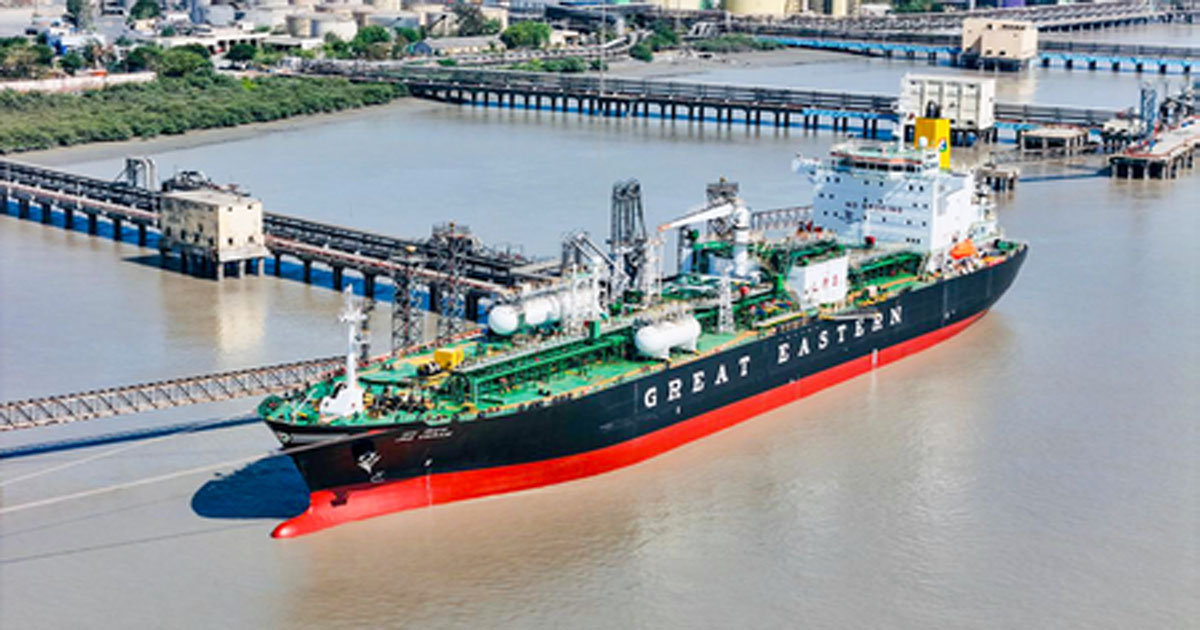
New Delhi, June 16: The government on Tuesday refuted media reports that it is pursuing a deep-sea energy pipeline, connecting Gujarat to Oman and other Gulf countries.
In a clarification, the Petroleum Ministry said it has noticed a series of media reports suggesting that the Government of India is actively pursuing a deep-sea energy pipeline, sometimes referred to as the Middle East-India Deepwater Pipeline (MEIDP), connecting Gujarat to Oman and other Gulf countries.
“The Ministry of Petroleum and Natural Gas wishes to categorically clarify that no such proposal is currently under consideration by this Ministry. There are no active discussions or negotiations with Oman or any other Gulf countries on this project at any level in this Ministry,” it said in a statement.
“This clarification is issued to put all speculation in this regard to rest,” added the ministry.
Meanwhile, the Malta-flagged LNG carrier DISHA, managed by a Shipping Corporation of India-led consortium, safely transited the Strait of Hormuz on Monday with a cargo of 62,370 metric tonnes of LNG bound for Dahej in Gujarat, and is likely to reach India on June 18.
The government said it remains in continuous coordination with the Ministry of External Affairs, Indian missions abroad, shipping companies, and other relevant stakeholders to ensure the safety and welfare of Indian seafarers and provide all assistance. Port operations across India remain normal, with no congestion reported.
The Directorate General of Shipping (DGS) has also advised shipping companies as well as maritime recruitment and placement agencies to restrict deployment of Indian seafarers to in the Middle East conflict areas until further orders, days after three Indian seafarers onboard MT Settebello were killed after the US military strike on the commercial vessel off the Oman coast.
DG Shipping, in a circular, said masters of vessels operating in or transiting through the Gulf region, including the Strait of Hormuz and adjoining waters, are advised to maintain heightened security awareness, closely monitor navigational warnings received and advisories issued from security agencies, and implement all applicable ship security measures and company security procedures.

Mumbai, June 16: Indian equity markets traded higher in morning trade on Tuesday after the United States and Iran reached a preliminary agreement to end conflict.
Sensex rose over 300 points or 0.41 per cent to touch an intraday high of 76,579 in early trade, while Nifty gained around 90 points or 0.36 per cent to trade at 23,941.
Sectorally, buying was seen in realty, IT, consumer durables and financial stocks, with Nifty Realty gaining 0.86 per cent and Nifty IT rising 0.74 per cent.
FMCG, media, chemicals and auto indices also traded in positive territory.
In contrast, metal stocks witnessed selling pressure, dragging Nifty Metal down more than 1 per cent.
From the Nifty pack, Hindalco Industries, JSW Steel, Axis Bank, HDFC Life, Tata Motors Passenger Vehicles (TMPV) and Tata Steel were among the top losers.
Analysts said the sharp correction in Brent crude prices to below $84 per barrel and stability in the rupee have the potential to lend resilience to the market.
“The strong macro headwind of a rising balance of payments (BoP) deficit is no longer a serious issue for the economy. This positive development has imparted stability to the rupee, which has appreciated to 94.71 against the dollar from its recent low of 96.96,” market experts said.
However, analysts cautioned that a weak monsoon remains a concern, as a below-normal rainfall season could fuel inflationary pressures. They said developments on the monsoon front would need to be closely monitored in the coming weeks.
According to senior US officials, the two sides have signed a memorandum of understanding (MoU) aimed at ending the nearly four-month-long war, with a formal signing ceremony expected on Friday.
Moreover, US officials indicated that shipping traffic through the Strait of Hormuz is likely to resume gradually, easing concerns over disruptions to global energy supplies.
On the commodities front, international benchmark Brent crude traded 0.37 per cent lower at $82.86 per barrel, while US West Texas Intermediate (WTI) crude slipped 0.22 per cent to $80.57 per barrel.
Asian markets traded mostly higher. Japan’s Nikkei advanced 0.62 per cent, while South Korea’s KOSPI surged more than 2 per cent. Indonesia’s Jakarta Composite gained around 4 per cent. However, Hong Kong’s Hang Seng declined over 1 per cent.
Overnight, Wall Street ended higher, with the S&P 500 gaining 1.65 per cent and the Nasdaq surging nearly 3 per cent.
Business
Railways okays Rs 201 crore Kavach project to enhance safety on 811 km route in Ambala division

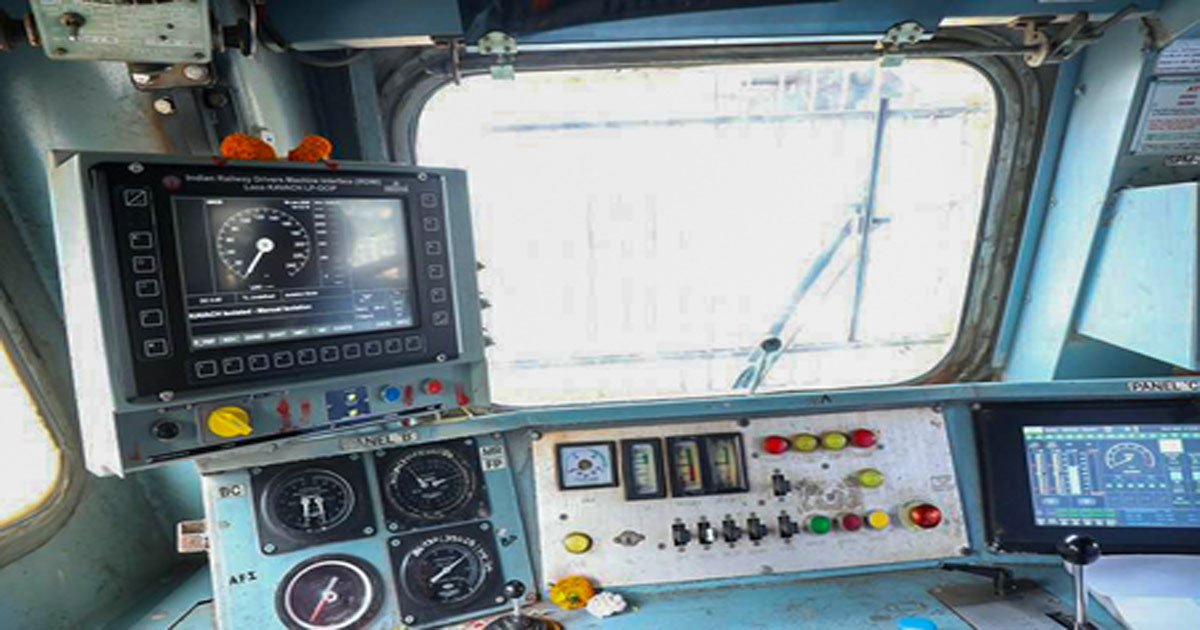
New Delhi, June 15: In a major step towards strengthening railway safety, Indian Railways has approved the installation of Kavach on the remaining 811 km broad gauge sections of the Ambala Division of the Northern Railway with an investment of Rs 201 crore, according to an official statement issued on Monday.
The sanctioned work will cover important rail routes in the Ambala Division, including Ambala Cantonment–Ludhiana, Kalka–Chandigarh–New Morinda–Sahnewal, Sirhind–Daulatpur Chowk, Rajpura–Bathinda–Shri Ganganagar, and Ludhiana–Dhuri–Jakhal sections.
These routes serve as key rail corridors connecting the states of Haryana, Punjab, and Himachal Pradesh. They handle substantial passenger and freight traffic and play an important role in the movement of people and goods across the region.
The work has been approved under the umbrella programme for the provision of Kavach with LTE-based communication backbone on balance routes of the Railways.
Kavach is an indigenously developed Automatic Train Protection (ATP) system designed to enhance operational safety. It helps prevent Signal Passing at Danger (SPAD), automatically applies brakes when required to avert unsafe situations, controls train speed in critical conditions, and significantly reduces the risk of collisions.
Indian Railways is progressively expanding Kavach across its network as part of its ongoing efforts to improve safety, reliability and capacity on high-density and strategically important routes.
Multiple projects worth Rs 1,364.45 crore have been approved to strengthen safety, signalling and communication infrastructure across its network. The sanctioned works include the provision of Kavach on locomotives, the expansion of optical fibre cable network, and the replacement of panel interlocking with electronic interlocking systems across various railway zones.
Indian Railways earlier sanctioned three itemised works in the Northern Railway at a total cost of Rs 400.86 crore for strengthening the communication backbone infrastructure. These works are part of a separate umbrella project approved at a cost of Rs 4,871 crore.
A sub-umbrella provision of Rs 871 crore has been allocated for Northern Railway for the laying of fibre cables along 926.05 route km in Ambala Division, along 1,204 route km along with Optical Fiber Communication (OFC) rooms at stations in Delhi Division, and along 1,074 route km in Lucknow Division. These works aim to enhance the capacity and reliability of communication systems across divisions, which are critical for modern signalling and Kavach deployment.

Madhya Pradesh gears up for NEET-UG 2026; CM directs officials to ensure ‘zero-error’ conduct of exam

FIFA WC: When and where to watch Portugal vs DR Congo; know all details

Mumbai: BMC’s helpline ‘My BMC Marg System’ launched ahead of monsoon, special focus on filling potholes

Mumbai: Two accused arrested for staging a drama of jewellery theft worth over Rs 60 lakh in Andheri

Accused in Rs 2 crore Pune embezzlement case arrested in Nashik

Trump, Netanyahu hold phone talks after Iranian missile fire: Israeli state media

The Municipal Corporation and the Railway Administration should work together to make Mumbai flood-free, directs Standing Committee Chairman Prabhakar Shinde

Virar Citizens Protest Demolition Drive In Arnala; Police Block Lal Bawta March, Sit-in Held On Road

Indian equity markets trade higher as Iran-Israel tensions ease

Dangerous Love Triangle In Mira-Bhayandar: Youth Kidnapped, Brutally Beaten, & Burned With Cigarettes Over Affair With Same Girl
-

 Crime4 years ago
Class 10 student jumps to death in Jaipur
-

 Maharashtra2 years ago
Mumbai Local Train Update: Central Railway’s New Timetable Comes Into Effect; Check Full List Of Revised Timings & Stations
-

 Maharashtra2 years ago
Mumbai To Go Toll-Free Tonight! Maharashtra Govt Announces Complete Toll Waiver For Light Motor Vehicles At All 5 Entry Points Of City
-

 Maharashtra2 years ago
False photo of Imtiaz Jaleel’s rally, exposing the fooling conspiracy
-

 National News2 years ago
Ministry of Railways rolls out Special Drive 4.0 with focus on digitisation, cleanliness, inclusiveness and grievance redressal
-

 Maharashtra2 years ago
Maharashtra Elections 2024: Mumbai Metro & BEST Services Extended Till Midnight On Voting Day
-

 National News2 years ago
J&K: 4 Jawans Killed, 28 Injured After Bus Carrying BSF Personnel For Poll Duty Falls Into Gorge In Budgam; Terrifying Visuals Surface
-

 Crime2 years ago
Baba Siddique Murder: Mumbai Police Unable To Get Lawrence Bishnoi Custody Due To Home Ministry Order, Says Report