
Politics
Changed political situation will force Bengal to help BSF in checking infiltration:Amit Shah


The political situation in West Bengal will soon be such that the local administration will be forced to assist the Border Security Force (BSF) to check illegal infiltration and cross-border smuggling along the India-Bangladesh border areas in the state, according to Union Home Minister Amit Shah.
“I understand that without the help of the local administration it is extremely difficult to check illegal infiltration and cross border smuggling. However, I would like to assure you that the political situation here will be such that you will get that help. Pressure from the people will force the local administration to provide that assistance,” Shah said, while addressing a programme on the occasion of the foundation stone laying ceremony of Maitri Sangrahalaya (museum) located at border outpost Haridaspur in North 24 Parganas district of West Bengal on Thursday afternoon.
Shah’s comments come at a time when the West Bengal and Union governments are at loggerheads over the extension of the BSF’s authority up to 50 kilometres from the borders with Pakistan and Bangladesh.
A notification issued in this regard by the Union Home Ministry empowered BSF personnel to conduct search operations, arrest suspects and make seizures within 50 kilometres from the borders.
Shah said that Prime Minister Narendra Modi is aware of the difficulties faced by the BSF personnel posted at the borders.
“So, the Union government is trying to come out with schemes so that the personnel posted at the borders get maximum opportunity to spend time with their family members. The Union government is also making arrangements to minimise the difficulties of security personnel posted at the borders,” Shah added.
West Bengal Trinamool Congress General Secretary, Kunal Ghosh said, “The Union Home Minister is trying to convert BSF into a cadre wing of the BJP. He should refrain from doing so.”
Earlier on Thursday, Amit Shah inaugurated six floating border outposts of the BSF at Hingalganj in North 24 Parganas district and also flagged off a boat ambulance there.


Maharashtra
Search continues for absconding accused under trial in Mumbai Sessions Court, Crime Branch teams are active, case registered on constable’s complaint

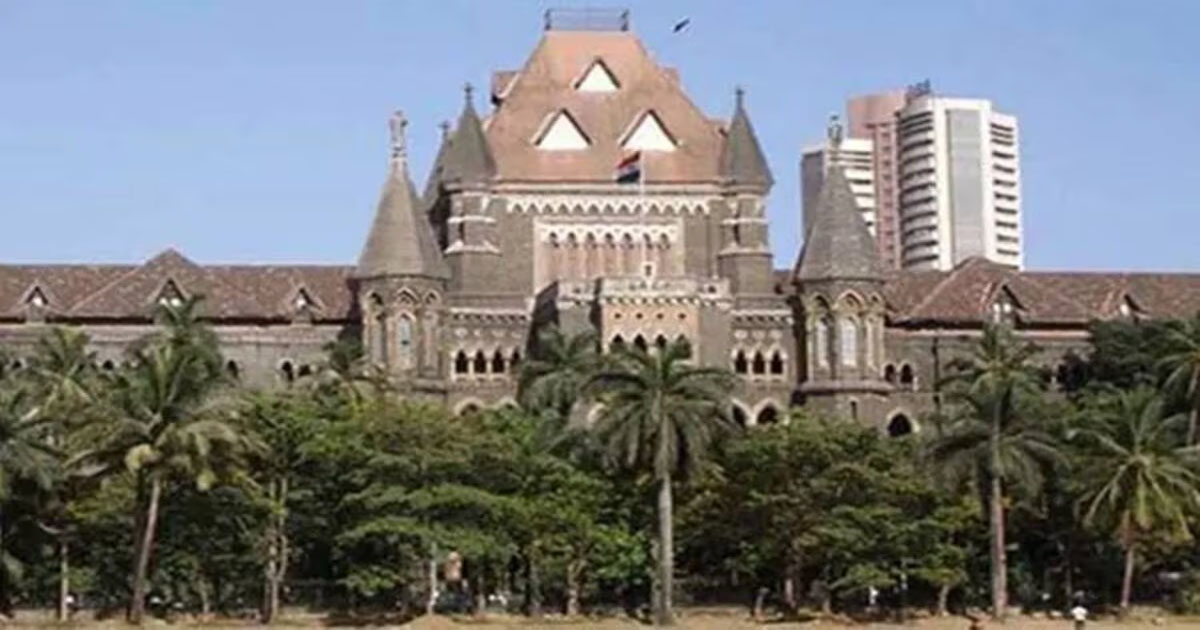
A suspect under trial has escaped from the Mumbai Sessions Court. The suspect had pushed the constable and fled. According to the details, the suspect under trial from Sessions Court Room No. 10, Calamba has fled from the second floor. Complainant Prashant Shrimant Kamble, 28 years old, employed as a police constable, resident of No. 2200, 2C Building, MHADA Colony, Mohite Patil Nagar, Mankhurd, Mumbai, pushed Harrison Anthony Joseph, 42 years old, resident of Gala No. 08, Room No. 2202, New Scale Building, Masafir Khana, Crawford Market, Mumbai. The suspect under trial in this case was brought from Arthur Road to Court Room No. 10, Sessions Court, Calamba for hearing today. After the hearing of the said suspect, he was to return to his jail along with the other four accused. The other four accused were to be kept in the lockup of the Sessions Court till the hearing is completed. While the complainant was being brought down from the third floor, as soon as he reached the second floor, the accused surrounded the complainant before he knew anything, grabbed his hand and pushed him and fled. The said case has been registered on the basis of the statement of the complainant. A case has been registered against the accused under sections 307,504,506,34 IPC. On receiving information about the said offences, the Crime Detection Team has immediately rushed to the spot and the footage has been examined. In the said footage, the accused is seen fleeing from the Sessions Court premises and on the basis of the information received, the Crime Detection Team has immediately left for Lokmanya Tilak Terminus, Kurla to search for him. Further investigation is underway.
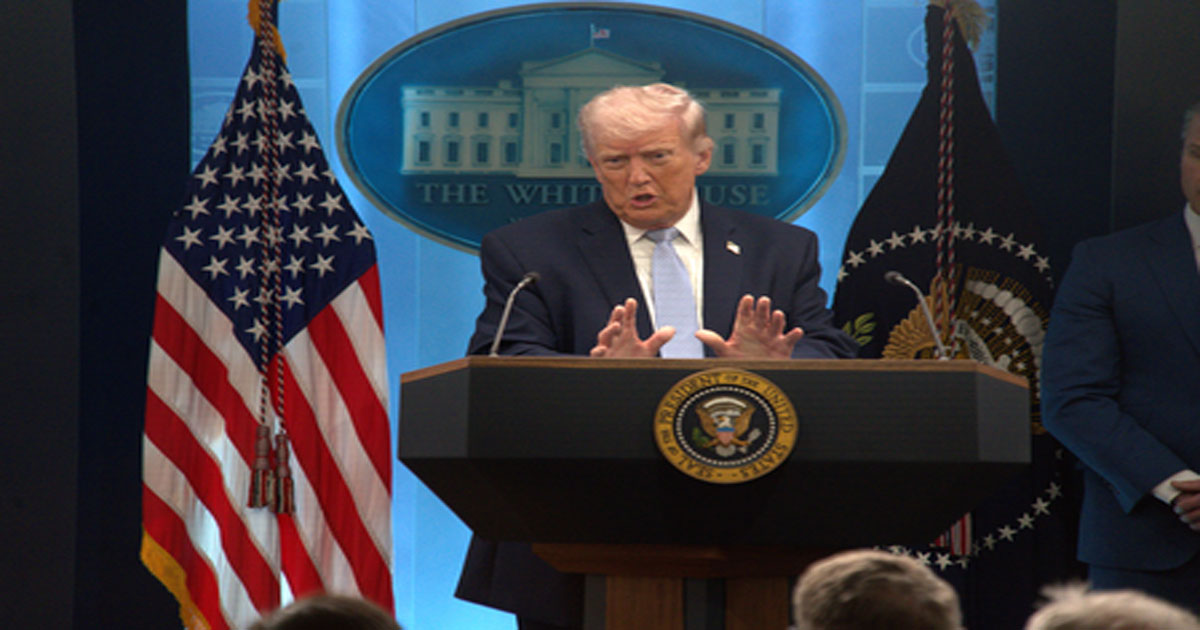
Washington, April 8: US President Donald Trump on Wednesday announced what he called a “very productive regime change” in Iran, saying the US would eliminate uranium enrichment and work to dig up and remove deeply buried nuclear “dust”.
In a series of posts, Trump outlined a framework that combined nuclear restrictions, sanctions relief and sharp trade penalties.
“The United States will work closely with Iran, which we have determined has gone through what will be a very productive regime change!” he wrote on Truth Social, a day after the US and Iran agreed to a two-week ceasefire and reopening of the Strait of Hormuz.
He asserted that Iran would no longer be allowed to enrich uranium. “There will be no enrichment of Uranium,” Trump said, adding that the United States would work with Iran to “dig up and remove all of the deeply buried (B-2 Bombers) nuclear ‘dust.’”
Trump said the material remained under strict monitoring. “It is now, and has been, under very exacting Satellite Surveillance (Space Force!). Nothing has been touched from the date of attack,” he said.
The President also pointed to ongoing negotiations that could ease economic pressure on Tehran. “We are, and will be, talking tariff and sanctions relief with Iran. Many of the 15 points have already been been agreed to,” he said, without detailing the terms or the parties involved.
Minutes later, Trump issued a warning to countries supplying weapons to Iran, signalling an aggressive escalation in trade policy.
“A country supplying military weapons to Iran will be immediately tariffed, on any and all goods sold to the United States of America, 50 per cent, effective immediately. There will be no exclusions or exemptions!” he said.
The dual messaging — offering sanctions relief while threatening sweeping tariffs — reflected a strategy that mixes economic coercion with conditional engagement.
Crime
Mumbai Crime: 3 Brothers Booked For Alleged ₹450 Crore Land Fraud In Bhandup Using Forged Documents

Mumbai, April 8: The Mumbai police have booked three brothers from Bhandup for allegedly forging affidavits and submitting false information to government authorities to fraudulently insert their names as legal heirs in official property records, including the property card and 7/12 extract. The accused are said to have subsequently sold this prime land parcel in Bhandup, currently valued at approximately Rs 450 crore.
The accused have been identified as Hitendra Shankar Gawand, Mahendra Shankar Gawand, and Narendra Shankar Gawand. Nimish Vajralal Sura, a partner in M/s Newkem Products Corporation, the company that purchased the land, has also been named as a co-accused in the case.
According to the FIR, the complaint was filed by Neeraj Prakash Malvi, 27, a resident of Thane West, who works at a private firm in Powai. He lives with his father, Prakash Malvi, 65, while his elder sister Hemangi, 29, recently got married in March 2026 and resides in Goregaon.
Neeraj’s mother, Bhavana Prakash Malvi (née Bhavana Shankar Gavand), passed away on May 9, 2005. Following her death, Neeraj and his sister, who were minors at the time, lived for a few years with their maternal uncle, Narendra Gavand.
The disputed land, located at Lake Road in Bhandup (West), bearing CTS Nos. 204 and 204/1 to 6, originally belonged to Neeraj’s grandfather, Shankar Narayan Gavand.
After his mother’s death, Neeraj’s father was allegedly assured by the three uncles that Bhavana Gavand was a legal heir and that her children would be entitled to a 5% share in the ancestral property.
The alleged fraud came to light in 2024 when Neeraj’s father initiated the process to sell a portion of the property for family needs. They discovered that the entire property had already been sold in 2010 by the three uncles to M/s Newchem Products Corporation.
Upon obtaining documents from the Mulund City Survey Office, it was revealed that shortly after Bhavana Gavand’s death, the accused brothers had submitted a false affidavit dated July 6, 2005, claiming that only they and their mother were the legal heirs of the deceased, deliberately excluding Bhavana’s children. Based on this affidavit, they allegedly got their names added to the property card and land records (7/12 extract).
Subsequently, on April 29, 2010, the brothers allegedly executed an illegal conveyance deed and sold the land to M/s Newkem Products Corporation.
The FIR further states that Nimish Sura was aware of Bhavana Gavand’s legal claim, as multiple meetings regarding the land transaction had taken place between 2003 and 2005 involving all family members, during which Bhavana had allegedly raised objections over her share.
Following Neeraj Malvi’s complaint, the Bhandup police have registered a case under relevant sections of the Indian Penal Code and have initiated further investigation.

Search continues for absconding accused under trial in Mumbai Sessions Court, Crime Branch teams are active, case registered on constable’s complaint

Trump claims Iran reset, orders nuclear dust cleanup

Mumbai Crime: 3 Brothers Booked For Alleged ₹450 Crore Land Fraud In Bhandup Using Forged Documents

Mumbai: Instructions to identify low-lying areas and locations before monsoon, Municipal Commissioner inspects drains and sweet river works in City Division

All auctions of Worli plots should be stopped and an auction policy should be formulated in consultation with group leaders of all parties: Raees Shaikh

Married Mumbai Woman Mocked In Andheri Society Over ‘Lift Kissing’ CCTV Video, Files Police Complaint

LPG Crisis In Maharashtra: Cyber Crime On Rise Amid Shortage, 2 Women Lose ₹4 Lakh In ‘Gas Update’ Online Scam In Kalyan-Dombivli

Dhurandhar 2 Box Office Collection Day 1: Ranveer Singh Starrer Takes An Exceptional Opening; Crosses ₹100 Crore Mark

Mumbai Police Busts Fake Apple Accessories Racket In Ghatkopar, ₹16.33 Lakh Goods Seized; Six Booked

Thane Horror: Man Slashed With Chopper In Naupada For Refusing ‘Vargani’, Caught On Camera
-

 Crime4 years ago
Class 10 student jumps to death in Jaipur
-

 Maharashtra2 years ago
Mumbai Local Train Update: Central Railway’s New Timetable Comes Into Effect; Check Full List Of Revised Timings & Stations
-

 Maharashtra1 year ago
Mumbai To Go Toll-Free Tonight! Maharashtra Govt Announces Complete Toll Waiver For Light Motor Vehicles At All 5 Entry Points Of City
-

 Maharashtra2 years ago
False photo of Imtiaz Jaleel’s rally, exposing the fooling conspiracy
-

 National News1 year ago
Ministry of Railways rolls out Special Drive 4.0 with focus on digitisation, cleanliness, inclusiveness and grievance redressal
-

 Maharashtra1 year ago
Maharashtra Elections 2024: Mumbai Metro & BEST Services Extended Till Midnight On Voting Day
-

 National News2 years ago
J&K: 4 Jawans Killed, 28 Injured After Bus Carrying BSF Personnel For Poll Duty Falls Into Gorge In Budgam; Terrifying Visuals Surface
-

 Crime1 year ago
Baba Siddique Murder: Mumbai Police Unable To Get Lawrence Bishnoi Custody Due To Home Ministry Order, Says Report