
Sports
Champions Trophy: Final squads of all eight participating teams

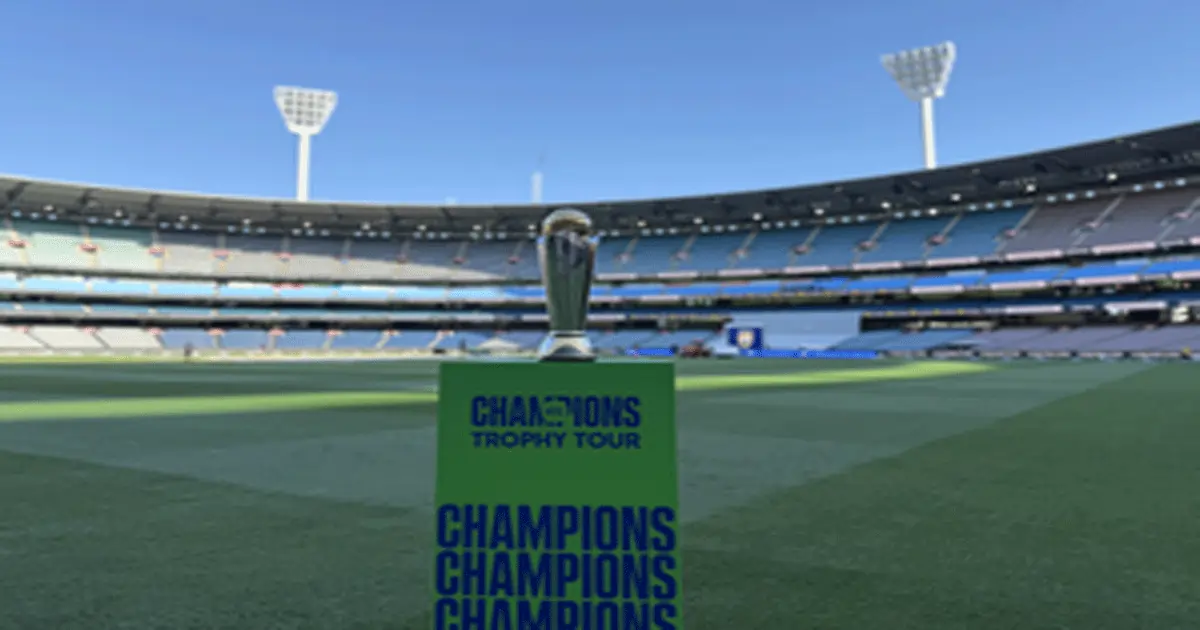
Dubai, Feb 14: The ICC Champions Trophy is set to commence in Pakistan on February 19. The marquee tournament, returning after an eight-year hiatus, will see the top eight men’s ODI teams battling for glory.
As the deadline for squad submissions ended on February 12, all participating nations have officially announced their 15-member squads, with several last-minute changes shaking up team compositions.
Led by Rohit Sharma, India enters the tournament boasting a formidable lineup, including eight players from their victorious T20 World Cup 2024 squad. However, the team suffered a major blow with pace spearhead Jasprit Bumrah ruled out due to injury. Young pacer Harshit Rana has been called in as his replacement. Additionally, Varun Chakaravarthy steps in for Yashasvi Jaiswal.
Defending champions Pakistan, under the leadership of wicketkeeper-batter Mohammad Rizwan, will aim to retain their 2017 title. The squad features key players from their last Champions Trophy-winning team, including Fakhar Zaman, Babar Azam, and Faheem Ashraf. However, they will miss the services of opening batter Saim Ayub due to injury.
The ODI world champions Australia will head into the tournament significantly weakened, with multiple senior players missing. Captain Pat Cummins, along with premier pacers Josh Hazlewood and Mitchell Starc, have withdrawn from the original squad. In their absence, Steve Smith has been handed the captaincy. The Aussies will also be without all-rounder Mitchell Marsh, with new faces Ben Dwarshuis, Spencer Johnson, and Tanveer Sangha stepping up.
New Zealand’s squad, initially set, had to undergo a change as pacer Ben Sears was ruled out with a hamstring injury. Jacob Duffy has been named as his replacement. Mitchell Santner, leading the Kiwis in his first ICC tournament as captain, will guide a squad with a mix of youth and experience. The absence of veteran pacers Trent Boult and Tim Southee puts pressure on Matt Henry, Lockie Ferguson, and young quick Nathan Smith to deliver.
Meanwhile, Bangladesh, led by Najmul Hossain Shanto, aims to surpass their semi-final finish from 2017. Senior players Mahmudullah and Mushfiqur Rahim provide stability, while exciting youngsters Nahid Rana and Rishad Hossain add firepower.
Afghanistan has been forced to make a last-minute tweak, with young spinner Nangyal Kharoti stepping in for the injured Allah Ghazanfar. The squad retains seasoned stars Rashid Khan and Mohammad Nabi, while Rahmanullah Gurbaz and Ibrahim Zadran add strength at the top order.
England’s lineup sees the return of Joe Root, while Tom Banton has replaced the injured Jacob Bethell. Under the leadership of Jos Buttler, their bowling attack will be spearheaded by Jofra Archer and Mark Wood, backed by Gus Atkinson and Jamie Overton.
South Africa faced a setback with Anrich Nortje ruled out due to injury, leading to Corbin Bosch’s inclusion. Kagiso Rabada leads the Proteas’ pace attack, while Temba Bavuma, Aiden Markram, Rassie van der Dussen, and Heinrich Klaasen form the batting core.
The eight teams are split into two groups, with the top two from each group progressing to the semifinals. Group A consists of hosts Pakistan, India, New Zealand, and Bangladesh, promising thrilling subcontinental rivalries. Group B features Australia, England, South Africa, and Afghanistan.
India begin their ICC Men’s Champions Trophy 2025 campaign against Bangladesh on February 20 before taking on rivals Pakistan on February 23. India will play their final Group A match against New Zealand on March 2.
This tournament marks the first time Pakistan will host an ICC event since 1996. The 2025 edition features eight teams split into two groups of four, with the top two from each group advancing to the semi-finals.
The top eight-team competition will see 15 matches to be played over 19 days in Pakistan and the UAE. India will play all their matches in Dubai, including the semi-final and the final (subject to qualification)
All final squads:
Afghanistan squad: Hashmatullah Shahidi (c), Ibrahim Zadran, Rahmanullah Gurbaz, Sediqullah Atal, Rahmat Shah, Ikram Alikhil, Gulbadin Naib, Azmatullah Omarzai, Mohammad Nabi, Rashid Khan, Nangyal Kharoti, Noor Ahmad, Fazalhaq Farooqi, Farid Malik, Naveed Zadran. Reserves: Darwish Rasooli, Bilal Sami
Bangladesh squad: Nazmul Hossain Shanto (c), Soumya Sarkar, Tanzid Hasan, Tawhid Hridoy, Mushfiqur Rahim, MD Mahmud Ullah, Jaker Ali Anik, Mehidy Hasan Miraz, Rishad Hossain, Taskin Ahmed, Mustafizur Rahman, Parvez Hossai Emon, Nasum Ahmed, Tanzim Hasan Sakib, Nahid Rana.
South Africa squad: Temba Bavuma (c), Tony de Zorzi, Marco Jansen, Heinrich Klaasen, Keshav Maharaj, Aiden Markram, David Miller, Wiaan Mulder, Lungi Ngidi, Kagiso Rabada, Ryan Rickelton, Tabraiz Shamsi, Tristan Stubbs, Rassie van der Dussen, Corbin Bosch.
Travelling reserve: Kwena Maphaka
New Zealand squad: Mitchell Santner (c), Michael Bracewell, Mark Chapman, Devon Conway, Lockie Ferguson, Matt Henry, Tom Latham, Daryl Mitchell, Will O’Rourke, Glenn Phillips, Rachin Ravindra, Jacob Duffy, Nathan Smith, Kane Williamson, Will Young.
Australia squad: Steve Smith (c), Sean Abbott, Alex Carey, Ben Dwarshuis, Nathan Ellis, Jake Fraser-McGurk, Aaron Hardie, Travis Head, Josh Inglis, Spencer Johnson, Marnus Labuschagne, Glenn Maxwell, Tanveer Sangha, Matthew Short, Adam Zampa.
Travelling reserve: Cooper Connolly.
England squad: Jos Buttler (c), Jofra Archer, Gus Atkinson, Jacob Bethell, Harry Brook, Brydon Carse, Ben Duckett, Jamie Overton, Jamie Smith, Liam Livingstone, Adil Rashid, Joe Root, Saqib Mahmood, Phil Salt, Mark Wood
Pakistan squad: Mohammad Rizwan (c), Babar Azam, Fakhar Zaman, Kamran Ghulam, Saud Shakeel, Tayyab Tahir, Faheem Ashraf, Khushdil Shah, Salman Ali Agha, Usman Khan, Abrar Ahmed, Haris Rauf, Mohammad Hasnain, Naseem Shah, Shaheen Shah Afridi.
India squad: Rohit Sharma (c), Shubman Gill, Virat Kohli, Shreyas Iyer, KL Rahul, Rishabh Pant, Hardik Pandya, Axar Patel, Washington Sundar, Kuldeep Yadav, Harshit Rana, Mohd. Shami, Arshdeep Singh, Ravindra Jadeja, Varun Chakaravarthy.

Sports
‘My role was limited to unknowingly promoting a few brands…’: Shefali Bagga on alleged role in betting app case


New Delhi, Oct 8: Television sports presenter Shefali Bagga, who was under investigation for her alleged role in the Mahadev betting app case, issued a clarification on her involvement in the hight-profile case and said she ‘unknowingly’ promoted the betting app and has co-operated in the investigation with the authorities.
As per the latest Enforcement Directorate (ED) chargesheet, Shefali surrendered Rs 1.20 crore, the balance sum she is accused of receiving to promote betting apps on the Mahadev platform, after being questioned in the case.
“My role was limited to unknowingly promoting a few brands on social media similar to the promotional engagements undertaken by many public figures and celebrities. Beyond this, I had no involvement or association with any other activities or operations relating to those brands or any other entity. I have cooperated with the department’s investigation, surrendered the money and have full faith in our law,” Shefali told media.
According to the chargesheet, the ED found that Shefali had received around Rs 1.5 crore for making promotional videos for the Mahadev betting app syndicate. During the search at her residence in Delhi, ED officials seized Rs 30 lakh in cash, the agency said.
The Mahadev Book, also known as Mahadev Betting App, has emerged as one of the largest online betting platforms in India in recent years. It facilitates illegal betting worth crores of rupees on sports like cricket and football through mobile apps and websites.
The network has spread nationwide and reportedly involves several high-profile individuals. In previous investigations, the ED had seized property worth several crores and arrested individuals connected to the scam.
The Mahadev Betting App has grown into a sprawling illegal enterprise. The ED continues to expand its investigation into this nationwide betting network.
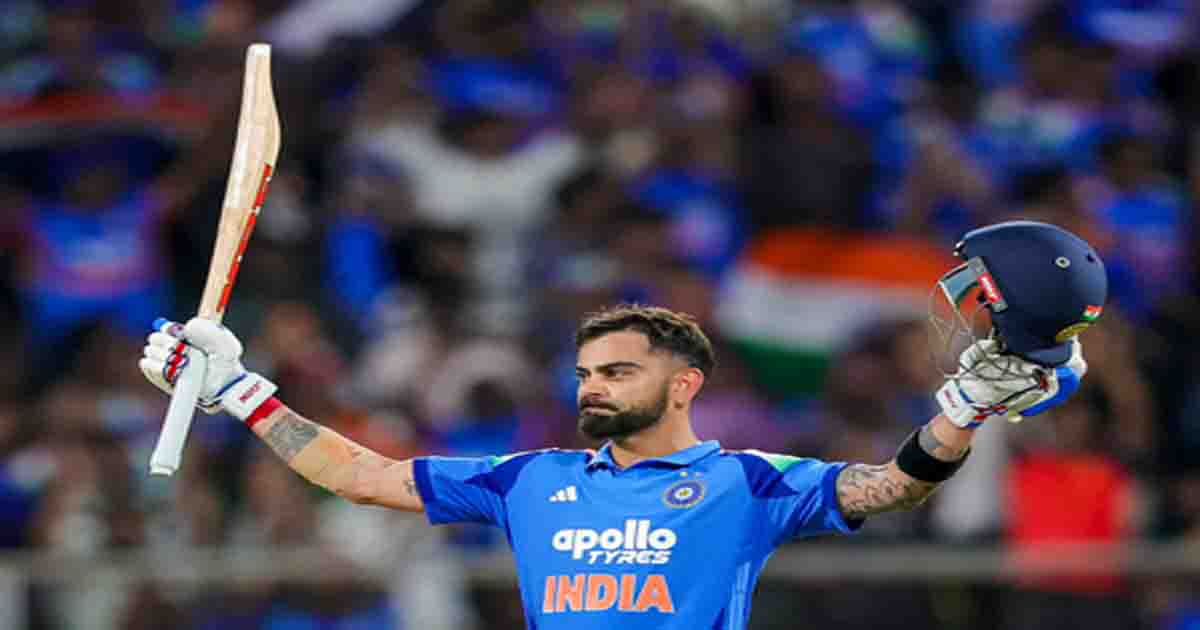
Thiruvananthapuram, Sep 28: Former West Indies fast bowler Ian Bishop believes the cricketing fraternity will only fully grasp the sheer magnitude of Virat Kohli’s monumental achievements once the Indian batting maestro calls time on his illustrious playing career.
Tearing into the West Indies bowling attack at the Greenfield International Stadium to give India a comfortable eight-wicket victory in the series opener, Kohli breached the 15,000-run mark in ODIs while making an unbeaten 139 on Sunday, while bringing up his 55th ton in the format – his third-fastest overall. He now stands as only the second player in history to cross 15,000 men’s ODI runs after the legendary Sachin Tendulkar.
“You have to love what you do to evolve as he has done over such a long period of time. I think this puts him in a rarefied atmosphere, given that he has achieved 15,000 runs in 74 fewer innings than the great Sachin Tendulkar, whom I hold in high regard, having played against him.
“Where his legacy will end, he certainly has to be one of the greatest, if not the greatest, batter in this format of the game. I mean, this is extraordinary. A lot of these fans watching on television and here on the ground appreciate it, but I don’t think we will fully appreciate it until some time after he concludes his playing days,” Bishop said on JioHotstar.
Bishop, the acclaimed commentator, was particularly left in awe of Kohli’s unmatched consistency and his legendary prowess in acing run-chases. “Virat is different in that respect, the appetite that he has for runs, his calculation of how to chase a total, I think that is unsurpassed in this game.
“Virat has a sense of occasion that he may not confess to, but again, that’s his evolution. I still can’t believe 15,000… I know Sachin got there, but that’s a heck of a lot of runs. So, if I had flowers right now, I’d give them to him because he certainly deserves his flowers,” he added.
Calling on the younger generation of cricketers to draw inspiration from Kohli’s work ethics, Bishop urged players across all disciplines to step outside their comfort zones and constantly refine their skills, regardless of age or experience.
“It’s something that we’re all very aware of, because I have grown tired of hearing players say, ‘This is the way I play,’ and people outside the game saying, ‘When you reach a certain age, you can’t learn new tricks.’
“If I were to take one thing away from what Virat Kohli has been doing over the years, it’s that he’s saying it’s never too late to evolve his attacking game, to adapt to how T20 or white-ball cricket has moved, to develop his power game and hit the number of sixes that he has done here at his age.
“It shows that where there is a will, many times, if you’re smart enough, you will find a way. And if any cricketer can take anything away from this, that is what I want them to remember: don’t stay in your comfort zone. Batter, bowler, fielder, captain, get out of your comfort zone,” he concluded.
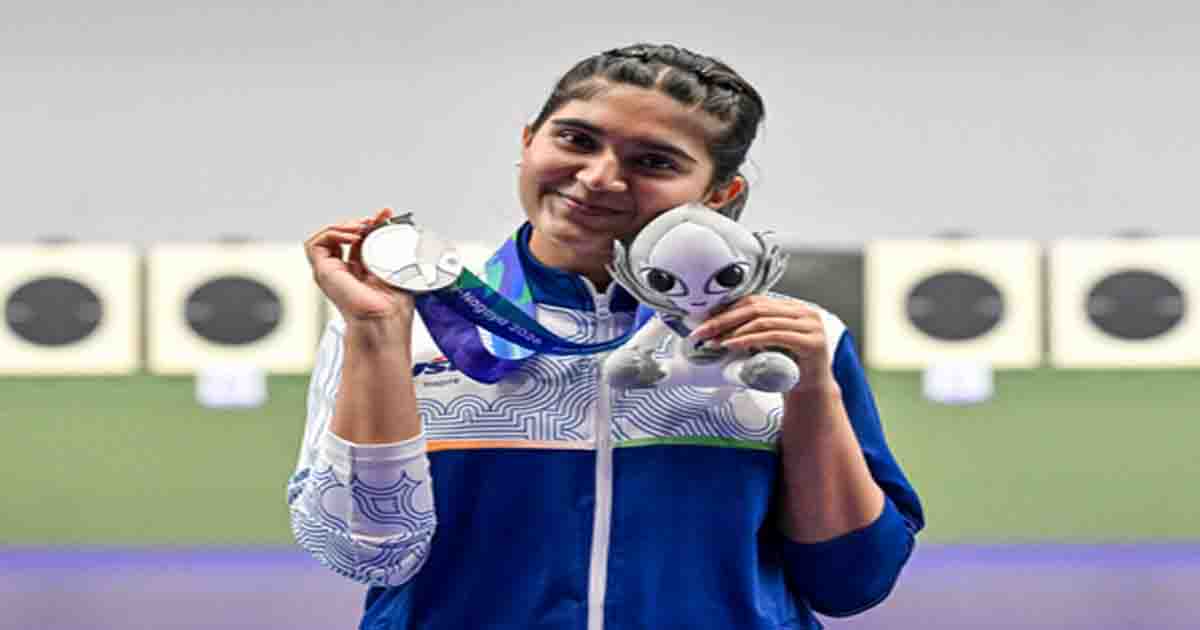
New Delhi, Sep 28: President of India Droupadi Murmu congratulated Esha Singh on Monday after the Indian shooter won the silver medal in the women’s 25m pistol event at the Asian Games 2026 in Aichi-Nagoya, praising her skill, precision and consistency after a dramatic final that featured multiple shoot-offs.
“I extend my heartiest congratulations to Esha Singh on winning the Silver Medal in the Women’s 25m Pistol event at the Asian Games 2026. Your exceptional performance has reflected great skill, precision and consistency. This medal is a proud addition to your sporting journey. My best wishes for many more laurels,” the President wrote on X.
Esha’s medal came after a tense contest in which she had to repeatedly fight to stay in contention. The Indian entered the final after qualifying eighth and eventually secured her place in the gold-medal shoot-off following a series of eliminations and shoot-offs.
The final stage brought Esha up against China’s Xiao Jiaruixuan. With the two separated by a single hit, Esha produced four hits to force a shoot-off. Both shooters then registered four hits apiece, sending the contest into another decisive exchange. Xiao eventually prevailed, leaving Esha with silver.
The result added another Asian Games medal to Esha’s record and drew praise from senior political leaders, with Murmu highlighting the performance as another significant milestone in the shooter’s career.
Defence Minister Rajnath Singh also hailed the Indian’s performance, pointing to the qualities behind her medal-winning display.
“A shining example of dedication and perseverance! Esha Singh has secured a silver medal women’s 25m pistol event at the Asian Games 2026. Her exceptional performance is a testament to her talent and hard work. Congratulations to her and best wishes for her future endeavours,” he said.
Uttar Pradesh Chief Minister Yogi Adityanath focused on Esha’s ability to withstand the pressure of the final, particularly during the shoot-offs.
“A fighting performance from Esha Singh in Shooting! Congratulations to Esha Singh on winning the silver medal in the women’s 25m pistol event at the Asian Games 2026. After battling through multiple shoot-offs, Esha held her nerve to secure another Asian Games medal in the event. A remarkable display of composure and determination,” he said.

Drug dealer arrested in Mumbai with 1.5 kg of charas (cannabis resin)

Lawrence Bishnoi gang shooters had practised shooting in the Aarey Colony forest before opening fire at Tiger Shroff’s residence.

PM Modi witnesses IAF’s air show, inaugurates garment facility in Varanasi

Major action by Mumbai ANC: Drug peddlers arrested.

Delhi Police bust Jamtara-based cyber fraud syndicate, 2 held for credit card fraud

Rahul, Cong ecosystem want to force regime change: BJP after Neha Bora praises B’desh Gen-Z protest

BJP pays tribute to ex-President Abdul Kalam, recalls his enduring influence on generations of India’s youth

Attack on democratic rights: INDIA Bloc leaders on detentions of anti-ECI protestors

INDIA bloc begins protest march against ECI

Maha Congress stages agitation against Gyanesh Kumar
-

 Crime4 years ago
Class 10 student jumps to death in Jaipur
-

 Maharashtra2 years ago
Mumbai Local Train Update: Central Railway’s New Timetable Comes Into Effect; Check Full List Of Revised Timings & Stations
-

 Maharashtra2 years ago
Mumbai To Go Toll-Free Tonight! Maharashtra Govt Announces Complete Toll Waiver For Light Motor Vehicles At All 5 Entry Points Of City
-

 Maharashtra2 years ago
False photo of Imtiaz Jaleel’s rally, exposing the fooling conspiracy
-

 National News2 years ago
Ministry of Railways rolls out Special Drive 4.0 with focus on digitisation, cleanliness, inclusiveness and grievance redressal
-

 Maharashtra2 years ago
Maharashtra Elections 2024: Mumbai Metro & BEST Services Extended Till Midnight On Voting Day
-

 National News2 years ago
J&K: 4 Jawans Killed, 28 Injured After Bus Carrying BSF Personnel For Poll Duty Falls Into Gorge In Budgam; Terrifying Visuals Surface
-

 Crime2 years ago
Baba Siddique Murder: Mumbai Police Unable To Get Lawrence Bishnoi Custody Due To Home Ministry Order, Says Report