
National News
BJP ‘victimised’ Shah Rukh, Mahesh Bhatt, says Mamata


In a sharp attack on the Bharatiya Janata Party, West Bengal Chief Minister Mamata Banerjee on Wednesday said that the country is facing “cruel and undemocratic” party which “victimised” Bollywood personalities like actor Shah Rukh Khan and director Mahesh Bhatt.
“We are facing a cruel undemocratic party – the BJP. If we come together, we will win,” Banerjee said at a large gathering of around 50 prominent civil society members including political and social leaders, retired judges, intellectuals, film celebs and other luminaries.
To a question, she said: “Mahesh ji has been victimised, even Shah Rukh Khan… and many others. But, if we have to win, we must speak out and fight it out wherever needed. You guide and advise us as a political party.”
Stressing the need for putting up a united front before the BJP’s challenge, Banerjee said: “India loves manpower, not muscle-power.”
She said regional parties like Shiv Sena in Maharashtra which are strong in their respective states must join hands to unitedly dislodge the BJP from power.
On the occasion, the Trinamool Congress chief, currently on a two-day visit to Mumbai, recalled the Nobel Prize laureate Rabindranath Tagore’s poem on Chhatrapati Shivaji Maharaj to say that “there is already a bridge between Bengal and Maharashtra”.
Senior NCP leader and lawyer Majeed Memon cited the Supreme Court’s observations how in the recent past, many laws have been rushed through the parliament which do not augur well for the people plus they are open to challenges before the courts.
He said that the West Bengal and Maharashtra together account for 90 seats in Lok Sabha and “Jai Bangla, Jai Maharashtra” can put up a formidable challenge to dislodge the BJP at the Centre, akin to the alliance of Shiv Sena-NCP-Congress in Maharashtra with the guidance of NCP President Sharad Pawar, with the BJP kept out of power.
“The Maharashtra model where parties like the Sena and Congress managed to keep their differences aside and worked on common goals, can be replicated elsewhere in the country with similar results,” Memon urged.
The meeting was attended by former high court judges Shafi Sayeed Parkar and Abhay M. Thipsay, senior lawyer Memon, lyricist Javed Akhtar, director Bhatt, intellectuals Bhalchandra Mungekar, Sudheendra Kulkarni, S. Balakrishnan, and Ayaz Memon, Bollywood actors Shatrughan Sinha, Swara Bhaskar, and Richa Chaddha, comedian Munawar Farooqui, social activists Vidya Chavan, Javed Anand and Medha Patkar, author Shobha De, among many others.
The meeting with leading lights from various fields was part of Banerjee’s 2-day high-profile visit to the state during which she met NCP chief Pawar, Sena leaders, MP Sanjay Raut, Tourism Minister Aditya Thackeray, the highlight of her trip, and she is likely to return home on Thursday morning.


Business
Employees’ body to meet on April 13 as Central govt staff keen on 8th Pay Commission decisions


New Delhi, April 7: Millions of Central government employees and pensioners await the outcome of the drafting committee of the National Council (Joint Consultative Machinery) on April 13 to get cues on the 8th Pay Commission salary revision, a report said on Tuesday.
The drafting committee meeting scheduled for 11:00 am at the JP Choubey Memorial Library (AIRF office premises) here will review a final common memorandum and discuss pay scale revisions, annual increments, allowances and other benefits, the report from NDTV Profit said.
“The April 13 meeting is in continuation of the March 12, 2026, meeting when all drafting committee members of the 8th Pay Commission met to discuss the common memorandum of all employee and pensioner bodies,” said NC-JCM secretary, Shiv Gopal Mishra, in a letter to members of the drafting committee.
The government has not yet announced the official date for the salary increase. Arrears will be calculated based on the date fixed for the implementation of the 8th Pay Commission
even as employee and pensioner groups press for arrears to be calculated from January 1, 2026, the report said.
The Federation of National Postal Organisations has asked the government to merge the 58 per cent dearness allowance with basic pay and give interim relief from the same date.
The salary increase will hinge on the fitment factor the government adopts which analysts expect to exceed 2.5. Some employee groups have sought a fitment factor of 3.15, even though the official decision may take over a year, the report said.
Pankaj Chaudhary, MoS Finance, told Parliament in March that the 8th Pay Commission will make its recommendations on pay, allowances, pensions, and other benefits for central government employees. The 8th Pay Commission is expected to complete this work within 18 months from November 2025.
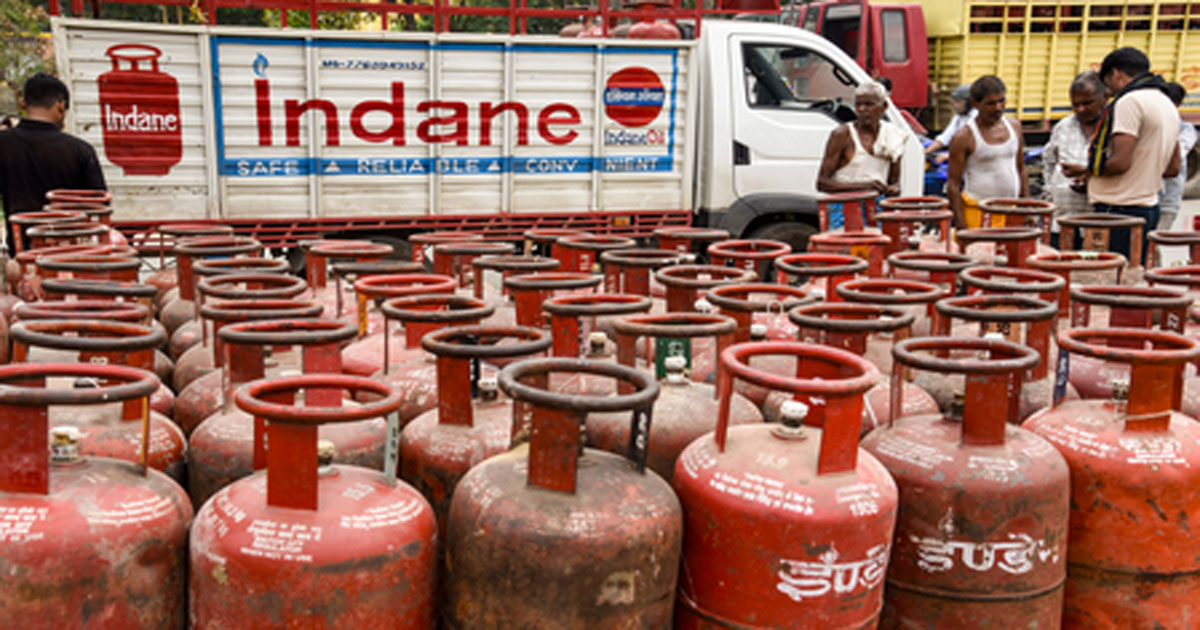
New Delhi, April 7: The Centre has decided to double the daily allocation of 5-kg free trade LPG (FTL) cylinders available for distribution to migrant labourers across states, according to an official communication.
The Petroleum Ministry said in a notification the enhanced allocation will be based on the average daily supply of cylinders provided to migrant workers.
The revised allocation goes beyond the earlier cap of 20 per cent specified in March announcement.
The government also said that the additional 5-kg FTL cylinders will be placed at the disposal of state governments and their Food and Civil Supplies Departments for distribution exclusively to migrant labourers with the assistance of oil marketing companies (OMCs).
Earlier, the government had said it was making all efforts to ensure adequate availability of petrol, diesel and LPG amid the prevailing geopolitical situation, while advising citizens to avoid panic buying and rely only on official sources for information.
Consumers were also encouraged to use digital modes for LPG bookings and minimise visits to distributors unless necessary.
The government has prioritised domestic LPG and PNG supplies, along with critical sectors such as hospitals and educational institutions.
It has also implemented several demand and supply-side measures, including enhancing refinery output and increasing LPG booking intervals to 25 days in urban areas and up to 45 days in rural areas.
To ease pressure on LPG demand, alternate fuels such as kerosene and coal have been made available, while states have been advised to expand PNG connections.
The government also said there has been no disruption in LPG supply affecting migrant workers.
According to official data, around 51 lakh domestic LPG cylinders were delivered recently, with online bookings rising to 95 per cent and delivery authentication-based distribution increasing significantly to curb diversion.
New Delhi, April 7: The Delhi Police on Tuesday rescued a 17-year-old minor girl and arrested an accused in a swift operation carried out by the women patrolling team of Mahila Chowki, Central District, preventing a serious crime as the victim was lured to Delhi on the pretext of getting her a job.
According to officials, the incident came to light on April 2, at around 10:00 AM, when a police team from Kamla Market Police Station comprising SI Kiran Sethi, W/Ct Khushboo, and W/Ct Pooja was on routine patrol duty near S.N. Marg. During patrolling, a minor girl approached the team seeking immediate help.
The police personnel acted promptly, ensured her safety, and recorded her statement. The victim, a resident of Darbhanga district in Bihar, revealed that she had left her home on March 14 following a domestic dispute and travelled to Delhi on the advice of a friend.
Upon her arrival at New Delhi Railway Station, she was received by Shivji Das (52), an acquaintance of her friend. He took her to his residence in Nehru Vihar, where she stayed from March 15 to April 2 under the pretext of being offered domestic work.
The victim alleged that during this period, especially in the absence of the accused’s wife, Shivji Das outraged her modesty, made inappropriate advances, and threatened her with defamation if she disclosed the incidents to anyone.
On April 2, the accused brought the girl to S.N. Marg area and asked her to wait in a parking lot, claiming he was arranging a job for her. Sensing danger and feeling unsafe in the suspicious surroundings, the victim sought help from the women police team passing by.
Acting on her complaint, the police immediately apprehended the accused at the spot. During further enquiry, when officers visited nearby shops to gather statements, it emerged that the accused was attempting to negotiate a deal to sell the minor. The alleged plan was foiled due to the timely intervention of the police team.
Based on the victim’s statement, an FIR (No. 95/2026) was registered at Kamla Market Police Station under relevant provisions of the Bharatiya Nyaya Sanhita and the POCSO Act.
The victim has undergone medical examination and was produced before the Child Welfare Committee. She is currently safe and staying in a shelter home.
Police confirmed that the accused, Shivji Das, a native of Darbhanga, Bihar, has been arrested, and further investigation into the case is underway.

Mumbai: Anti-Narcotics Cell cracks down on drug dealers, seizes drugs worth over Rs 10 crore, arrests 10 accused

Mumbai: Massive Fire Engulfs Railway Coach At Matunga Carshed, Welding Sparks Suspected

Employees’ body to meet on April 13 as Central govt staff keen on 8th Pay Commission decisions

Mumbai Shocker! Thief Steals Mobile During Jumma Namaz In Govandi Mosque, Act Caught On CCTV

Mumbai: 6-Year-Old Girl Killed By Dumper In Kandivali, Locals Block Road In Protest

Married Mumbai Woman Mocked In Andheri Society Over ‘Lift Kissing’ CCTV Video, Files Police Complaint

LPG Crisis In Maharashtra: Cyber Crime On Rise Amid Shortage, 2 Women Lose ₹4 Lakh In ‘Gas Update’ Online Scam In Kalyan-Dombivli

Dhurandhar 2 Box Office Collection Day 1: Ranveer Singh Starrer Takes An Exceptional Opening; Crosses ₹100 Crore Mark

Thane Horror: Man Slashed With Chopper In Naupada For Refusing ‘Vargani’, Caught On Camera

Mumbai Police Busts Fake Apple Accessories Racket In Ghatkopar, ₹16.33 Lakh Goods Seized; Six Booked
-

 Crime4 years ago
Class 10 student jumps to death in Jaipur
-

 Maharashtra2 years ago
Mumbai Local Train Update: Central Railway’s New Timetable Comes Into Effect; Check Full List Of Revised Timings & Stations
-

 Maharashtra1 year ago
Mumbai To Go Toll-Free Tonight! Maharashtra Govt Announces Complete Toll Waiver For Light Motor Vehicles At All 5 Entry Points Of City
-

 Maharashtra2 years ago
False photo of Imtiaz Jaleel’s rally, exposing the fooling conspiracy
-

 National News1 year ago
Ministry of Railways rolls out Special Drive 4.0 with focus on digitisation, cleanliness, inclusiveness and grievance redressal
-

 Maharashtra1 year ago
Maharashtra Elections 2024: Mumbai Metro & BEST Services Extended Till Midnight On Voting Day
-

 National News2 years ago
J&K: 4 Jawans Killed, 28 Injured After Bus Carrying BSF Personnel For Poll Duty Falls Into Gorge In Budgam; Terrifying Visuals Surface
-

 Crime1 year ago
Baba Siddique Murder: Mumbai Police Unable To Get Lawrence Bishnoi Custody Due To Home Ministry Order, Says Report