
Politics
BJP leaders in Bihar advocate for religious conversion law

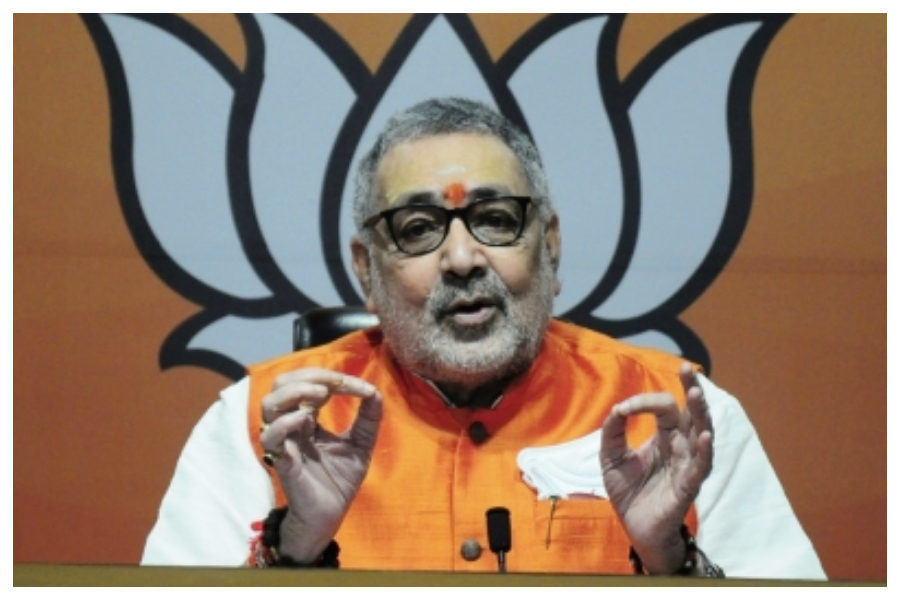
The BJP leaders in Bihar who have already announced their support to the caste-based surveys in the state are also stressing on the implementation of the religious conversion law in the country.
Union Minister and firebrand Bharatiya Janata Party (BJP) leader Giriraj Singh said: “The religious conversion law is necessary and should come into existence in the country.”
Singh on Friday appeared in MP-MLA court in a case related to “Rail Roko” protest in 2014.
Also, BJP’s Rajya Sabha MP Rakesh Sinha also spoke on similar lines. He said that it is not only necessary but it is also mandatory in the country.
“When the UPA government was in power, six states had formed the religious conversion law. Why it could not be implemented in the entire country to prevent conversion?” Sinha said in Begusarai.
The statements of these two BJP leaders have come at a time amid rumours that some of the families in Bihar’s Saran district have opted for conversion procedures.
Bihar Chief Minister Nitish Kumar, however, already clarified on Wednesday that there is no truth into it.
“There is no truth into the talks of conversion in Bihar. The administration in all districts are on alert mode, and keeping a close tab on any unusual incidents,” Kumar said.
“There is no communal dispute in the state. Bihar is a peaceful state. People of every religion are united and busy in their own field of work,” he said.
Nitish Kumar is serving as the Chief Minister of Bihar for the fourth consecutive term. He runs the government with the support of the BJP.
Also, he has never allowed fringe elements to create communal tension in Bihar.


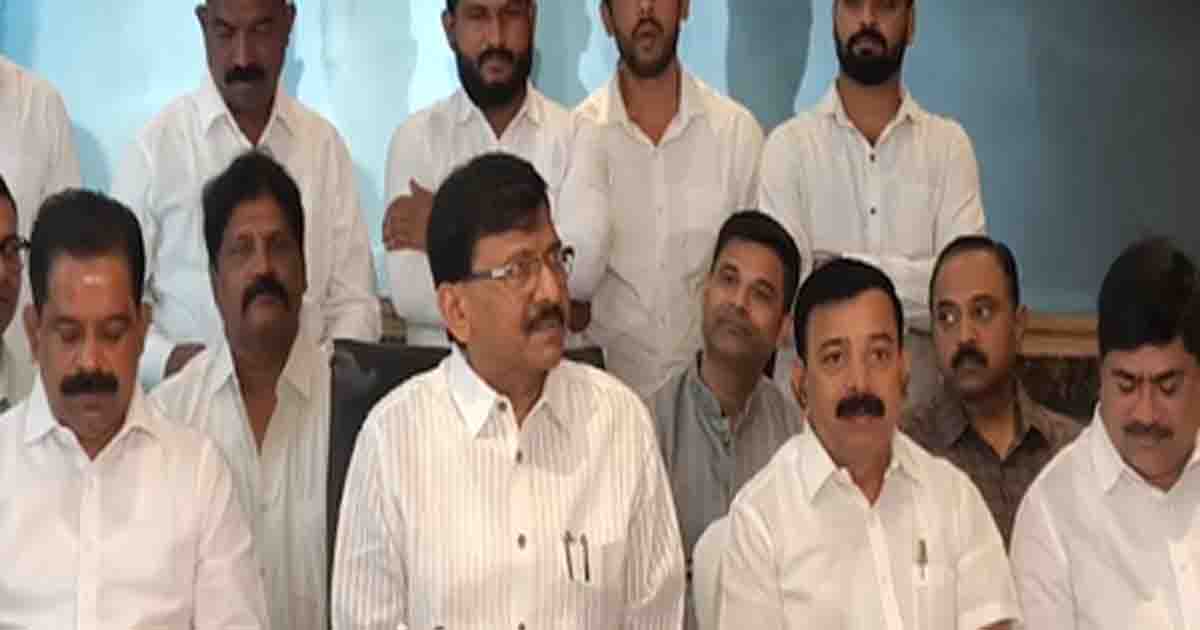
Pune, Oct 10: Shiv Sena (Uddhav Balasaheb Thackeray) MP Sanjay Raut on Saturday predicted that the central government would collapse within six months, accusing it of using heavy police deployment and blockades to prevent protesters from reaching Delhi for the Cockroach Janta Party (CJP) demonstration against Chief Election Commissioner Gyanesh Kumar.
Calling the ongoing protests a “people’s rebellion,” he claimed that the Narendra Modi government was in its final days and would fall by March-April next year.
Speaking to reporters, Raut claimed that the central government is terrified of young citizens and peaceful protesters.
CJP chief Abhijit Dipke on Saturday arrived at the Delhi airport, where the police detained him.
Raut predicted a massive political upheaval in the country, claiming that the central administration is breathing its last.
“This government will not survive. Between March and April, the Modi government will take its last breath, and a national government will be established,” he claimed.
He reiterated his earlier remark that Prime Minister Narendra Modi’s birthday on September 17 would be his last as Prime Minister. “If Modi doesn’t remain, Amit Shah won’t remain either,” he added.
Targeting the leadership, Raut used a harsh phrase referencing the late actor Nana Patekar’s famous dialogue, stating that a “cockroach” can make a government powerless. He alleged that current leaders are merely “traders” rather than strong statesmen, and traders are quick to panic.
He claimed that the Centre has effectively turned Delhi into Jammu and Kashmir, with around 15,000 vehicles stranded outside the city and trains halted to prevent protesters from reaching the capital.
Accusing the Centre of using extreme suppression tactics reminiscent of the British era, Raut questioned why the government was sealing Delhi and stopping youth from protesting democratically.
“Not even during British rule were such massive blockades seen. Thousands of vehicles are stuck on all sides. By what law are you branding protesting youth as traitors and anti-nationals?” Raut asked.
He urged the Delhi Police not to follow illegal orders issued by the central government, alleging that the current regime relies on voter manipulation and state machinery misuse.
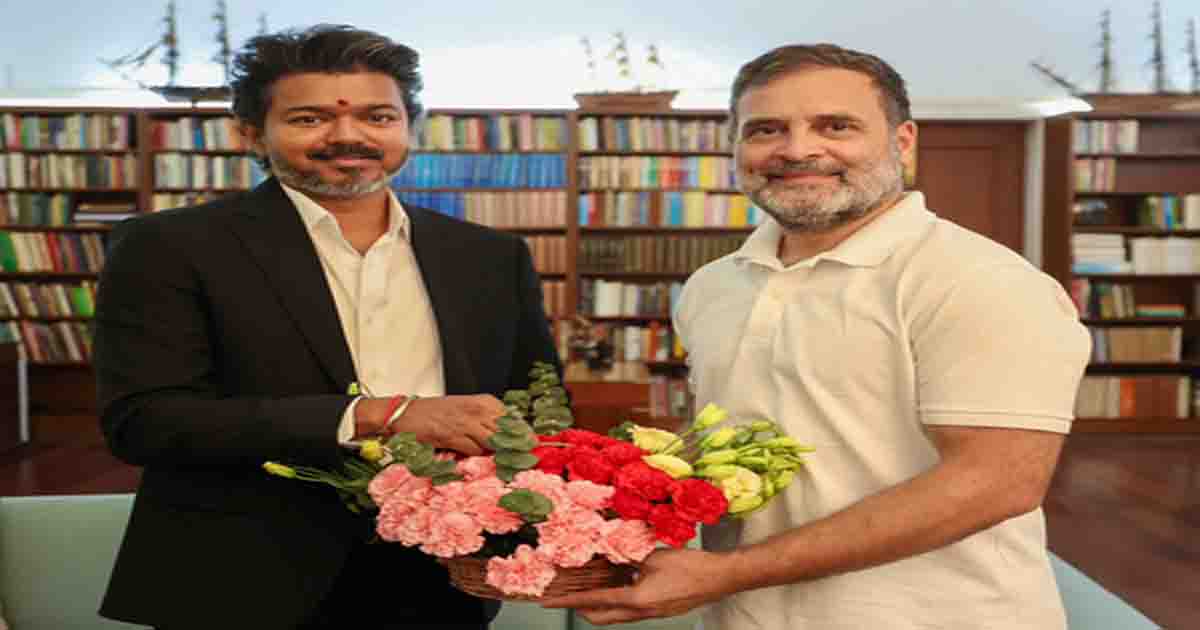
Chennai, Oct 10: Lok Sabha Leader of the Opposition (LoP), Rahul Gandhi, will address students at Chennai Island Grounds on Saturday as part of his ‘Chhatron Ki Goonj (Voice of Students)’ outreach programme, which focusses on concerns over examination irregularities, paper leaks, rising tuition fees and unemployment.
During his visit, LoP Gandhi is also scheduled to meet Tamil Nadu Chief Minister Vijay at his Neelankarai residence.
The meeting is slated for 1.30 p.m., an hour after the Congress leader’s expected arrival at Chennai airport.
The student interaction, scheduled for 5 p.m., follows similar programmes in Kota in Rajasthan, Pune and Nashik in Maharashtra, and Indore in Madhya Pradesh.
The initiative provides a platform for students to discuss difficulties within the education system and challenges in securing employment.
The Tamil Nadu Congress has made extensive arrangements for the Chennai event, erecting a large covered pavilion at Island Grounds.
State Congress president Manickam Tagore inspected the venue and reviewed preparations with senior party leaders. He was accompanied by senior party in-charge Ghulam Ahmad Mir, joint in-charge Nivedit Alva, ministers Rajesh Kumar and Viswanathan, and Congress legislature party leader Tharahai Cuthbert.
According to organisers, more than one lakh students registered through a website and QR codes circulated across Tamil Nadu.
However, entry to the interaction will be restricted to 10,000 students who have been issued identification cards.
Students from several colleges across the State are expected to attend. Organisers have installed large screens outside the pavilion to enable people gathered beyond the main enclosure to watch the proceedings.
Drinking water and toilet facilities have also been arranged at the venue. Seating provisions have been made for around 350 invited education representatives, including college principals, professors and former principals.
The programme will centre on issues affecting students, including NEET and other examination paper leaks, increasing educational expenses and uncertainty over job opportunities.
LoP Gandhi’s outreach seeks to bring these concerns into direct discussion with young people. Apart from his meeting with CM Vijay and the student interaction, LoP Gandhi is expected to meet Congress functionaries and other prominent political leaders at the Taj Connemara hotel during his Chennai visit.
The State Congress leadership has been coordinating arrangements for the event, including student participation and facilities at the venue, ahead of his arrival. LoP Gandhi is scheduled to leave Chennai for New Delhi on a flight at 9.30 p.m.
Maharashtra
Congress leader Dalwai urges Fadnavis to free Maha activists detained ahead of Delhi stir

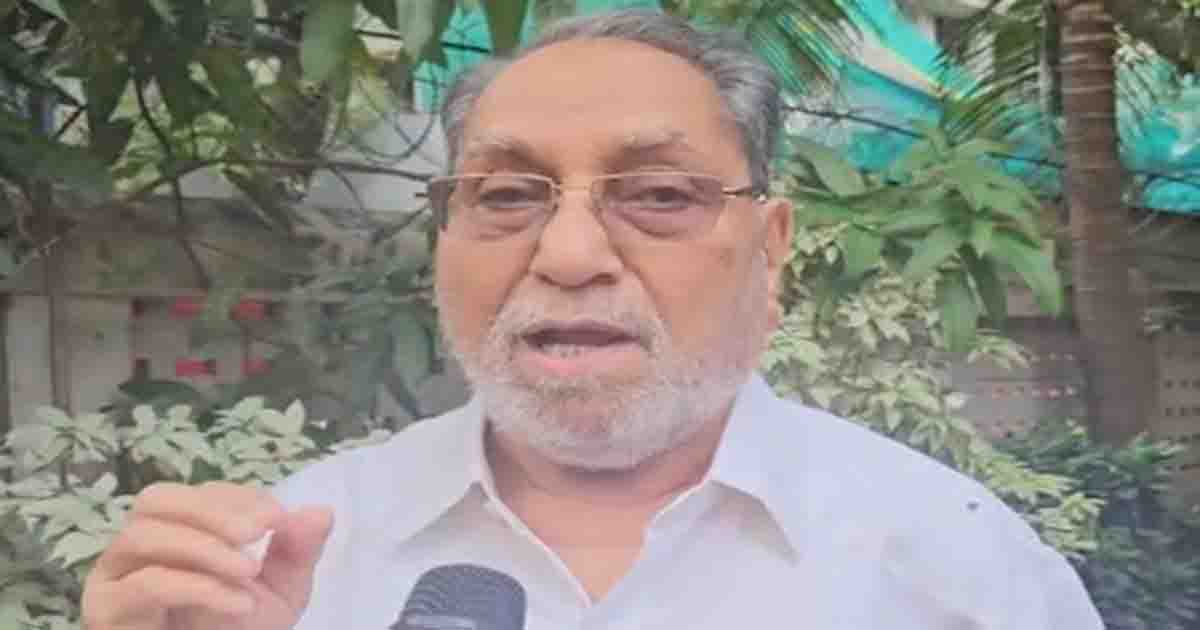
Mumbai, Oct 10: Former Rajya Sabha MP and veteran Congress leader Husain Dalwai has written to Maharashtra Chief Minister Devendra Fadnavis, expressing strong outrage over the detention of senior social activist Firoze Mithiborawala and several other activists across Maharashtra.
Dalwai, in his letter on Friday, said that activists and student union members were traveling to New Delhi to participate in a peaceful rally scheduled for Saturday.
The protest, organised by various student organisations and the Cockroach Janata Party (CJP), aims to demand transparency in the electoral process.
Dalwai stated that the police used high-handed tactics to detain Mithiborawala directly from his residence in Mumbai and kept him in police custody to prevent him from reaching the national capital.
Additionally, several other activists and students travelling by train from Maharashtra were intercepted and detained at various railway stations.
Terming the police action as “authoritarian” and a direct violation of fundamental democratic rights, Dalwai highlighted that the Indian Constitution guarantees freedom of speech, movement, and peaceful assembly. He condemned treating peaceful activists and youth like criminals.
In his appeal, Dalwai urged the Chief Minister to immediately intervene in the matter, take note of the police crackdown, and issue directives to administration officials for the immediate and honourable release of all detained activists and students across the state.
Earlier, the Shiv Sena (Uddhav Balasaheb Thackeray) launched a scathing attack on the Centre, accusing it of driving Indian democracy to its grave.
The Thackeray camp in the party mouthpiece “Saamana” editorial commented on the intensifying political showdown surrounding Chief Election Commissioner (CEC) Gyanesh Kumar, widespread opposition protests, and an unprecedented state-sponsored crackdown on democratic dissent.
The editorial highlighted that Senior Congress leader Rahul Gandhi’s aggressive campaign against CEC Gyanesh Kumar—triggered by allegations of electoral manipulation—has sent shockwaves through the ruling Bharatiya Janata Party (BJP).
It asserted that instead of addressing accusations of systemic electoral irregularities, the ruling establishment is shielding the election chief at all costs, calling the protection of such actions a “betrayal of the nation”.
Condemning the handling of recent demonstrations, the editorial pointed out a glaring double standard by the administration. While Opposition leaders like Rahul Gandhi and Priyanka Gandhi were dragged, manhandled, and bundled into police vehicles during peaceful protests at Jantar Mantar, BJP Mahila Morcha activists staging abrasive demonstrations outside the Congress headquarters were granted absolute immunity by the home ministry, alleged the “Saamana” editorial.
The Thackeray camp claimed that the government planned to deploy around two lakh armed members of Bajrang Dal to Jantar Mantar to crush the opposition’s youth-led “cockroach” movement. It argued that relying on political gangs and “private armies” to violently suppress lawful public dissent invites absolute anarchy and civil unrest.

Sanjay Raut predicts ‘major political upheaval’, says Centre fears protesters

Saira Banu recalls Dilip Kumar drying Nana Patekar hair after he arrived home drenched in rain post ‘Krantiveer’ National Award win

LoP Rahul Gandhi to meet CM Vijay, address students in Chennai today

Congress leader Dalwai urges Fadnavis to free Maha activists detained ahead of Delhi stir

Mumbai Police detain Mahatma Gandhi great-grandson ahead of CJP protest

Gift to President Putin part of PM Modi bid to globally display India’s heritage

PM Modi’s warm camaraderie with Putin, Xi on full display at BRICS Summit

INDIA bloc begins protest march against ECI

Complaint against Netflix & Mukesh Chhabra for inappropriate language on ‘India’s Got Latent 2’

Maha Congress stages agitation against Gyanesh Kumar
-

 Crime4 years ago
Class 10 student jumps to death in Jaipur
-

 Maharashtra2 years ago
Mumbai Local Train Update: Central Railway’s New Timetable Comes Into Effect; Check Full List Of Revised Timings & Stations
-

 Maharashtra2 years ago
Mumbai To Go Toll-Free Tonight! Maharashtra Govt Announces Complete Toll Waiver For Light Motor Vehicles At All 5 Entry Points Of City
-

 Maharashtra2 years ago
False photo of Imtiaz Jaleel’s rally, exposing the fooling conspiracy
-

 National News2 years ago
Ministry of Railways rolls out Special Drive 4.0 with focus on digitisation, cleanliness, inclusiveness and grievance redressal
-

 Maharashtra2 years ago
Maharashtra Elections 2024: Mumbai Metro & BEST Services Extended Till Midnight On Voting Day
-

 National News2 years ago
J&K: 4 Jawans Killed, 28 Injured After Bus Carrying BSF Personnel For Poll Duty Falls Into Gorge In Budgam; Terrifying Visuals Surface
-

 Crime2 years ago
Baba Siddique Murder: Mumbai Police Unable To Get Lawrence Bishnoi Custody Due To Home Ministry Order, Says Report