
Business
Big news related to Mukesh Ambani

Mukesh Ambani, who took over the reins of Reliance Industries Ltd (RIL) after the sudden demise of his legendary industrialist father Dhirubhai Ambani, completes 20 years at the helm during which the company saw a 17-fold jump in revenues, 20-times surge in profit and has become a global conglomerate.
Following Dhirubhai’s death in 2002, Mukesh and his younger brother Anil assumed joint leadership of Reliance.
While the elder brother took over as the chairman and managing director, Anil was named vice chairman and joint managing director.
The brothers, however, feuded over control, leading to a split with Mukesh assuming control of the gas, oil, and petrochemicals units as RIL, while Anil got telecommunications, power generation, and financial services units through a demerger.
In 20 years that Stanford University-drop out Mukesh, 65, has been at the helm of RIL, the company has re-entered the telecom business, diversified in retail and new energy, and raised a record Rs 2.5 lakh crore selling minority interests during the Covid lockdown.
Here is his journey in numbers at the helm of RIL:
* Market capitalization grew at an annualized rate of 20.6 per cent in the last 20 years from Rs 41,989 crore in March 2002, to Rs 17,81,841 crore in March 2022.
* Revenues grew at an annualized rate of 15.4 per cent from Rs 45,411 crore in FY 2001-02, to Rs 792,756 crore in FY 2021-22.
* Net profit grew at an annualized rate of 16.3 per cent from Rs 3,280 crore in FY 2001-02, to Rs 67,845 crore in FY 2021-22.
* Exports grew at an annualized rate of 16.9 per cent from Rs 11,200 crore in FY 2001-02, to Rs 254,970 crore in FY 2021-22.
* Total assets grew at an annualized rate of 18.7 per cent from Rs 48,987 crore in March 2002, to Rs 14,99,665 crore in March 2022.
* Net worth grew at an annualized rate of 17 per cent from Rs 27,977 crore in March 2002, to Rs 645,127 crore in March 2022.
* RIL added Rs 17.4 lakh crore to investor wealth during these two decades, which is an average of Rs 87,000 crore every year.
According to Motilal Oswal’s 26th annual wealth creation study, the company has emerged as the largest wealth creator, over 2016-21, creating wealth to the tune of nearly Rs 10 lakh crore and breaking its own previous record.
Diversification
Reliance started several new businesses in these two decades – telecom arm Jio started operations in 2016, retail in 2006, and new energy in 2021.
From a single oil refinery in 2002, Jamnagar is now the world’s largest single-location refining complex. During this period, RIL doubled oil refining capacity, adding the unique capability to convert the worst of crude oils into the best of exportable fuels. It also added some of the world’s largest downstream units.
Its traditional business of petrochemicals too flourished and expanded many-fold in the last two decades.
Reliance’s oil and gas exploration (E&P) business made the first hydrocarbon discovery in late 2002 and production started in 2009. The firm got UK’s bp plc as an investor in the E&P business in 2011 and in recent months, it brought to production the second set of discoveries.
RIL brought BP, one of the global petroleum industry leaders, as a partner in its Indian fuel retailing business.
Reliance Mobility Solutions has brought the latest technology and offerings for consumers at petro-retail outlets through the Jio-BP brand.
It aims to offer a new experience in buying fuel with high-quality service and making the retail outlets future-ready with charging and battery swap facilities.
Reliance set the foundation for New Energy Business committing over Rs 75,000 crore investment in three years to set up five uniquely integrated Giga Factories at Jamnagar with the world’s latest technology.
This will have a first-of-its-kind ‘quartz-to-module’ solar panel facility. The ultimate aim is to emerge world’s lowest-cost producer of solar energy and green hydrogen.
Reliance has set a target to become Net Carbon Neutral by 2035, contributing to India’s net carbon zero mission. It will start 10GW of solar PV cell and module factory by 2024, to be scaled up to 20GW by 2026.
By 2025, RIL plans to generate its entire round-the-clock (RTC) power and intermittent energy for Green Hydrogen from captive solar power plants.
Reliance set a record for capital fundraising in FY21. It raised more than Rs 2.5 lakh crore through a rights issue and minority stake sales in Jio Platforms and Reliance Retail Ventures to global marquee investors such as Facebook and Google. During FY2021, Reliance was the single-largest foreign direct investment (FDI) generator for India.
After the launch of Jio, India became the data capital of the world and the cost of data/GB fell from Rs 500 to Rs 12. India’s ranking in Broadband data consumption moved from 150 in 2016 to No.1 in 2018 thanks to Jio.
Born in Aden, Yemen, where his father worked as a gas station attendant, Mukesh Ambani earned his bachelor’s degree in chemical engineering from the University of Bombay (now the University of Mumbai) and subsequently pursued a master’s degree in business administration from Stanford University.
He, however, left the program in 1981 to join the family business, where he worked to diversify the company, foraying into communications, infrastructure, petrochemicals, petroleum refining, polyester fibres, and oil and gas production.
In 2007, he became India’s first rupee trillionaire. He, however, has lost the richest Indian tag to a fellow Gujarati businessman, Gautam Adani in recent months.
Reliance Foundation, backed by Reliance Industries, came up in 2010 to spearhead the company’s philanthropic initiatives under the leadership of his wife Nita. It works in the areas of rural empowerment, nutrition security, ecological conservation, education, and sports.
Reliance Foundation is India’s biggest corporate social responsibility initiative by reach, as well as by spend.


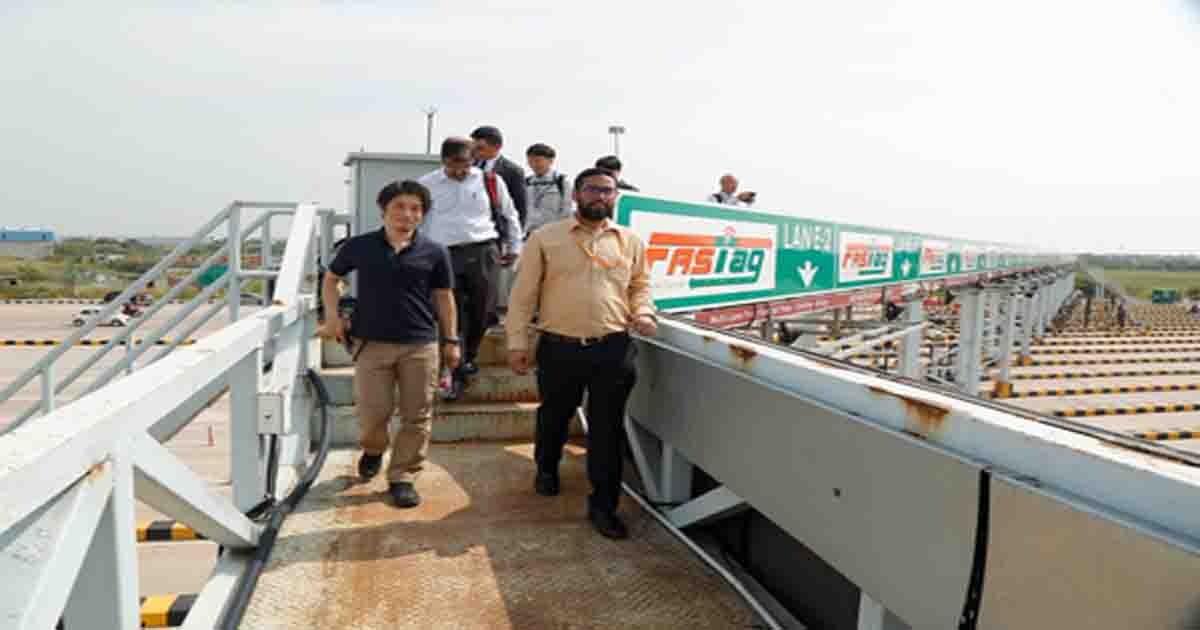
A Japanese delegation visited the Multi-Lane Free Flow (MLFF) tolling system in Mundka-Bakkarwala on Friday on the sidelines of the 12th India–Japan Joint Working Group Meeting on Roads and Road Transportation.
The MLFF system provided insights into India’s technology-driven initiatives for seamless and efficient highway travel.
At the MLFFs, the National Highways Authority of India (NHAI) uses a combination of RFID-based FASTag electronic toll collection, automatic number plate recognition (ANPR) and AI analytics to allow vehicles to pass through charging points without stopping, slowing down or remaining in a designated lane.
MLFFs have already been installed at Choryasi in Gujarat, Mundka in Delhi, Gharaunda in Haryana and Daulatpura and Manoharpura in Rajasthan.
While 12 further locations have been awarded for conversion, tenders have also been launched covering an additional 104 toll plazas around the country.
The MLFF at Choryasi on the Surat–Bharuch section of NH-48 was the first to become operational.
The one at Mundka on Delhi’s Urban Extension Road-II was the second.
The expansion plan represents a significant shift from India’s traditional barrier-based toll plazas.
Rather than moving immediately to satellite-based toll collection, the Indian government has opted to build on the country’s established FASTag system and combine it with ANPR and AI.
Expert committees had recommended further consideration of GPS-based barrier-free tolling because of security, privacy and operational control issues, the Ministry of Road Transport and Highways has indicated.
FASTag and ANPR/AI was thus selected as the technology for the current MLFF programme.
The session of the India–Japan Joint Working Group on Roads and Road Transportation Sector was successfully held at Bharat Mandapam in New Delhi.
Discussions focused on advanced construction technologies, bridge and tunnel engineering, sustainable infrastructure and digital innovations, fostering the exchange of technical expertise and best practices.
“The meeting reaffirmed both nations’ commitment to safe, sustainable and technology-driven road infrastructure, aligned with the vision of Viksit Bharat @ 2047,” the Ministry said in a statement.
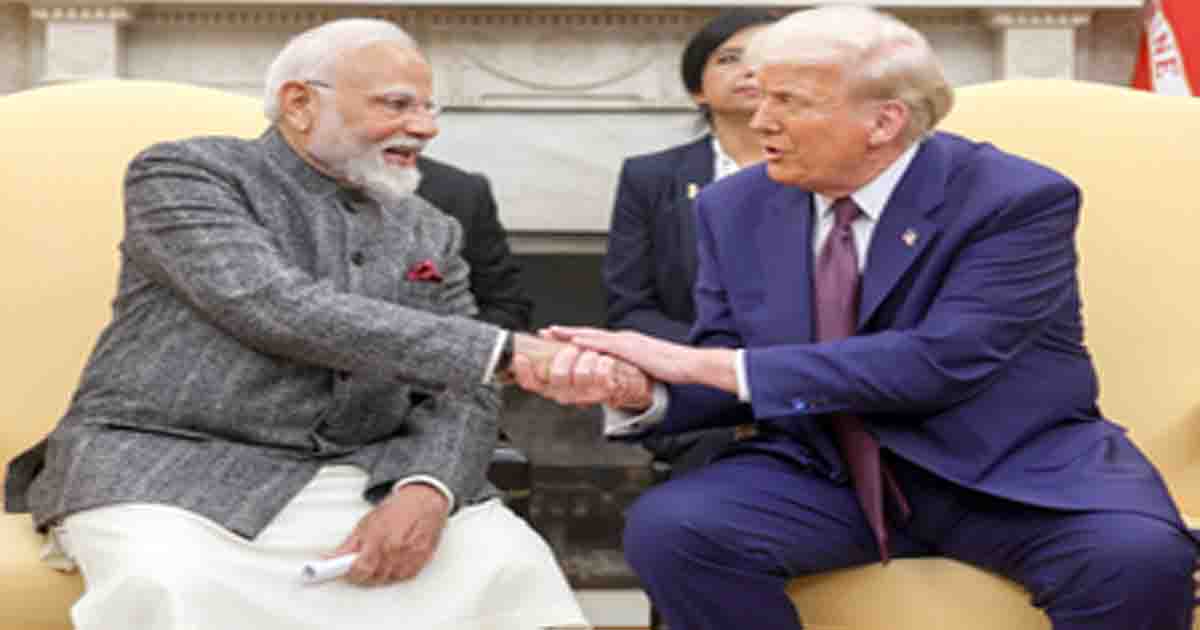
Washington, Oct 16: A long-awaited trade agreement between India and the United States is almost complete, with only one or two per cent of negotiations remaining, a senior US official said, signalling that the two countries are approaching a breakthrough after months of high-level discussions.
The official said the biggest issues had already been resolved and that negotiations were continuing at the highest political levels, including between President Donald Trump and Prime Minister Narendra Modi.
“The biggest items have been settled. I mean …., it’s pretty much done. We have that one, one or two per cent left,” the official told reporters during a State Department briefing on Friday.
The remarks came ahead of Secretary of State Marco Rubio’s scheduled visit to India, where he will hold discussions with Indian government officials and leading business executives in Mumbai and Jamnagar.
The official said the two governments remained in constant contact over the proposed agreement.
“We are actively engaged every single week,” the official said, adding that high-level discussions on the trade deal were taking place regularly.
The official cited recent diplomatic engagements involving US Trade Representative Jamieson Greer, India’s Commerce Minister Piyush Goyal and conversations between Trump and PM Modi as evidence of the momentum behind the negotiations.
However, the official also identified a significant complication that had delayed the agreement.
An earlier understanding had been linked to the International Emergency Economic Powers Act, or IEEPA, but the legal framework had to be reconsidered after the law was struck down, according to the official.
The development forced negotiators to revisit elements of the proposed agreement and contributed to several additional months of discussions.
Despite those complications, the official expressed optimism that the remaining differences could be resolved soon.
Rubio is scheduled to travel first to Uzbekistan for meetings with Central Asian leaders before proceeding to India.
In Mumbai, he will meet Indian government counterparts and senior executives from some of the country’s largest companies.
The official said the decision to visit Mumbai rather than New Delhi reflected the administration’s growing emphasis on commercial diplomacy and Indian investment in the United States.
Rubio will also travel to Jamnagar.
The official said Washington was seeking closer engagement with India across information technology, pharmaceuticals, defence cooperation and other sectors.
Further visits by senior American Cabinet officials are also anticipated next year as both governments seek to expand bilateral engagement.

New Delhi, Oct 16: Domestic equity benchmark indices traded lower on Friday, tracking mixed global cues, while information technology (IT) shares supported the market with gains.
In early deals, Sensex was trading 0.29 per cent or 221.89 points lower at 74,093, hitting an intraday low. Similarly, Nifty recorded an intraday low of 22,942, down 0.24 per cent or 55.19 points.
Earlier in the day Sensex opened 0.03 per cent or 25.47 points higher at 74,341.08 against its previous close of 74,315.61. While the 50-scrip basket began the trading session at 23,065.10, up 0.29 per cent or 67.75 points from its previous close of 22,997.35.
In morning trade, Nifty IT, Nifty Media, Nifty PSU Bank and Nifty Metal surged up to 1.59 per cent. In contrast, Nifty Oil & Gas, Nifty MidSmall IT & Telecom and Nifty FMCG declined up to 0.86 per cent.
Meanwhile, realty and auto sectoral indices were also trading lower, while pharma, cement, healthcare and private bank saw marginal declines.
According to market experts, India has significantly outperformed other markets this week with 668-point gains in Nifty 50 in the last three days.
The outperformance is driven by a weakening AI trade, expectations of major changes in LTCG taxation in the coming Budget, and positive fallout from Q2 results that have been better than expected so far.
They further noted that good results from IT majors and positive management commentary have led to a smart 9 per cent revival in the IT index, contributing to the resilience of the Nifty.
“Q2 results of telecom, banking, automobiles and metals like copper, aluminium and zinc are expected to be impressive and provide fundamental support to the market,” they added.
“Another positive development is the sharp decline in the US 10-year bond yield to 5.07 per cent. This, along with strength in the rupee, can restrain FII selling to some extent,” according to the experts.
However, FIIs are likely to continue selling so long as the 10-year yield remains above 5 per cent and Brent trades above $100.
While maintaining a 23,200-23,600 view, analysts expect mean reversion moves while below 23,070, given the sharp rise in the previous session. Dips are expected to find buying interest as long as they do not stretch beyond 22,780.
On global cues, Asian equities traded higher in early hours, mirroring US markets. The S&P 500 closed 0.33 per cent higher after recovering from early losses, while the tech-heavy Nasdaq ended flat, up 0.08 per cent.

Trump says Russia ‘asked to be represented’ at G20, would ‘love to have’ Putin

Rights Body flags escalating human rights abuses in Bangladesh during EU meeting

Eight killed as minibus falls into ditch on Delhi-Mumbai Expressway in Rajasthan’s Kota

Delhi Police registers multiple FIRs over violation of prohibitory orders in CP; warns repeat offenders of action

Five of a family found dead in Greater Noida village under suspicious circumstances

Rahul, Cong ecosystem want to force regime change: BJP after Neha Bora praises B’desh Gen-Z protest

BJP pays tribute to ex-President Abdul Kalam, recalls his enduring influence on generations of India’s youth

Mumbai Cyber Cell arrests 6 members of organized gang in major operation; Beware of cyber fraudsters; Digital arrest has no legal status; DCP Bajrang Bansode

INDIA bloc begins protest march against ECI

Maha Congress stages agitation against Gyanesh Kumar
-

 Crime4 years ago
Class 10 student jumps to death in Jaipur
-

 Maharashtra2 years ago
Mumbai Local Train Update: Central Railway’s New Timetable Comes Into Effect; Check Full List Of Revised Timings & Stations
-

 Maharashtra2 years ago
Mumbai To Go Toll-Free Tonight! Maharashtra Govt Announces Complete Toll Waiver For Light Motor Vehicles At All 5 Entry Points Of City
-

 Maharashtra2 years ago
False photo of Imtiaz Jaleel’s rally, exposing the fooling conspiracy
-

 National News2 years ago
Ministry of Railways rolls out Special Drive 4.0 with focus on digitisation, cleanliness, inclusiveness and grievance redressal
-

 Maharashtra2 years ago
Maharashtra Elections 2024: Mumbai Metro & BEST Services Extended Till Midnight On Voting Day
-

 National News2 years ago
J&K: 4 Jawans Killed, 28 Injured After Bus Carrying BSF Personnel For Poll Duty Falls Into Gorge In Budgam; Terrifying Visuals Surface
-

 Crime2 years ago
Baba Siddique Murder: Mumbai Police Unable To Get Lawrence Bishnoi Custody Due To Home Ministry Order, Says Report