
Crime
Big crackdown: Delhi Police bust several arms syndicates ahead of R-Day

In a crackdown, Delhi Police have busted several illegal arms supply syndicates that may have emerged as a security threat in the national capital ahead of Republic Day celebrations.
In just past five days, police have arrested 6 notorious arms dealers who used to supply illegal arms and ammunition to the gangsters of Delhi, out of which the last was been found to have illegal financial links with subversive modules based abroad.
In the first operation, the Special Cell on January 21 announced arrest of a wanted arms dealer who supplied weapons to conspirators, who plotted to kill a Delhi-based Kashmiri Pandit. The accused, identified as Haji Shamim alias Shamim Pistol, was a notorious illegal arms supplier and had been supplying illegal arms for more than 15 years.
First arrested in an illegal arms case in 2007, he deals in sophisticated arms including foreign-made arms.
The dconspiracy to kill the Kashmiri Pandit social activist was hatched by a person named Randeep, who has been absconding since 2014 and is hiding abroad. It was learnt that he runs an international drug cartel and enjoys the support of Pakistan. In this whole conspiracy, weapons were arranged by Shamim.
The second operation was conducted on January 22 in which an illegal arms factory that was manufacturing around 1,000 weapons per year was busted by the Delhi Police in Uttar Pradesh’s Aligarh district and one man was apprehended in this connection. The details about the arms factory were revealed during the interrogation of notorious arms supplier Shakil alias Sherni, who was arrested earlier that week after an encounter with the Special Staff of Outer North district. The apprehended accused, identified as Ravi Mahor, was making illegal arms in a shop being used as a manufacturing unit.
“Several raw materials used in the manufacturing of arms were recovered such as barrels, triggers, the body of arms, etc along with Khairat machine, bits used in the machine, Bhatti, Okhli, gripper, etc were recovered,” Deputy Commissioner of Police, Outer North district, Brijendra Kumar Yadav had told IANS.
In the third operation, two notorious arms suppliers of the infamous Neeraj Bawana and Tillu Tajpuriya gang were arrested by the Special Cell. The accused were identified as Manish, 25, a resident of Bawana, Delhi and Shokeen, 38, a resident of Shamli, UP. It was learnt that the Delhi gangsters were procuring illegal arms and ammunition from these weapons suppliers. A total of 27 illegal firearms and live cartridges were recovered from the accused persons at the time of their arrests.
According to the police, in the past year, accused Manish has supplied more than 30 illegal firearms along with ammunition to different members of the Neeraj Bawana and Tillu gang. Both Neeraj Bawana and Sunil Mann alias Tillu Tajpuriya are dreaded gangsters currently lodged at different jails in the national capital.
In the latest operation, just one day ahead of Republic Day, the Special Cell said they have busted an interstate illegal arms racket and arrested its two key members. Notably, the racket was having illegal financial links with terror modules based abroad. The arrested accused were identified as Ravi Khan, 40, a resident of Prayagraj in Uttar Pradesh, and Rahul Singh Chhabda alias Rahul Sikhligar, 23, a resident of district Dhar in Madhya Pradesh. A total of 25 semi-automatic pistols were recovered, with their mobile phone and SIM cards used in the offense.
According to DCP, Special Cell, Rajiv Ranjan Singh, Chhabda and his associates were supplying illegal weapons in UP and Delhi NCR from the areas of Khargone, Dhar, Badwani, and Burhanpur in Madhya Pradesh. Chhabda used to procure illegal pistols from suppliers of his village and nearby areas and further supply the same to criminals of Delhi, UP, Haryana and Rajasthan directly himself or through co-accused Ravi Khan and others.
Upon further interrogation of the accused persons, it was also revealed that accused Chhabda was having links with some foreign-based modules, who were involved in subversive and Hawala activities. It was also revealed that he had received huge money from such modules through illegal channels.

Crime
Nasrapur Rape & Murder: ‘What Was Habitual Offender Doing On Streets?’ – Home Dept, Pune Police, Judiciary In Line Of Fire

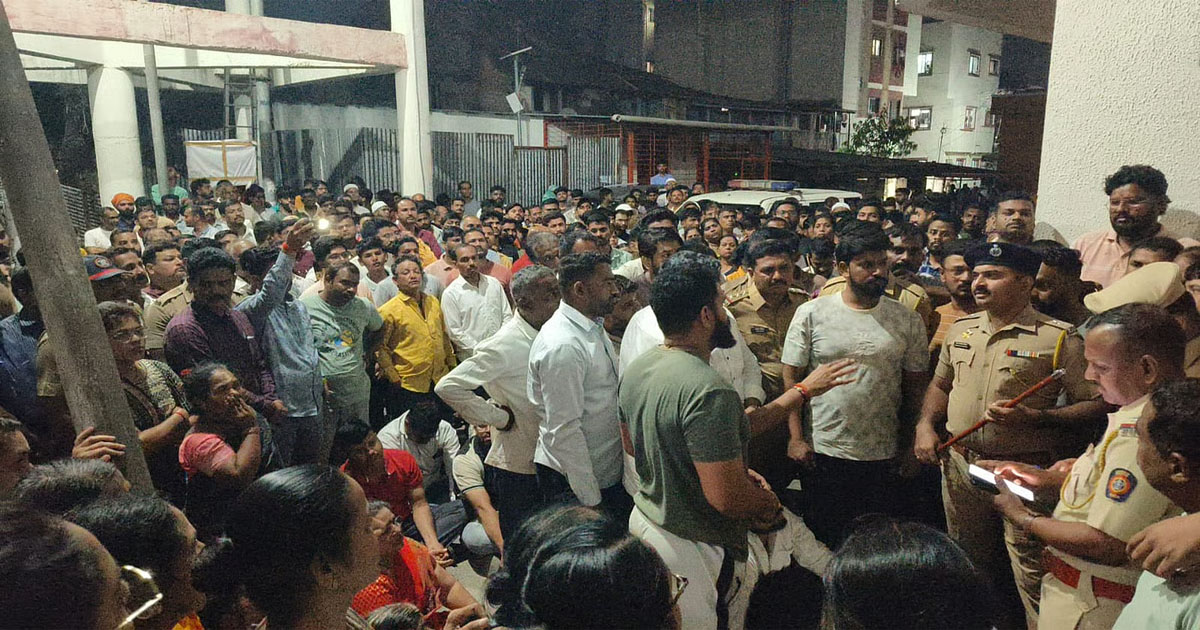
Pune: The entire country is currently shaken by the unfortunate events that took place in Nasrapur village of Bhor tehsil in Pune district on Friday evening. A four-year-old girl was raped and murdered. The brutal incident has sparked tensions and protests across Pune District, with residents of Nasrapur village blocking the forever-busy Pune-Satara Highway (part of the Mumbai-Bengaluru National Highway) for hours since Friday night.
Although the crime is horrific and brutal, the case has gained attention for something much more serious, raising questions against Maharashtra’s Home Department, Pune Rural Police and the overall judiciary in India. The opposition leaders have pounced upon this and are targeting the ruling Mahayuti government over this issue.
The case has sparked a fierce political debate, with many leaders questioning how a “habitual offender” was allowed to roam free. On this topic, key leaders including Rohit Pawar, Harshavardhan Sapkal, Supriya Sule and others have reacted. Maharashtra CM Devendra Fadnavis offered a crisp response to their questions on Saturday — saying that the accused will be given a strict punishment.
Nationalist Congress Party-Sharadchandra Pawar (NCP-SP) MLA from Karjat-Jamkhed, Rohit Pawar, was one of the first people to question this. He had said, “The accused has a criminal record. He has allegedly assaulted two or three other minor girls in the past. If he was already known for such crimes, what was he doing on the streets? This is a serious failure of the administration and the law and order system. We demand a special one-day session of the assembly to pass the Shakti Act immediately.”
Indian National Congress Maharashtra Chief Harshavardhan Sapkal said, “Law and order in the state is at stake, and children are no longer safe. This is a total failure of the home department; the police have lost control over criminal elements. The accused is a repeat offender — why was there no surveillance on such a person?”
Shiv Sena (Uddhav Balasaheb Thackeray) spokesperson Sushma Andhare said, “Maharashtra has become unsafe. When habitual offenders like this are free to commit such heinous acts again, it raises questions about the entire state’s security framework. Who is responsible for letting these monsters roam the streets?”
Baramati MP Supriya Sule of NCP-SP said, “The Maharashtra Women’s Commission does not have a chairperson today. Where are we supposed to go to ask for justice? The system caught this monster quickly, and I thank the police force for that. However, we are not satisfied with this. Considering the brutal manner in which this murder was committed, it is extremely horrific. Most importantly, this was the monster’s third crime. If this is his third offence, how did he get bail in the first two cases? Was the Maharashtra government waiting for our daughter to be murdered?”
On legal action and punishment, Maharashtra Chief Minister Devendra Fadnavis said, “The incident is highly reprehensible and deeply saddening. The entire community is shaken. The accused has been arrested, and we will request the High Court to try this case in a fast-track court. We will appoint a special public prosecutor and seek nothing less than the death penalty for the culprit.”
Maharashtra Deputy Chief Minister Sunetra Pawar said, ‘As a mother, I can truly feel the condition of the victim’s family. Criminals with such distorted mindsets must be dealt with an iron fist. This incident is numbing and infuriating. We will not rest until the victim’s family gets justice and the monster receives the harshest punishment.”
National Commission for Women Chairperson Vijaya Rahatkar said, “Such acts constitute a severe violation of children’s rights. We have taken suo motu cognisance and urged the immediate filing of a charge sheet under the POCSO Act to facilitate a speedy trial.”
The Nasrapur case is a horrific criminal incident involving the sexual assault and murder of a four-year-old girl in the Nasrapur village of Bhor tehsil in Pune district. The incident occurred on Friday (1st May) and has triggered massive state-wide outrage due to the brutal nature of the crime and the accused’s known criminal history.
The four-year-old victim was visiting her grandmother for the summer holidays when she was lured away by a 65-year-old man while she was playing in front of her house. CCTV footage showed the accused, identified as Bhimrao Kamble, leading the child toward a cattle shed. He reportedly lured her by saying he would “show her a calf”.
After a frantic search by the family on Friday late afternoon and evening, her body was found hidden under a pile of cow dung in the shed. Forensic evidence confirmed she was sexually assaulted and then bludgeoned to death with a large stone. Angry villagers blocked the Pune-Satara highway for hours and observed a total bandh (shutdown) in Nasrapur. The police had to use a mild lathi charge to manage the crowds demanding that the accused be handed over to them for “instant justice”.
A Pune-based practising lawyer, speaking to media, explained the current situation on condition of anonymity. He said, “The Home Department is being blamed for not making the Shakti Act a reality sooner. This law would have provided much faster and harsher punishments. There is also no official list or registry to track people who commit such crimes after they leave jail. This lack of policy allows dangerous offenders to vanish back into neighbourhoods.”
He further said, “The local police also failed to monitor a known criminal. Bhimrao Kamble had been arrested twice before for similar acts. However, he was living in the village without any police check-ins or supervision. The police did not use their power to move him out of the area or keep him under watch. This allowed him to walk the streets freely.”
He also explained that the legal system is facing criticism for how easily it grants bail. In India, getting bail is often seen as a right even for serious crimes. Because the courts are slow and trials take years, dangerous men often get back on the streets. If the earlier cases against Kamble had finished quickly, he would likely have been in prison on the day of the attack.
According to available details, other countries handle these situations much differently. In places like the United States of America (USA) and the United Kingdom (UK), sex offenders are put on public lists. Neighbours are warned when a predator moves nearby. In some cases, these offenders must wear tracking devices for life. Canada can even keep dangerous people in prison indefinitely if they are a permanent threat.
However, in India, the system is fragmented and does not share information well. Once a person gets bail or finishes a short sentence, they simply disappear back into society. This creates a high risk of them hurting someone else. The Nasrapur case has pushed the public to their breaking point. Now, the government is rushing to use fast-track courts to finally find justice.
Mumbai: A shocking incident has come to light from Mumbai’s Kurla, where a man was shot and stabbed to death. According to the Mumbai Police, three accused have been arrested in the case.
the incident took place on April 29 at around 10 pm near Pipeline Block No. 3 in Kurla’s V B Nagar. The deceased, identified as Baba Pawar, was shot by one person while two others stabbed him.
After the information was received, Pawar was rushed to Bhabha Hospital for treatment. However, he succumbed to his injuries while undergoing treatment.
A case was registered at V B Nagar police station under Bharatiya Nyaya Sanhita and Arms Act for murder and other offences. Later, it was reported that the police arrested all the three accused involved in the crime. Currently, further investigation is underway to determine the circumstances and motive behind the gruesome killing.
Meanwhile, in another recent incident, a man allegedly stabbed a shopkeeper five to six times after thinking that he and his brother were laughing at him. The incident occurred in Agripada’s Baby Garden area, where two brothers were chatting and laughing over something in their shop.
When the accused arrived at the shop, he thought the two brothers were laughing and mocking him and in a sudden outburst, Mansuri pulled out a knife and attacked one of the brothers multiple times.
Prior to this, another stabbing incident took place in Mira Road’s Naya Nagar, where a 31-year-old man, Zaib Zubair Ansari, attacked two security guards after being questioned about their religion. The attack took place near Asmita Grand Mansion in Mira Road East, where two security guards were on duty when Ansari approached them, initially asking for directions to a nearby mosque. Later, Ansari questioned one of the guards about his religion before attacking him with a knife. He then entered the security cabin and allegedly asked the second guard to recite the ‘Kalma’.
Ansari was arrested within hours after police reviewed CCTV footage. He was later produced before a Thane district court, which remanded him to police custody until May 4.
Crime
Thane Woman, 61, Duped Of ₹15.76 Lakh By Fraudsters Posing As Officials; Police Register Case, Launch Probe To Trace Accused

Thane: A 61-year-old woman from Thane, who had worked as a baby caretaker in Dubai, has allegedly been cheated of Rs 15.76 lakh under the pretext of receiving a parcel containing valuables from abroad, police said on Thursday.
The woman, who lives near Thane railway station in Maharashtra, alleged that two persons contacted her on her Dubai mobile number on April 14 and informed her that her gold ornaments and a high-end phone had arrived at the Mumbai airport from Italy, an official from Naupada police station said.
“They told her that the consignment needed to be cleared before April 22 and threatened that if she failed to do so, she would face legal action and would not be allowed to go back to Dubai,” the official said.
The fraudsters allegedly made multiple calls to the woman from different numbers and shared bank account details via WhatsApp, coercing her into transferring money on several occasions, he said.
“Under pressure and fear of arrest, the woman transferred Rs 15,76,000 into various bank accounts provided by the fraudsters,” the official said.
The woman approached the police on Tuesday, following which a case was registered against two unidentified persons under sections 318(4) (cheating) and 3(5) (common intention) of the Bharatiya Nyaya Sanhita.
Efforts were underway to trace the culprits, the police added.

Mumbai Traffic Alert! Bike Skids On Western Express Highway Near Airport Due to Oil Spill, Heavy Jam Reported

OPEC+ agrees to oil output quota hike amid Hormuz blockade, Kuwait oil exports zero

Mumbai Mayor Ritu Tawde Inspects Road Concretisation And Desilting Works; Sets 8.28 Lakh Tonne Monsoon Target

Iran condemns Trump’s ‘brazen’ remarks about seizure of Iranian vessels

Nasrapur Rape & Murder: ‘What Was Habitual Offender Doing On Streets?’ – Home Dept, Pune Police, Judiciary In Line Of Fire

‘Son Falsely Implicated, We Are Well-Educated’: Father Of Accused Tausif Attar Defends Son After Skullcap, Namaz Coercion Allegations Rock TCS Nashik

Mumbai: Pan-India Hawala Trail Exposes Chilling Conspiracy Behind Rohit Shetty House Firing Case

Asha Bhosle’s son says last respects to be paid at residence in Lower Parel, followed by last rites at Shivaji Park

Mumbai: 15th arrest in Rohit Shetty shooting case, shooter identified, arrested, more arrests possible

Crude oil prices tank up to 20 pc over Iran ceasefire announcement
-

 Crime4 years ago
Class 10 student jumps to death in Jaipur
-

 Maharashtra2 years ago
Mumbai Local Train Update: Central Railway’s New Timetable Comes Into Effect; Check Full List Of Revised Timings & Stations
-

 Maharashtra2 years ago
Mumbai To Go Toll-Free Tonight! Maharashtra Govt Announces Complete Toll Waiver For Light Motor Vehicles At All 5 Entry Points Of City
-

 Maharashtra2 years ago
False photo of Imtiaz Jaleel’s rally, exposing the fooling conspiracy
-

 National News2 years ago
Ministry of Railways rolls out Special Drive 4.0 with focus on digitisation, cleanliness, inclusiveness and grievance redressal
-

 Maharashtra1 year ago
Maharashtra Elections 2024: Mumbai Metro & BEST Services Extended Till Midnight On Voting Day
-

 National News2 years ago
J&K: 4 Jawans Killed, 28 Injured After Bus Carrying BSF Personnel For Poll Duty Falls Into Gorge In Budgam; Terrifying Visuals Surface
-

 Crime2 years ago
Baba Siddique Murder: Mumbai Police Unable To Get Lawrence Bishnoi Custody Due To Home Ministry Order, Says Report