
International News
Beware of anti-liberation forces’ conspiracy against nation: Sheikh Hasina


Bangladesh Prime Minister Sheikh Hasina on Tuesday urged the people to remain alert as “anti-liberation forces”, along with their associates, are still conspiring against the country, “taking assistance from abroad”.
“War criminals, defeated forces, August 15 killers, and their children are still conspiring against Bangladesh. They’re plotting against the country,” she said in her address at a programme of Bangladesh Chhatra League (BCL), the student wing of her Awami League, at Krishibid Institution, Bangladesh (KIB) to mark the National Mourning Day.
“Evil forces are pampered by some international forces which had acted against Bangladesh’s Liberation War. The nation must remain alert about it,” she said, joining the programme virtually from her official residence Ganobhaban.
At the beginning of the programme, a one-minute silence was observed to show respect to the martyrs of the August 15, 1975 massacre, where her father, Bangabandhu Sheikh Mujibur Rahman, and most of the family were killed.
Hasina, the chief patron of BCL, asked its members and ruling party activists and leaders to work for the country being imbued with patriotism and follow the ideals of Bangabandhu, the Father of the Nation.
Referring to his hectic nation-building hectic effort, she said the defeated forces staged the August 15 massacre when they saw Bangladesh cannot be stopped from its economic march forward. “We’ve to move forward keeping that in our mind.”
She said the defeated forces of 1971 took their revenge with the August 15 carnage and distorted the history of Bangladesh after that, including its liberation struggle.
About Ziaur Rahman, who seized power after Sheikh Mujib’s assassination, and his engagement in the Liberation War in 1971, Hasina said there is no instance that he fired a single shot at the Pakistani forces. “No one can prove that.”
She mentioned that Mustaq, Rashid and Farooq, proclaimed killers of Sheikh Mujib, in their interviews with the BBC, admitted that Ziaur Rahman was always with them. “Zia was the source of all power (for them), he betrayed Sheikh Mujib,” she stressed.
The PM said she is surprised that these people, who had always visited Bangabandhu’s house for various purposes, including personal matters, killed him. “How could they do that!”
She also highlighted the sacrifice of her mother Bangamata Fazilatunnesa Mujib.
“My father could fully engage in the service of the country as he got such a companion beside him… this is a rare instance,” she said.
The Prime Minister stressed all that Bangladesh has many enemies and massive hurdles in every step of its development journey
“Our path of progress is not smooth. It is rather full of hurdles, but we’ve to move forward overcoming all the odds and obstacles, and we’re doing that,” she said, adding Bangladesh has stood out on the world stage in the last 12 years.
The Prime Minister earlier unveiled a book titled “Matribhumi” and the “Joy Bangla Magazine”.


disaster
Landslide triggering Budhi Gandaki River floods in Nepal unleashed energy equivalent to 3.5-magnitude quake: Report


Kathamandu, Oct 14: A massive landslide in the high Himalayas of Nepal Gorkha district on October 11, which triggered devastating floods in the Budhi Gandaki River, generated energy equivalent to that of a 3.5-magnitude earthquake, according to a preliminary assessment by the Department of Mines and Geology.
The landslide occurred in the upper reaches of the Ungdilung Khola, a tributary of the Budhi Gandaki River, triggering destructive flood surges after a large volume of debris blocked and subsequently released river flows, the technical report said.
The report provides an initial explanation of how the high-altitude landslide and the repeated blockage and release of river flows contributed to the flooding downstream.
The National Disaster Risk Reduction and Management Authority (NDRRMA) said in a social media post, citing the department’s report, that the Budhi Gandaki River experienced repeated flood surges in a single day following the massive landslide involving snow, water and glacial debris in the high Himalayas.
The latest disaster left at least five people missing and destroyed several hydropower projects, roads and bridges, according to the NDRRMA.
The October 11 flooding was the second major flooding disaster, which occurred around one and a half months after devastating floods struck the Bhote Koshi and Trishuli rivers on August 26, which killed nearly 1,500 people and left more than 5,000 missing while devastating communities, houses, hydropower plants, roads and bridges along the affected rivers, the authority said.
Citing the department’s technical report, the NDRRMA said the largest of the repeated flood surges reached an estimated height of 20 to 25 metres.
The incident occurred at around 4:20 a.m. in the upper reaches of the Ungdilung Khola, between Chamar Himal and Syerangi Himal, in Chumnubri Rural Municipality, which borders China.
According to the report, an avalanche originated at an altitude of approximately 6,000 metres in the Tibetan Tethys Himalaya, an area characterised by relatively weak rock formations, and a landslide occurred at around 5,500 metres.
“The massive landslide, comprising a mixture of snow, water and debris, flowed southward along the Ungdilung Khola, depositing a large volume of debris at the narrow confluence of the Ungdilung Khola and Syar Khola, another tributary of the Budhi Gandaki River, at an altitude of around 2,000 metres,” the authority said in its social media post.
The debris repeatedly blocked and released the flow of the Syar Khola, potentially generating successive flood surges. A similar process may also have occurred at the confluence of the Syar Khola and the Budhi Gandaki River, contributing to repeated flooding downstream, it said.
However, the report suggests that the enormous volume of debris carried by the Ungdilung Khola played a more significant role in generating the largest flood surge than the water accumulated behind the blockage of the Syar Khola.
The first mud-laden flood reached the Salleri area at around 4:30 a.m., where a camp for the 341-MW Budhi Gandaki Hydroelectric Project was located.
“The largest surge arrived at the hydropower camp in Salleri at around 6:30 a.m., reaching an estimated height of 20 to 25 metres before sweeping away the camp,” the report said.
The powerful surge caused major damage downstream, particularly in the Jagat area along the Budhi Gandaki River, where several buildings were affected. Permanent bridges over the Soti Khola and the Budhi Gandaki River were also among the damaged structures, the report said.
Field observations further indicated that the flow of the Syar Khola had stopped following the landslide approximately one hour before the largest flood surge arrived.
“Water had accumulated over a stretch of around 1.5 kilometres in the upper reaches of the river. Smaller flood surges continued even after the largest surge had passed,” the report said.
International News
Indians in Saudi Arabia advised to stay indoors during aerial attacks; Embassy opens 24×7 control room
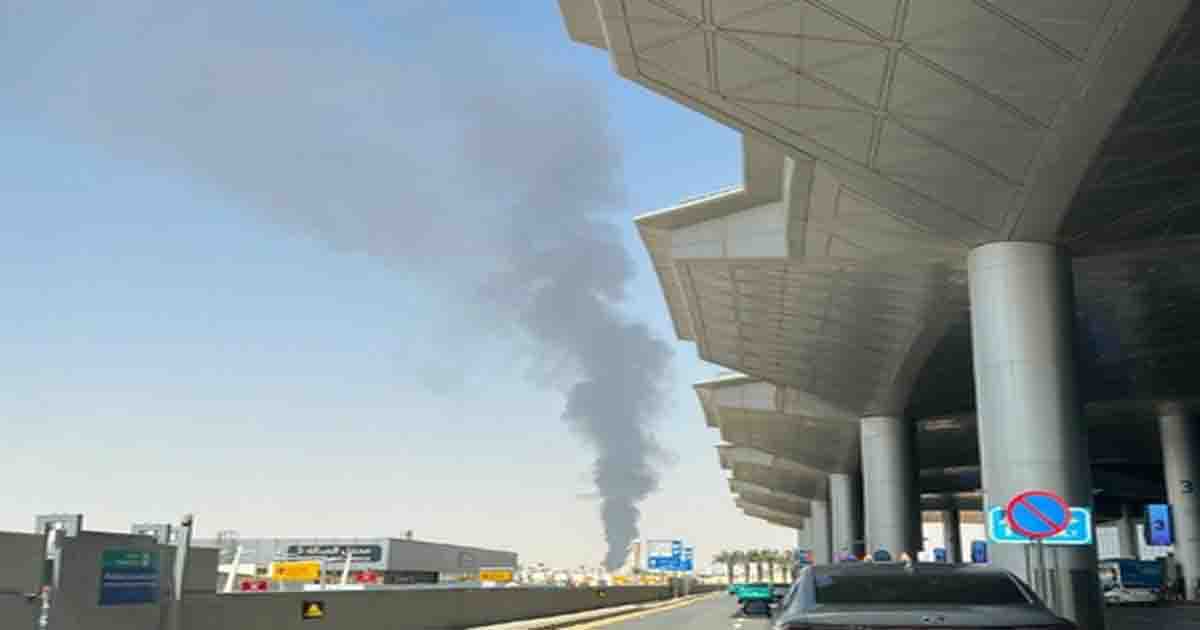
Riyadh, Oct 13: Indian nationals in Saudi Arabia have been advised to remain calm, vigilant and stay indoors in case of an aerial attack, the Indian Embassy in Riyadh said on Tuesday as it opened a 24×7 control room to assist the community.
“In view of the current situation, all Indian nationals in the Kingdom of Saudi Arabia are advised to remain calm and vigilant, stay indoors in case of an aerial attack, and follow the instructions issued by local authorities through official channels,” the Embassy said in an advisory.
It also “strongly advised” Indian nationals to refrain from circulating or reposting any videos or news related to the ongoing events.
Indian nationals were advised to remain in regular contact with their airlines and verify the latest status of their flights. Those in an emergency who wish to leave Saudi Arabia may avail flights from airports in neighbouring Gulf countries, particularly Qatar and Bahrain, subject to obtaining visas as per their rules, the Embassy said.
“In view of the evolving situation, the Embassy has opened 24×7 Control Room to provide necessary assistance to Indian nationals in Saudi Arabia,” it said.
Giving an update on the Indian nationals injured in the October 10 attack on Riyadh airport, the Embassy mentioned that four people remain in the ICU, four are receiving medical care in the normal ward, and three have been discharged.
“The Embassy officials continue to visit the hospitals where the injured Indian nationals are receiving medical treatment, and are in constant touch with their family members and providing all possible support,” it added.
The funeral rites of Mohammed Yousuf Ali, the Indian national who lost his life in the attack, were completed in Riyadh on October 12 as per the wishes of his family, with the Ambassador and Embassy officials in attendance.
On October 11, India condemned the attack on Saudi Arabia’s King Khalid International Airport, saying that attacks on civilians and civilian infrastructure were “unacceptable” and calling for an immediate cessation of hostilities.
“The repeated attacks on civilians and civilian infrastructure are completely unacceptable and must cease immediately,” the Ministry of External Affairs (MEA) said in a statement.
“We stand in solidarity with the people and the government of the Kingdom of Saudi Arabia in defence of their sovereignty, and hope that peace and normalcy returns to the region at the earliest,” it added.
On October 10, Saudi Arabia’s General Authority of Civil Aviation said that the attack targeting King Khalid International Airport on Saturday afternoon killed 12 people and injured 309 others.
International News
Pakistan: Emergency rule in Khyber Pakhtunkhwa intensifies volatile political confrontation
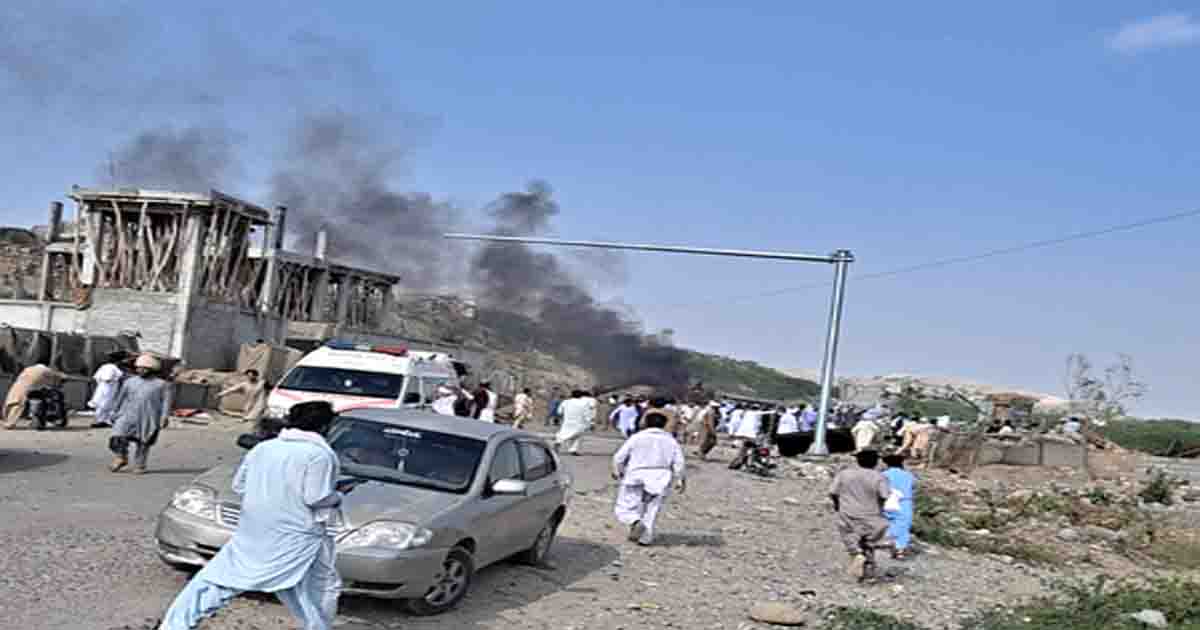
Islamabad, Oct 13: Pakistan government’s decision to impose emergency rule in the Khyber Pakhtunkhwa province has intensified an already volatile political confrontation between the federal government and the opposition. It has reignited long-standing debates regarding governance, security and the state’s relationship with its Pashtun-majority frontier region, a report has detailed.
Pakistan government effectively removed the Pakistan Tehreek-e-Insaf (PTI)-led provincial government and presented it as a “necessary response” to militancy. However, critics have described the decision by Pakistani authorities as a political intervention disguised as a security measure, an opinion piece in Afghan Diaspora Network detailed.
On October 11, Pakistan President Asif Ali Zardari approved emergency measures after recommendations made by Prime Minister Shehbaz Sharif’s cabinet. The move suspended the provincial government led by former Pakistan Prime Minister Imran Khan-founded PTI and transferred authority to a Governor. In addition, the federal government announced the deployment of forces in Khyber Pakhtunkhwa. The decision comes at a politically sensitive moment as PTI has been preparing major demonstrations demanding the release of Imran Khan.
PTI spokesperson Zulfikar Bukhari has condemned the Pakistan government’s decision to impose Governor’s rule in Khyber Pakhtunkhwa, terming it as a “coup disguised as emergency.”
“Strongly condemn the arrest of the only mandated Chief Minister Sohail Afridi and of Junaid Akbar. This coup disguised as emergency or Governor rule has squashed the only little bit of democracy left in Pakistan. Further instability and collateral damage to follow. The regime must be feeling very proud,” Bukhari wrote on X.
PTI chairman Gohar Ali Khan condemned the imposition of emergency and Governor’s rule in Khyber Pakhtunkhwa, describing the federal government’s decision as a “political mistake and undemocratic.” He emphasised that there is no disagreement on eliminating terrorism; however, the fight against terrorism cannot be used as justification to suppress the voice of the people, achieve political objectives and restrict the constitutional authority of the province.
“We strongly condemn the imposition of emergency in the province in the strongest terms and completely reject this action. This is an extremely alarming and grave political mistake and an undemocratic measure — the people will never accept such actions against their rights,” Khan posted on X.
Former Member of Pakistan’s National Assembly, Mohsin Dawar, accused the Pakistan government of following “colonial” policies towards Khyber Pakhtunkhwa and said that the decisions impacting the province are once again imposed without a democratic mandate. He said that emergency rule in Khyber Pakhtunkhwa could push the region “into further darkness.”
Veteran Pashtun nationalist leader Afrasiab Khattak said that Pakistan government’s imposition of emergency rule in Khyber Pakhtunkhwa, which has already faced decades of conflict, was another experiment in authoritarian governance. According to the Afghan Diaspora Network report, he asked whether Pashtuns should see the decision as proof of how they continue to be treated as subjects of a colony instead of equal citizens within the federation.
“Whether one accepts these arguments or not, they reflect a broader perception found among many critics of Pakistan’s security policies: that the country’s current security challenges cannot be separated from decisions made over several decades. The emergency declaration therefore represents more than an administrative measure. It sits at the intersection of three overlapping crises: rising militancy, deep political polarisation, and unresolved questions about the governance of Pakistan’s Pashtun borderlands,” the report in Afghan Diaspora Network stated.
“Supporters see decisive action against a deteriorating security situation. Opponents see a dangerous precedent in which elected governments can be sidelined under the banner of counterterrorism. As troops move into Khyber Pakhtunkhwa and federal authorities assume greater control, the province has once again become the focal point of Pakistan’s most important national debate: whether security and democracy can coexist or whether one will continue to be used to justify curtailing the other,” the author added.

Bihar tragedy: 13 children die as boat capsizes in Ganga River in Vaishali; search on for missing passengers

Intent to undermine trust in India’s democratic institutions: Harvard community rejects alumni statement

Maha ATS intensifies crackdown on Shahzad Bhatti network, 16 handlers on hit list

Four women arrested for stealing gold jewellery, cash from elderly passenger on Maharashtra ST bus

Saurav Das, Ranka sent to 5-day judicial custody; Shinde released on personal bond

INDIA bloc begins protest march against ECI

Maha Congress stages agitation against Gyanesh Kumar

Complaint against Netflix & Mukesh Chhabra for inappropriate language on ‘India’s Got Latent 2’

Delhi court grants three-week interim bail to influencer Swatantra Bhardwaj

Bombay HC warns Vijay Mallya against posting court documents on social media
-

 Crime4 years ago
Class 10 student jumps to death in Jaipur
-

 Maharashtra2 years ago
Mumbai Local Train Update: Central Railway’s New Timetable Comes Into Effect; Check Full List Of Revised Timings & Stations
-

 Maharashtra2 years ago
Mumbai To Go Toll-Free Tonight! Maharashtra Govt Announces Complete Toll Waiver For Light Motor Vehicles At All 5 Entry Points Of City
-

 Maharashtra2 years ago
False photo of Imtiaz Jaleel’s rally, exposing the fooling conspiracy
-

 National News2 years ago
Ministry of Railways rolls out Special Drive 4.0 with focus on digitisation, cleanliness, inclusiveness and grievance redressal
-

 Maharashtra2 years ago
Maharashtra Elections 2024: Mumbai Metro & BEST Services Extended Till Midnight On Voting Day
-

 National News2 years ago
J&K: 4 Jawans Killed, 28 Injured After Bus Carrying BSF Personnel For Poll Duty Falls Into Gorge In Budgam; Terrifying Visuals Surface
-

 Crime2 years ago
Baba Siddique Murder: Mumbai Police Unable To Get Lawrence Bishnoi Custody Due To Home Ministry Order, Says Report