
International News
Bangladesh: Islamist Party calls protest over India’s Waqf Act amid rising attacks on minorities at home

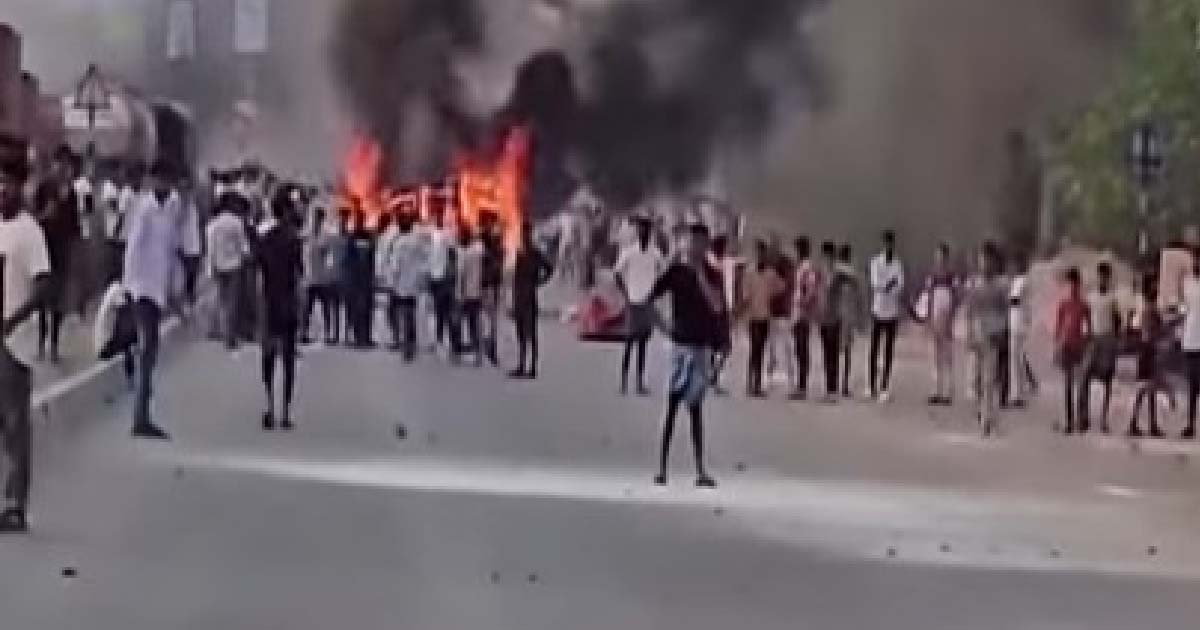
Dhaka/New Delhi, April 23: Bangladesh’s far-right Islamist political outfit, Khelafat Majlish, is set to stage a mass march and submit a memorandum to the Indian Embassy in Dhaka on Wednesday, demanding the repeal of the recently passed Waqf (Amendment) Act by the Indian Parliament.
According to local media reports, Khelafat Majlish chief Maulana Mamunul Haque claimed that Muslim-owned lands in India were being encroached upon, alleging that properties governed by Islamic endowments (Waqf) were being illegally acquired to build various structures, including temples.
In a provocative statement, Haque accused India of giving legal backing to these alleged actions through the Waqf (Amendment) Act, 2025.
“We have already expressed our anger and condemnation of these steps. Muslims across India erupted in protest against the Bill. This Bill basically interferes with the religious laws and rights of Muslims,” he said.
Haque further urged the global Muslim community to raise its voice against what he called the “killing of Muslims by the Indian state and interference in their religious matters.”
The announcement of the protest comes at a time when Bangladesh itself is under scrutiny over a spate of violent attacks against minority communities, including Hindus and Christians, especially in the aftermath of the ousting of former Prime Minister Sheikh Hasina.
India has strongly condemned recent acts of violence in Bangladesh, particularly the abduction and murder of Bhabesh Chandra Roy, a well-known Hindu community leader in northern Bangladesh.
The Ministry of External Affairs (MEA) described the incident as part of a disturbing pattern of minority persecution under the country’s interim administration.
MEA spokesperson Randhir Jaiswal, in a post on X, said, “We have noted with distress the abduction and brutal killing of Shri Bhabesh Chandra Roy, a Hindu minority leader in Bangladesh. This killing follows a pattern of systematic persecution of Hindu minorities under the interim government, even as the perpetrators of previous such events roam with impunity.”
“We condemn this incident and once again remind the interim government to live up to its responsibility of protecting all minorities, including Hindus, without inventing excuses or making distinctions,” he added.
India has previously voiced similar concerns regarding rising attacks on minority communities in Bangladesh, but Roy’s murder has drawn particular attention due to his prominence in the Hindu community.
The Indian government’s response is being seen as a clear signal that it will not remain silent on the issue of minority rights in the neighbouring country.
The Khelafat Majlish protest plan, viewed in India as a politically motivated move, has triggered responses from analysts and officials who suggest it is an attempt to divert attention from the internal human rights issues plaguing Bangladesh, particularly those targeting vulnerable minority populations.

International News
PM Modi thanks world leaders for warm wishes on completing 25 years as head of government

New Delhi, Oct 7: Prime Minister Narendra Modi on Wednesday thanked world leaders for their warm wishes as he completed 25 years as the head of the government.
PM Modi thanked Nigerian President Bola Ahmed Tinubu for the warm wishes and expressed readiness to continue cooperation to further strengthen the Strategic Partnership and advance a shared vision for a more inclusive, prosperous and peaceful world.
“Thank you, President Tinubu. India and Nigeria are close partners and leading voices of the Global South. I look forward to continuing our cooperation to further strengthen our Strategic Partnership and advance our shared vision for a more inclusive, prosperous and peaceful world,” PM Modi posted on X.
He also thanked his Dominica counterpart Roosevelt Skerrit for the warm wishes and noted that India deeply values its partnership with Dominica and looks forward to strengthening it further.
“Thank you, Prime Minister Skerrit, for your warm wishes and thoughtful words. India deeply values its enduring friendship with Dominica. We look forward to further strengthening our partnership and working together for the shared progress and prosperity of the people of our nations,” Prime Minister Modi wrote on X.
PM Modi thanked his Belgian counterpart Bart De Wever for the wishes and expressed readiness to work with him to further strengthen the partnership between India and Belgium.
“Thank you, Prime Minister Bart De Wever, for your wonderful wishes. I look forward to working with you to build on the positive momentum in our relations and further strengthen our bilateral partnership,” he said.
Thanking Philippines President Ferdinand R. Marcos Jr., PM Modi said that India values its Strategic Partnership with the Philippines and looks forward to deepening friendship.
In response to the Philippines President’s wishes on X, PM Modi wrote, “Thank you, President Ferdinand Marcos Jr., for your wishes. India deeply values its Strategic Partnership with the Philippines. I look forward to our continued engagement and further deepening of the friendship between our nations.”
PM Modi thanked Bhutanese counterpart Tshering Tobgay for the heartfelt message and noted that both nations are bound by an “enduring partnership” rooted in mutual trust and understanding.
“Thank you, Prime Minister Tobgay, for the warm and heartfelt message. India and Bhutan are bound by an enduring partnership rooted in mutual trust and understanding. I look forward to continuing our close cooperation to advance our shared vision of Viksit Bharat and a prosperous Bhutan,” PM Modi posted on X.
PM Modi appreciated Botswana President Dumo Gideon Boko’s warm wishes and expressed readiness to work with him to further strengthen close ties.
“I deeply appreciate your warm wishes, President Duma Boko. India greatly values the friendship with Botswana and I look forward to working together to further strengthen our close ties,” PM Modi wrote on X.
The congratulatory messages from world leaders came as PM Modi on Wednesday marks 25 years of uninterrupted leadership as head of government. He began his tenure as Gujarat Chief Minister on October 7, 2001, and became Prime Minister of India in 2014.
In October 2001, PM Modi was chosen to replace Keshubhai Patel as Gujarat Chief Minister at a difficult time for the state, which was still dealing with the aftermath of the devastating Bhuj earthquake as well as political and administrative challenges. He remained Chief Minister until 2014 before moving to national politics.
PM Modi’s tenure as India’s Prime Minister has been marked by an expanded international profile for the country, with the government pursuing greater diplomatic engagement, stronger relations with major powers and a prominent role for India in the Global South.
International News
Belgian PM Wever hails PM Modi’s 25 years of leadership, expresses hopes for stronger partnership
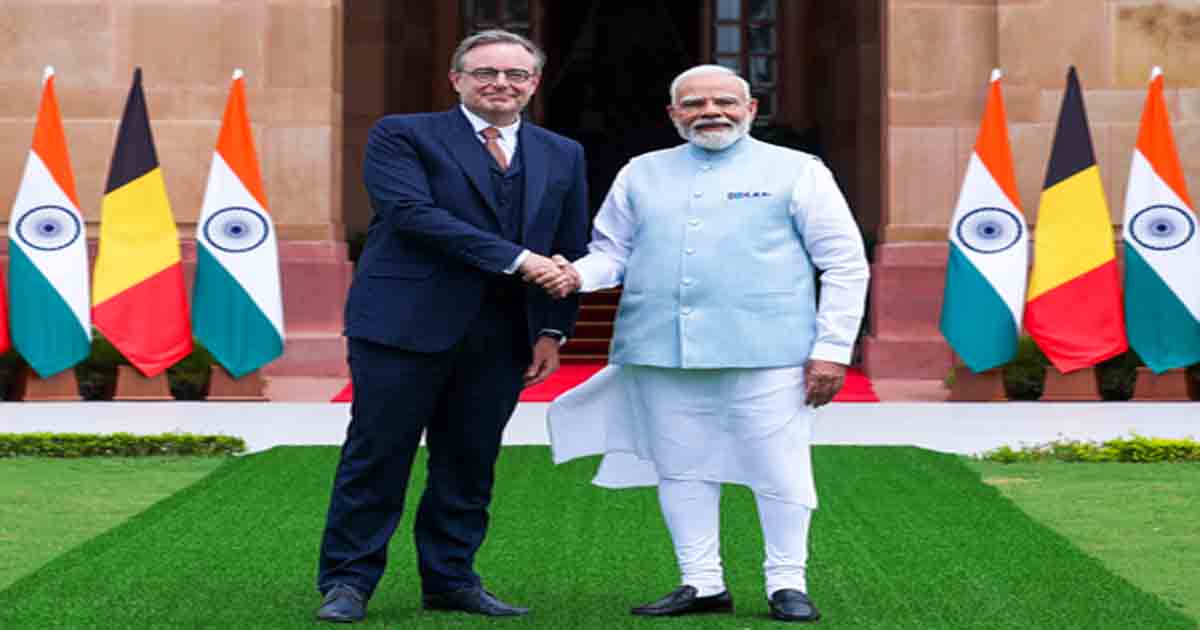
Belgian Prime Minister Bart De Wever on Wednesday congratulated Prime Minister Narendra Modi on 25 years of continuous leadership in government and expressed readiness to deepen the partnership between India and Belgium.
In his congratulatory message, Wever described his recent visit to India as “productive.”
In a post on X, Wever stated, “I warmly congratulate Prime Minister Narendra Modi on 25 years of continuous leadership in government, from Gujarat to New Delhi. Following my productive visit to India last month, I look forward to further deepening the strong partnership between our two countries.”
Bart De Wever’s statement comes as PM Modi marks 25 years of uninterrupted leadership as head of government, beginning with his oath as Gujarat Chief Minister on October 7, 2001, and continuing through three terms as Prime Minister of India.
In October 2001, PM Modi was chosen to replace Keshubhai Patel as Gujarat Chief Minister at a difficult time for the state, which was still dealing with the aftermath of the devastating Bhuj earthquake as well as political and administrative challenges. He remained Chief Minister until 2014 before moving to national politics.
PM Modi’s tenure as India’s Prime Minister has been marked by an expanded international profile for the country, with the government pursuing greater diplomatic engagement, stronger relations with major powers and a prominent role for India in the Global South.
Last month, Bart De Wever was on an official visit to India. It was his first visit to India after assuming office in February last year and also the first visit by a Belgian PM to India in two decades.
During his visit to India, Wever reviewed the full spectrum of bilateral ties with PM Modi during their bilateral talks at the Hyderabad House in New Delhi. The two leaders reaffirmed their commitment to further deepen the partnership between India and Belgium while also discussing regional and global issues of mutual interest.
“The two leaders reviewed the full spectrum of bilateral relations, with a focus on defence, trade, investment, innovation, semiconductors, fintech, critical minerals, people-to-people ties, and academic and research cooperation. They also exchanged views on regional and global issues of mutual interest and reaffirmed their commitment to further deepen the close and multifaceted India-Belgium partnership,” the Ministry of External Affairs (MEA) posted on X.
PM Modi and PM Bart De Wever witnessed the exchange of Memorandum of Understanding (MoUs) in the field of defence, renewable energy, combating crime and establishing diplomatic training between the two nations. The two sides agreed to double the bilateral trade in next five years, establish a business forum, an investment forum and a consular dialogue, the MEA stated.
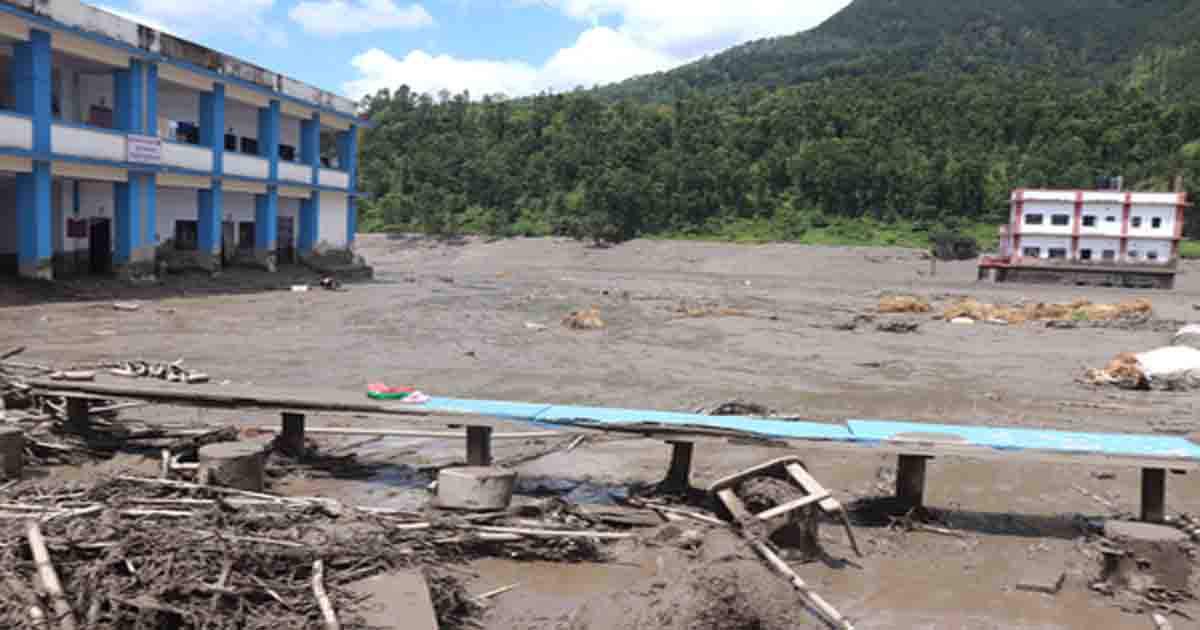
Kathmandu, Oct 6: The devastating August floods in Nepal are expected to have a material negative impact on the country’s economic prospects in the short term, the World Bank said on Tuesday as it lowered its economic growth projection for the Himalayan nation.
The global development lender said Nepal’s economic growth is projected to slow to 3.7 per cent in the current fiscal year 2026-27, which began in mid-July, from the 4.2 per cent projected in April, reflecting disruptions to industry and services.
In its report titled Nepal Development Update: Building Back Differently for the Future, released on Tuesday, the World Bank said the August 2026 floods are expected to affect Nepal’s economy through four primary transmission channels: energy, transportation, trade and tourism.
“Agriculture and banking and insurance are also channels through which the economy would be affected, but with relatively lower potential impact,” it said.
According to the bank’s report, energy, particularly hydropower, is the most critical transmission channel. The floods affected 12 hydropower projects, including seven operational projects with a combined capacity of 256.1 MW and five projects under construction with a combined capacity of 395.02 MW, as well as a 25 MW solar facility.
“Damage to transmission infrastructure disrupted an additional 149.6 MW, bringing total affected generation and transmission capacity to approximately 430.7 MW, equivalent to 10.6 per cent of Nepal’s FY26 installed hydropower and solar capacity,” the bank said.
Transportation and trade are other key transmission channels, given the concentration of Nepal’s international and domestic trade along a limited number of corridors, according to the World Bank.
As many as 1,455 people have been confirmed dead and 5,285 remain missing to date following the disaster, which destroyed communities and infrastructure along the Bhotekoshi and Trishuli river corridors, according to the National Disaster Risk Reduction and Management Authority.
According to the Rapid Disaster Needs Assessment (RDNA) report prepared by a joint technical team of the National Planning Commission and the National Disaster Risk Reduction and Management Authority, the recent floods are estimated to have caused physical damage worth 274.48 billion Nepali rupees (about 1.93 billion US dollars), while overall losses and damages have reached 408.28 billion rupees (about 2.87 billion US dollars).
The preliminary assessment suggests that more than 723 billion rupees will be required for the reconstruction and recovery of affected infrastructure and assets. The Nepali government is now working on a Post-Disaster Needs Assessment involving a more extensive assessment of the damage.
The World Bank said industry is expected to be the main drag on growth, reflecting extensive damage to hydropower, solar energy, electricity transmission and transport infrastructure, which will constrain electricity generation and production and disrupt the movement of goods.
“For instance, it took nearly a year to fully restore generation at the 111 MW Rasuwagadhi Hydropower Project, which was severely damaged by the July 8, 2025, Bhotekoshi (Lhende River) flood,” it said.
The same project has once again been badly affected by the August floods.
“This illustrates the potential for flood-related damage to disrupt electricity supply and impose substantial reconstruction costs,” the global development lender said.
“Hydropower construction in areas not directly affected by the flood is expected to continue, although projects could face higher insurance premiums, financing reassessments, and cost overruns,” it added.
“Services are expected to be affected through disruptions to trade, transport, tourism, and financial activity, while agricultural losses are expected to have limited effects on aggregate output but significant impacts on livelihoods in affected areas,” the bank said in the report.
Tourism is expected to face a potentially prolonged impact, reflecting both physical disruptions and heightened perceptions of travel risks, according to the report.
It said more than 200 hotels and restaurants were damaged across the affected districts, while access to major trekking and pilgrimage destinations—including Langtang, Gosaikunda and the Kailash Mansarovar corridor—has been disrupted.
However, economic activity is expected to gradually recover in fiscal year 2027-28 as reconstruction activity begins to gain momentum and damaged infrastructure and productive capacity are progressively restored, the bank said.

Seemapuri building collapse: 1 killed, 7 rescued

’80 pc to NDA, 20 pc to PDA’: CM Yogi Adityanath’s swipe at SP ahead of 2027 UP polls

Meta unveils new AI tools to combat child sexual exploitation online

PM Modi thanks world leaders for warm wishes on completing 25 years as head of government

Delhi HC permits Vivo India executive to travel abroad, suspends LOC for four days

Gift to President Putin part of PM Modi bid to globally display India’s heritage

PM Modi’s warm camaraderie with Putin, Xi on full display at BRICS Summit

Complaint against Netflix & Mukesh Chhabra for inappropriate language on ‘India’s Got Latent 2’

Maha Congress stages agitation against Gyanesh Kumar

INDIA bloc begins protest march against ECI
-

 Crime4 years ago
Class 10 student jumps to death in Jaipur
-

 Maharashtra2 years ago
Mumbai Local Train Update: Central Railway’s New Timetable Comes Into Effect; Check Full List Of Revised Timings & Stations
-

 Maharashtra2 years ago
Mumbai To Go Toll-Free Tonight! Maharashtra Govt Announces Complete Toll Waiver For Light Motor Vehicles At All 5 Entry Points Of City
-

 Maharashtra2 years ago
False photo of Imtiaz Jaleel’s rally, exposing the fooling conspiracy
-

 National News2 years ago
Ministry of Railways rolls out Special Drive 4.0 with focus on digitisation, cleanliness, inclusiveness and grievance redressal
-

 Maharashtra2 years ago
Maharashtra Elections 2024: Mumbai Metro & BEST Services Extended Till Midnight On Voting Day
-

 National News2 years ago
J&K: 4 Jawans Killed, 28 Injured After Bus Carrying BSF Personnel For Poll Duty Falls Into Gorge In Budgam; Terrifying Visuals Surface
-

 Crime2 years ago
Baba Siddique Murder: Mumbai Police Unable To Get Lawrence Bishnoi Custody Due To Home Ministry Order, Says Report