
National News
Archaeological excavations will establish prominence of TN in history of Indian subcontinent


The next phase of archaeological excavations in seven sites of Tamil Nadu will commence from February and help establish that the history of Indian subcontinent began from the landscape of Tamil Nadu, Chief Minister M.K. Stalin has said.
In a statement on Thursday, the chief minister said that the findings of these excavations will underline the antiquity, culture, and values of Tamil society and the state government has sanctioned an amount of Rs 5 crore for the project.
The Chief Minister also said that excavations conducted earlier at Keezhadi and other archaeological sites earlier have proved that Tamil culture was older by several more centuries than was earlier thought off.
Excavations will take place at Keezhadi and its surrounding areas like Konthagai, Aagaram, and Manalur. This is the eighth phase of excavations that will take place in these areas in the Sivaganga district of South Tamil Nadu.
The other places where excavations are scheduled to be held are Sivakalai in Thoothukudi district (third phase), Gangaikondacholapuram in Ariyalur district (Phase III), Myladumparai in Krishnagiri district (Phase -II), Vembakottai in Virdudhunagar district, Thulukkarpatti in Tirunelveli district, and Perumpalai in Dharmapuri district (Phase I).
The archeology department would also conduct a reconnaissance survey in the sea off the Korkai coast in Thoothukudi district where the river Tamirabarani flows into the sea . This will be conducted in association with the National Institute of Ocean Technology and Indian Maritime University.
R.K. Mukundan, a Retired Sociology Professor from a foreign university while speaking to IANS said: “The archaeological surveys conducted at Keezhadi and other areas of Tamil Nadu has beyond any doubts proved that the Tamil culture is much older than what was believed to be. The excavations to be carried out is expected to provide more proof on the style of life, the culture of Tamil, and other crucial points to establish that we were one of the most sophisticated and highly established race in the Indian subcontinent.”

National News
Not just a leader, MP Dr. Shrikant Shinde became an example of humanity, assured workers, “I will empower every worker”

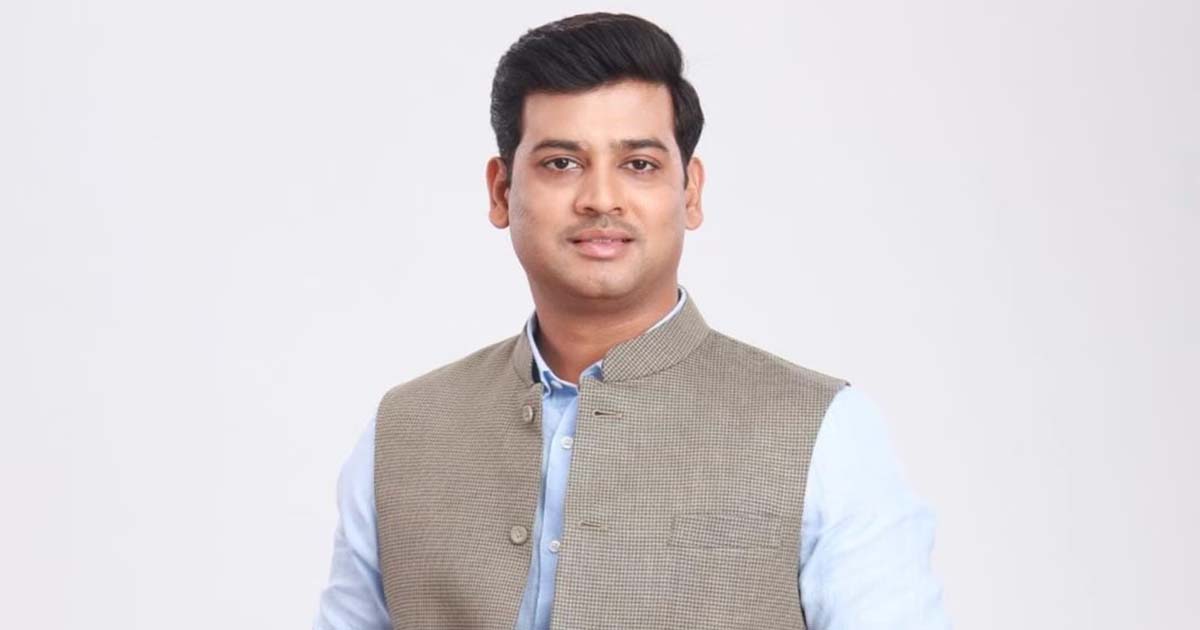
In politics, leaders are often identified by their speeches and rallies, but sometimes there are times when the human face of a leader touches the hearts of people. Shiv Sena MP Dr. Shrikant Shinde has set such an example. Rasool Ghafoor Syed, who lost his son ten days ago, went to meet MP Dr. Shrikant Shinde in Kejriwal to share his grief. There, he suffered a sudden heart attack. He was immediately taken to the hospital but died during treatment. Two major tragedies have befallen a single family in a few days. As soon as the news of the incident was received, MP Dr. Shrikant Shinde went straight to the family home. He not only offered his condolences but also sat with the family and shared their grief. During this, Dr. Shinde provided financial assistance of Rs 5 lakh and assured the responsibility of the children’s education. This incident once again proved that Dr. Shrikant Shinde is not just a politician but also a sensitive human being who understands the pain and suffering of the common people. The way he supported his family in difficult times and showed humanity is being talked about in the entire region. Minister Bharat Sheth Gogawale, MP Sandipan Bhumare, former MLA Sangeeta Thombare and Yuva Sena Inspector Bajirao Chavan were also present with Shrikant Shinde during the event.
Shiv Sena Parliamentary Party leader and MP Dr. Shrikant Shinde, who is on a visit to Maharashtra, said that Marathwada has always been the stronghold of Shiv Sena, and the party will work to empower every worker there. As part of his “Shiv Samavad” tour, he interacted with workers and office bearers in Bed district to review the preparations for the upcoming elections. At a meeting held in Kej, MP Dr. Shinde said that it is necessary to strengthen the organisation at the booth level in view of the Zilla Parishad and Panchayat Samiti elections. He urged the workers to go to the villages and strengthen the party. He said that the party leadership is also focusing on the common workers and those who work hard will get organizational responsibilities. He said that appointments for Taluka Heads, Deputy Taluka Heads, Branch Heads and Deputy Branch Heads in Parli and Kej assembly constituencies will be made soon. Minister Bharat Sheth Gogawale highlighted the important role of BLA in the voter list revision campaign and stressed the need to collect accurate voter information at every booth. He urged the workers to work diligently for the organization. Meanwhile, MP Dr. Shinde addressed three separate meetings from Kej, Parli, Beed, Majalgaon, Ashti, and Giurai assembly constituencies of Beed district. A large number of Shiv Sena members were present in the meetings.
During his tour of the “Shiv Samavad”, Dr. Shrikant Shinde visited 23 assembly constituencies of Marathwada in the last three days, directly interacted with party workers, and conveyed the message of strengthening the organization.
National News
US President Donald Trump’s Daughter Tiffany Visits India’s Iconic Taj Mahal With Husband During Private Trip
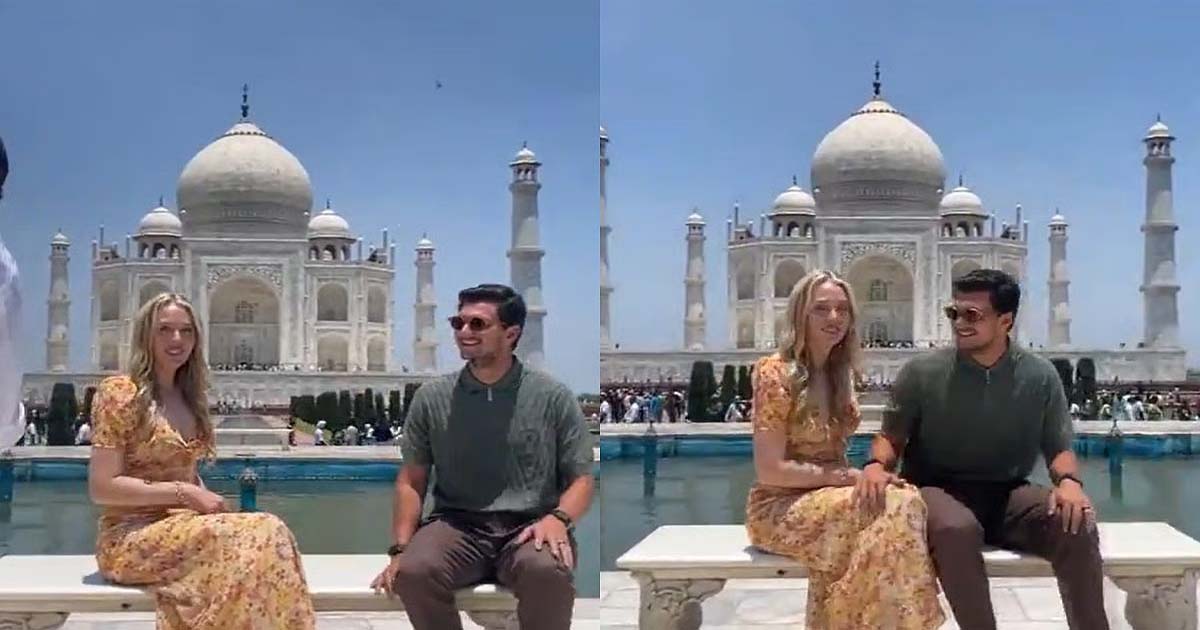
India’s most iconic monument just welcomed another high-profile visitor. Tiffany Trump, daughter of US President Donald Trump, made a stop at the world-famous Taj Mahal on May 30 during her private trip to India, accompanied by her husband, Michael Boulos.
The couple reportedly arrived in Agra on Saturday and spent time exploring the historic marble mausoleum before continuing their travels to Rajasthan. Videos from the visit, shared by press, showed Tiffany embracing the Indian summer in a breezy floral dress, while Michael opted for a relaxed casual look as they admired one of the world’s most celebrated architectural wonders.
Inside Tiffany Trump’s India visit with husband
Tiffany travelled to Agra via a chartered aircraft. Given the family’s global profile, authorities made special security arrangements during the visit. However, officials have clarified that the trip is entirely personal, with no political meetings or official engagements on the schedule.
Before arriving in Agra, Tiffany also visited Swaminarayan Akshardham in Delhi. Sharing her experience on social media, she described the visit as an “Incredible visit to Akshardham Temple,” offering followers a glimpse into her cultural tour across India.
The visit has naturally sparked interest, not only because of Tiffany’s famous family name but also due to the Trump family’s longstanding connection with India. Over the years, members of the family have frequently expressed admiration for India’s culture, heritage, and historic landmarks.
Tiffany, the daughter of Donald Trump and actress Marla Maples, married Michael Boulos in 2022. Since then, the couple has often been spotted together at family celebrations, public appearances, and international events.
National News
Tejashwi Yadav To Lead Major RJD Organisational Overhaul After MLC Polls; Bihar Chief Mangani Lal Mandal Likely To Be Replaced
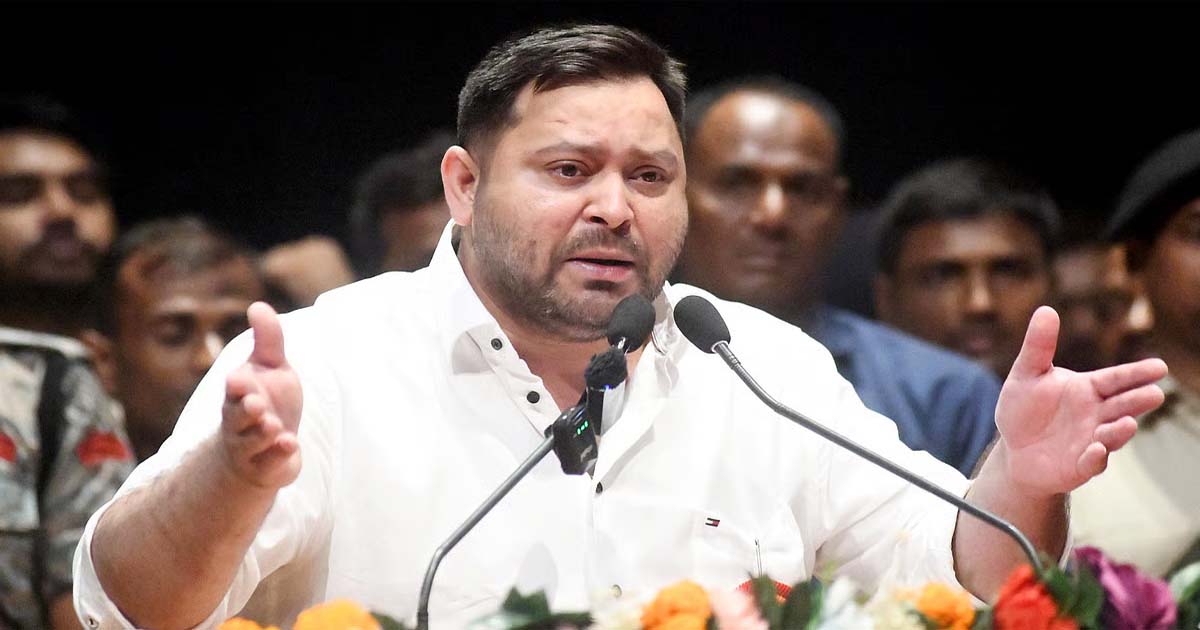
Patna: RJD national working president Tejashwi Yadav may effect a major organisational rejig after the MLC polls, scheduled next month.
In the party`s organsiational overhaul, RJD is also likely to have a new Bihar chief, replacing the incumbent Mangani Lal Mandal. Ahead of the organisational rejig, Tejashwi is scheduled to hold meetings with the party’s district presidents, senior leaders, and party workers.
Senior RJD leaders will hold discussions in these meetings to formulate strategy for strengthening the party at the booth level. The announcement of the new team is expected to follow immediately thereafter. It is widely believed that, in addition to the state president, leaders holding various other organisational positions will also be replaced.
Mandal was made state RJD president last year. Recently, Mandal created a flutter in party circles after he expressed his displeasure regarding the working methods of party leaders and workers.
He alleged that several important events were being organised without informing senior office-bearers, and that party protocols were not followed. He also warned that strict disciplinary action would be taken against those found violating party norms.
Amid the speculation over Mandal’s potential departure, names of former ministers Kumar Sarvajeet and Alok Mehta are doing the rounds for the post of state party chief.
Sarvajeet is considered the frontrunner in this race. He is the RJD MLA representing the Bodh Gaya assembly constituency and is known for his close proximity with both party chief Lalu Prasad and Tejashwi.
The second major name in this race is Alok Mehta. He possesses extensive political experience at both the central and state levels in Bihar. He is a former MP and currently serves as the RJD MLA from the Ujiarpur constituency.
He is widely regarded as having a strong command over the party’s grassroots cadre. The third name in contention is that of RJD MP Sudhakar Singh. He is the son of the former state RJD chief, Jagdanand Singh.
The second major name in this race is Alok Mehta. He possesses extensive political experience at both the central and state levels in Bihar. He is a former MP and currently serves as the RJD MLA from the Ujiarpur constituency.
He is widely regarded as having a strong command over the party’s grassroots cadre. The third name in contention is that of RJD MP Sudhakar Singh. He is the son of the former state RJD chief, Jagdanand Singh.

Sludge removal and drain cleaning should be done quickly, special attention should be paid to low-lying areas and lifting pumps should be kept ready: Ritu Tawde

BJP government targets Muslims and opposition, bulldozers and encounters instead of punishment through law: Abu Asim Azmi

Over 500 Residents Gather for Grand Nepeansea Road Hindu Sammelan at Bhartiya Vidya Bhavan

Mumbai blast conspiracy: Bandra mosque martyrdom was not a revenge plot, Delhi Special Cell claims after arrest of suspects, denies misleading reports

Qatar condemns Israeli settlers’ storming of Al-Aqsa Mosque, terms it ‘violation of international law’

Mumbai: Strict action directed against prominent Marathi placards in shops and institutions, warning of action in Shiv Sena style: Deputy Mayor Sanjay Ghadi

The Municipal Corporation and the Railway Administration should work together to make Mumbai flood-free, directs Standing Committee Chairman Prabhakar Shinde

Virar Citizens Protest Demolition Drive In Arnala; Police Block Lal Bawta March, Sit-in Held On Road

Apple to invest Rs 100 crore in India’s renewable energy infrastructure

Dangerous Love Triangle In Mira-Bhayandar: Youth Kidnapped, Brutally Beaten, & Burned With Cigarettes Over Affair With Same Girl
-

 Crime4 years ago
Class 10 student jumps to death in Jaipur
-

 Maharashtra2 years ago
Mumbai Local Train Update: Central Railway’s New Timetable Comes Into Effect; Check Full List Of Revised Timings & Stations
-

 Maharashtra2 years ago
Mumbai To Go Toll-Free Tonight! Maharashtra Govt Announces Complete Toll Waiver For Light Motor Vehicles At All 5 Entry Points Of City
-

 Maharashtra2 years ago
False photo of Imtiaz Jaleel’s rally, exposing the fooling conspiracy
-

 National News2 years ago
Ministry of Railways rolls out Special Drive 4.0 with focus on digitisation, cleanliness, inclusiveness and grievance redressal
-

 Maharashtra2 years ago
Maharashtra Elections 2024: Mumbai Metro & BEST Services Extended Till Midnight On Voting Day
-

 National News2 years ago
J&K: 4 Jawans Killed, 28 Injured After Bus Carrying BSF Personnel For Poll Duty Falls Into Gorge In Budgam; Terrifying Visuals Surface
-

 Crime2 years ago
Baba Siddique Murder: Mumbai Police Unable To Get Lawrence Bishnoi Custody Due To Home Ministry Order, Says Report